
Table of Contents
- What Is a DJVU File?
- Why Convert DJVU to PDF?
- Quick Comparison: Best DJVU to PDF Converter Options
- Method 1: Convert DJVU to PDF with AVS Document Converter
- Method 2: Convert DJVU to PDF Online with Zamzar or Convertio
- Method 3: Convert DJVU to PDF with Calibre
- Method 4: Use DjVuLibre for Advanced or Offline Conversion
- After Conversion: Edit, OCR, Organize, and Compress the PDF with PDFelement
- How to Choose the Right DJVU to PDF Converter
- Troubleshooting DJVU to PDF Conversion Problems
- Tips for Better PDF Output
- FAQs
DJVU files are common in scanned books, archived documents, academic materials, and older ebook collections. The format can store high-quality page scans in a relatively small file size, which is useful for storage but not always convenient for everyday reading. Many devices, browsers, and document apps do not open DJVU files by default. PDF, on the other hand, is widely supported and easier to print, share, annotate, and manage.
If you need to convert DJVU to PDF, the best method depends on the file size, the number of pages, whether the document contains scanned text, and whether you prefer an online or offline tool. Below are several practical ways to handle the conversion, plus tips for improving the PDF after it is created.


 G2 Rating: 4.5/5 |
 100% Secure
What Is a DJVU File?
DJVU, sometimes written as DjVu, is a document format designed mainly for scanned pages. It was developed to compress high-resolution images of text, drawings, diagrams, and photos while keeping file sizes manageable.
That is why DJVU often appears in:
- Scanned books
- Historical archives
- Research papers
- Technical manuals
- Old ebook libraries
- Documents with mixed text and images
A DJVU file may look like a normal document when opened in a compatible viewer, but it is often image-based underneath. That matters because converting the file to PDF does not always make the text searchable or editable. If the original DJVU file does not include an OCR text layer, the converted PDF may simply contain page images.
For general background on the format, the DjVuLibre documentation is a useful reference.
Why Convert DJVU to PDF?
PDF is easier to work with in most modern document workflows. Even if DJVU is efficient for archiving scanned books, PDF is usually better for reading and sharing.
You may want to convert DJVU to PDF because:
- Your device or app cannot open DJVU files.
- You need to send the document to someone who expects a PDF.
- You want to print the file without installing a special viewer.
- You need to annotate, highlight, or comment on the document.
- You want to run OCR and make scanned pages searchable.
- You need to combine the document with other PDFs.
- You want to compress, split, or reorganize pages.
The key point is that conversion solves compatibility. It does not always solve editability. If your converted PDF is image-based, you may still need OCR before you can search or edit the text.
Quick Comparison: Best DJVU to PDF Converter Options
There is no single best DJVU to PDF converter for every case. A small one-page DJVU file can be handled online in seconds. A 500-page scanned book may be better processed with desktop software.
| Method | Best For | Main Advantage | Possible Limitation |
|---|---|---|---|
| AVS Document Converter | Windows users, batch conversion | Simple desktop interface | Windows-focused |
| Zamzar / Convertio | Quick online conversion | No installation needed | File size and privacy limits |
| Calibre | Ebook collections | Free and works with many ebook formats | Output may need adjustment |
| DjVuLibre | Advanced users, offline workflows | Free, open-source tools | Less beginner-friendly |
| PDFelement after conversion | Editing, OCR, compression, organizing PDF | Improves the converted PDF | Not a direct DJVU importer in every workflow |
G2 Rating: 4.5/5 |100% Secure
If you only need a quick file conversion, start with an online converter. If you work with large scanned books or confidential documents, a desktop workflow is usually safer and more reliable.
Method 1: Convert DJVU to PDF with AVS Document Converter
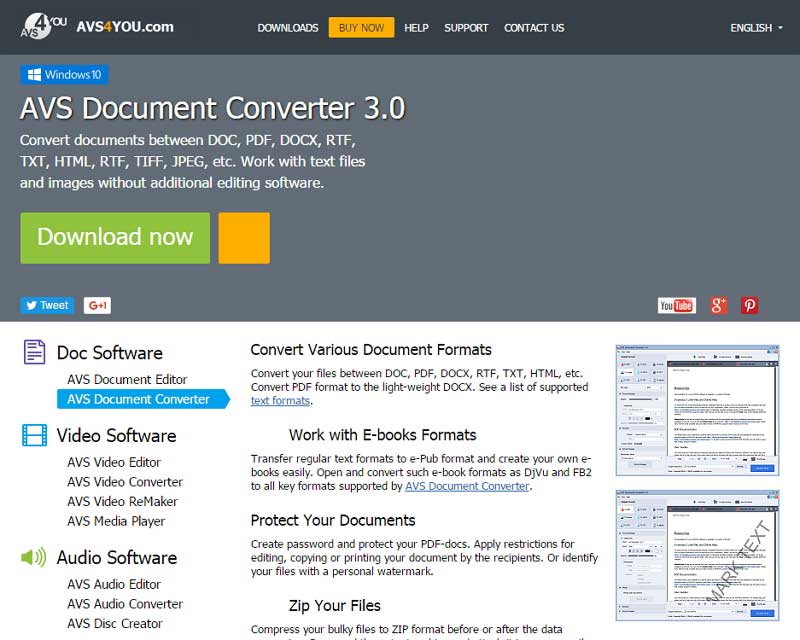
AVS Document Converter is a Windows desktop tool that supports several document formats, including DJVU and PDF. It is a practical choice if you do not want to upload files to an online converter or if you need to process multiple documents.
Step 1Install AVS Document Converter
Go to the official AVS Document Converter page, download the installer, and install the program on your Windows computer.
After installation, open the program and check that your DJVU file is accessible from a local folder. If the file is stored on an external drive or cloud-synced folder, it may be smoother to copy it to your desktop first.
Step 2Add Your DJVU File
Open AVS Document Converter and add the DJVU file. You can usually drag and drop the file into the program window or use the file selection option.
If you are converting a scanned book, wait for the preview or file list to load completely before starting the conversion. Large DJVU files can take a moment to appear.
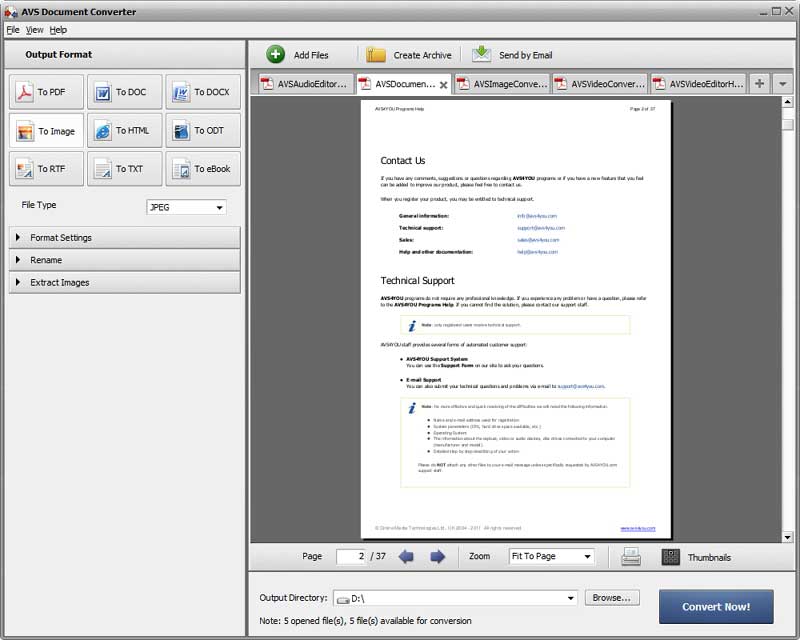
Step 3Select PDF as the Output Format
Choose PDF as the output format. If the tool offers page settings, review them before converting. For scanned documents, keeping the original page size is usually best unless you need a specific print layout.
Step 4Choose an Output Folder
Select a folder where the converted PDF should be saved. Avoid saving directly into a temporary downloads folder if you plan to edit or archive the PDF later.
A simple naming convention helps, especially for books or multi-part documents. For example:
- `book-title-original.pdf`
- `manual-ocr-ready.pdf`
- `archive-volume-01.pdf`
Step 5Convert the DJVU File to PDF
Click Convert Now or the equivalent conversion button. When the process finishes, open the PDF and check several pages:
- The first page
- A middle page with text
- A page with images or tables
- The final page
This quick review helps catch layout problems before you delete or move the original DJVU file.
Method 2: Convert DJVU to PDF Online with Zamzar or Convertio
Online converters are the easiest option when you need a fast result and the file does not contain sensitive information. They work in a browser and usually require only three steps: upload, choose PDF, and download.
Popular options include:
Step 1Open an Online DJVU to PDF Converter
Go to the converter website and find the DJVU to PDF tool. Make sure the source format is DJVU and the output format is PDF.
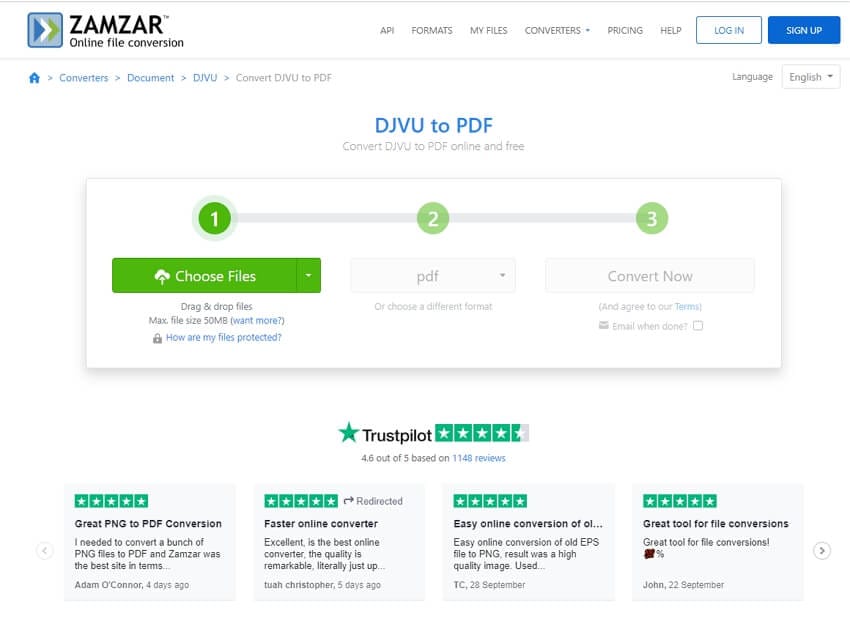
Step 2Upload the DJVU File
Click the upload button and select your DJVU file. Some online tools also support importing from cloud storage, but uploading from your local computer is usually more predictable.
Before uploading, consider what is inside the file. If it contains private contracts, financial records, unpublished research, or personal identification documents, use an offline method instead.
Step 3Select PDF and Start Conversion
Choose PDF as the output format and start the conversion. Processing time depends on the file size and the number of pages.
When the PDF is ready, download it immediately. Some online services delete files automatically after a period of time, but you should still avoid leaving sensitive documents on third-party platforms longer than necessary.
When Online Conversion Works Best
Use an online converter if:
- The file is small or medium-sized.
- The content is not confidential.
- You only need a quick PDF copy.
- You do not want to install software.
- You are using a shared or temporary computer.
Avoid online conversion if:
- The file is very large.
- The document is private.
- You need batch processing.
- Your internet connection is unstable.
- You need strict control over output quality.
Method 3: Convert DJVU to PDF with Calibre
Calibre is a free ebook management tool that supports many ebook and document formats. It is often used for EPUB, MOBI, AZW, and PDF workflows, but it can also be helpful when dealing with DJVU files in an ebook collection.
You can download it from the official Calibre website.
How to Use Calibre for DJVU to PDF
- 1. Install and open Calibre.
- 2. Click Add books and import your DJVU file.
- 3. Select the imported file in your library.
- 4. Click Convert books.
- 5. Choose PDF as the output format.
- 6. Review page setup and layout options.
- 7. Start the conversion.
- 8. Open the output PDF from the Calibre library folder.
Calibre is useful if you already manage ebooks there. However, its PDF output can vary depending on the structure of the original DJVU file. Scanned pages may remain image-based, and page sizing may need adjustment.
If the PDF looks awkward after conversion, try changing output settings such as page size, margins, or preserving the original layout.
Method 4: Use DjVuLibre for Advanced or Offline Conversion
DjVuLibre is an open-source set of tools for working with DJVU files. It is less beginner-friendly than browser converters, but it is useful for users who prefer offline processing or need more technical control.
Depending on your operating system and installation method, DjVuLibre may include tools that can export or process DJVU pages. Some users also combine DjVuLibre with other PDF tools to create a final PDF.
This route is best for:
- Technical users
- Linux users
- Archive workflows
- Large document collections
- Offline conversion requirements
- Scripted or repeatable processing
If you are not comfortable with command-line tools, AVS Document Converter, Calibre, or an online converter will be easier.
After Conversion: Edit, OCR, Organize, and Compress the PDF with PDFelement
A DJVU to PDF conversion often gives you a readable PDF, but not always a finished document. Many DJVU files are scanned page images. After conversion, the PDF may be too large, pages may need reordering, or the text may not be searchable.
That is where PDFelement fits into the workflow as a follow-up PDF tool. It is not necessary to pretend every PDF editor is the best direct DJVU converter. The practical use case is what happens after the conversion.
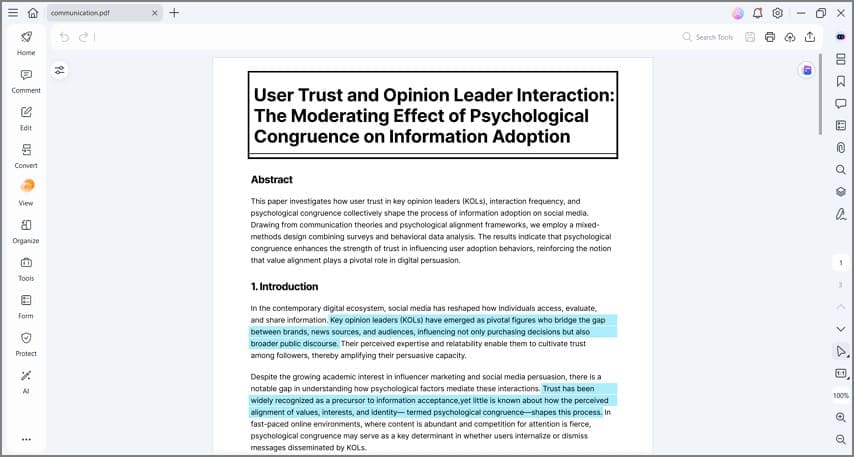
After you convert DJVU to PDF with one of the methods above, you can open the PDF in PDFelement to:
- Run OCR on scanned pages so text becomes searchable and selectable.
- Add highlights, comments, stamps, or notes.
- Rearrange, delete, rotate, or extract pages.
- Compress a large converted PDF before sharing it by email.
- Combine the converted PDF with other PDF files.
- Add page numbers, headers, footers, or watermarks.
- Fill forms or sign the document if it becomes part of a formal workflow.
G2 Rating: 4.5/5 |100% Secure
This is especially useful for scanned books, manuals, and research documents. For example, if you convert a DJVU scan of an old technical manual to PDF, you may still be stuck scrolling through image pages. Running OCR in PDFelement can make the manual easier to search. If some pages are sideways, you can rotate them. If the file is too large to send, compression can make it more manageable.
The cleanest workflow is:
- Convert the DJVU file to PDF.
- Open the PDF in PDFelement.
- Run OCR if the text is not searchable.
- Fix page order, rotation, or unwanted blank pages.
- Compress or export the final PDF.
This approach separates the conversion step from the PDF cleanup step, which usually produces a better final document.
How to Choose the Right DJVU to PDF Converter
The best converter depends on your file and your priorities. Use the questions below to decide.
Is the File Confidential?
If yes, avoid online converters. Use desktop software instead. Uploading private documents to a third-party website may not be appropriate, even if the service has a file deletion policy.
For public-domain books, old manuals, or non-sensitive documents, online tools are often fine.
Is the File Large?
Large DJVU files can fail during online upload or take too long to process. Desktop tools are usually better for large scanned books or multi-volume archives.
If the file is several hundred pages, choose AVS Document Converter, Calibre, DjVuLibre, or another offline method.
Do You Need Batch Conversion?
If you have many DJVU files, do not convert them one by one in a browser unless there are only a few. A desktop tool with batch conversion will save time and reduce errors.
Batch conversion is helpful for:
- Digitized book collections
- Archived magazine issues
- Research document sets
- Scanned manuals
- Course materials
Do You Need Searchable Text?
A DJVU file may or may not include a text layer. After conversion, test the PDF by trying to select a sentence. If you cannot select text, the PDF is probably image-based.
In that case, use OCR after conversion. This step matters more than the converter itself if your goal is searching, copying, or editing text.
Are You on Windows, Mac, or Linux?
- Windows: AVS Document Converter and online tools are straightforward.
- Mac: Online converters and Calibre are easy starting points.
- Linux: DjVuLibre and other open-source tools may be a better fit.
- Any platform: Browser-based converters work if the file is not sensitive and size limits are acceptable.
Troubleshooting DJVU to PDF Conversion Problems
Even a good converter can produce a flawed PDF if the original file is complex. Here are common problems and practical fixes.
The PDF Is Too Large
DJVU compression is often very efficient. When you convert DJVU to PDF, the file size may increase sharply.
Try these fixes:
- Use a PDF compressor after conversion.
- Lower image quality only if readability remains acceptable.
- Remove blank or duplicate pages.
- Split a huge PDF into smaller sections.
- Avoid repeated conversion, which can make files larger or blurrier.
PDFelement can help compress the PDF and remove unnecessary pages after conversion.
The Text Is Not Searchable
This usually means the converted PDF contains page images without a text layer.
Fix it by running OCR. After OCR, test the result by searching for a word that appears clearly on the page. OCR accuracy depends on scan quality, language, font, and page contrast.
Pages Are Rotated Sideways
Scanned DJVU files sometimes contain pages in mixed orientations. After conversion, open the PDF and rotate incorrect pages.
If only a few pages are affected, manual correction is fine. If many pages are rotated, look for batch page rotation options in your PDF editor.
The Layout Looks Different
Some converters reprocess pages rather than preserving the original scan layout. This can change margins, page size, or image placement.
Try another converter or look for settings such as:
- Preserve original layout
- Keep original page size
- Fit to page
- Disable margin changes
- Image-based output
For scanned books, preserving original page dimensions usually gives the most faithful result.
The Online Converter Fails
Upload failures are common with large files or slow connections.
Try these options:
- Use a different browser.
- Rename the file with simple characters.
- Move the file to a local folder before uploading.
- Check the converter’s file size limit.
- Use a desktop converter instead.
The PDF Opens but Some Pages Are Blank
This may happen if the DJVU file uses layers or compression features that the converter does not handle well.
Try converting with another tool. If the document is important, keep the original DJVU file until you confirm every page in the PDF is correct.
Tips for Better PDF Output
A cleaner source file and a careful post-conversion review can save time later.
Keep the Original DJVU File
Do not delete the DJVU file immediately after conversion. Open the PDF and inspect it first. For long documents, check pages from different sections rather than only the first page.
Use Clear File Names
A converted file named `document.pdf` is easy to lose. Use names that show the title, version, or source.
For example:
- `history-book-djvu-converted.pdf`
- `repair-manual-searchable.pdf`
- `archive-issue-1934-final.pdf`
Run OCR Only When Needed
OCR can make a PDF more useful, but it also adds processing time and may increase file size. If the PDF already has selectable text, you may not need OCR.
Compress After OCR and Editing
If you need to reduce file size, compress the final version after OCR, page editing, and annotations. Compressing too early may force you to repeat steps later.
Check Readability Before Sharing
Zoom in on small text, diagrams, footnotes, and tables. A PDF that looks fine at full-page view may be hard to read when printed or viewed on a tablet.
People Also Ask
-
What is the best way to convert DJVU to PDF?
For quick, non-sensitive files, an online converter such as Zamzar or Convertio is the easiest option. For large files, private documents, or batch conversion, a desktop tool such as AVS Document Converter, Calibre, or DjVuLibre is usually better.
-
Can I convert DJVU to PDF online for free?
Yes. Several online tools offer free DJVU to PDF conversion, usually with file size or daily usage limits. Always check the service’s privacy policy before uploading sensitive documents.
-
Is a converted DJVU file searchable in PDF format?
Not always. If the DJVU file contains only scanned page images, the converted PDF may also be image-based. To make it searchable, run OCR after conversion using a PDF tool such as PDFelement.
-
How do I convert DJVU to PDF on Mac?
Mac users can use online converters such as Zamzar or Convertio. Calibre is another option if you prefer desktop software. After conversion, open the PDF to check layout, page order, and text searchability.
-
How do I convert DJVU to PDF on Windows?
Windows users can use AVS Document Converter, online tools, Calibre, or DjVuLibre. AVS Document Converter is a straightforward desktop choice for users who want a visual interface.
-
Why is my PDF larger than the original DJVU file?
DJVU is designed for strong compression of scanned pages. PDF conversion may expand images or store pages less efficiently. Compress the PDF after conversion if the file is too large.
-
Can I edit text after converting DJVU to PDF?
Only if the PDF contains real text or you run OCR successfully. Many DJVU files are scanned images, so conversion alone may not create editable text.
-
Is DJVU better than PDF?
DJVU can be better for storing compressed scanned books, but PDF is better for compatibility, sharing, printing, annotation, and document workflows. For most everyday use, PDF is more convenient.
-
Can I convert PDF back to DJVU?
Yes, some tools can convert PDF to DJVU, including DjVuLibre-based workflows and certain online converters. This is usually done to reduce file size for scanned documents, but PDF remains more widely supported.
-
What should I do after converting DJVU to PDF?
Open the PDF and check page quality, orientation, file size, and searchability. If needed, use a PDF editor such as PDFelement to run OCR, rotate pages, delete unwanted pages, compress the file, or add annotations.
![All the Methods to Convert a PDF to Black and White [2026]](https://images.wondershare.com/pdfelement/images2026/pdf-like-article-3.png)