PDF Reader for Windows
A PDF reader for Windows helps you open, view, search, navigate, and print PDF documents. Basic PDF readers focus on viewing files, while more advanced readers may also provide annotation, screenshot, security, and signing tools. With a PDF reader, you can commonly:
- Open, view, save, and print PDFs;
- Search text and navigate between PDF pages;
- Switch between different PDF reading modes;
- Annotate, highlight, and comment on PDFs;
- Protect PDFs with passwords and permissions;
- Add digital or electronic signatures when supported;
- Capture selected content from a PDF page.
To open a PDF on Windows, double-click the file in File Explorer. If the PDF opens in the wrong application, right-click the file, select "Open with", and choose the PDF reader you want to use. The interface and available tools may vary depending on the PDF software.
3D View
PDF readers can offer different page viewing modes for different reading needs. Common options include single-page view, continuous scrolling, two-page view, full-screen mode, and book-style layouts. Some PDF software also provides a "3D View" or page-turning mode that makes reading a PDF feel more like flipping through a physical book.
Some PDF readers also provide Grid, ruler, or guide tools. These can help you position text boxes, shapes, comments, and other annotations more precisely on the page.
If you cannot find a specific PDF viewing mode, check the "View", "Display", or page layout settings in your PDF reader. The available reading modes vary between applications.
Page Background
Some PDF readers let you change the page background or reading appearance to make long PDF documents more comfortable to view. This can be useful when reading for extended periods or using your computer in a low-light environment.
Depending on the PDF reader, page background options may include Day, Night, Eye Protection, Parchment, dark mode, or other reading themes. These settings usually change only how the PDF appears on your screen and do not permanently modify the original PDF page.
Add Comments
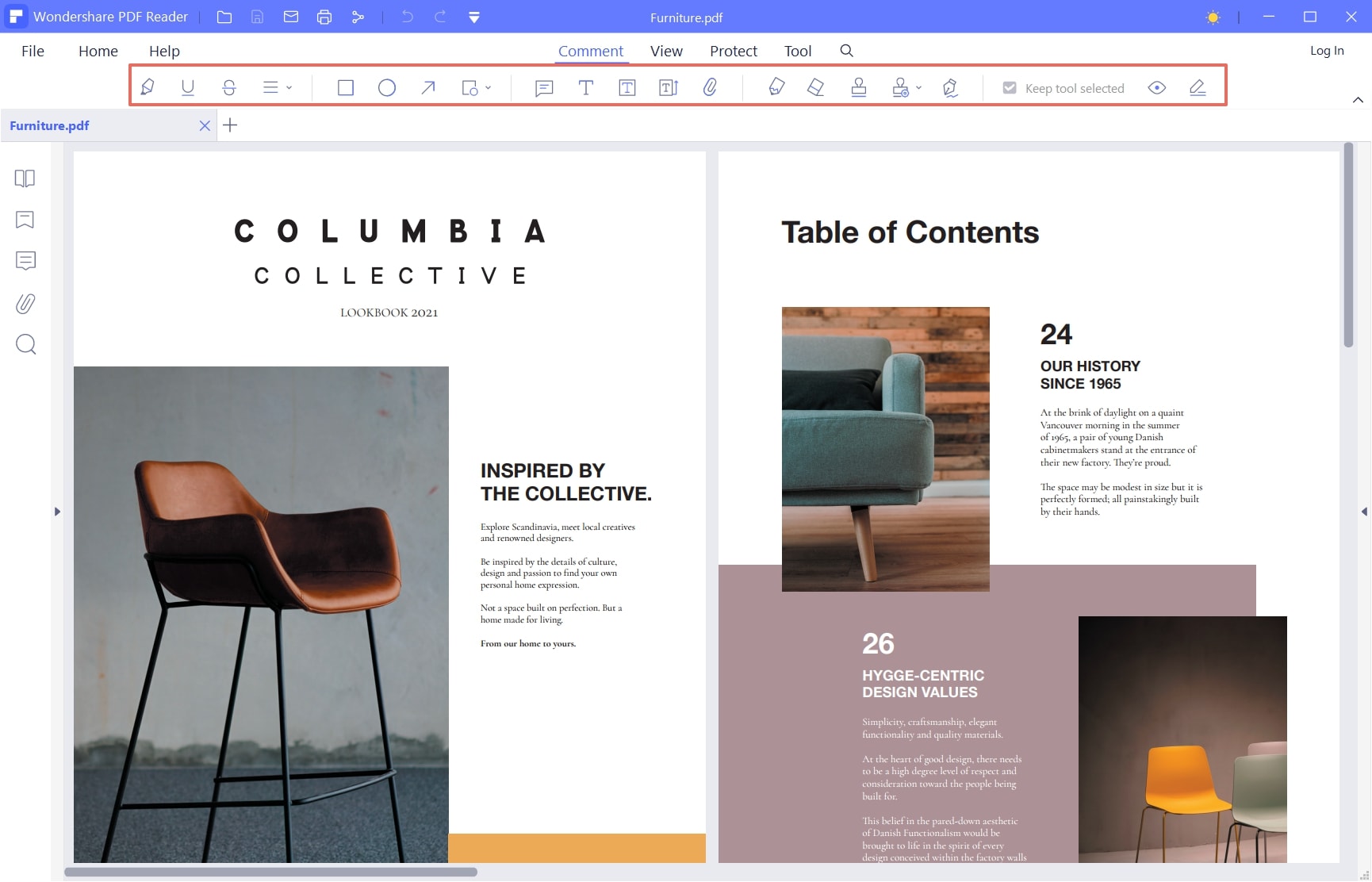
When reading or reviewing a PDF, you may want to highlight important information, leave notes, or mark text for later review. Many PDF readers provide annotation tools such as Note, Highlight, Underline, Strikethrough, Text Box, Callout, shapes, and drawing tools.
To add comments to a PDF, choose the annotation or markup tool you need and then select the relevant text or page area. PDF comments are useful for proofreading, studying, document review, and sharing feedback without directly changing the original document text.
Capture Tool
A PDF Capture Tool, Snapshot tool, or screenshot feature lets you select part of a PDF page and capture it separately. This can be useful when you only need a chart, table, image, paragraph, or another specific section of a document.
After selecting an area, some PDF readers let you copy the captured content, save it as an image, or keep it visible on the screen while comparing information from another part of the document.
Tips: Some PDF tools also support scrolling screenshots. A scrolling screenshot can capture long tables, continuous content, or PDF sections that extend beyond the visible area of the screen.
Secured Tools
More advanced PDF readers and editors may include security tools for protecting confidential or important documents. Common options include setting an open password, restricting editing or printing, redacting sensitive information, and adding digital or electronic signatures.
An open password controls who can access a PDF, while permission settings can restrict actions such as editing, printing, or copying content. Redaction tools can permanently remove sensitive information, while digital signatures can help verify the signer and the integrity of a signed PDF.
The exact security and signing features depend on the PDF reader or editor you use. Look for options such as "Protect", "Security", "Encrypt", or "Sign" when you need to secure or approve a PDF document.