
Turning a PDF into a web link on your Mac is one of the most efficient ways to share documents, bypass email attachment size limits, and distribute content to a wider audience. However, when Mac users ask how to "convert a PDF to a URL," they usually mean one of two completely different things.
You might want to upload your PDF to the cloud to generate a simple download or viewing link, or you might want to fully convert the static PDF document into a dynamic HTML web page.
In this comprehensive guide, we will explore both avenues. Whether you need a quick shareable link or a fully responsive web page, you will learn exactly how to make a PDF into a URL on Mac using powerful software like PDFelement, built-in macOS tools like iCloud, and popular alternative cloud drives.


 G2 Rating: 4.5/5 |
 100% Secure
In this article
- Understanding the Two Methods: Link Sharing vs. HTML Conversion
- Method 1: How to Make a PDF into a URL on Mac via PDFelement (All-in-One Solution)
- Method 2: Official Ways to Turn a PDF into a Link on Mac (iCloud & Preview)
- Method 3: Alternative Cloud Services for Mac Users
- Method 4: Using Free Online Tools to Convert PDF to URL
- Best Practices for Sharing PDF URLs
- Comparison Table: Choosing the Best Method for Your Mac
- Frequently Asked Questions (FAQ)
- Conclusion
Understanding the Two Methods: Link Sharing vs. HTML Conversion
Before diving into the tutorials, it is crucial to understand the difference between the two primary ways to create a PDF to link solution for Mac. Choosing the right method depends entirely on your end goal.
1. Generating a Shareable Cloud Link
This method involves uploading your existing PDF document to a cloud storage server. Once uploaded, the server provides you with a unique URL. When someone clicks this URL, they are taken to a web viewer where they can read the PDF exactly as it looks on your Mac, or they can download the file to their own device.
- Best for: Sending contracts, sharing portfolios, distributing fixed-layout documents, and bypassing email size restrictions.
- Tools used: PDFelement Cloud, iCloud Drive, Google Drive, Dropbox.
2. Converting PDF to an HTML Web URL
This method is a true file conversion. Instead of hosting a static document, you use software to translate the text, images, and layout of the PDF into HTML5 code. You then host this HTML file on a web server, making it a live, interactive web page.
- Best for: Publishing content natively on a website, ensuring text is readable on small mobile screens (responsive design), and improving Search Engine Optimization (SEO) for the text within the document.
- Tools used: PDF to HTML converters like PDFelement for Mac.
Method 1: How to Make a PDF into a URL on Mac via PDFelement (All-in-One Solution)
If you regularly work with documents, relying on a comprehensive PDF editor is the most efficient approach. PDFelement for Mac is a versatile tool that allows you to tackle both scenarios: generating quick sharing links and performing deep HTML conversions.
Option A: Generating a Shareable Cloud Link for Your PDF
One way to distribute PDFs to a larger online audience is to create a download or view link that they can access from within a browser tab. Instead of first converting the PDF into HTML, you can directly upload the PDF to Wondershare's integrated cloud service to generate publicly shareable links.
G2 Rating: 4.5/5 |100% Secure
Step 1Open a PDF on Mac with PDFelement
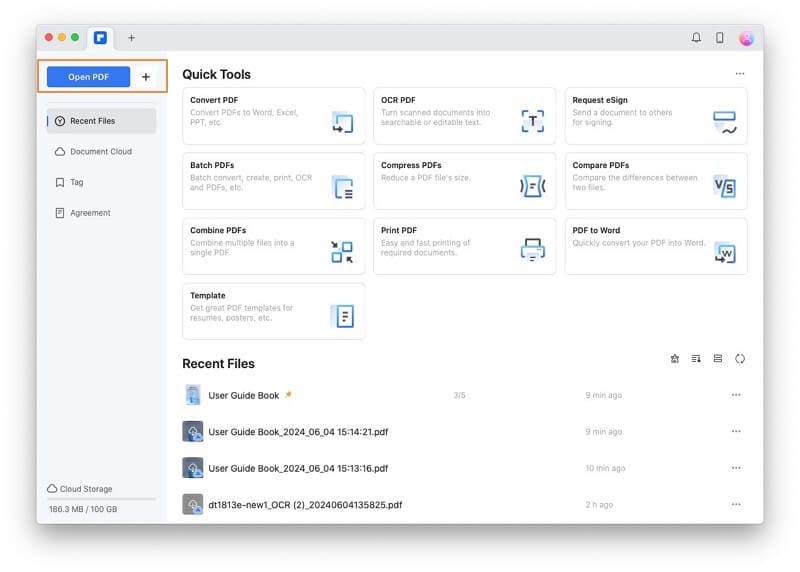
After installing and opening PDFelement on your Mac, click the "Open PDF" button to access your file. Alternatively, right-click the PDF file in Finder and select "Open with > PDFelement."
Step 2Click to Share the PDF as a Link on Mac
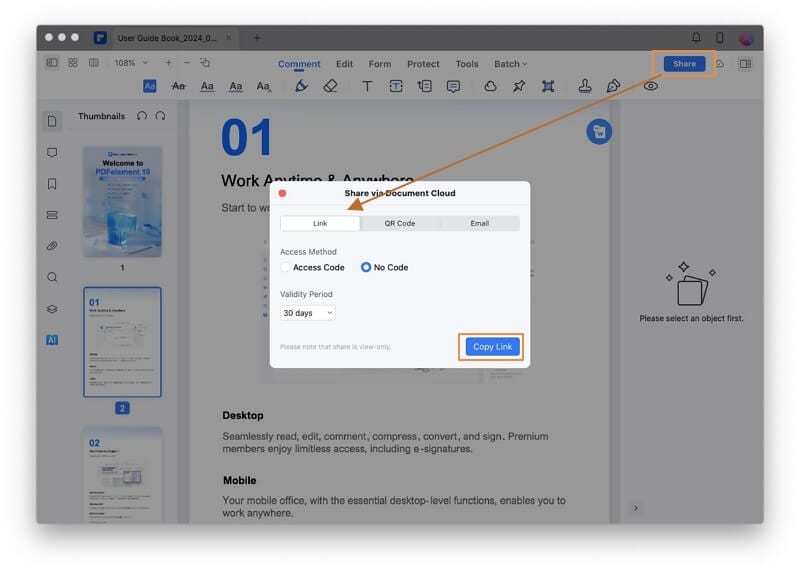
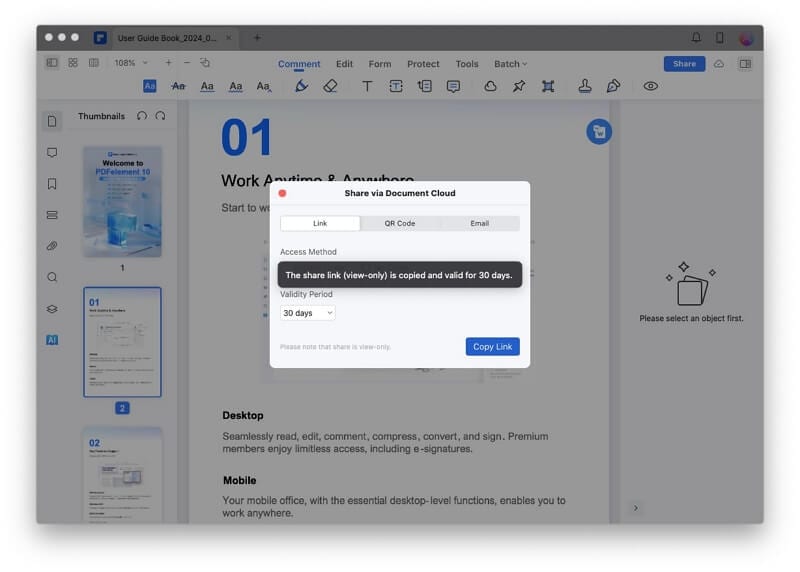
Navigate to the top-right corner of the interface and click on the "Share" button. A pop-up window will appear showing different sharing options. Select "Link" and adjust your desired permissions to generate a customized link for the PDF on your Mac.
Step 3Get the Link for Your PDF
After the software generates the URL, simply click on "Copy Link" to save it to your Mac's clipboard. You can now paste this URL into an email, a Slack message, or a social media post.
Step 4Upload PDFs to Cloud and Make PDF into a Download Link on Mac
If you specifically wish to share the PDF as a direct download link rather than just a viewing link, you can access PDFelement's Document Cloud. Locate your recently uploaded files in your cloud drive interface.
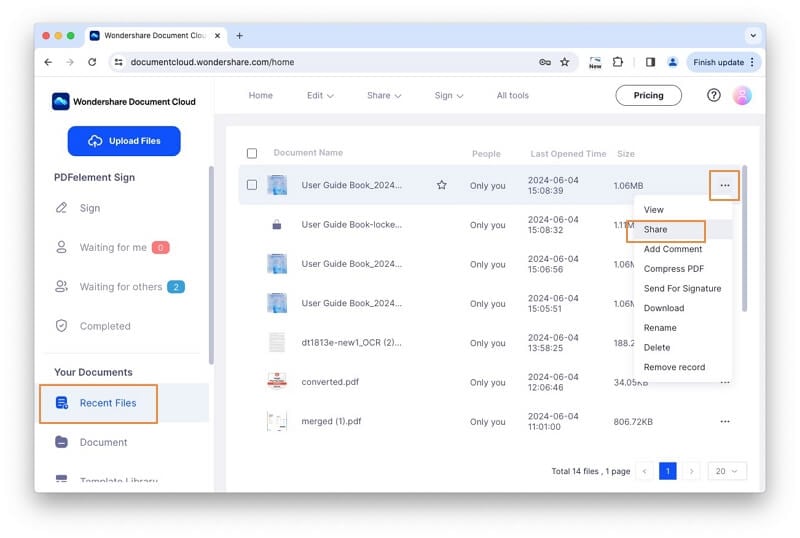
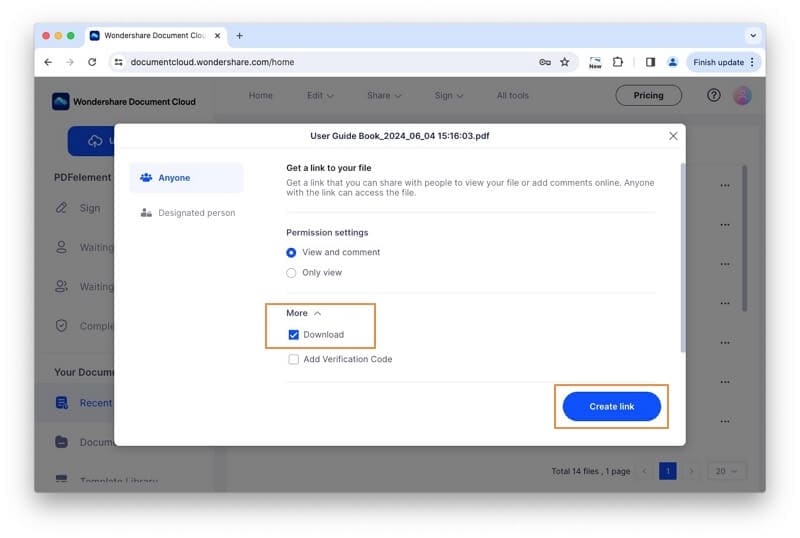
Click on the three dots ("...") next to the file name and select "Share." Ensure you enable the "Download" option in the permission settings. Lastly, click on "Create URL" to successfully obtain a downloadable PDF link.
Option B: How to Convert PDF to URL on Mac (HTML Conversion)
The advantage of using this method rather than merely generating a URL for a downloadable PDF file is that the recipients get interactive and dynamic content instead of static PDF pages. It is an ideal way to send complex content with numerous media and text elements because HTML5 is inherently responsive based on the device viewing it.
G2 Rating: 4.5/5 |100% Secure
Step 1Open PDF before Converting to URL on Mac
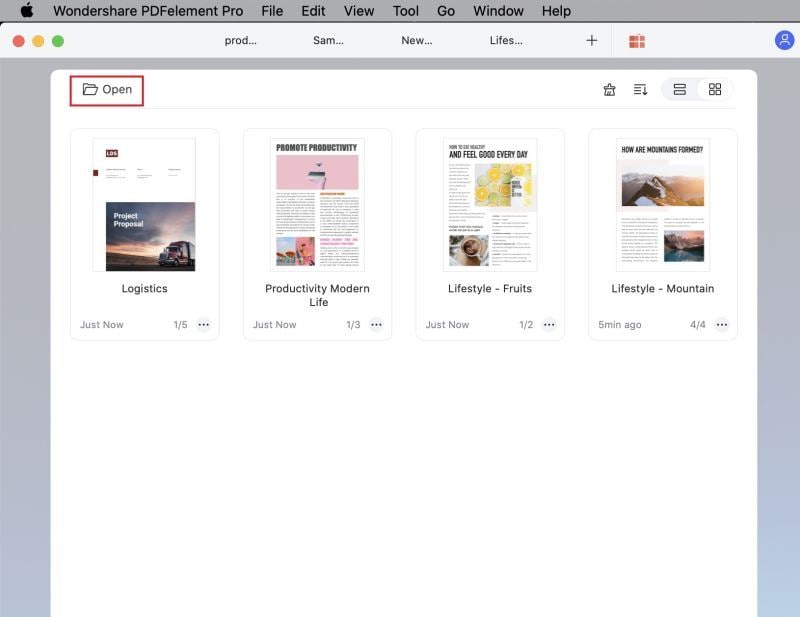
Import the PDF into PDFelement by clicking the "Open File…" button. Alternatively, simply drag and drop the PDF from your Mac Finder directly into the program window.
Step 2Convert PDF to URL on Mac
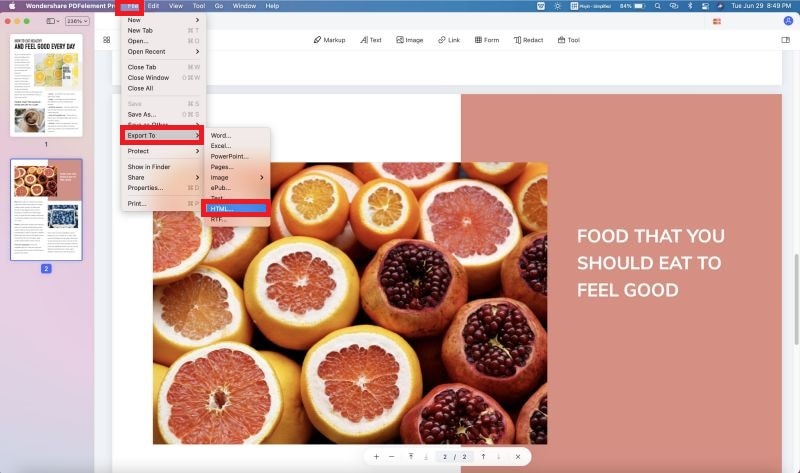
Go to the top menu bar and click "File" → "Export To". Within the contextual menu, choose the "HTML" option. The software will ask you where you want to save the output file on your Mac.
Step 3Host Your New Web Page
Once the PDF is converted to an HTML file, it is now web-ready. To generate a live URL that anyone can visit, you need to upload this HTML file to a web server (via FTP or cPanel) or host it on a cloud location that supports web rendering.
Option C: Batch Converting PDFs to URLs on Mac
If you have dozens of PDF documents that need to be converted into HTML web pages, doing it one by one is incredibly tedious. PDFelement includes a powerful batch processing engine.
G2 Rating: 4.5/5 |100% Secure
Step 1Click on the "Batch Process"
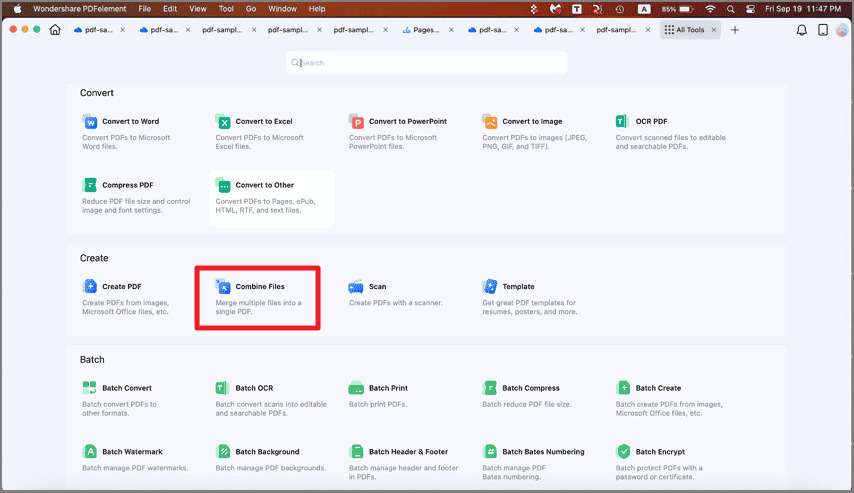
Open the software and click the "Tool" menu item in the left-hand panel. Then click the "Batch Process" option.
Step 2Convert PDF to URL on Mac in Batch
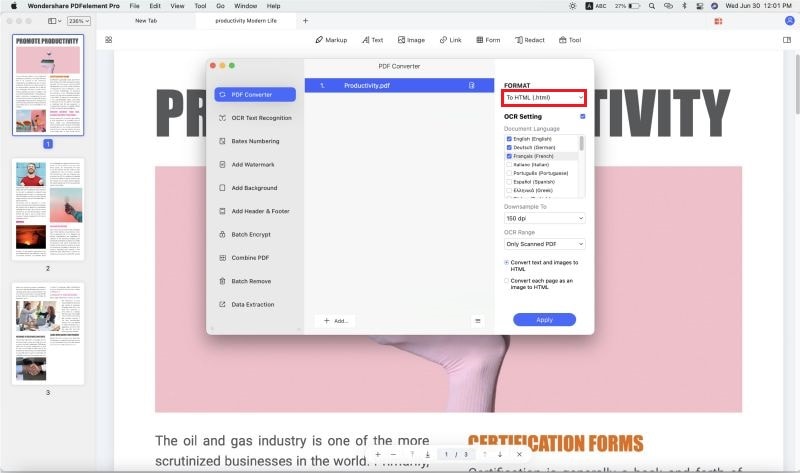
In the Batch Processes window that appears in the middle of your screen, select "PDF Converter" on the left-side panel. You can drag and drop multiple PDFs into this window or use the "Add File" button to import entire folders.
Change the dropdown selection in the Format section on the right to say "To HTML." Hit "Apply" when you are ready.

Method 2: Official Ways to Turn a PDF into a Link on Mac (iCloud & Preview)
If you prefer not to use third-party software, Apple provides built-in solutions for Mac users. While macOS Preview does not have a native "generate web link" button, it works seamlessly with iCloud Drive to accomplish this task.
Using iCloud Drive via Mac Finder to Generate a Link
iCloud is deeply integrated into the macOS ecosystem. By placing a PDF into your iCloud Drive, you can easily generate a collaborative or read-only URL.
Step 1Move the PDF to iCloud Drive
Open a new Finder window on your Mac. In the left sidebar, click on iCloud Drive. Drag and drop your target PDF file from your Desktop or Documents folder into iCloud Drive.
Step 2Access the Share Menu
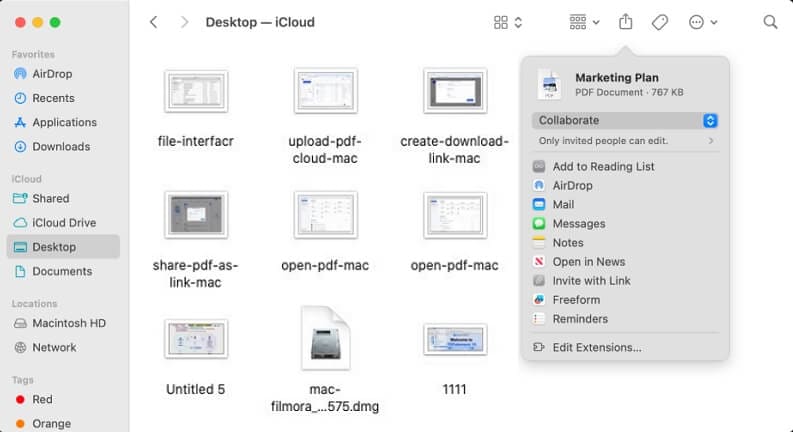
Right-click (or Control-click) the PDF file inside iCloud Drive. Select "Share" from the context menu, then choose "Share File" or "Collaborate" depending on your macOS version.
Step 3Set Permissions and Generate the Link
In the pop-up menu, change the access permissions. Click on "Only invited people can edit" and change it to "Anyone with the link." You can also dictate whether they have permission to make changes or only view the file. Finally, select "Copy Link" to generate the URL.
Can You Create a Link Directly in Mac Preview?
Many Mac users wonder if they can generate a link directly from Preview, Apple's default PDF and image viewer. The short answer is no, not directly. Preview allows you to share PDFs as email attachments or via iMessage by clicking the "Share" icon at the top of the window. However, it does not have a standalone feature to generate a URL. If you are viewing a document in Preview and decide you need a link, you must first save the document, move it to a cloud service like iCloud or Google Drive, and generate the link from Finder or a web browser.
Method 3: Alternative Cloud Services for Mac Users
If you do not use iCloud or PDFelement, you likely use other popular cloud storage solutions. These are excellent ways to create a PDF to link convert for Mac, particularly if you collaborate with PC users or use Google Workspace.
Creating a PDF URL with Google Drive for Mac
- Upload the File: Open your web browser on your Mac, navigate to Google Drive, and click "New" > "File Upload." Select your PDF.
- Open Share Settings: Once uploaded, right-click the PDF in Google Drive and select "Share."
- Adjust Access: Under the "General access" section, change the setting from "Restricted" to "Anyone with the link."
- Copy the URL: Click the "Copy link" button.
Generating a Link via Dropbox Integration
- If you have the Dropbox Mac app installed, simply drag your PDF into your Dropbox folder in Finder.
- Wait a moment for the green checkmark to appear, indicating the file has successfully synced to the cloud.
- Right-click the file and select "Copy Dropbox Link."
- The URL is instantly copied to your clipboard, ready to be pasted anywhere.
Method 4: Using Free Online Tools to Convert PDF to URL
If you do not want to install any software and do not want to use cloud storage drives, online PDF-to-HTML converters are a viable alternative.
How Online PDF to HTML Converters Work
These web-based tools require you to upload your PDF to their servers. The server processes the file, converts the layout into HTML code, and provides you with a zip file containing the web page assets, or temporarily hosts the file for you.
Step-by-Step Guide Using HiPDF on Mac
Step 1Open Safari or Chrome on your Mac and visit the HiPDF website
Step 2Navigate to the "PDF to HTML" tool
Step 3Click "Choose File" and select the PDF from your local Mac storage
Step 4Click the "Convert" button. The cloud servers will process the document
Step 5Click "Download" to save the converted HTML file back to your Mac
Step 6Upload this HTML file to your website's server to create a permanent, live web URL
Best Practices for Sharing PDF URLs
Knowing how to make a pdf into a url mac is only half the battle. Ensuring that your links are secure, fast, and professional is equally important.
Managing Link Permissions and Security
When you create a link using cloud services, pay strict attention to your permission settings.
- View vs. Edit: Always default to "View Only" unless you specifically need the recipient to collaborate on the document.
- Expiration Dates: Some premium cloud services allow you to set an expiration date on the URL. This is excellent for limited-time offers or sensitive proposals.
- Password Protection: If the contents are confidential, use a PDF editor to password-protect the PDF before you upload it to the cloud.
Optimizing PDF File Size Before Uploading
If you are generating an HTML URL, file size is critical for web page loading speeds.
- Before generating your URL, use a PDF compression tool to reduce the file size.
- Compress heavy images within the PDF and remove unnecessary embedded fonts.
- A smaller file uploads faster from your Mac and creates a better experience for whoever clicks your link.
Comparison Table: Choosing the Best Method for Your Mac
| Method | Best For | Output Type | Requires Software Install? | Mac Finder Integration? |
|---|---|---|---|---|
| PDFelement (Cloud Share) | Professional sharing with editing capabilities prior to upload. | Shareable Cloud URL | Yes | Yes (via Context Menu) |
| PDFelement (HTML Convert) | Creating responsive web pages for websites. | HTML File (Web URL) | Yes | No |
| iCloud Drive | Quick sharing within the Apple ecosystem. | Shareable Cloud URL | No (Built-in) | Yes (Native) |
| Google Drive / Dropbox | Collaborating with non-Mac users or large teams. | Shareable Cloud URL | Optional | Yes (if app installed) |
| Online Converters (HiPDF) | One-off conversions without installing apps. | HTML File (Web URL) | No | No |
G2 Rating: 4.5/5 |100% Secure
Frequently Asked Questions (FAQ)
-
How do I create a clickable link inside a PDF on a Mac?
Creating a link inside a PDF is different from turning the PDF into a link. To add a hyperlink to text or an image within a PDF document, you need a PDF editor. Open your document in a tool like PDFelement, select the "Edit" tab, choose the "Link" option, and highlight the text you want to make clickable. You can then enter the destination URL. macOS Preview does not allow you to add new hyperlinks to existing text. -
Do PDF links expire?
It depends on the service used to generate the URL. Links created via basic iCloud Drive, Google Drive, or Dropbox do not expire unless you manually delete the file or turn off link sharing. However, if you use temporary online file-sharing services (like WeTransfer) to generate a PDF URL, those links typically expire after 7 to 30 days. -
Are online PDF to URL converters safe for sensitive Mac documents?
While highly reputable tools employ strong encryption and automatically delete files from their servers after a few hours, it is best practice to avoid uploading highly sensitive information (like tax returns, medical records, or confidential business plans) to free online converters. For sensitive documents, always perform conversions locally on your Mac using installed desktop software.
Conclusion
Understanding how to make a PDF into a URL on Mac is a vital skill for modern digital communication. Whether you are using the deep macOS integration of iCloud to share a quick read-only link, relying on Google Drive for team collaboration, or utilizing PDFelement to batch-convert massive documents into responsive HTML web pages, you now have the tools required to execute the task flawlessly. Evaluate your specific needs—whether it's simple file distribution or full web publishing—and choose the method that best fits your workflow.
![All the Methods to Convert a PDF to Black and White [2026]](https://images.wondershare.com/pdfelement/images2026/pdf-like-article-3.png)