
Table of Contents
- Quick Answer: The Fastest Ways to Remove Links in Word
- How to Remove a Hyperlink in Word One at a Time
- How to Remove All Hyperlinks in Word at Once
- How to Stop Word From Creating Hyperlinks Automatically
- Troubleshooting: Why Some Links Are Still Clickable
- After Word: Remove or Edit Links in PDFs With PDFelement
- Best Practices Before Sharing a Clean Word Document
Copied text from a website often brings more than words with it. Blue underlined links, embedded URLs, linked images, email addresses, and hidden clickable areas can all end up in your Word document. If you are preparing a report, contract, resume, handout, or PDF, those links may look messy or create review problems.
The good news: learning how to remove hyperlink in Word is simple once you choose the right method. A single link can be removed with a right-click. A long document full of links can be cleaned with a shortcut. If Word keeps creating new links automatically, you can change that behavior too.
This guide covers the practical methods for Microsoft Word on Windows, Mac, and the web, including what to do when some links refuse to disappear.


 G2 Rating: 4.5/5 |
 100% Secure
Quick Answer: The Fastest Ways to Remove Links in Word
If you only need the answer and not the explanation, use the method that matches your situation.
To remove one hyperlink in Word, right-click the linked text and choose Remove Hyperlink. Word keeps the visible text but removes the clickable destination.
To remove all hyperlinks in a Word document on Windows, press Ctrl + A to select the document, then press Ctrl + Shift + F9. This unlinks hyperlink fields and turns the visible text into normal text.
To remove all hyperlinks in Word on Mac, select the content and try Command + Shift + F9. On some Mac keyboards, you may need to press Fn as well, depending on how function keys are configured.
To avoid bringing links into Word in the first place, paste copied web content using Keep Text Only or Paste Special > Unformatted Text.
There is one important warning: the shortcut for removing all hyperlinks can also unlink other Word fields in the selected content, such as cross-references, some citations, table of contents entries, or dynamic fields. If your document uses those features, make a copy before using the shortcut.
How to Remove a Hyperlink in Word One at a Time
Removing a single hyperlink is the safest method when you want to clean only a few links and leave the rest of the document unchanged. It works well for resumes, short proposals, references, or a document where some links should stay clickable.
Remove a Hyperlink With Right-Click
Open your Word document and find the linked text. Hyperlinks usually appear blue and underlined, though the formatting may vary if the document uses custom styles.
Right-click the linked text, then choose Remove Hyperlink from the menu. Word removes the link but keeps the display text in the document.
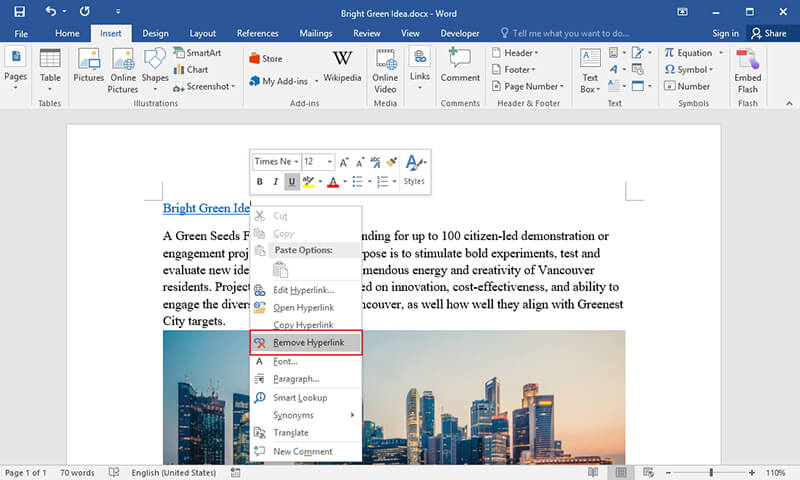
For example, if the text says “Download the report” and links to a website, removing the hyperlink leaves the words “Download the report” in place. The text no longer opens a browser or email client when clicked.
Remove a Hyperlink From the Insert Link Dialog
If the right-click menu does not show the option you expect, you can use Word’s link dialog instead.
Click the linked text, then go to Insert > Link or Insert > Hyperlink, depending on your Word version. In the dialog box, remove the address or choose the option to remove the link if available.
This method is useful when you want to inspect the URL before deleting it. For instance, you may want to check whether a link points to a company website, a shared drive, or a suspicious external page before deciding what to do.
Keep the Text, Change the Formatting
Removing a hyperlink does not always remove blue underlining or other visual formatting. In many cases, Word updates the text automatically. But if the text still looks like a link, the hyperlink may already be gone while the style remains.
To clean the appearance, select the text and apply normal formatting manually. You can use Home > Clear All Formatting, apply the Normal style, or change the font color and underline setting yourself. Be careful with Clear All Formatting in heavily formatted documents because it can remove more styling than you intended.
How to Remove All Hyperlinks in Word at Once
If a document contains dozens or hundreds of links, removing them one by one is a waste of time. This usually happens after copying research from web pages, exporting content from another system, merging documents, or receiving a file from someone who pasted online text without cleaning it.
The fastest way to remove all hyperlinks Word-wide is to select the content and unlink fields.
Remove All Hyperlinks in Word on Windows
Open the document in the Word desktop app. Press Ctrl + A to select the full document body. Then press Ctrl + Shift + F9.
Word removes the hyperlinks from the selected content and leaves the visible text behind. This is the standard shortcut many users need when searching for how to remove all hyperlinks in Word.
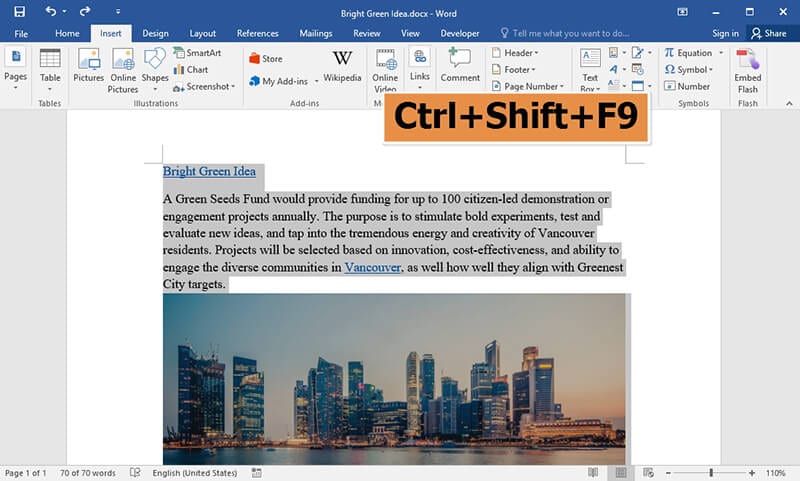
If nothing happens, check whether your cursor is inside a text box, table, header, footer, or comment. Ctrl + A may select only the current area, not every part of the file. You may need to repeat the process in separate sections.
Remove All Hyperlinks in Word on Mac
In Word for Mac, select the text first. Use Command + A to select the current document area, then press Command + Shift + F9. On some keyboards, especially if function keys are mapped to system controls, try Fn + Command + Shift + F9.
If the shortcut does not work, use the right-click method for selected links or check your Word keyboard shortcut settings. Microsoft’s own Word shortcut behavior can vary by version and keyboard layout, so Mac users sometimes need to test the shortcut on a copy of the file first.
Understand the Field-Code Warning
The all-at-once shortcut works because Word treats hyperlinks as fields. The shortcut unlinks fields in the selected text, converting them into ordinary text.
That is convenient for links, but it can be risky in documents that depend on dynamic fields. Before using it, check whether your file contains:
- A generated table of contents
- Cross-references to headings, figures, or tables
- Automatically numbered captions
- Citation manager fields
- Mail merge fields
- Dynamic dates, file names, or document properties
If the document includes those items, save a backup copy first. You can also select only the section that contains unwanted links instead of the whole document.
Remove Hyperlinks From Headers, Footers, Text Boxes, and Comments
A common frustration: you remove links from the main document, but some are still clickable. That does not always mean the shortcut failed. It may mean the links are outside the selected document body.
Headers and footers are separate editing areas in Word. Double-click the header or footer, select its contents, and use the same unlink shortcut. Do the same for text boxes, shapes, footnotes, endnotes, and comments if they contain hyperlinks.
For images or shapes, right-click the object and look for Link, Hyperlink, or Edit Hyperlink. If an image has a clickable destination, the link may be attached to the object rather than visible text.
How to Stop Word From Creating Hyperlinks Automatically
Removing links is useful, but prevention is better when you copy from websites often. Word can automatically convert URLs and email addresses into hyperlinks as you type or paste. It can also preserve links from web pages unless you choose a cleaner paste option.
Paste Without Hyperlinks
The simplest method is to paste as plain text.
After copying content from a web page, right-click in Word and choose Keep Text Only under paste options. The exact icon may vary, but it usually looks like a clipboard with the letter “A”. This keeps the words and removes most web formatting, including hyperlinks.
You can also use Paste Special. In Word for Windows, go to Home > Paste > Paste Special, then choose Unformatted Text. This is helpful when you need predictable results across a large document.
Plain-text pasting may remove headings, bold text, tables, and images along with hyperlinks. If you need some formatting, try pasting normally first, then use the hyperlink removal shortcut on the pasted section only.
Turn Off Automatic Hyperlinks in Word
If Word turns every URL into a clickable link as soon as you press Space or Enter, adjust AutoCorrect settings.
In Word for Windows, go to File > Options > Proofing > AutoCorrect Options. Open the AutoFormat As You Type tab and uncheck Internet and network paths with hyperlinks. You may also want to check the AutoFormat tab because Word has similar options there.
On Mac, go to Word > Preferences > AutoCorrect, then look for the AutoFormat options related to internet and network paths. Uncheck the hyperlink setting.
Microsoft provides more detail about these settings in its official AutoCorrect and AutoFormat documentation, which is useful if your Word interface differs by version.
Once this setting is off, Word should stop converting newly typed URLs into clickable hyperlinks. Existing links in the document will not be removed automatically; you still need to remove them using one of the methods above.
Choose the Right Paste Option for the Job
Word’s paste options are not just cosmetic. They decide how much hidden formatting enters your document.
If you are copying a paragraph from a web article for notes, Keep Text Only is usually best. If you are copying a table and need to preserve rows and columns, paste normally and remove the links afterward. If you are combining content from several sources, consider pasting into a plain-text editor first, then copying from there into Word.
That extra step can save cleanup time, especially when source pages contain ads, navigation links, author links, and tracking URLs.
Troubleshooting: Why Some Links Are Still Clickable
Sometimes users follow the correct steps but still find clickable content in the document. The cause is usually one of four things: the link is not in the main body, the link is attached to an object, the text only looks like a link, or the file is being edited in a limited Word environment.
The Link Is in a Header, Footer, Footnote, or Comment
Word separates different document regions. Selecting all text in the main page area may not select headers, footers, footnotes, endnotes, comments, captions inside text boxes, or linked objects.
If you are preparing a document for formal review, check these areas manually. A company logo in the header may link to a website. A footer may contain a clickable email address. A comment may include a URL pasted during review.
The Link Is Attached to an Image, Shape, or Icon
Not every hyperlink appears as underlined text. Images, icons, SmartArt, and shapes can carry hyperlinks too.
Click the object and right-click it. If you see options such as Edit Hyperlink, Open Hyperlink, or Remove Hyperlink, the link is attached to the object. Remove it from the context menu or through the Insert Link dialog.
This often happens in brochures, newsletters, exported templates, and documents created from web-based design tools.
The Hyperlink Is Gone, but the Blue Underline Remains
A piece of text can look like a hyperlink even when it is no longer clickable. This usually means the text still has hyperlink-style formatting.
Place your cursor on the text and see whether Word shows a URL preview or asks you to Ctrl-click. If nothing opens and no URL appears, the link has probably been removed.
To fix the appearance, apply the Normal style or manually remove underline and change the color. If many removed links still look blue, you can modify the Hyperlink style in Word, but that may affect real links that remain in the document.
Word for the Web Has Fewer Controls
Word for the web can remove individual hyperlinks, but it may not support every desktop shortcut or advanced field behavior. If you need to remove links in Word from a large or complex file, open it in the desktop version of Microsoft Word.
This is especially true for files with headers, footers, text boxes, field codes, citations, or layout-heavy content. The desktop app gives you more reliable control.
The Link Comes Back After Editing
If a URL becomes clickable again after you remove it, AutoFormat is probably still enabled. Turn off the automatic hyperlink setting, then remove the hyperlink again.
This also happens when collaborators edit the file with different Word settings. If you share a clean document and someone pastes fresh web content into it, new links can appear even though you removed the old ones.
After Word: Remove or Edit Links in PDFs With PDFelement
Many people remove hyperlinks in Word because the document is about to become a PDF. That is a smart time to clean links. A PDF sent to clients, students, reviewers, or legal teams should not contain accidental clickable URLs, especially if they point to draft pages, tracking links, private folders, or outdated resources.
Still, links can survive the export process. If you save or print the Word file as a PDF and later notice a clickable link, you need a PDF editor rather than Word. This is where PDFelement fits naturally into the workflow.
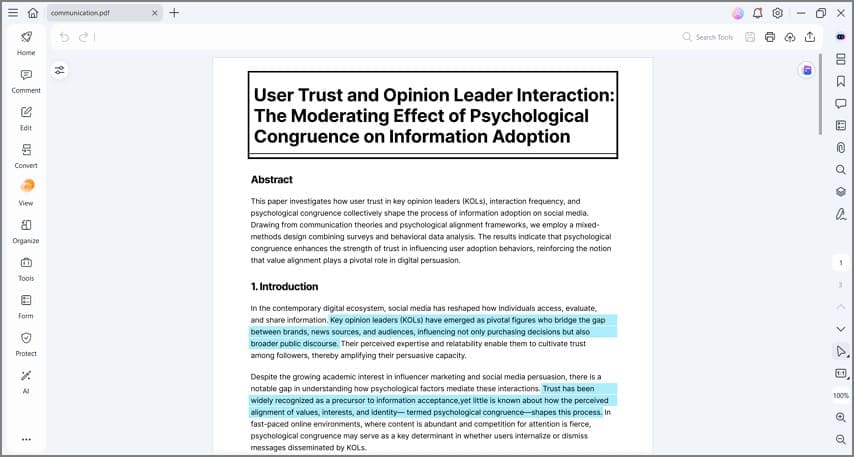
PDFelement lets you open a PDF, inspect link areas, edit existing links, or delete links from the PDF itself. That is useful when the Word source file is unavailable, when the PDF has already been approved visually, or when you only need to remove a few clickable areas without rebuilding the whole document.
G2 Rating: 4.5/5 |100% Secure
How to Remove a Hyperlink From a PDF in PDFelement
Open PDFelement and choose Open File to import the PDF. You can also drag the PDF into the program window if that is faster.
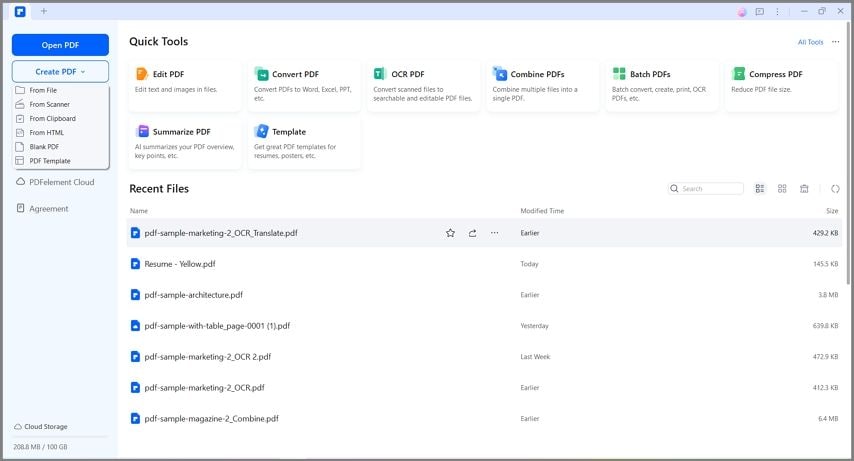
Go to the editing tools and choose the link editing option. Select the linked area in the PDF, then delete it or edit its destination. The visible text can remain in the PDF while the clickable action is removed.
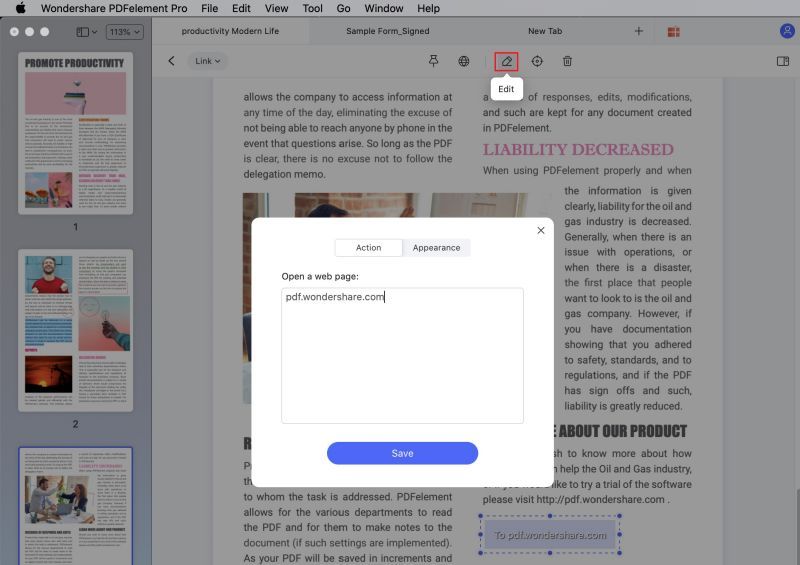
This workflow is different from removing hyperlinks in Word. Word cleans the source document; PDFelement cleans the final PDF. If you control both files, start with Word so future exports stay clean. If only the PDF is available, use PDFelement to fix the exported file directly.
PDFelement is also useful after hyperlink cleanup for related document tasks: converting Word files to PDF, compressing large PDFs before sharing, adding comments for review, organizing pages, applying OCR to scanned documents, and signing final files. Those steps often happen in the same publishing workflow as link cleanup.
G2 Rating: 4.5/5 |100% Secure
Best Practices Before Sharing a Clean Word Document
Once you remove hyperlinks, take a minute to check the document the way a recipient will experience it. This is especially important for professional documents where accidental links can look careless.
First, scan for blue underlined text. Not all blue text is clickable, but it is a good visual clue. Then hover over suspicious text and objects to see whether a URL preview appears. If Word tells you to Ctrl-click to follow a link, the hyperlink is still active.
Next, check headers, footers, logos, footnotes, endnotes, and comments. These areas are easy to miss because they are not always visible during normal editing. If the file came from a template, pay extra attention to logos and footer text.
If you plan to send the file as a PDF, export a test PDF and click through it before sending. Some links may behave differently after conversion. If you find links in the PDF that were missed in Word, either go back to the Word file and remove them there or edit the PDF directly with a tool such as PDFelement.
For sensitive documents, consider whether visible URLs should remain as plain text. Removing a hyperlink stops the click action, but the address may still be readable. If the URL itself should not be shared, delete or redact the text rather than only removing the link.
People Also Ask
-
What is the easiest way to remove a hyperlink in Word?
The easiest way is to right-click the linked text and choose Remove Hyperlink. This removes the clickable destination while keeping the visible text. It is best for deleting one or a few links. -
How do I remove all hyperlinks in Word at once?
In Word for Windows, press Ctrl + A to select the document body, then press Ctrl + Shift + F9. In Word for Mac, use Command + A, then try Command + Shift + F9. Some Mac keyboards may require the Fn key as well. -
Why did Ctrl + Shift + F9 remove more than hyperlinks?
That shortcut unlinks Word fields, not only hyperlinks. If your selected content contains a table of contents, cross-references, citation fields, mail merge fields, or other dynamic fields, those may be converted to static text too. Use a backup copy if your document has important field-based content. -
Can I remove hyperlinks but keep the blue text?
Yes. Removing a hyperlink and formatting text are separate actions. If you want the text to remain blue or underlined for design reasons, remove the hyperlink first, then manually apply the formatting you want. -
Why does my text still look like a hyperlink after I removed it?
The clickable link may be gone, but the formatting may remain. Select the text and remove the underline, change the font color, apply the Normal style, or use Clear All Formatting if you do not need to preserve other styling. -
How do I stop Word from automatically making links?
Go to Word’s AutoCorrect or AutoFormat settings and turn off the option for Internet and network paths with hyperlinks. In Word for Windows, this is usually under File > Options > Proofing > AutoCorrect Options > AutoFormat As You Type. -
Can I remove links when pasting from a website?
Yes. Use Keep Text Only when pasting, or use Paste Special > Unformatted Text. This prevents most copied hyperlinks from entering the Word document. The tradeoff is that much of the original formatting may be removed too. -
Does Word for the web support removing all hyperlinks?
Word for the web can handle basic hyperlink editing, but it may not support every shortcut or advanced document area. For large documents or files with headers, footers, text boxes, and field codes, use the desktop version of Microsoft Word. -
How do I remove hyperlinks from images in Word?
Right-click the image or shape and look for hyperlink options such as Edit Hyperlink or Remove Hyperlink. If the link is attached to the object, selecting text will not remove it. -
Can PDFelement remove hyperlinks from a Word document?
PDFelement is a PDF editor, so it is not the tool for removing hyperlinks inside the original Word file. Use Microsoft Word for the DOCX file. After converting to PDF, you can use PDFelement to remove or edit links in the PDF if clickable links remain.