
Table of Contents
- What to Know Before Removing PDF Password Protection
- Best Method: Remove Password from PDF with PDFelement
- Other Desktop Ways to Remove Password Protection from PDF
- Free Built-In Methods for Windows, Mac, and Browser
- How to Remove Password from PDF Online
- Troubleshooting: Why You Cannot Remove the PDF Password
Removing a PDF password is simple if you know the password and have permission to change the file. The tricky part is choosing the right method. Some PDFs are locked so they cannot be opened without a password. Others open normally but block editing, copying, printing, or page extraction. Those two cases are not the same, and the best way to handle them depends on the type of protection.
This guide explains how to remove password from PDF files using desktop software, Adobe Acrobat, browser tools, Mac Preview, Google Docs, and an online PDF password remover. It also covers what to do when a method fails and why many tools cannot legally or technically remove an unknown open password from an encrypted PDF.


 G2 Rating: 4.5/5 |
 100% Secure
What to Know Before Removing PDF Password Protection
Before trying any tool, check what kind of PDF security you are dealing with. This small step saves time because several popular “free” methods only work in specific situations.
Open password vs. permission password
An open password prevents anyone from opening and viewing the PDF until the correct password is entered. If you receive a bank statement, contract, payroll document, tax file, or confidential report that asks for a password immediately, that is usually an open password.
A permission password allows the PDF to open, but restricts actions such as editing, printing, copying text, adding comments, filling forms, or extracting pages. You may be able to read the file but see restrictions when you try to modify it.
The difference matters because a PDF editor can usually remove protection from a file you can open and authenticate. But if you do not know the open password, legitimate PDF editors generally cannot simply remove it. That is how encryption is supposed to work.
Only remove passwords from files you own or are authorized to edit
Removing PDF security from someone else’s document without permission may violate privacy, copyright, workplace policy, or local law. Use the methods below only for files you created, files sent to you with permission to modify, or documents you are responsible for managing.
Adobe’s own documentation on PDF password security also distinguishes between opening a document and changing restricted actions. That distinction is worth keeping in mind no matter which tool you use.
Quick comparison: which method should you use?
If you want the cleanest result and plan to edit or manage the file afterward, use a PDF editor such as PDFelement or Adobe Acrobat Pro. If you only need a quick unlocked copy and printing is allowed, Chrome’s print-to-PDF method can work. If you are on a Mac, Preview is convenient for simple cases. Online tools are helpful for non-sensitive files, but you should be cautious with contracts, IDs, financial records, or company documents.
Best Method: Remove Password from PDF with PDFelement
PDFelement is a practical choice if you need to remove password protection from PDF files and continue working with the document afterward. For example, you may need to unlock an internal form, correct text, add annotations, combine it with other pages, compress it for email, OCR a scanned copy, or send it for signature. Instead of using one tool to remove the password and another tool to edit the file, you can keep the whole workflow in one PDF editor.
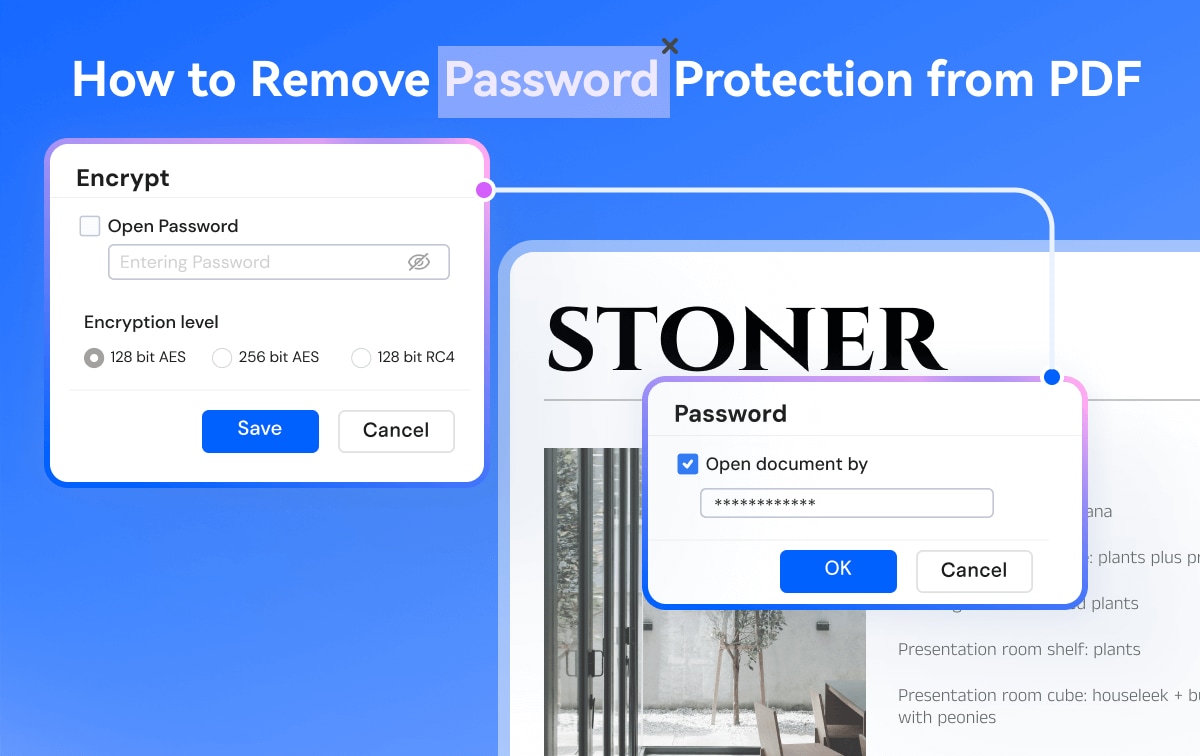
PDFelement can help with two common scenarios: removing an open password after you enter the correct password, and removing permission restrictions when you are authorized to change the document security settings. The exact interface may vary slightly between Windows and Mac versions, but the workflow is similar.
G2 Rating: 4.5/5 |100% Secure
Step 1. Open the password-protected PDF
Launch PDFelement and open the protected PDF. You can usually drag the file into the program window or use the Open File option.
If the PDF has an open password, enter it when prompted. This confirms that you have access to the document before changing its security settings.
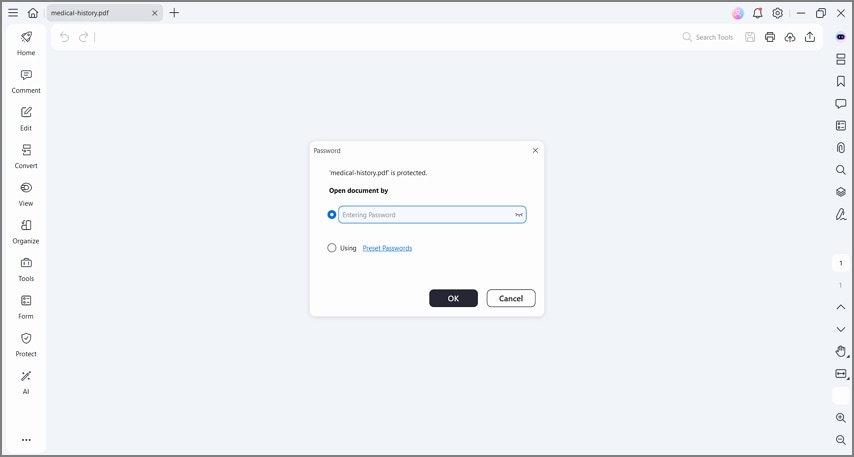
If the file opens without asking for a password but you cannot edit, print, or copy text, it is likely protected by permission restrictions instead of an open password.
Step 2. Go to the password settings
After the PDF is open, go to the protection or security area of the program. In PDFelement, this is typically under Protect > Set Password.
This panel is where you manage document open passwords and permission passwords. Review the settings carefully before changing them, especially if the PDF is part of a business workflow where certain restrictions were added intentionally.
Step 3. Remove the open password or permission restrictions
To remove an open password, uncheck or disable the option that requires a password to open the PDF.
To remove restrictions on editing, copying, or printing, disable the permission password or clear the related permission settings. Then save the file.
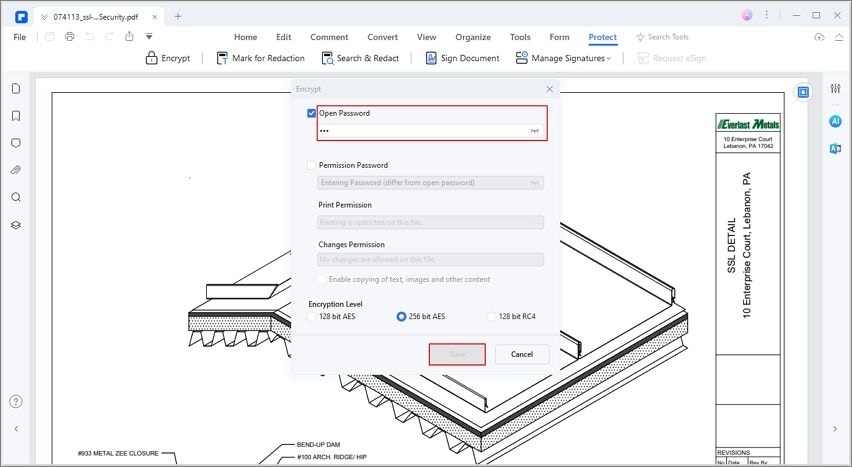
Save the PDF as a new copy if you want to keep the original protected version. A safe file name might be something like contract-unlocked-for-editing.pdf or form-no-password.pdf. This makes it easier to track which copy has protection and which copy does not.
Step 4. Continue editing or managing the PDF
Once the password is removed, you can handle the document like a normal PDF. This is where a full PDF editor becomes useful. You may want to correct a typo, replace outdated pages, add comments for review, convert the PDF to Word or Excel, compress a large file, run OCR on scanned pages, or add a signature field.
For business documents, keeping these tasks in one editor reduces file clutter. You do not have to upload the file to several services or create multiple exported copies just to make small changes after removing protection.
G2 Rating: 4.5/5 |100% Secure
Other Desktop Ways to Remove Password Protection from PDF
Desktop tools are usually better than online tools for sensitive PDFs because the file stays on your device. They also tend to preserve formatting better than browser or Google Docs workarounds.
Remove PDF password with Adobe Acrobat Pro
Adobe Acrobat Pro can remove PDF security if you have the required password and permission to change the document.
Open the PDF in Acrobat Pro. If prompted, enter the password. Then go to File > Properties and open the Security tab. In the Security Method menu, choose No Security. Confirm the change and save the file.
This is one of the most direct methods if your organization already uses Acrobat. The main drawback is that Acrobat Pro is a paid product, and the free Adobe Acrobat Reader is not designed for advanced security changes.
Free Built-In Methods for Windows, Mac, and Browser
Free methods are useful when you already know the password and only need a non-password copy for convenience. They are not always ideal for official records because some methods recreate the PDF instead of preserving the original file structure.
Remove password from PDF by printing in Google Chrome
Chrome can open many PDFs and print them to a new PDF file. This method works only if you can open the document and printing is not blocked.
Open Google Chrome and drag the PDF into a browser tab. Enter the open password if prompted. Click the Print icon or press Ctrl + P on Windows, or Command + P on Mac. Choose Save as PDF as the destination, then save the new file.
The new PDF usually will not carry the original open password. However, this method may flatten interactive elements, change form behavior, remove some metadata, or affect bookmarks and tags. Use it for simple documents, not for complex forms or compliance-sensitive files.
Remove password from PDF on Mac with Preview
Preview is the built-in PDF viewer on macOS, and it can help in simple password removal cases.
Open the PDF in Preview and enter the password. Then use File > Export or File > Export as PDF, depending on your macOS version. Save a new copy of the document. If the export options include permissions settings, adjust them according to your needs before saving.
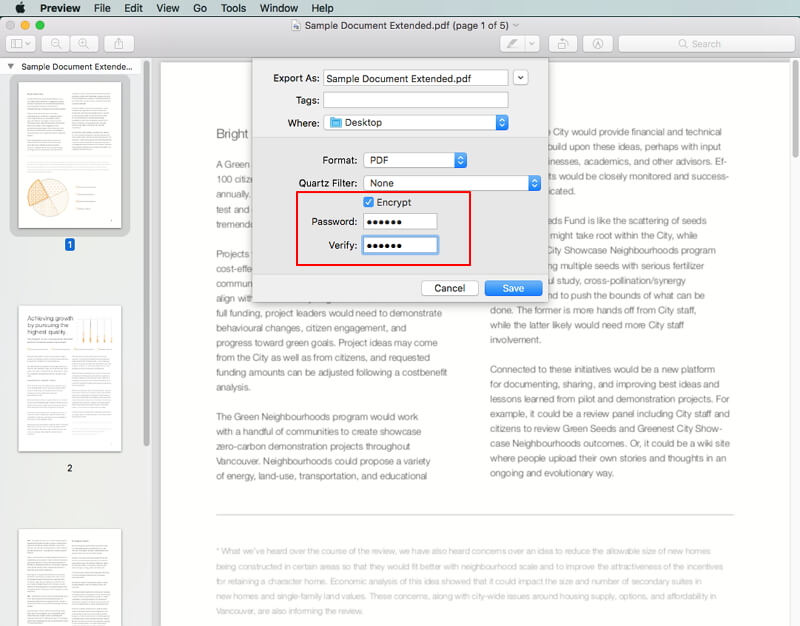
Preview is convenient for personal PDFs, receipts, and simple documents. For files with complicated layouts, forms, digital signatures, or strict permission settings, a professional PDF editor may produce a cleaner result.
Use Google Docs only for simple text-based PDFs
Google Docs is sometimes mentioned as a free way to remove password protection from PDF files, but it is not a true PDF security editor. It converts the PDF into a Google document, then lets you download it again as a PDF.
To try it, upload the PDF to Google Drive. Open it with Google Docs, then choose File > Download > PDF Document (.pdf).
This can work for simple text documents, but layout changes are common. Headers, columns, tables, images, page breaks, fonts, and scanned pages may not survive the conversion cleanly. Avoid this method for contracts, designed brochures, invoices, or forms where formatting matters.
How to Remove Password from PDF Online
Online tools are fast because you do not need to install software. They are best for low-risk files, such as public forms, sample documents, or PDFs that do not contain private information. For sensitive documents, a desktop method is safer.
Use HiPDF to remove a PDF password online
HiPDF provides an online PDF password remover that can remove password protection after you upload the file and enter the correct password.
Go to the HiPDF PDF unlock tool, upload your protected PDF, and enter the password when prompted. Click the unlock option, then download the new PDF after processing.
For non-confidential files, this is a convenient option. For sensitive files, review your organization’s data policy before uploading documents to any web-based service. This applies to all online PDF tools, not only one provider.
Safety checklist before using an online PDF unlocker
Use an online tool only when the file is appropriate for upload. Avoid uploading PDFs that contain:
- Passport scans, IDs, bank statements, tax documents, medical records, payroll files, or legal evidence.
- Confidential business contracts, unreleased financial data, customer lists, or internal strategy documents.
- Documents protected by an NDA, compliance rule, client policy, or employer restriction.
If the PDF contains private or regulated information, use an offline desktop tool instead. You can also check general privacy guidance from sources such as the Federal Trade Commission when deciding how to handle personal documents online.
Troubleshooting: Why You Cannot Remove the PDF Password
If you followed the steps but still cannot remove the password, the problem is usually one of four things: the wrong password, the wrong method, restricted printing, or a damaged file.
You are trying to remove an open password without knowing it
If a PDF is encrypted with an open password, most legitimate PDF editors require that password before the file can be opened or modified. This is expected behavior. Without the correct password, the document contents remain encrypted.
If the PDF belongs to you, try checking your password manager, email thread, file notes, or the system that generated the PDF. Some organizations use predictable password rules for statements or payslips, such as part of a birth date or customer ID. If the file came from a company, ask the sender for the password or an unlocked copy.
The PDF allows viewing but blocks printing
Chrome’s print-to-PDF method will not help if printing is disabled. In that case, open the file in a proper PDF editor and remove the permission restrictions if you are authorized to do so.
If you are not authorized, request a version with printing enabled. This is common with contracts, eBooks, training manuals, and internal policy documents.
The file is signed, certified, or protected by a document workflow
Some PDFs are digitally signed or certified. Removing security or printing to a new PDF may invalidate signatures, remove certification status, or change the evidentiary value of the document.
For signed agreements, legal records, or official forms, do not casually remove protection. Make a copy first, and check with the document owner or legal team if the signature status matters.
The PDF is damaged or partially downloaded
A corrupted PDF may ask for a password incorrectly, fail to save after security changes, or produce an empty output file. Download the file again, ask the sender to resend it, or try opening it in another PDF reader to confirm whether the problem is the file or the tool.
The method recreated the PDF and changed the formatting
Print-to-PDF and Google Docs methods can create a visually similar PDF rather than preserving the original document structure. If bookmarks, fillable fields, layers, tags, comments, or layout are important, use PDFelement or Acrobat Pro instead of a conversion workaround.
People Also Ask
-
How do I remove password from PDF if I know the password?
Open the PDF in a PDF editor such as PDFelement or Adobe Acrobat Pro, enter the password, go to the document security settings, disable the open password or permission password, and save the file. For simple files, you can also open the PDF in Chrome and print it to a new PDF if printing is allowed. -
How do I remove password protection from PDF without Adobe?
Use PDFelement, Mac Preview, Chrome’s Save as PDF option, or an online tool such as HiPDF. PDFelement is the better option if you also need to edit, OCR, annotate, compress, combine, or sign the document after removing protection. -
Can I remove a PDF password without knowing the password?
If the PDF has an open password and is properly encrypted, you usually cannot remove it with a normal PDF editor unless you know the password. Some recovery tools may help in legitimate cases where you own the file and remember part of the password, but success is not guaranteed. -
Why does Chrome not remove the password from my PDF?
Chrome’s method depends on printing the opened PDF to a new PDF. It will fail or be unavailable if you do not know the open password, if printing is disabled, or if the file uses security settings Chrome cannot bypass. It may also change forms, bookmarks, or metadata. -
How do I remove password from PDF file on Mac?
Open the PDF in Preview and enter the password. Then choose File > Export or Export as PDF and save a new copy. For advanced security settings or editing after removal, use a PDF editor such as PDFelement for Mac. -
Is it safe to use an online PDF password remover?
It depends on the file. Online tools are convenient for non-sensitive PDFs, but you should avoid uploading documents with personal, financial, legal, medical, or confidential business information. Use offline software for private files. -
What is the difference between removing a password and unlocking a PDF?
“Removing a password” usually means saving the PDF so it no longer asks for a password or no longer restricts editing and printing. “Unlocking” can mean either entering the correct password to access the file temporarily or permanently removing restrictions. Always check what the tool actually does before relying on the output file. -
Will removing PDF password protection damage the file?
A proper PDF editor should preserve the file content while changing security settings. Workarounds such as print-to-PDF or Google Docs can alter formatting, remove interactive fields, flatten comments, or lose bookmarks. Save a backup before making changes.