Table of Contents
A password-protected PDF can stop you at two different points: before you can view the file, or after it opens but still blocks editing, printing, copying, or page extraction. The fix depends on which kind of protection is being used. If you know the correct password and have permission to access the document, opening it is usually simple. If you do not know the password, your options are much more limited, especially for properly encrypted PDFs.
This guide explains how to open password protected PDF files in common apps, how to remove password protection from files you’re authorized to manage, when an online tool makes sense, and what to do when the password has been lost.


 G2 Rating: 4.5/5 |
 100% Secure
Quick answer: how to open a password-protected PDF
- If you know the password: Open the PDF in a reader such as PDFelement, Adobe Acrobat Reader, Google Chrome, or Microsoft Edge. Enter the correct password when prompted to access the document.
- If you don't know the password: Check the original email or download page, contact the sender, or look for an unprotected backup. You generally cannot open an encrypted PDF without the correct password.
- After opening the PDF: You can remove its open password (if you have the necessary permissions), edit its content, convert it to other formats, perform OCR, or organize its pages.
What are the Two Types of PDF Password Protection
PDF passwords are used for contracts, invoices, tax documents, HR files, academic records, bank statements, legal paperwork, and other files that should not be freely opened or changed. Before choosing a method, it helps to identify the type of protection on the file.
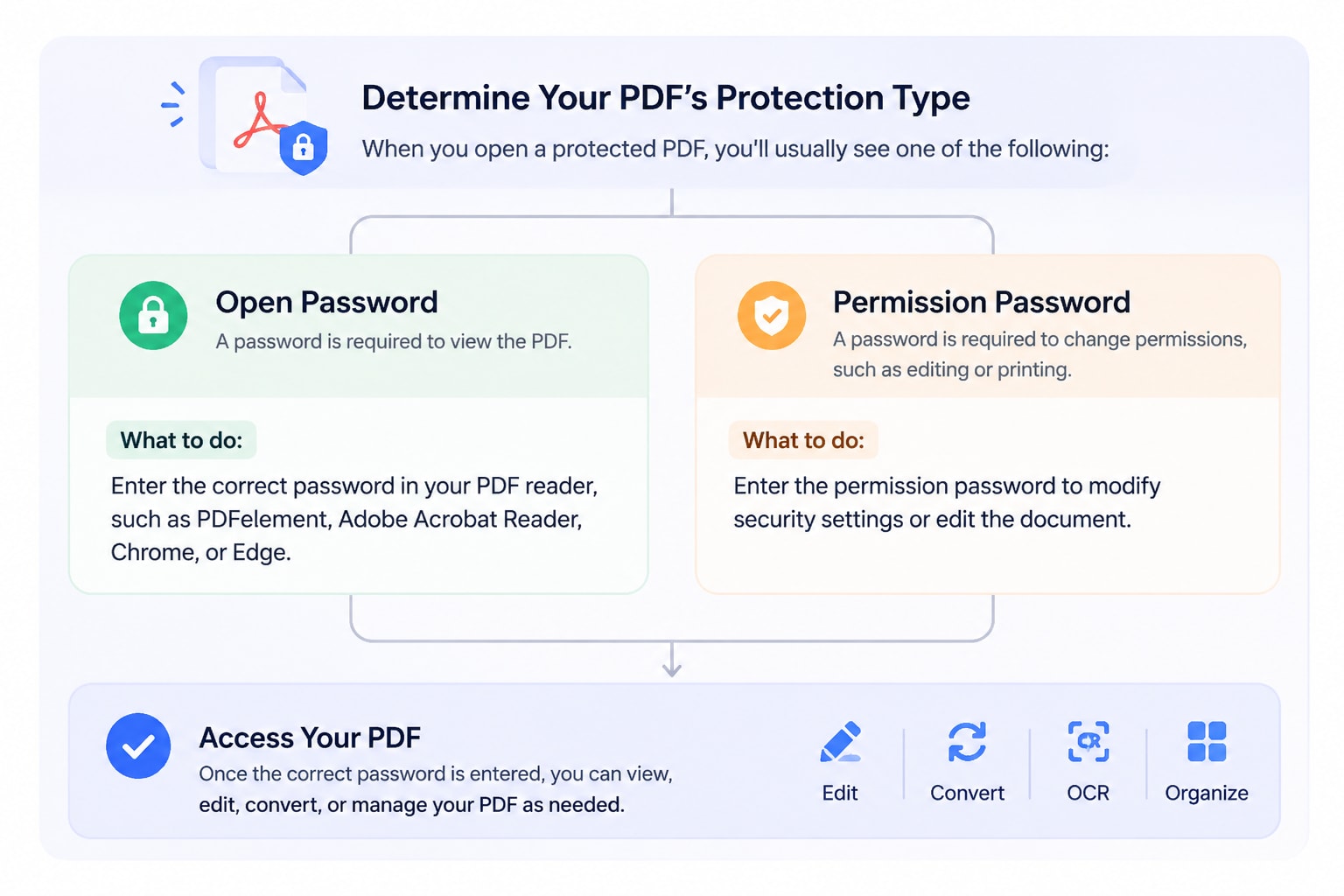
Open password vs permission password
There are two common PDF security settings:
An open password blocks the document from opening at all. When you double-click the PDF, the viewer asks for a password before showing any page. If you do not enter the correct password, the content stays encrypted and unreadable.
A permission password lets the PDF open, but restricts what you can do with it. For example, you may be able to read the file but not print it, copy text, edit pages, fill forms, or extract images. Some PDF viewers show these restrictions under document properties or security settings.
This distinction matters. If your PDF asks for a password immediately, you need the correct open password. If it opens but features are disabled, you may be dealing with permission restrictions.
How to Open Password Protected PDF Files When You Know the Password
If you have the correct password, the fastest method is to open the file in a PDF editor or viewer, enter the password, and then decide whether you want to keep or remove the security settings.
Open a password protected PDF with PDFelement
PDFelement is useful when you need more than basic viewing. After opening the secured file, you can edit text, annotate, convert the PDF, run OCR on scanned pages, organize pages, sign documents, compress the file, or remove password protection if you’re authorized to do so.
G2 Rating: 4.5/5 |100% Secure
To open the file:
- Launch PDFelement.
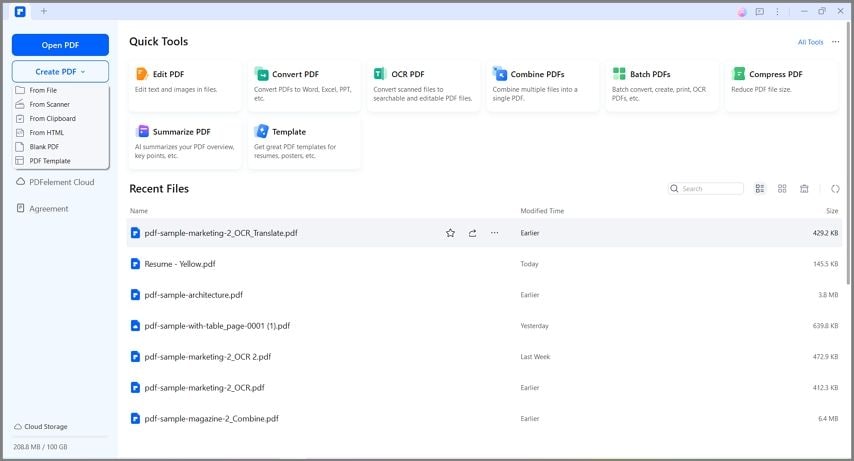
- Click Open PDF or the + button on the home screen.
- Select the password-protected PDF from your computer. You can also drag the file into the PDFelement window.
- If the PDF has an open password, enter the correct password when prompted.
- Once the file opens, review the document or continue with editing, conversion, signing, or other PDF tasks.
If the file only has permission restrictions, it may open without asking for a password, but certain actions can still be blocked depending on the document’s settings.
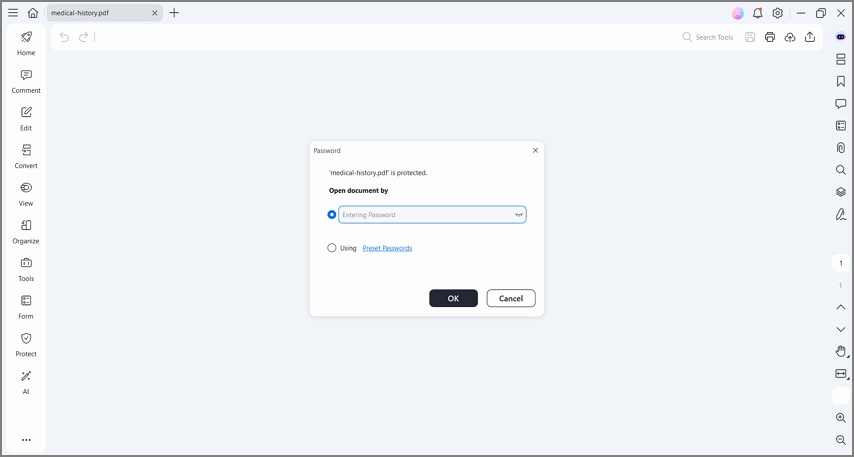
PDFelement is a practical choice when a password-protected file is part of a larger workflow. For example, you may receive a locked contract, open it with the password from the sender, add comments, convert it to Word for internal review, or apply OCR if the file is a scanned copy. A basic PDF viewer can show the file, but it will not help much once you need to work with the content.
G2 Rating: 4.5/5 |100% Secure
Open a PDF with password in Adobe Acrobat Reader
Adobe Acrobat Reader can open most password-protected PDFs if you know the password. It is a good option for simple viewing, printing when allowed, and filling forms.
To open the PDF:
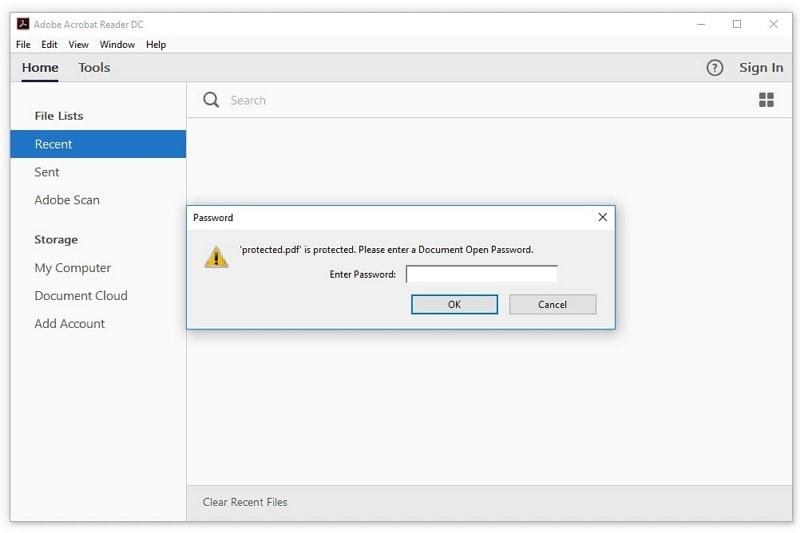
- Open Adobe Acrobat Reader.
- Choose File > Open.
- Select the secured PDF.
- Enter the password in the prompt.
- Click OK to view the document.
If you need to remove the password or change security settings, you usually need Adobe Acrobat Pro rather than the free Reader. Adobe’s own help pages explain PDF security settings in more detail: Adobe Acrobat PDF security overview.
Open a locked PDF in Chrome or Microsoft Edge
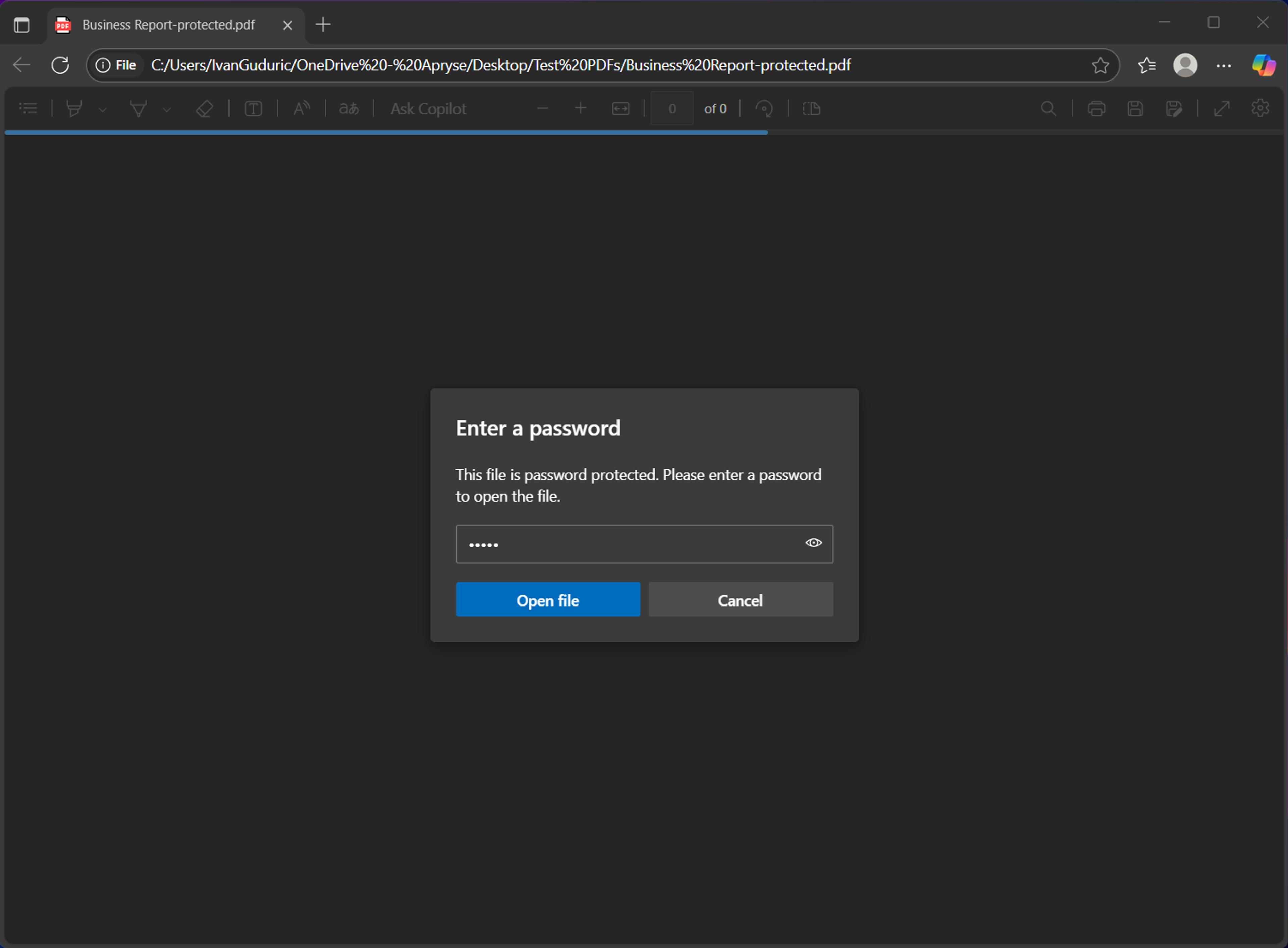
Modern browsers such as Google Chrome and Microsoft Edge include built-in PDF viewers. They can open many password-protected PDFs as long as you know the open password.
To use Chrome or Edge:
- Open a new browser tab.
- Drag the PDF file into the tab.
- Enter the password if the browser asks for it.
- Read, print, or download the file depending on what the PDF permissions allow.
This method is convenient when you are on a computer without PDF software installed. It is not the best choice if you need accurate form handling, advanced annotations, redaction, OCR, page organization, or reliable editing.
Open a password protected PDF on Mac Preview
Mac users can use Preview for basic password-protected PDFs.
- Double-click the PDF, or right-click it and choose Open With > Preview.
- Enter the password when prompted.
- View or print the document if the file permissions allow it.
Preview can remember a password through macOS Keychain if you choose to save it. That can be convenient for personal files, but avoid saving passwords for sensitive work documents on shared computers.
You can choose the most suitable method for opening a password-protected PDF based on your needs and the tools available. The table below compares the main options and their advantages to help you decide.
| Opening Method | Best For | Main Advantage |
| PDFelement | When you need to edit the PDF or perform other operationsafter opening it | Supports a wider range of PDF operations |
| Adobe Acrobat Reader | When you only need to view PDFs | Free PDF viewing,some basic PDF processing features |
| Chrome / Edge | When you don't want to install additional software | Opens PDFs directly in the browser |
| Mac Preview | Mac users | Built-in app, no additional installation required |
How to Open a Password-Protected PDF on Your Phone
You can open password-protected PDF files without needing a computer. Whether you are using an iPhone or an Android phone, as long as you have the correct password, you can access these password protected PDF files using the apps built into your phone or the PDF readers mentioned above.
Open a Protected PDF on iPhone
If you're using an iPhone, you can open a password-protected PDF directly with the built-in Files app. There's no need to install an additional PDF reader if you only want to view the document.
-
Open the Files app on your iPhone.
-
Find the password-protected PDF in your Downloads folder, iCloud Drive, or another saved location.
-
Tap the PDF file to open it.
-
When prompted, enter the correct PDF password.
-
Tap Go or the confirmation option to access the document.
Once the password is verified, you can view the PDF on your iPhone. You can also use the Share menu to open the file in another compatible PDF app if you need additional features.
Open a Protected PDF on Android
On Android, the built-in PDF viewer may vary depending on your phone's brand. For example, Samsung users can use the PDF viewer in the My Files app to open PDF documents. Alternatively, you can use a dedicated PDF reader such as PDFelement or Adobe Acrobat Reader mentioned above to open password-protected PDFs. Simply locate the PDF file, open it with your preferred app, and enter the correct password when prompted.
What If You Don't Know the Password to a Protected PDF?
You generally cannot open a password-protected PDF without the correct password if it uses an open password.PDF open passwords are designed to prevent unauthorized access, and there is no guaranteed way to bypass this protection. However, you can try the following methods to find the correct password:
-
Check the original message or download page. If someone sent you the PDF or you downloaded it from a website, check the accompanying email, message, download page, or instructions. The password may be provided separately.
-
Contact the sender or document owner. If you received the PDF from someone else, ask them for the password or a new copy with the appropriate access permissions.
-
Check your saved passwords and notes. If you previously accessed the document, look through your password manager, notes, or saved messages to see whether you stored the password.
-
Look for an unprotected backup. Check your cloud storage, email attachments, or local folders for an earlier copy of the PDF that doesn't require a password.
What Can You Do After Opening a Password-Protected PDF?
Opening a password-protected PDF gives you access to its contents, but you may want to do more than just read it.Here's what you can do with a PDF after opening it.
Remove Password Protection from the PDF
If you don't want to enter a password every time you open a PDF, you can remove its open password, provided you know the password and have the necessary permissions.
With PDFelement, you can remove PDF password protection.A typical workflow is:
- Open the secured PDF in PDFelement.
- Enter the password if prompted.
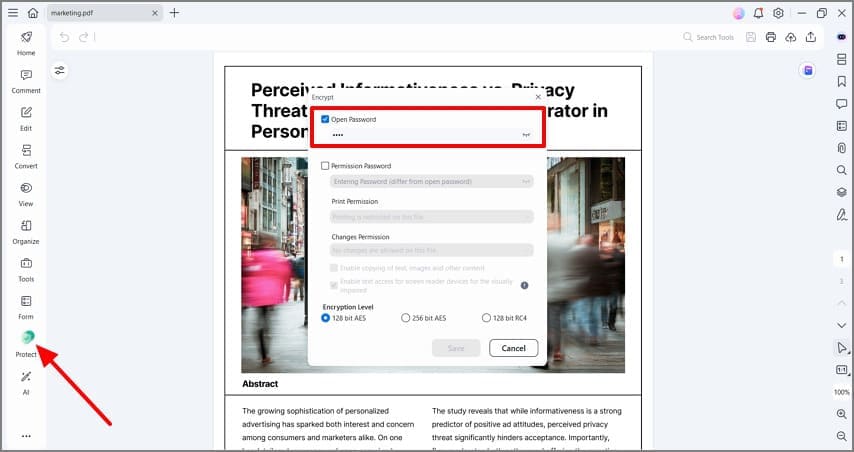
- Go to Protect and choose the encryption or password settings option.
- Clear the open password or permission restrictions you are authorized to remove.
- Save the PDF as a new file or overwrite the original if that is your intended workflow.
G2 Rating: 4.5/5 |100% Secure
Edit, Convert, OCR, and Manage the PDFs
Opening the file is often only the first step. Many users search for how to open a locked PDF because they need to do something practical afterward: correct a typo, copy a clause, export tables, add a signature, combine pages, or send a smaller version by email.
PDFelement fits this follow-up stage well. Once you open an authorized PDF, you can edit text and images directly, convert the file to Word or Excel when you need a working document, use OCR on scanned PDFs so text becomes searchable, add comments during review, fill and sign forms, compress large files, or organize pages before sending the final copy. That matters because password-protected PDFs often arrive as formal documents, and formal documents usually need careful handling after access is restored.
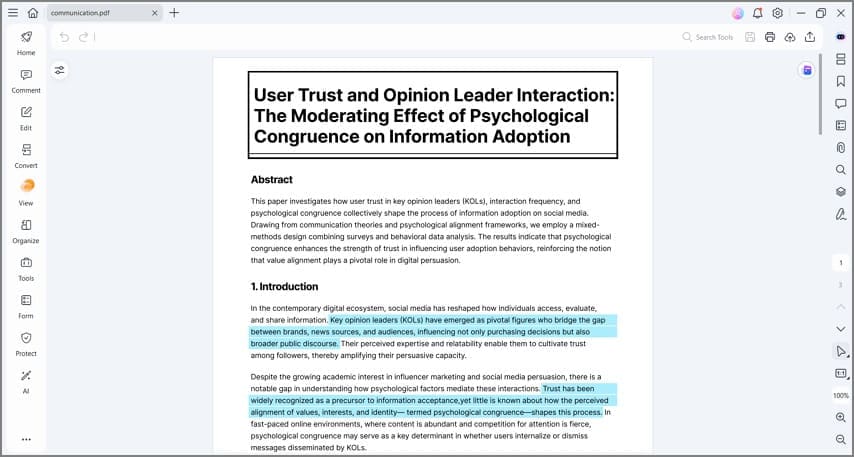
A practical example: suppose a vendor sends a password-protected invoice packet. After entering the password, you may need to extract one page for approval, add a note for the finance team, convert a table to Excel, and archive the final PDF. Doing all of that in one PDF editor is faster than opening the file in a browser, downloading it again, and switching between several tools.
G2 Rating: 4.5/5 |100% Secure
People Also Ask
-
Why Is My PDF Password Not Working?
If your PDF password isn't working, first make sure you're entering the correct password. Check for common mistakes such as incorrect capitalization, extra spaces, or confusing similar characters like "0" and "O" or "1" and "l". Also, make sure you're using the PDF's open password rather than a permission password or the password for the website where you downloaded the file. -
Are PDF Passwords Case-Sensitive?
Yes. PDF open passwords are case-sensitive, which means uppercase and lowercase letters are treated as different characters. For example,PDF2026andpdf2026are considered two different passwords. When entering your password, check that Caps Lock is off and that you're using the correct capitalization, numbers, and special characters. -
Why does my PDF open but still block printing or editing?
That usually means the PDF has permission restrictions. The document is viewable, but the owner has limited actions such as printing, copying, editing, commenting, or page extraction. If you have authorization, use a PDF editor such as PDFelement or Adobe Acrobat Pro to change the security settings after opening the file. -
Is it safe to upload a locked PDF to an online unlocker?
It depends on the document. For non-sensitive personal files, an online tool may be convenient. For contracts, financial records, IDs, medical documents, legal files, or work documents, use a local desktop tool instead. Uploading a confidential PDF to an online service may violate privacy rules or company policy. -
Can Google Drive open a password protected PDF?
Google Drive can store password-protected PDFs, and its preview may ask for a password for some files. However, support can vary depending on the PDF’s encryption and settings. Google Docs conversion may also change formatting, remove layout details, or fail with some secured files. For layout-sensitive PDFs, a dedicated PDF editor is more reliable. -
Can I remove the password permanently?
Yes, if you know the correct password and have permission to modify the PDF. Open the document in a PDF editor, remove the open password or permission restrictions, and save a new copy. Keep the original protected version until you confirm the new PDF opens correctly and still contains the expected pages, formatting, comments, and form fields.