
Table of Contents
Converting a PowerPoint presentation to PDF should be simple: export the file, send it, and let everyone view the slides exactly as designed. The problem is that fonts do not always survive the trip. A title may switch to a default typeface, spacing may shift, bold text may disappear, or carefully aligned content may no longer fit the slide.
The safest way to convert PPT to PDF without changing font is to prepare the PowerPoint file first, then use a conversion method that preserves embedded fonts, slide layout, images, and vector elements. This guide covers the most reliable options, including PowerPoint’s built-in export tool, PDFelement, online conversion, and dedicated PDF converter workflows. It also explains what to check if you need to convert PPT to PDF without losing quality.


 G2 Rating: 4.5/5 |
 100% Secure
Why Fonts Change When You Convert PPT to PDF
Font changes usually happen because PowerPoint and the PDF converter cannot access the exact font data used in the original file. The PDF then substitutes another font that looks “close enough,” but even a small substitution can change line breaks, spacing, and visual balance.
The font is missing on the computer
If a presentation uses a font that is installed on the creator’s computer but not on yours, PowerPoint may silently replace it when you open or export the file. This is common with brand fonts, downloaded design fonts, and fonts used by agencies or designers.
For example, a presentation designed with a custom corporate font may look correct on the designer’s MacBook but change to Arial or Calibri on a Windows laptop. If you export the file from the Windows laptop, the PDF may preserve the substituted font, not the original one.
The font was not embedded in the PPT file
PowerPoint can embed fonts inside a presentation, but this setting is not always enabled. If the font is not embedded, the file depends on whatever fonts are available on the device used for conversion.
Embedding fonts is especially useful when you need to send a PPTX to another person for export or editing. Microsoft provides official guidance on font embedding in PowerPoint through its font embedding support documentation.
The font license does not allow embedding
Some fonts are restricted by their creators. A font may allow viewing but not editing, or it may block embedding completely. If the font cannot be embedded, PowerPoint or the PDF converter may substitute it during export.
This is not a software bug. It is usually a licensing rule built into the font file. If your PDF must match a brand design exactly, check whether the brand font is licensed for embedding and distribution.
Only part of the font family is installed
A font family may include separate files for Regular, Bold, Italic, and Bold Italic. If only the Regular version is installed, PowerPoint might simulate bold or italic styling on screen. During conversion, that simulated styling can flatten, disappear, or change.
This is one reason a PDF may show the right font name but still look wrong.
Mac and Windows handle fonts differently
PowerPoint presentations often move between macOS and Windows. The same font name may refer to different font files, or one system may not include a font available on the other. Office theme fonts can also behave differently across devices.
If the presentation will be shared widely, test the exported PDF on another computer before sending it to clients, teachers, colleagues, or print vendors.
Best Practices Before Converting PPT to PDF Without Changing Font
A clean conversion starts before you click “Export.” These quick checks reduce the risk of font substitution, broken spacing, and low-quality output.
Use common or embeddable fonts
If you are still designing the presentation, choose fonts that are widely available or licensed for embedding. Fonts such as Arial, Aptos, Calibri, Times New Roman, Georgia, and Verdana are less likely to cause trouble across devices.
For polished reports or client decks, you can still use custom fonts, but confirm that they can be embedded. If the presentation uses a paid brand font, ask the brand owner or designer for the correct font package and usage rights.
Embed fonts in PowerPoint
Before converting, embed fonts in the PPTX file if possible.
On Windows, the typical path is:
- Open the presentation in PowerPoint.
- Select File.
- Choose Options.
- Go to Save.
- Under Preserve fidelity when sharing this presentation, check Embed fonts in the file.
- Choose one of these options:
- Embed only the characters used in the presentation if no one needs to edit the text later.
- Embed all characters if others may edit the file.
The second option creates a larger file but is safer for collaboration.
PowerPoint for Mac has had different font embedding support depending on version and font type. If you do not see the option, consider exporting from a Windows version of PowerPoint or using fonts that are already available on the conversion device.
Check bold, italic, symbols, and non-English text
Font problems often show up in details. Review:
- Bold and italic text
- Bullet symbols
- Currency symbols
- Mathematical characters
- Accented letters
- Chinese, Japanese, Korean, Arabic, or other non-Latin scripts
- Icons inserted as font glyphs
If these characters are essential, open the exported PDF and zoom in to inspect them. Do not rely only on the page thumbnails.
Keep slide size consistent
A slide size mismatch can make a PDF look like the font changed when the real problem is scaling. For example, converting a widescreen deck to a print-oriented page may shrink content and make text appear thinner.
In PowerPoint, check Design > Slide Size before export. Keep the original slide ratio unless you have a specific print requirement.
Save a backup copy
Before changing font settings or replacing fonts, save a duplicate PPTX. If the deck belongs to a client, team, or school project, this gives you a safe version to return to if a font replacement causes layout changes.
How to Convert PPT to PDF Without Changing Font
There is no single best method for every situation. PowerPoint’s built-in export is often enough for simple files. PDFelement is useful when you want a PDF-focused workflow after conversion, such as editing, organizing, compressing, annotating, or protecting the final PDF. Online tools are convenient for quick one-off conversions, but they require more caution with private files.
Method 1: Export directly from PowerPoint
PowerPoint’s own export feature is usually the first method to try because it understands PPTX structure, slide dimensions, animations, fonts, and theme elements better than many generic converters.
Steps
- Open the presentation in PowerPoint.
- Confirm that fonts are installed or embedded.
- Select File > Export.
- Choose Create PDF/XPS Document or Save as PDF, depending on your PowerPoint version.
- Click Options if available.
- Choose what you want to publish:
- Slides
- Handouts
- Notes pages
- Outline view
- Select Standard or high-quality output if available.
- Save the PDF.
- Open the PDF and compare several slides with the original PPT.
If the presentation is simple and fonts are properly embedded, this method is usually enough to convert PPT to PDF without changing font.
When this method works best
Use PowerPoint export when:
- You created the deck yourself.
- The fonts are installed on your computer.
- The file does not contain unusual font glyphs or complex design effects.
- You need a quick PDF for sharing or email.
If the PDF still changes fonts, move to the troubleshooting section below before trying another converter. A different converter cannot always fix a missing or restricted font.
Method 2: Use PDFelement to create PDF from PPT
PDFelement is a practical option when your task does not end at conversion. Many users convert a PPT to PDF because they need a shareable document that is easier to review, sign, compress, annotate, or protect. In that workflow, creating the PDF in PDFelement and then managing the finished file in the same tool can save extra steps.
For best font results, prepare the PowerPoint first: install missing fonts, embed fonts where possible, and confirm the slides look correct before conversion.
G2 Rating: 4.5/5 |100% Secure
Steps
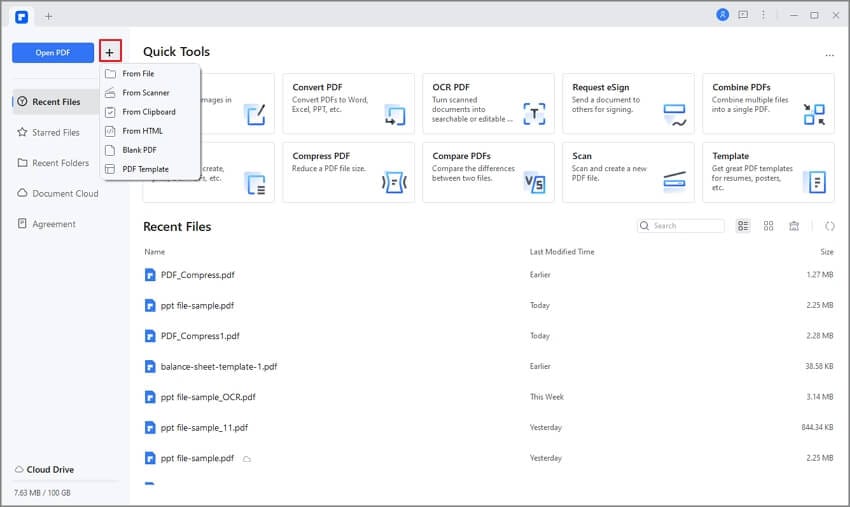
- Open PDFelement on your computer.
- Choose Create PDF from the main interface.
- Select the PowerPoint file you want to convert.
- Open the file in PDFelement and let the software create the PDF.
- Review the converted slides, especially title slides, dense text slides, and slides using custom fonts.
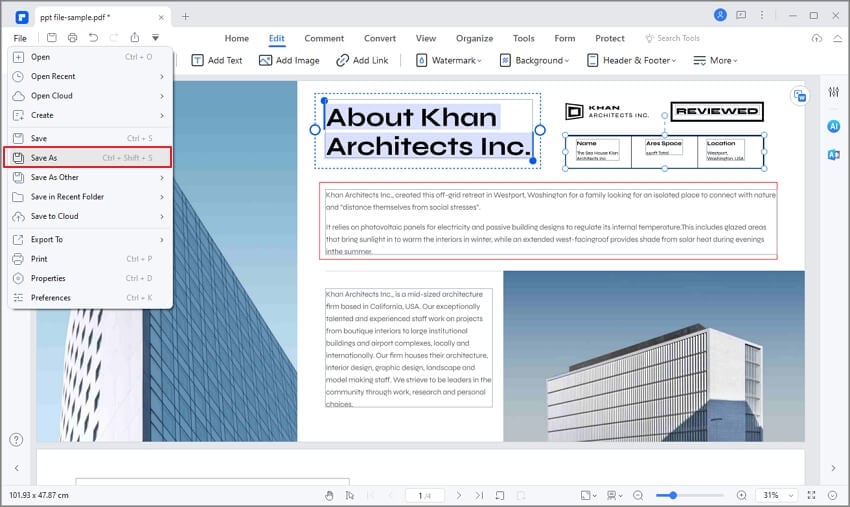
- Save the PDF to your preferred folder.
After the file is created, use File > Save As to store the final PDF.
PDFelement is also useful after the conversion. You can add comments for review, reorder pages, delete unnecessary slides, compress the PDF before emailing it, add password protection, or apply signatures if the presentation has become a formal proposal or report. If you notice a small typo after conversion, you may be able to edit the PDF text directly instead of returning to PowerPoint and exporting again.
When this method works best
Use PDFelement when:
- You want a PDF-centered workflow after conversion.
- You need to annotate, sign, compress, or protect the converted PDF.
- You are combining slides with other PDF documents.
- You want to check and manage the final document before distribution.
Method 3: Use an online PPT to PDF converter
An online converter is convenient when you are on a device without PowerPoint or desktop PDF software. It can be a good choice for non-confidential presentations, quick school slides, or simple business decks.
The key caution: do not upload sensitive files to an online converter unless you trust the service and understand its privacy terms. Presentations may contain internal numbers, client names, speaker notes, hidden slides, or metadata.
Steps
- Open an online PPT to PDF converter.
- Upload the PPT or PPTX file.
- Start the conversion.
- Download the PDF.
- Open the PDF locally and compare it with the PowerPoint file.
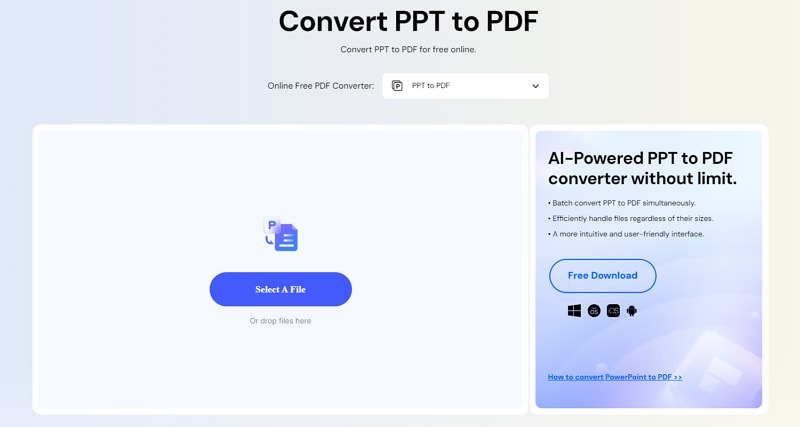
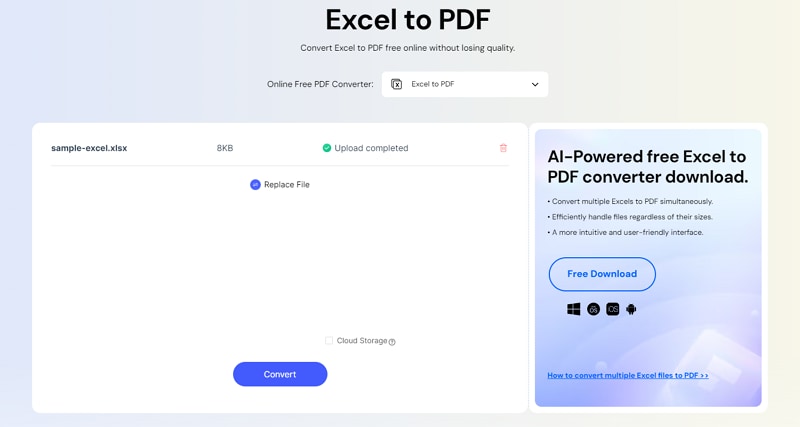
After conversion, download the PDF and check whether the original fonts, spacing, and slide layout are preserved.
When this method works best
Use an online converter when:
- The file is not confidential.
- You need a fast conversion on a shared or temporary device.
- The deck uses common fonts.
- You do not need advanced PDF editing afterward.
If the online result changes fonts, the converter may not have access to the required font. Try embedding the fonts in PowerPoint first, or use a desktop method on a computer where the fonts are installed.
Method 4: Use a dedicated PDF converter
A dedicated PDF converter can help when you regularly convert Office files to PDF and want batch processing or stable output settings. This is useful for teams that handle many presentations, reports, training decks, or archived materials.
Steps
- Open the PDF converter.
- Choose a File to PDF or similar option.
- Add the PPT file.
- Confirm the output folder.
- Start the conversion.
- Review the PDF for font and image quality.
This method is most useful if you convert files often. For a single file, PowerPoint export or PDFelement may be simpler.
How to Convert PPT to PDF Without Losing Quality
Font preservation is only part of the job. A converted PDF can keep the right font but still look poor if images are compressed too heavily, charts render badly, or slide dimensions change.
Choose standard or high-quality PDF output
If PowerPoint gives you a choice between Minimum size and Standard, choose Standard for better visual quality. Minimum size is useful for email attachments, but it may reduce image quality.
If you are sending the PDF to a printer, design team, or client, use the highest practical quality setting first. You can compress the PDF later after reviewing the output.
Avoid unnecessary image compression
PowerPoint files often include screenshots, product photos, charts, and background graphics. If these are compressed during export, the PDF may look blurry even though the original slide looked sharp.
Before exporting, check PowerPoint’s image compression settings. On Windows, you can review image quality under File > Options > Advanced > Image Size and Quality. You may see an option such as Do not compress images in file. This can increase file size, but it helps preserve clarity.
For general best practices on PDF viewing and print reliability, Adobe’s PDF resources are also useful, especially when preparing files for professional use: Adobe PDF overview.
Keep the original slide dimensions
If the PPT was designed in 16:9 widescreen, export it that way unless you need a print-specific format. Changing dimensions can scale objects and make text look slightly different.
For print handouts, consider creating a separate version of the presentation with print-friendly margins instead of forcing the original deck into a different page size during PDF conversion.
Review charts, icons, and transparent objects
Charts and icons may be vector-based, image-based, or font-based. Each type behaves differently during conversion.
After exporting, check:
- Chart labels and legends
- Thin lines in graphs
- Transparent overlays
- SVG icons
- SmartArt
- Gradients and shadows
- Text placed over images
Zoom to 100% and 200%. A PDF can look fine in a small preview but show defects when viewed full screen or printed.
Compress only after checking the PDF
If the PDF is too large, compress it after confirming that the first export looks correct. This gives you a clean master PDF and a smaller sharing copy.
PDFelement can help here because you can convert the deck, review it, and then compress the PDF for email or upload. This is safer than choosing the smallest export setting immediately and discovering too late that the images became blurry.
G2 Rating: 4.5/5 |100% Secure
Troubleshooting: What to Do If Fonts Still Change
If you followed the steps and the PDF still does not match the PowerPoint file, the issue is usually the font itself, the conversion device, or the export settings.
Replace unsupported fonts
If a font cannot be embedded, replace it with a similar font that can. In PowerPoint, use Home > Replace > Replace Fonts to swap the problematic font across the presentation.
After replacing fonts, review every slide. Different fonts have different widths, so text boxes may need small adjustments.
Install the full font family
If bold or italic formatting disappears, check whether the full family is installed. You may need separate files for:
- Regular
- Bold
- Italic
- Bold Italic
- Light
- Semibold
- Condensed
Install the missing variants, restart PowerPoint, reopen the file, and export again.
Ask the creator to export the PDF
If you received the PPT from someone else and do not have the fonts, ask the creator to export the PDF on the original computer. That device is more likely to have the correct font files and theme settings.
This is often the fastest fix for agency decks, branded templates, and conference presentations.
Convert text to shapes only as a last resort
PowerPoint can turn text into shapes through certain design workflows, and some users use screenshots or flattened images to lock the appearance. This can preserve the look, but it has serious downsides:
- Text is no longer searchable.
- File size may increase.
- Accessibility gets worse.
- Editing becomes difficult.
- Screen readers may not read the content properly.
Use this only for decorative text or final artwork, not for reports, contracts, educational content, or documents that need to remain accessible.
Check the PDF on another device
Sometimes the PDF is correct, but the viewer displays it poorly. Open the file in another PDF reader or browser. If it looks correct elsewhere, the issue may be the PDF viewer, not the conversion.
For important documents, test the PDF in at least one common reader before sending it widely.
Which PPT to PDF Method Should You Use?
The best method depends on the file, privacy level, and what you need to do after conversion.
| Method | Best for | Font preservation | Quality control | Main limitation |
|---|---|---|---|---|
| PowerPoint Export | Quick conversions from your own deck | High if fonts are installed or embedded | Good | Limited PDF editing after export |
| PDFelement | Converting and then editing, compressing, signing, or organizing the PDF | High when source fonts are available | Good | Requires desktop software |
| Online Converter | Fast conversion on a device without software | Varies by file and font | Varies | Not ideal for confidential files |
| Dedicated PDF Converter | Frequent or batch file conversion | Good with proper source files | Good | More than some users need for one file |
G2 Rating: 4.5/5 |100% Secure
Recommended workflow for most users
For a presentation you created yourself, start with this workflow:
- Open the PPT in PowerPoint.
- Embed fonts if the option is available.
- Export as a standard or high-quality PDF.
- Review the PDF carefully.
- If you need to edit, compress, annotate, sign, or organize the PDF, open it in PDFelement and finish the document there.
For a file created by someone else:
- Open the PPT and check for font warnings.
- Ask the creator for the required fonts or a PDF export.
- If you must convert it yourself, install missing fonts first.
- Use PowerPoint export or PDFelement.
- Compare the final PDF against the original slides.
This approach gives you the best chance to convert PPT to PDF without changing font while still keeping images, charts, and layout sharp.
People Also Ask
-
Why did my font change after converting PPT to PDF?
The most common reasons are missing fonts, fonts that were not embedded in the PowerPoint file, font licensing restrictions, or differences between Mac and Windows font handling. If the converter cannot access the original font, it substitutes another font.
-
How do I embed fonts in PowerPoint?
On Windows, go to File > Options > Save, then check Embed fonts in the file under Preserve fidelity when sharing this presentation. You can embed only the characters used or embed all characters for easier editing later.
-
Can I convert PPT to PDF without losing image quality?
Yes. Use standard or high-quality PDF output, avoid aggressive image compression, keep the original slide size, and review the PDF before compressing it. If the file is too large, compress a copy after confirming that the master PDF looks correct.
-
Is an online PPT to PDF converter safe?
Online converters are convenient, but they are not the best choice for confidential presentations. Avoid uploading files that contain private business data, financial details, client names, unpublished research, or internal strategy. For sensitive files, use PowerPoint export or desktop software.
-
Why are bold or italic styles missing in my PDF?
The full font family may not be installed. Some fonts use separate files for Regular, Bold, Italic, and Bold Italic. If PowerPoint simulated the style on screen, the PDF export may not preserve it correctly. Install the missing font variants and export again.
-
Can PDFelement edit the PDF after conversion?
Yes. After converting the PPT to PDF, PDFelement can help you edit PDF text and images, add comments, rearrange pages, compress the file, protect it with a password, or add signatures. It is especially useful when the PDF needs review or distribution after conversion.
![All the Methods to Convert a PDF to Black and White [2026]](https://images.wondershare.com/pdfelement/images2026/pdf-like-article-3.png)