
Table of Contents
- Plan the Questionnaire Before You Build It
- How to Create a Questionnaire in Word Using the Developer Tab
- How to Make a Questionnaire Template in Word 2010 and Newer Versions
- Design Tips for a Questionnaire People Can Actually Complete
- Convert or Rebuild the Questionnaire as a Fillable PDF with PDFelement
- Common Problems and Quick Fixes
Creating a questionnaire in Word is straightforward once you know where Microsoft hides the form tools. The key is the Developer tab, which lets you add fillable text boxes, checkboxes, drop-down lists, date selectors, and other interactive fields. With the right structure, you can turn a plain Word document into a questionnaire people can complete without accidentally breaking the layout.
This guide walks through how to create a questionnaire in Word from scratch, how to save it as a reusable template, what to watch for in Word 2010, and when it makes more sense to distribute the finished questionnaire as a fillable PDF.


 G2 Rating: 4.5/5 |
 100% Secure
Plan the Questionnaire Before You Build It
A good questionnaire is not just a list of questions. It needs a clear purpose, a logical order, and input areas that match the kind of answer you expect. If you build the fields first and think about the structure later, you often end up with awkward spacing, inconsistent answer options, or a form that is hard to complete on another computer.
Start by deciding what information you actually need. For example, a customer feedback questionnaire might include contact details, satisfaction ratings, product experience questions, and an optional comment box. An employee onboarding questionnaire may need legal names, dates, department choices, emergency contacts, and consent checkboxes. Those two documents should not use the same field types everywhere.
Use short-answer fields for names, email addresses, phone numbers, and comments. Use checkboxes when more than one option can apply. Use radio buttons or drop-down lists when the respondent should choose only one answer. Word does not offer every survey feature found in dedicated survey platforms, but it is very useful for internal forms, printable questionnaires, client intake forms, training feedback sheets, and simple data collection documents.
Before opening the Developer tab, sketch the questionnaire in sections. A simple structure often works best:
- Title and short instructions
- Respondent details, if needed
- Main questions grouped by topic
- Optional comments or supporting information
- Consent, signature, or submission instructions
If the questionnaire will be emailed around, consider whether recipients will complete it in Word or whether a PDF will be more stable. Word is easier to edit while drafting. PDF is usually better when you want consistent formatting, controlled fields, and a cleaner file for sharing.
How to Create a Questionnaire in Word Using the Developer Tab
Microsoft Word’s form-building tools are located under the Developer tab. Once you enable it, you can insert interactive fields directly into your document. The exact interface may vary slightly between Word versions, but the workflow is similar in Word 2010, Word 2013, Word 2016, Word 2019, Word 2021, and Microsoft 365.
Step 1: Enable the Developer Tab
The Developer tab is not always visible by default. To turn it on, open Word and go to File > Options > Customize Ribbon. On the right side, look for the list of main tabs and check Developer. Click OK.
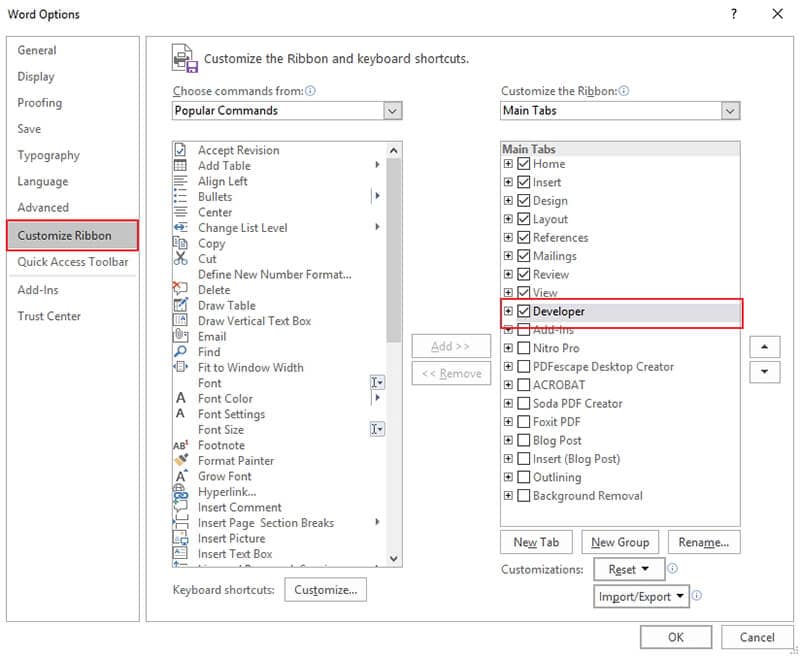
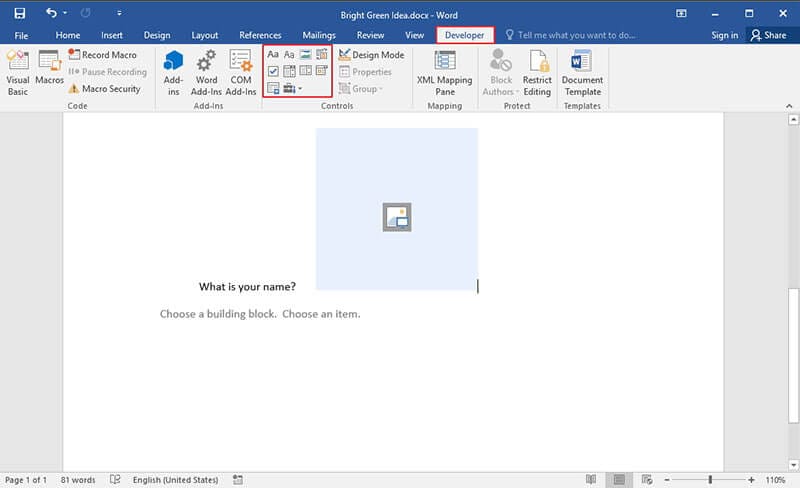
After that, you should see Developer in the main Word ribbon. This tab contains the controls you need to create a fillable questionnaire in Word, including plain text fields, rich text fields, checkboxes, combo boxes, drop-down lists, date pickers, and form protection settings.
If you are using Word for Mac, the path is slightly different. Go to Word > Preferences > Ribbon & Toolbar, then enable Developer under the ribbon customization options. Microsoft’s own guide to showing the Developer tab is also useful if your version looks different.
Step 2: Create the Basic Questionnaire Layout
Before inserting fields, type the fixed text of your questionnaire. This includes the title, section headings, instructions, and question labels.
For example:
Customer Feedback Questionnaire
Please complete the questions below and return the form by email.
Name:
Email:
Date of Visit:
How satisfied were you with the service?
Which service did you use?
Additional comments:
Keep labels short and clear. If you need long instructions, place them above the relevant section instead of cramming them into the question line. Word forms are easier to fill out when each question has predictable spacing and the answer area starts in the same general position.
Tables can help with alignment. A two-column table, with questions on the left and answer fields on the right, often works better than using tabs and spaces. If you do not want visible borders, create the table first, insert the form fields, and then set the table borders to No Border.
Step 3: Add Text Fields for Short Answers
Click where the respondent should type an answer. Go to Developer > Controls, then choose Plain Text Content Control.
Use plain text fields for answers such as names, job titles, email addresses, IDs, and short comments. If you want the respondent to use formatting such as bold, line breaks, or styled text, choose Rich Text Content Control instead. For most questionnaires, plain text is safer because it keeps responses visually consistent.
To customize a field, select it and click Properties in the Developer tab. You can add a title, set placeholder text, and choose whether the field can be deleted. For example, a text field for a respondent’s full name might have the title “Full Name” and placeholder text such as “Enter your full name.”
Small details help. Instead of leaving the default placeholder text, use something meaningful. “Click or tap here to enter text” works, but “Enter your email address” is clearer.
Step 4: Add Checkboxes for Multiple-Choice Questions
For questions where respondents can select one or more answers, use checkboxes. Place your cursor next to the first answer option, then go to Developer > Controls > Check Box Content Control.
For example:
Which topics are you interested in?
☐ Product updates
☐ Training sessions
☐ Customer support
☐ Pricing information
In modern Word versions, checkbox content controls are simple and clean. If you are working in Word 2010, they are still available, but some organizations use legacy checkbox fields for compatibility with older documents. If you plan to send the questionnaire to people using different Word versions, test the file before distributing it widely.
Step 5: Add a Drop-Down List for Single-Choice Answers
A drop-down list is useful when the answer should come from a controlled set of options. Common examples include department, location, gender, age range, rating, product type, or appointment category.
Click where the drop-down field should appear. Go to Developer > Controls > Drop-Down List Content Control. Then select the field and click Properties.
In the properties window, add a title and enter the list choices. Remove the default “Choose an item” option if it does not fit your form, or keep it as a placeholder so the respondent knows they need to make a selection. Use Add to enter each display name.
For a satisfaction rating, your list might include:
- Very satisfied
- Satisfied
- Neutral
- Dissatisfied
- Very dissatisfied
Drop-down lists are especially helpful when you need consistent answers. If one person types “Human Resources,” another types “HR,” and another types “People Team,” your results become harder to compare. A controlled list prevents that kind of cleanup work later.
Step 6: Add Date Pickers and Picture Controls if Needed
For dates, use the Date Picker Content Control rather than a plain text field. This reduces confusion between date formats such as MM/DD/YYYY and DD/MM/YYYY. After inserting the date picker, select it, click Properties, and choose the display format you prefer.
A Picture Content Control can be useful if your questionnaire asks respondents to upload or insert an image, such as a profile photo, product damage photo, ID scan, or site inspection image. It is not needed for most basic questionnaires, but it can be useful for forms connected to HR, education, maintenance, insurance, or field reports.
Do not add advanced controls just because they are available. Each field should make completion easier, not more complicated.
Step 7: Protect the Form So Only Fields Can Be Edited
Once the questionnaire is ready, protect it so respondents can fill in answers without accidentally deleting questions or changing the layout.
Go to Developer > Restrict Editing. In the panel that opens, look for editing restrictions and choose Filling in forms. Then click Yes, Start Enforcing Protection. Word may ask you to set a password. A password is optional, but it can help prevent casual edits to the form structure.
Be careful with password protection. If you lose the password, editing the original form can become inconvenient. Save an unlocked master copy before protecting the version you plan to send out.
After protection is enabled, test the questionnaire as if you were a respondent. Try typing in each text field, selecting every checkbox, choosing drop-down options, and tabbing through the form. If the tab order feels strange, adjust the field placement or layout.
Step 8: Save and Share the Questionnaire
Save the working file as a normal Word document first. Use a clear file name such as:
Customer_Feedback_Questionnaire_Master.docx
Then save a separate copy for distribution:
Customer_Feedback_Questionnaire_Fillable.docx
Keeping a master copy matters. Once a document is protected and shared, you may later need to revise the questions, update answer options, or change branding. An editable master file saves time and avoids rebuilding the questionnaire from scratch.
If people will print the form, preview it before sending. If they will complete it electronically, email it to yourself or open it on another device to check spacing, field behavior, and compatibility.
How to Make a Questionnaire Template in Word 2010 and Newer Versions
If you create similar questionnaires often, do not keep copying and editing old files. Save a clean version as a Word template instead. A template gives you a reusable starting point while keeping the original design intact.
Creating a Questionnaire Template in Word
After building your questionnaire, go to File > Save As. In the file type menu, choose Word Template (*.dotx). Give it a clear name, such as:
Client_Intake_Questionnaire_Template.dotx
The next time you need a new questionnaire, open the template and Word will create a fresh document based on it. This is safer than editing last month’s completed questionnaire and hoping you removed all old answers.
If your form includes macros, save it as a macro-enabled template using .dotm. Most simple questionnaires do not need macros.
Notes for Questionnaire Template Word 2010 Users
The phrase “questionnaire template Word 2010” often comes up because many offices still use older Microsoft Office installations or archived templates. Word 2010 supports content controls and the Developer tab, so you can create a fillable questionnaire using the same general method described above.
There are a few practical cautions:
Word 2010 may display some modern formatting differently, especially if the file was created in a newer Microsoft 365 version. To avoid layout changes, keep your design simple. Use standard fonts, avoid complex spacing tricks, and test the file on a Word 2010 machine if that is your target environment.
You may also see Legacy Tools in the Developer tab. These include older form fields such as legacy text fields, checkboxes, and drop-down fields. They can be useful when working with documents built in earlier Word versions, but for new forms, content controls are usually easier to manage.
If you download a questionnaire template from Microsoft Create or another template library, review it carefully before using it. Templates can save time, but they rarely match your exact wording, field requirements, privacy needs, or brand style. Microsoft’s template gallery can be a starting point, not a substitute for editing.
What to Include in a Reusable Template
A reusable questionnaire template should contain the structure that stays the same and placeholders for the parts that change. For example, a training feedback template might keep the rating scale, instructor evaluation questions, and comments section, while leaving the course name, date, and instructor name easy to update.
A practical template often includes:
- A short instruction block at the top
- Consistent section headings
- Reusable answer fields
- Placeholder text for variable information
- A final review or consent line, if needed
Avoid putting too much company-specific detail into a general template if different teams will use it. The more flexible the template, the less likely people are to break the layout while adapting it.
Design Tips for a Questionnaire People Can Actually Complete
A questionnaire can be technically fillable and still frustrating. The best Word forms are simple, predictable, and written in plain language. People should understand what you are asking without rereading the question three times.
Write Questions That Produce Usable Answers
Avoid combining two ideas in one question. “How satisfied were you with the price and customer service?” is difficult to answer because the respondent may feel differently about each part. Split it into two questions.
Use specific wording. “What did you think?” is too vague for most business forms. “What could we improve about the checkout process?” gives the respondent a clearer target.
For rating scales, define the scale. If you ask respondents to rate something from 1 to 5, explain which end is positive. For example: “1 = Very dissatisfied, 5 = Very satisfied.” Without that instruction, some responses may be unreliable.
Keep the Layout Calm
Word questionnaires often become messy because the creator tries to fit too much onto one page. Give each section enough breathing room. A slightly longer document is better than a cramped one where respondents cannot tell which field belongs to which question.
Use bold text for section headings, not for every question. Keep font sizes consistent. Align fields neatly. If you use tables for structure, remove borders only after the form is working; visible borders can help while you are editing.
For long text responses, give people enough space. A tiny one-line field under “Please describe your issue” signals that you do not really want detail. If you expect a paragraph, use a larger rich text area or leave visible space in the layout.
Think About Accessibility
If the questionnaire will be used by a wide audience, accessibility should not be an afterthought. Use readable fonts, strong color contrast, and clear labels. Do not rely on color alone to communicate meaning. For example, “required fields are red” is less accessible than marking required fields with text such as “Required.”
Microsoft provides guidance on making Word documents accessible, and it is worth checking if your form will be used in education, government, healthcare, hiring, or customer-facing workflows.
Accessibility also helps everyone else. A clean form with descriptive labels is easier to complete on a laptop, tablet, or smaller screen.
Convert or Rebuild the Questionnaire as a Fillable PDF with PDFelement
Word is a good place to draft a questionnaire because editing text, questions, and layout is fast. But Word is not always the best final format. If you send a Word questionnaire to ten people, you may get ten slightly different-looking files back, especially if recipients use different Word versions, fonts, screen sizes, or office suites.
PDF is often better for distribution. It preserves the layout, opens consistently across devices, and can still include fillable fields when created with the right tool. This is where PDFelement fits naturally into the workflow.
When PDF Is the Better Format
Use PDF when the questionnaire needs to look exactly the same for every recipient, when the form may be printed, or when you want to reduce accidental editing. PDF is also helpful for client-facing forms, registration forms, HR documents, consent forms, inspection checklists, and questionnaires that need signatures.
A Word form is easier to revise. A PDF form is usually easier to distribute and collect in a controlled way. Many teams draft in Word, finalize the language, and then convert the approved version to PDF.
How PDFelement Helps After You Create a Questionnaire in Word
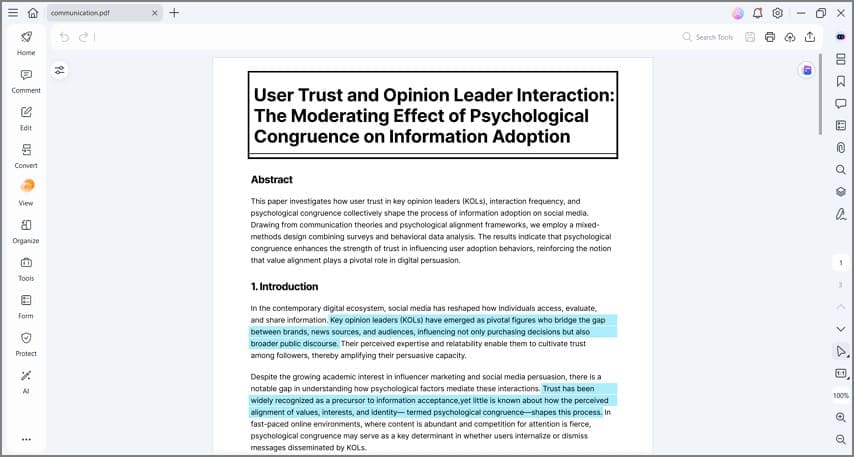
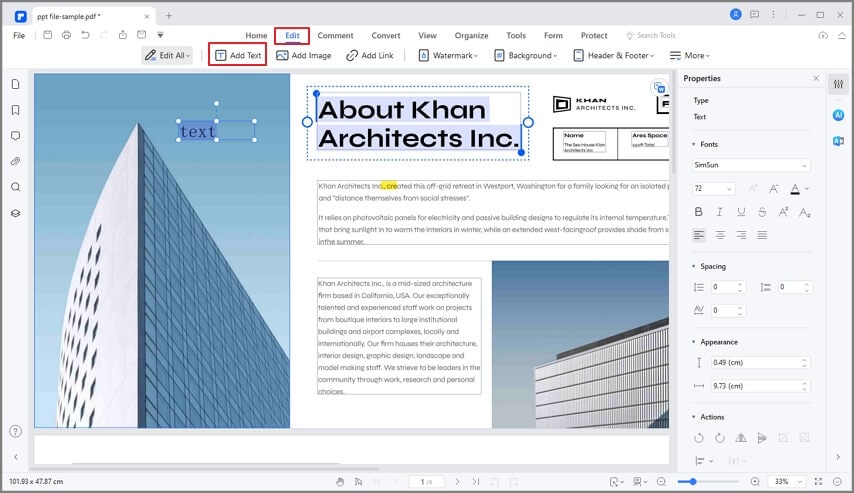
After creating the questionnaire in Word, you can convert it to PDF and use PDFelement to add or refine fillable form fields. This is useful if you want the visual design from Word but need PDF-style controls for completion and sharing.
G2 Rating: 4.5/5 |100% Secure
In PDFelement, you can open the PDF version of your questionnaire, add text fields, checkboxes, radio buttons, list boxes, and buttons, then adjust field properties. For example, you might turn a row of satisfaction options into radio buttons so the respondent selects only one answer. You can also edit text if you spot a typo after conversion, annotate the document during review, compress the file before sending, or organize pages if the questionnaire includes instructions and attachments.
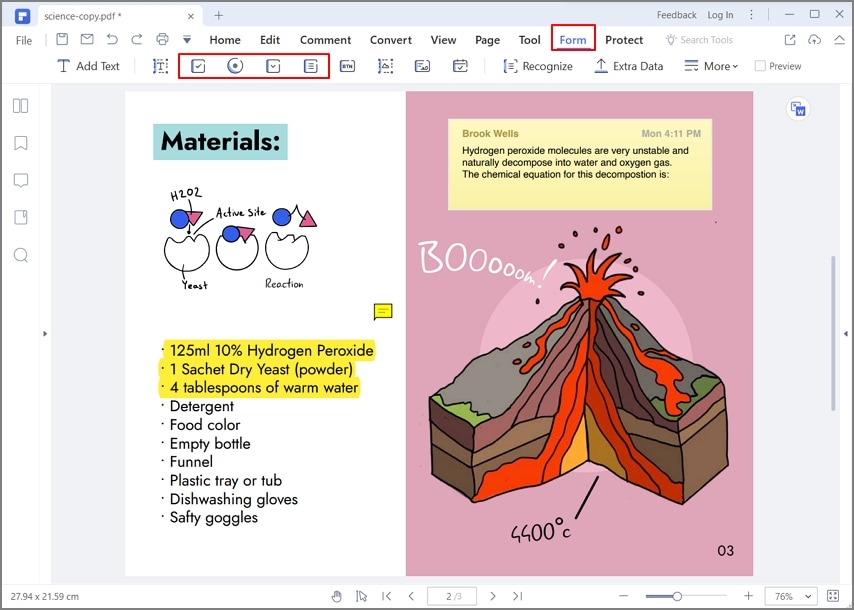
This does not mean you must abandon Word. A practical workflow is to keep the Word file as the editable master and use PDFelement to prepare the polished PDF version for distribution. That way, future edits remain easy, while the shared questionnaire stays consistent for respondents.
If you receive scanned questionnaire responses, PDFelement’s OCR feature can also help turn scanned text into searchable or editable content, depending on the document quality. That is especially useful when forms are printed, signed, scanned, and returned by email.
G2 Rating: 4.5/5 |100% Secure
Common Problems and Quick Fixes
Even a well-built Word questionnaire can behave unexpectedly. Most issues come from protection settings, field choice, or layout decisions rather than from Word itself.
The Developer Tab Is Missing
If the Developer tab is not visible, it probably has not been enabled. Go to File > Options > Customize Ribbon and check Developer. In managed company environments, some settings may be restricted by IT policy. If you cannot enable the tab, ask your administrator whether Developer tools are disabled.
Respondents Can Edit the Questions
This usually means the form is not protected. Use Developer > Restrict Editing, choose Filling in forms, and start enforcement. Save an unlocked master copy before doing this, because protected documents are less convenient to edit later.
The Form Fields Move Around
Fields may shift if the layout relies on spaces, tabs, or inconsistent paragraph formatting. Use tables for alignment, especially for question-and-answer rows. You can hide table borders after the layout is stable.
Checkboxes Do Not Work
Make sure you inserted a Check Box Content Control, not just a square symbol. A typed symbol may look like a checkbox, but users cannot click it as an interactive field. If the document uses legacy fields, it may also need protection enabled before the fields work correctly.
Drop-Down Options Are Missing or Wrong
Select the drop-down control, click Properties, and review the list items. If users need to select more than one option, a drop-down is the wrong field type; use checkboxes instead.
The Questionnaire Looks Different on Another Computer
This is common when the other computer lacks the fonts used in your document or opens the file in a different app. Use standard fonts such as Calibri, Arial, Aptos, or Times New Roman if compatibility matters. For a fixed final layout, convert the questionnaire to PDF.
People Also Ask
-
Can I create a fillable questionnaire in Word without the Developer tab?
You can type a questionnaire without the Developer tab, but you need the Developer tab for proper fillable fields such as text controls, checkboxes, date pickers, and drop-down lists. Without it, you are mostly limited to blank lines, tables, and typed symbols, which are less reliable for electronic completion. -
What is the best field type for open-ended answers?
Use a plain text content control for short answers and a rich text content control for longer answers that may need line breaks or formatting. If the answer should be a paragraph, give the field enough visible space so respondents know detail is welcome. -
How do I create a questionnaire template in Word 2010?
Enable the Developer tab, build the questionnaire with content controls or legacy form fields, then save it as a Word Template using File > Save As > Word Template (*.dotx). If you are using legacy fields, test the template after protecting it to make sure respondents can fill it in correctly. -
Should I use checkboxes or a drop-down list?
Use checkboxes when respondents can choose multiple answers. Use a drop-down list when they should choose only one answer from a defined set. For rating scales, radio buttons or clearly labeled drop-down options are usually better than open text fields. -
How do I stop people from changing the questionnaire text?
Use Word’s Restrict Editing feature. Choose the option that allows only filling in forms, then start enforcement. Keep a separate unprotected master copy so you can update the questionnaire later. -
Is Word or PDF better for questionnaires?
Word is better for drafting and internal editing. PDF is better for final distribution when you want consistent formatting and fewer accidental layout changes. A common workflow is to create the questionnaire in Word, approve the content, then convert it to a fillable PDF using a PDF editor such as PDFelement. -
Can I collect questionnaire responses automatically in Word?
Word is not ideal for automatic response collection. It works well for individual fillable documents, but if you need analytics, charts, or automatic spreadsheet collection, a survey platform such as Microsoft Forms or Google Forms may be better. Use Word when the document format matters; use a survey tool when response aggregation matters most.