

Table of Contents
- Why Adding Images to PDFs Can Be Tricky
- Add Image to PDF Without Changing the Layout
- Add Image to PDF with Adobe Acrobat
- Add Image to PDF Online
- Insert Picture Into PDF with Google Docs
- Add Picture to PDF with Preview on Mac
- Add an Image to PDF on Mobile
- Tips for Better Image Quality and Placement in PDF
- FAQs About Adding Images to PDFs
Adding an image to a PDF sounds simple until the image lands in the wrong place, covers text, looks blurry, or shifts the document layout. The best method depends on what you are adding: a company logo, product photo, scanned signature, chart, stamp, screenshot, or a full-page image. It also depends on whether you need a quick free fix or a cleaner edit for a document you plan to send, print, or archive.
This guide shows several practical ways to add image to PDF files on Windows, Mac, browser-based tools, and mobile devices. You will also learn when to use a dedicated PDF editor, when an online tool is enough, and when a workaround like Google Docs may create more formatting problems than it solves.


 G2 Rating: 4.5/5 |
 100% Secure
Why Adding Images to PDFs Can Be Tricky
A PDF is designed to preserve layout. That is why it is so useful for contracts, reports, invoices, manuals, forms, and portfolios. But that fixed layout is also the reason inserting a new image can be awkward in basic apps. Unlike a Word document, a PDF usually does not “reflow” around new content unless you are using a capable PDF editor.
For example, adding a small signature image to the bottom of a one-page form is easy. Adding a product image inside an existing catalog page requires more control: you may need to resize the image, align it with text, crop it, adjust opacity, or move other objects out of the way. If the PDF was scanned, you may also need OCR before editing nearby text.
A good method should let you do at least three things well: place the image accurately, preserve the existing PDF formatting, and save the edited file without degrading quality. For sensitive files, privacy matters too. Uploading a tax form, contract, ID document, or internal business report to an online PDF editor may not be ideal, even if the tool is convenient.
Add Image to PDF Without Changing the Layout
For most edited PDFs, a dedicated PDF editor is the safest option because it treats the PDF as a PDF rather than converting it into another format first. That means you can insert an image into PDF pages, move it freely, and keep the original page layout intact.
PDFelement is a practical choice for this workflow because it combines image insertion with other PDF editing tasks you often need afterward: cropping, rotating, resizing, OCR, annotations, signatures, page organization, and compression. If you are preparing a document for clients, school, HR, legal review, or internal approval, those follow-up tools matter.
How to Add an Image to PDF with PDFelement
Open your PDF in PDFelement and go to the editing tools. From there, choose the image option and select the picture you want to insert. PDFelement supports common image formats such as JPG, PNG, GIF, TIFF, and BMP, so you can add screenshots, logos, photos, diagrams, or scanned signatures without converting them first.
G2 Rating: 4.5/5 |100% Secure
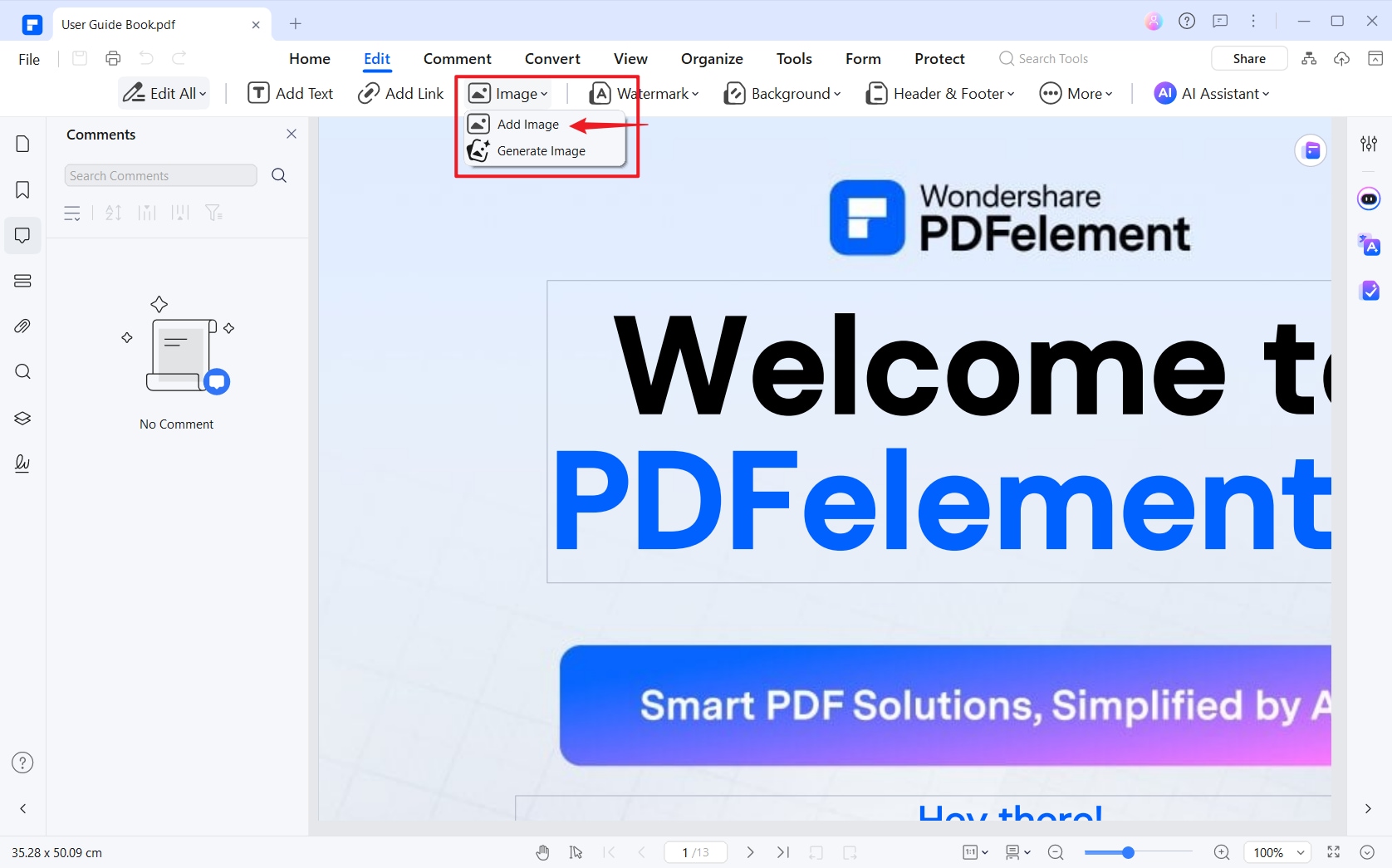
After selecting the image, click the page area where you want it to appear. If the first placement is not perfect, that is normal. You can drag the picture into position and adjust the size until it fits the surrounding content.
A typical workflow looks like this:
- Open the PDF in PDFelement.
- Choose the editing mode.
- Select the image insertion tool.
- Pick an image from your computer.
- Click the PDF page to place it.
- Resize, rotate, crop, or move the image.
- Save the edited PDF as a new file if you want to keep the original.
This is especially useful when you need to insert picture into PDF pages without changing tables, text blocks, page numbers, or headers.
Resize, Crop, Rotate, and Edit the Image
Once the image is on the PDF page, placement matters more than simply getting it into the file. A logo may need to align with a header. A screenshot may need to fit inside a report section. A signature image may need to sit exactly on a signature line without hiding nearby text.
PDFelement lets you adjust the image after insertion. You can drag it to another part of the page, resize it from the corners, rotate it, flip it, or crop away unwanted edges. For watermark-style images, you can adjust placement and opacity so the image does not overpower the document text.
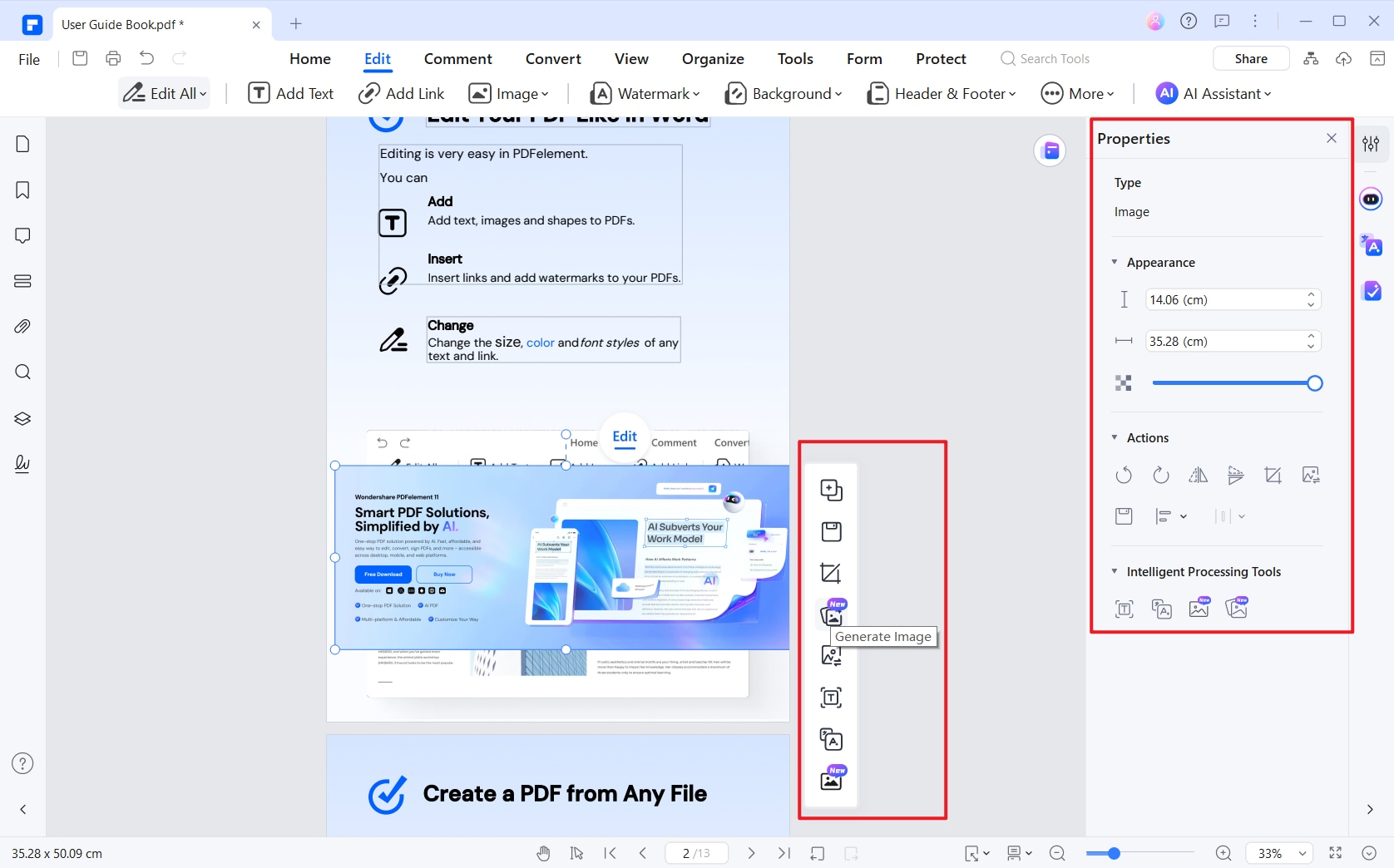
If your inserted image has a background you do not want, image editing tools can also help clean it up before the final PDF is saved. For instance, a signature scanned on white paper may look better if the background is removed or cropped tightly.
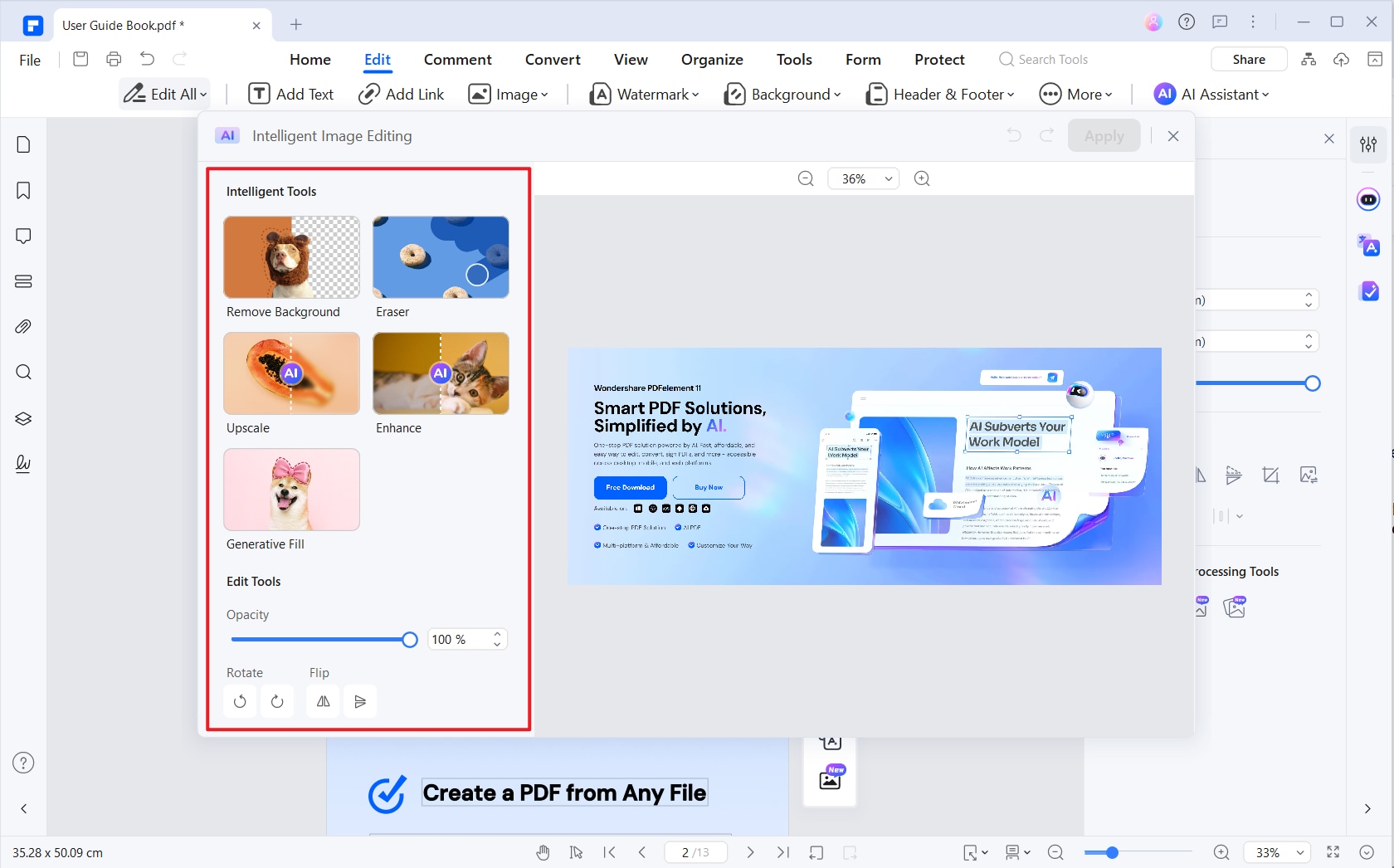
This is where a PDF editor is more useful than a basic viewer. You are not just placing a picture; you are making it look like it belongs in the document.
G2 Rating: 4.5/5 |100% Secure
Add a Signature Image to a PDF
A common reason to add picture to PDF files is to place a handwritten signature. If you already have a signature saved as an image, you can upload it and use it repeatedly rather than inserting the same picture manually each time.
In PDFelement, you can create a signature from an uploaded image and then apply it to PDF files when needed. This is handy for forms, approval sheets, offer letters, invoices, and internal documents that require a visible signature.
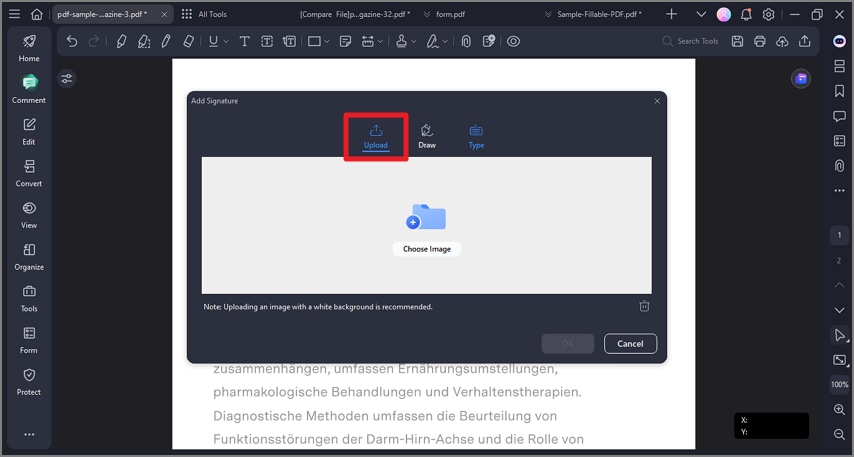
For best results, use a high-contrast signature image. A dark blue or black signature on a clean white background usually works better than a dim photo taken under uneven lighting. Crop the image closely before adding it, or use editing tools to remove unnecessary margins.
Use PDFelement for the Rest of the PDF Workflow
Adding an image is often only one step. You may need to compress the file before emailing it, add comments for reviewers, protect the PDF with a password, run OCR on a scanned page, or convert the final version to another format. PDFelement is useful here because it keeps those tasks in the same workspace.
For example, if you add several high-resolution photos to a PDF report, the file size may become too large to upload to a portal. You can use PDF compression after editing. If you insert a diagram into a scanned manual, OCR can help make the surrounding text searchable. If you add a signature image to a contract, password protection or redaction may be relevant before sharing.
That is the main advantage of a full PDF editor: it reduces the number of times you need to export, upload, convert, and re-save the same file.
Add Image to PDF with Adobe Acrobat
PDFelement is a strong option for layout-sensitive PDF editing, but it is not the only way. The right tool depends on what you already have installed, whether you can upload the PDF, and how much formatting control you need.
Adobe Acrobat is one of the most established PDF editors, and it can insert images into existing PDF pages. If you already have Acrobat, it is a reliable way to add photos, PNG graphics, logos, and other image files.
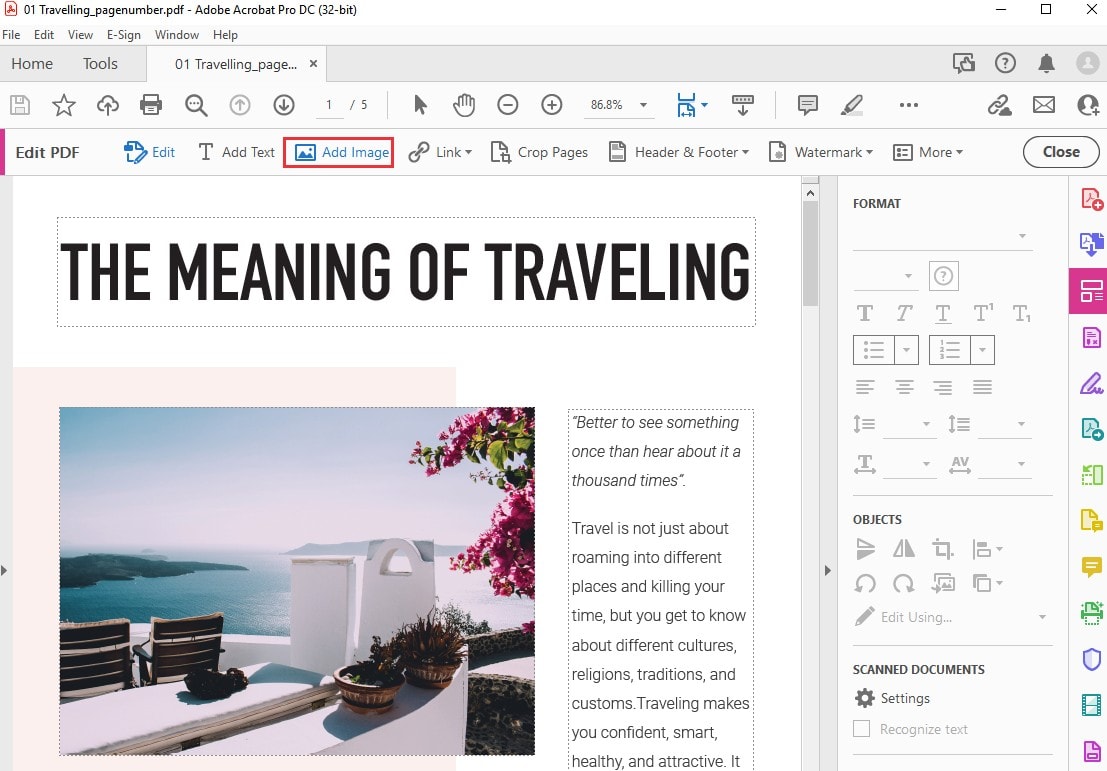
Open the PDF in Acrobat, choose the PDF editing tools, and select the option to add an image. Pick the file from your computer, then place it on the page. After insertion, Acrobat lets you resize, rotate, crop, and position the image.
This method works well for professional edits, but it may be more than you need for a one-time task. Acrobat is also a paid product for full editing features, so users looking for a quick free method may prefer an online editor or a built-in Mac option.
For official Acrobat editing guidance, Adobe’s help documentation is a useful reference: Adobe Acrobat PDF editing help.
Add Image to PDF Online
If you do not want to install software, an online PDF editor can be the fastest way to add image to PDF online. Tools such as HiPDF let you upload a PDF, choose an image, place it on the page, and download the edited file.
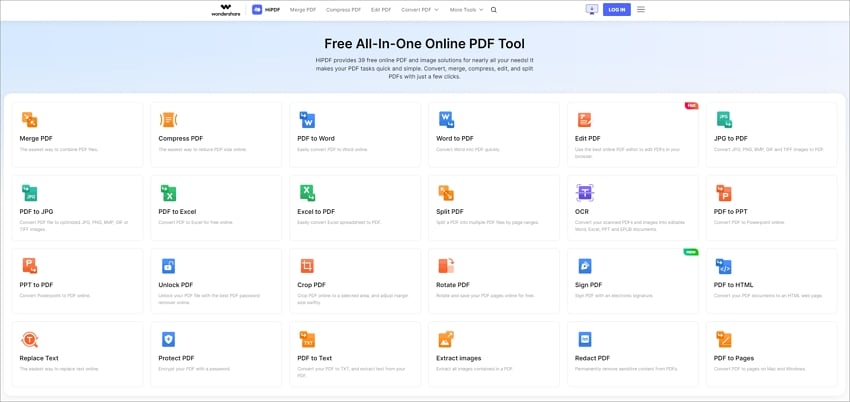
The basic process is simple: open the online PDF editor in your browser, upload the PDF, choose the add image tool, select your picture, position it on the page, apply the changes, and download the new PDF.
Online tools are convenient for simple files such as flyers, worksheets, non-sensitive forms, and casual documents. They are less ideal for confidential files, large PDFs, or documents that need precise formatting. Since your file is processed through a remote server, avoid uploading PDFs that contain private IDs, financial information, medical details, trade secrets, or unsigned contracts unless you have reviewed the service’s privacy policy and trust its handling practices.
Insert Picture Into PDF with Google Docs
Google Docs can be used as a workaround, but it is not a true PDF editor. The method works by converting your PDF into an editable Google Docs document, adding the image, and exporting it back to PDF.
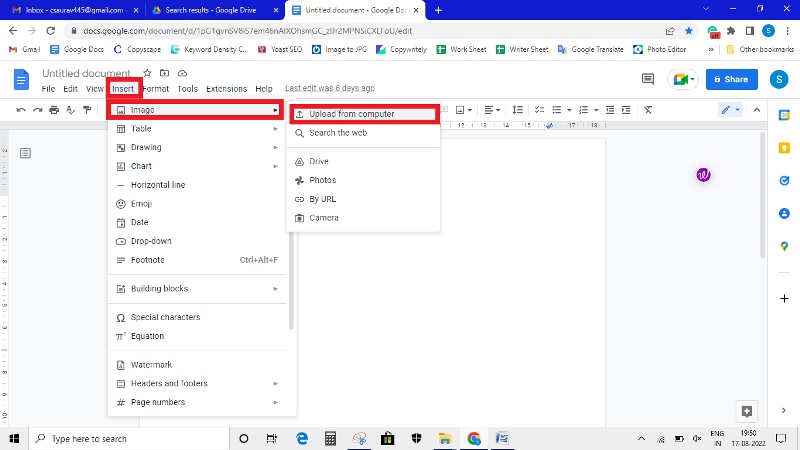
Upload the PDF to Google Drive, open it with Google Docs, then use Insert > Image > Upload from computer to add the picture. After positioning the image, go to File > Download > PDF Document to save it as a PDF again.
This can work for simple text-based PDFs, but it is risky for complex layouts. Tables may shift. Fonts may change. Headers, footers, columns, charts, and existing images may not survive the conversion cleanly. If your PDF needs to look exactly the same after editing, use a PDF editor instead.
Google’s own documentation on inserting images in Docs can help if you choose this route: Insert or delete images in Google Docs.
Add Picture to PDF with Preview on Mac
Mac users can use Preview for basic PDF image insertion. It is free, already installed on macOS, and good enough for simple tasks such as adding a small image, pasted signature, or quick visual note.
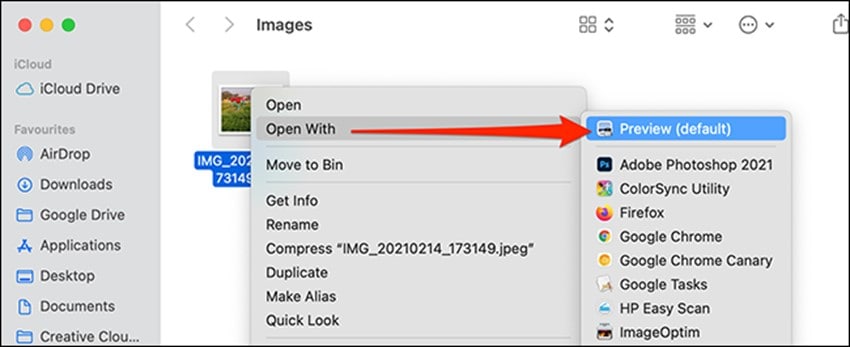
First, open the image in Preview. Select the image and copy it. Then open the PDF in Preview, go to the page where the picture should appear, and paste the image onto the PDF. Once it appears, drag it into position and resize it using the handles.
Preview is helpful for quick edits, but it has limits. It is not designed for deeper PDF editing, and image handling can feel less predictable than a dedicated PDF editor. If you only need to paste a signature or small graphic, it can save time. If you need to edit multiple images, align elements, preserve a polished layout, or manage a long PDF, use a fuller PDF editor.
Apple’s Preview user guide is also worth checking for built-in PDF markup features: Apple Preview User Guide.
Add an Image to PDF on Mobile
If you are working from a phone or tablet, use a mobile PDF editor rather than trying to force the task through a photo viewer. Most mobile PDF editing apps let you open the PDF, tap an edit or image tool, choose a picture from your gallery, and place it on the page.
This is useful for adding a receipt photo, ID image, field-work photo, signature, or quick annotation while away from your desk. The tradeoff is precision. Small screens make it harder to align an image perfectly, especially on dense forms or multi-column documents. If placement matters, do a quick mobile edit only when necessary and review the final file on a larger screen before sending it.
Which Method Should You Use?
The best way to insert image into PDF depends on the document and the risk of layout changes. A one-page school worksheet does not need the same workflow as a client proposal or signed agreement.
Use a dedicated PDF editor such as PDFelement when the layout matters, when the file is private, or when you need to keep editing after the image is added. This is the best fit for contracts, reports, forms, brochures, manuals, invoices, portfolios, and business documents.
Use Adobe Acrobat if it is already part of your workflow and you are comfortable with its interface. It is powerful, but not always the most cost-effective choice for a simple one-off edit.
Use an online PDF editor when you need a fast browser-based option and the file is not sensitive. It is convenient for lightweight edits but less suitable for confidential or large documents.
Use Google Docs only when the PDF has simple formatting and you do not mind checking the layout carefully afterward. It is a workaround, not a precision PDF editing method.
Use Preview on Mac for quick pasted images or signatures. It is convenient and free, but it is best for simple changes rather than polished document production.
G2 Rating: 4.5/5 |100% Secure
Tips for Better Image Quality and Placement in PDF
A PDF can only display the image quality you give it. If you insert a low-resolution picture and stretch it across half a page, it will look blurry. If you add a huge photo straight from a camera, the PDF may become unnecessarily large. The goal is to use an image that is sharp enough for its display size without making the file difficult to share.
For printed documents, higher-resolution images matter more. For screen-only PDFs, a moderately sized image is often enough. If the PDF will be emailed, uploaded to a form system, or shared through a messaging app, check the final file size after inserting images.
A few practical checks can prevent most problems:
- Use PNG for logos, screenshots, signatures, and images with sharp edges or transparency.
- Use JPG for photos when file size matters.
- Crop the image before inserting it if the original has unnecessary blank space.
- Keep image proportions locked while resizing so faces, logos, and charts do not look stretched.
- Save a copy of the original PDF before editing, especially for contracts or official forms.
- After saving, reopen the PDF and check the edited page at 100% zoom and fit-to-page view.
If you need the inserted image to appear on every page, do not manually paste it page by page. Use a watermark, header, footer, or background feature in a PDF editor. This is the better method for logos, draft marks, confidentiality labels, and branded templates.
For signatures, avoid inserting a large uncropped photo of a piece of paper. Crop the signature tightly and use a clean background. If the tool supports transparency or background removal, use it so the signature blends naturally with the form.
FAQs About Adding Images to PDFs
-
How do I add image to PDF for free?
You can use a free online PDF editor, Preview on Mac, or a free trial of a PDF editor. Online tools are usually the fastest free option, but they require uploading your PDF. Preview is a good free choice for Mac users who only need to paste a simple image or signature. -
Can I insert image into PDF without changing the formatting?
You can remove a watermark from a PDF online by uploading the file to an AI-powered PDF watermark remover, selecting the watermark area, and letting the tool detect and erase it automatically. This works best for image-based or visually separate watermarks. If the watermark is embedded into the PDF layer or overlaps heavily with important text, you may need a more advanced PDF editor after the AI removal. -
How do I add picture to PDF online?
Open an online PDF editor, upload your PDF, choose the add image tool, select the picture from your device, place it on the page, and download the edited PDF. This is convenient for non-sensitive files, but for private documents, an offline PDF editor is safer. -
How do I insert picture into PDF on Mac?
You can use Preview for a quick edit. Open the image in Preview, copy it, open the PDF in Preview, then paste the image onto the page. Resize and move it as needed. For more control, use a dedicated PDF editor on Mac. -
How do I add a signature image to a PDF?
Save your signature as an image, then insert it into the PDF using a PDF editor. Crop the signature closely before adding it. In PDFelement, you can create a reusable signature from an uploaded image, which is faster if you sign PDFs regularly. -
How can I add the same image to every page of a PDF?
Use a watermark, header, footer, or background tool in a PDF editor. This is better than manually pasting the image onto each page. It also gives you more control over position, size, opacity, and page range. -
Why does my image look blurry after I add it to a PDF?
The original image may be too small, or it may have been stretched beyond its natural size. Use a higher-resolution image, avoid enlarging it too much, and export or save the PDF with quality settings that do not over-compress images. -
Can I add multiple images to one PDF?
Yes. A PDF editor lets you add multiple images to one page or across different pages. You can also create a blank PDF and place several images inside it, then resize and arrange them before saving. -
Is it safe to add image to PDF online?
It depends on the document and the service. For public or low-risk files, online tools are convenient. For contracts, IDs, financial records, medical documents, or company files, use an offline PDF editor so the document stays on your device. -
What image format should I use for PDFs?
Use PNG for logos, screenshots, signatures, and graphics with transparent backgrounds. Use JPG for photos when you want a smaller file size. TIFF may be useful for high-quality scans, but it can make the PDF larger.