
Table of Contents
Creating an electronic signature should not be harder than signing a piece of paper. The tricky part is choosing the right method: a quick typed signature may be enough for an internal approval, while a signed contract may need a cleaner PDF workflow or stronger identity controls.
This guide explains how to create an electronic signature in several practical ways, including free options, handwritten signature images, and PDF signing with Wondershare PDFelement. It also covers the small details that often cause frustration: blurry signatures, white backgrounds, resizing problems, and whether an electronic signature is different from a digital signature.


 G2 Rating: 4.5/5 |
 100% Secure
What Counts as an Electronic Signature?
An electronic signature is any electronic mark, sound, symbol, or process used to show that someone agrees to a document or record. In everyday PDF work, that usually means a typed name, a drawn signature, a scanned handwritten signature, a signature image, or a signature added through an e-signature platform.
The key point is intent. If you add a signature to approve, accept, authorize, or acknowledge a document, you are using an electronic signature. The exact method you should use depends on the type of document, the recipient’s expectations, and any legal or compliance requirements involved.
Electronic signature vs. digital signature
People often use these terms as if they mean the same thing, but they are not identical.
An electronic signature is a broad category. It can be as simple as typing your name at the end of a PDF or inserting an image of your handwritten signature.
A digital signature is a more technical type of electronic signature. It usually uses encryption and a digital certificate to verify the signer and detect whether the file was changed after signing. Digital signatures are common in higher-trust workflows, government forms, enterprise approvals, and regulated industries.
If your goal is to make an electronic signature for a résumé, invoice, permission form, internal approval, or basic agreement, a drawn or scanned signature may be enough. If your organization requires identity verification, audit trails, tamper evidence, or certificates, ask whether a digital signature or dedicated e-signature service is required.
Which signature method should you choose?
If you only need a natural-looking signature that you can place on a PDF, create a handwritten signature image and save it as a transparent PNG if possible. It looks professional and is easy to reuse.
If speed matters more than appearance, a typed signature works. Many forms accept a typed name, especially when paired with a date, checkbox, or email confirmation.
If the document is sensitive, valuable, or legally complex, do not rely only on a pasted image. Use a signing workflow that supports signer authentication, audit history, permissions, and document integrity.
How To Create an Electronic Signature: 4 Practical Methods
There is no single best way to create an e-signature. The best method is the one that matches the document and the level of trust required. Below are the most common options, from quickest to most polished.
Method 1: Draw your signature on a screen
Drawing is the fastest way to create electronic signature files if you have a touchscreen, trackpad, stylus, or phone. Open a signature creator, PDF editor, note app, or markup tool, then draw your name as you would on paper.
This method is convenient, but the result depends heavily on your input device. A finger-drawn signature on a small phone screen can look uneven. A stylus or tablet usually produces a cleaner result.
For best results, draw slowly and keep the signature larger than you think you need. You can always shrink it later. Enlarging a tiny signature often makes it pixelated.
Method 2: Type your signature
A typed signature uses your keyboard input, often styled with a cursive or handwritten-looking font. It is clean, readable, and quick.
Typed signatures are common for forms where the signer’s identity is already clear from the email trail, account login, or document workflow. They may look less personal than a handwritten signature, but they are useful when readability matters.
If you use this method, pair the typed signature with supporting details such as your full name, title, date, company name, or email address. For example, an approval line might read:
“Signed electronically by Maria Chen, Procurement Manager, March 12, 2026.”
That context can be more useful than a decorative font alone.
Method 3: Upload or scan a handwritten signature
This is the most common approach for people who want their PDF signature to look like a real handwritten signature. You sign on paper, scan or photograph it, clean it up if needed, and save it as an image.
Use black or dark blue ink on plain white paper. Avoid lined paper, shadows, glare, or a cluttered background. If you take a photo with a phone, place the paper near a window or under soft lighting, then crop tightly around the signature.

PNG is usually better than JPG for signatures because it can preserve sharper edges and, if edited properly, support transparency. A transparent PNG lets your signature sit naturally on top of a PDF without a white rectangle around it.
Method 4: Use a PDF editor or e-signature tool
If the document is already a PDF, a PDF editor is often the most direct option. You can open the file, add your electronic signature, resize it, place it on the signature line, and save or export the signed copy.
An e-signature platform is better when you need to send the document to other people for signing, track who signed, collect multiple signatures, or maintain an audit trail. A PDF editor is better when you personally need to sign, annotate, edit, convert, organize, or prepare the PDF before sending it.
For many everyday workflows, the practical path is simple: create the signature once, save it, and reuse it whenever you need to sign a PDF.
How To Make an Electronic Signature for a PDF With PDFelement
PDFs are where electronic signatures become most useful. Contracts, tax forms, HR documents, invoices, NDAs, onboarding packets, approval letters, and application forms are often shared as PDFs because the layout stays fixed. Wondershare PDFelement is a practical option when you need to create an electronic signature and place it precisely inside a PDF while still having access to editing, annotation, conversion, OCR, compression, and page organization tools.
The workflow below focuses on creating a reusable handwritten-style electronic signature. This is helpful if you frequently sign PDFs and do not want to print, sign, scan, and resend the same type of document.
G2 Rating: 4.5/5 |100% Secure
Step 1: Open the PDF document
Launch PDFelement and open the PDF you want to sign. You can start from the home screen by choosing the file from your computer.
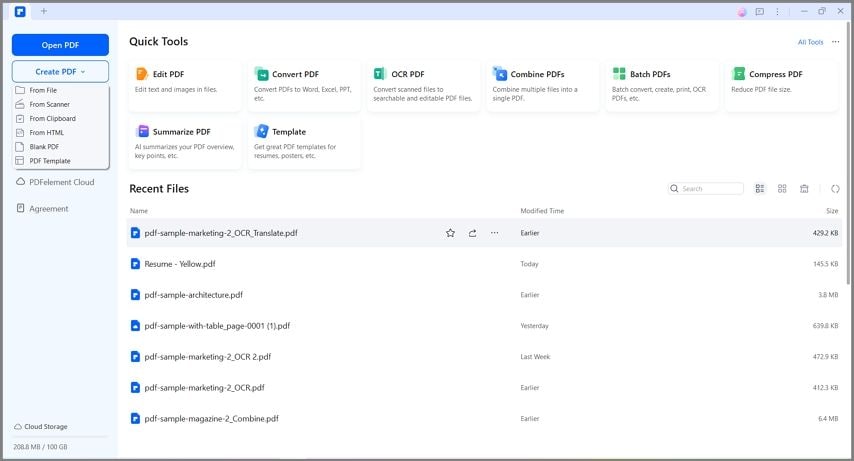
Before adding your signature, review the document. Check that the pages are in the right order, the signature line is visible, and no form fields or text need to be corrected. If the PDF is a scanned image, OCR can help make the content searchable or editable before the signing stage.
Step 2: Prepare your signature image
If you already have a PNG or JPG signature image, keep it in an easy-to-find folder. If not, sign your name on white paper and scan or photograph it. Crop away extra space so the signature does not appear too small after insertion.
A transparent PNG is ideal. If your image has a white background, it may still work on white PDF pages, but it can look awkward on colored forms, shaded boxes, or scanned documents.
Step 3: Create an electronic signature as a custom stamp
One useful way to make an electronic signature reusable in PDFelement is to add the signature image as a custom stamp. This lets you place it again later without importing the image every time.
Go to the commenting or stamp tools, choose the custom stamp option, and create a stamp from your saved signature image.
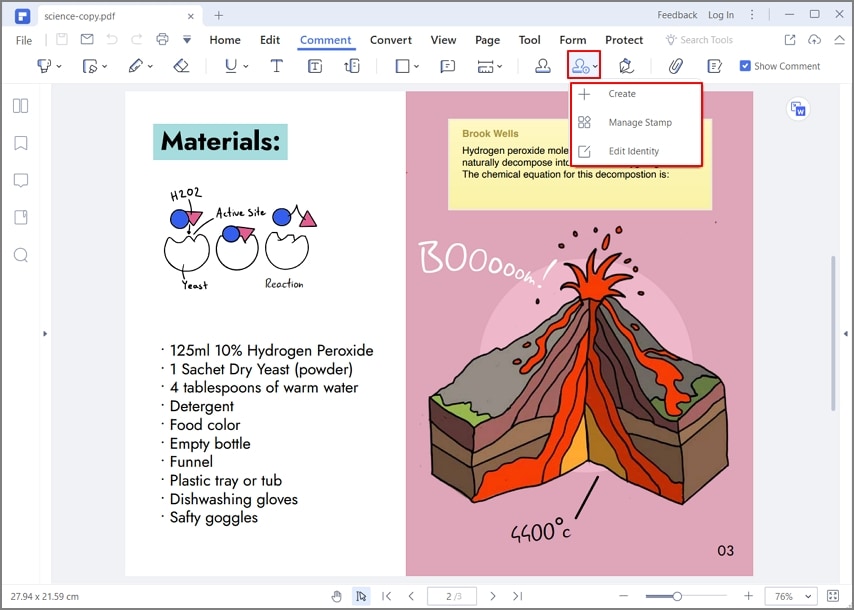
After selecting the image, save it into a stamp category that is easy to recognize, such as “Signatures” or “Personal Signature.” This sounds like a minor detail, but it matters if you also use stamps for approval marks, review notes, or company workflows.
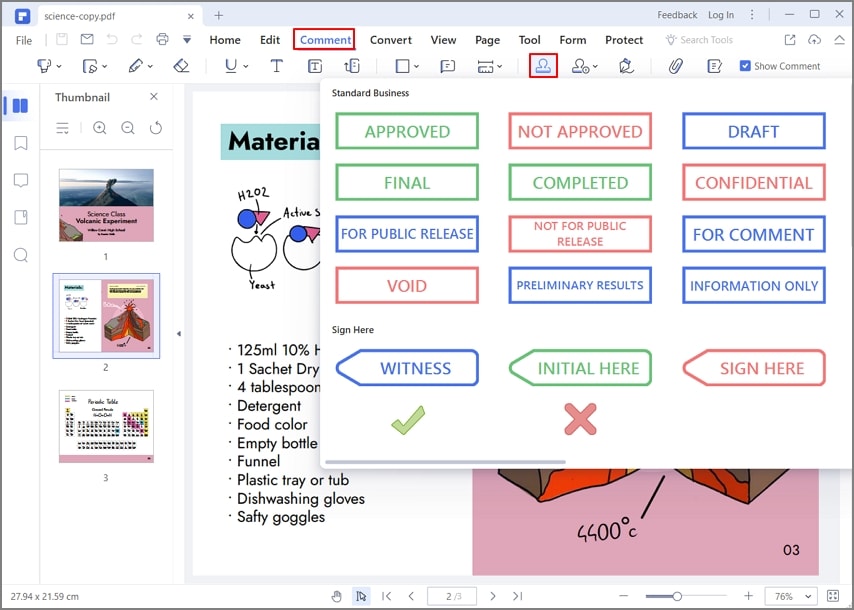
Step 4: Place, resize, and save the signed PDF
Click the signature stamp and place it on the signature line. Resize it so it matches the scale of the document. A signature that is too large can make a form look careless; one that is too small may appear unclear when printed.
Once the signature is in place, save a copy of the signed PDF. If you may need to edit the original later, keep an unsigned version too. For documents that are final, consider saving with a clear file name such as:
Vendor-Agreement-Signed-Maria-Chen-2026-03-12.pdf
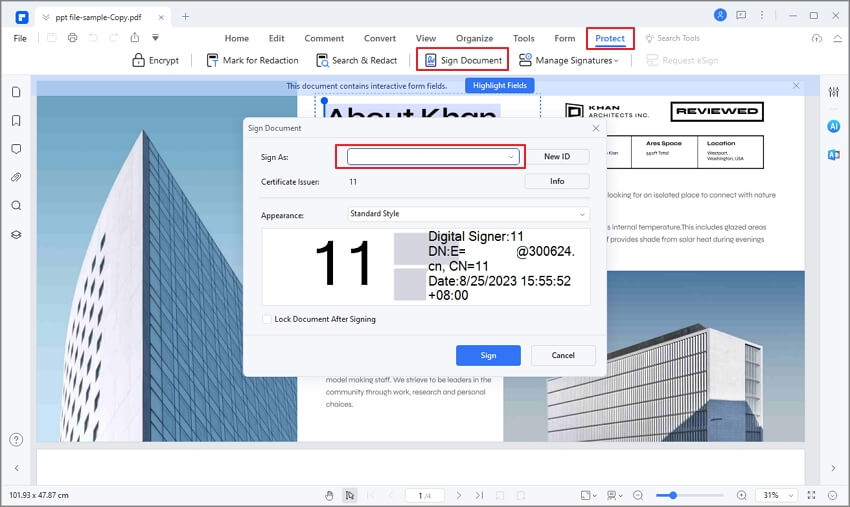
PDFelement is also useful before and after signing. For example, you can combine attachments into one PDF, compress the file before emailing it, convert Word documents to PDF for stable formatting, redact sensitive information, or add comments for reviewers before the final signature is applied.
G2 Rating: 4.5/5 |100% Secure
How To Create an Electronic Signature for Free: What To Watch For
Many people search for how to create a free electronic signature because they only need to sign one document. Free methods can work well, but the word “free” covers very different tools.
Some free options simply create a downloadable signature image. Others let you sign a limited number of PDFs. Some require an account, add watermarks, restrict file size, or limit advanced features such as audit trails and signer verification.
Free methods that are usually enough
For low-risk documents, you can create an electronic signature for free by drawing it in a basic markup app, scanning a handwritten signature, or using a free online signature generator to download a PNG. Then you can insert that image into a PDF using a PDF editor or compatible document tool.
This is often enough for:
- Internal approvals where the sender and recipient already know each other
- School forms, club documents, or simple permission slips
- Invoices, estimates, or acknowledgments that do not require identity verification
- Personal PDFs where appearance and convenience matter more than formal tracking
If you use an online tool, avoid uploading sensitive contracts, IDs, financial records, medical documents, or confidential business files unless you trust the provider and understand how the file is handled.
Where free tools may fall short
Free tools are less suitable when you need to prove who signed, when they signed, and whether the file was changed afterward. They may also be inconvenient if you sign documents regularly, because you may have to upload the same signature or file repeatedly.
A pasted signature image can show intent, but it does not by itself create a full audit trail. If your document has legal, financial, or compliance consequences, use the signing method required by the organization receiving the file. For some workflows, that means a dedicated e-signature service or certificate-based digital signature.
Free tools can also create formatting issues. Some signature images download with a white box, low resolution, or extra padding. Before sending the document, zoom in to 100% and print a test copy if the signed document will be printed.
Best Practices for a Professional and Safer E-Signature
A good electronic signature should look clean, be easy to place, and not create an unnecessary security risk. The signature itself is only one part of the workflow; how you store, reuse, and send the signed PDF also matters.
Use a high-contrast signature. Black ink on white paper gives you the cleanest scan. If you prefer blue ink because it looks more “original,” make sure the scan still has enough contrast.
Save the original signature image somewhere private. Do not leave it in a shared downloads folder or public cloud directory. A reusable signature image is convenient, but it should be treated like a sensitive file.
Use transparent PNG when possible. It usually looks better on PDF forms because the page background shows through around the signature strokes. If your signature image has a white box, try removing the background before inserting it.
Do not sign blank or incomplete documents. This sounds obvious, but it is one of the most important habits. Review the full PDF, including attachments and hidden pages, before applying your signature.
Flatten or protect final files when appropriate. If you are sending a final signed PDF, consider using PDF permissions or a workflow that reduces accidental edits. For high-trust documents, use digital signing or a platform with audit logs rather than only placing a visual signature image.
Keep signed copies organized. Use filenames that include the document name, signer, and date. If you sign many PDFs, create separate folders for unsigned drafts, sent documents, and fully executed copies.
A practical rule: if losing control of the signature image or signed document would create a problem, store and share it more carefully.
Common Problems When Making an E-Signature
Even a simple e-signature can look wrong if the source image is poor or the PDF tool handles the image unexpectedly. Most issues are easy to fix once you know what caused them.
The signature looks blurry
Blurry signatures usually come from using an image that is too small. Start with a larger scan or photo, crop it, and then shrink it inside the PDF. Do not take a tiny signature image from an email preview or messaging app; those files are often compressed.
If you are scanning, use a reasonable resolution and save the signature as a PNG when available. If you are photographing it, keep the camera steady and avoid digital zoom.
There is a white box around the signature
A white box appears when the signature image has an opaque background. On a white PDF page, you may not notice it. On a shaded form field or scanned page, it stands out.
The best fix is to remove the background and save the signature as a transparent PNG. If that is not possible, crop tightly and place the signature only on white areas of the form.
The signature is hard to position
PDF pages can have different scaling, margins, or rotated pages. If the signature does not land where expected, zoom in and place it at a higher magnification. This gives you more control.
Also check whether the page itself is rotated. A scanned PDF may look upright but have an unusual page orientation internally. Rotating or correcting the page before signing can make placement easier.
The signed PDF is too large to email
Scanned PDFs and image-heavy files can become large, especially after inserting signature images. Compressing the PDF can help before you send it. Just avoid over-compressing if the document contains fine print, stamps, or identification details that must stay readable.
You need to edit the PDF after signing
If the change is minor and the recipient allows it, edit the PDF first, then reapply the signature to the final version. Avoid changing a document after signing unless all parties understand what changed.
For formal agreements, the safer workflow is to revise the unsigned draft, send it for review again, and sign only the final version.
People Also Ask
-
How do I create an electronic signature?
You can create an electronic signature by drawing it on a screen, typing your name in a signature style, scanning your handwritten signature, or using a PDF editor or e-signature platform. For PDF documents, a common workflow is to save your handwritten signature as a PNG image and insert it into the PDF where the signature is required. -
How do I make an electronic signature look handwritten?
Sign your name on white paper with a dark pen, then scan or photograph it in good lighting. Crop the image closely and save it as a PNG. For the cleanest result, remove the white background so the signature appears naturally on the PDF page. -
Can I create an e-signature for free?
Yes. You can create electronic signature free by drawing it in a free markup tool, using a free signature generator, or scanning your handwritten signature and saving it as an image. Free methods are usually fine for simple documents, but they may not provide audit trails, signer verification, or tamper evidence. -
Is an electronic signature legally valid?
In many places, electronic signatures are legally recognized if they show the signer’s intent and meet the requirements for that type of transaction. In the United States, the ESIGN Act supports the validity of electronic signatures in many situations. Some documents, industries, or regions may have stricter requirements, so check the rules for important legal or regulated documents. -
What is the difference between an electronic signature and a digital signature?
An electronic signature is any electronic method used to show agreement, such as a typed name, drawn signature, or inserted signature image. A digital signature is a more secure type of electronic signature that uses encryption and certificates to verify the signer and detect changes to the document. -
What file format should I use for my signature image?
PNG is usually the best choice because it keeps edges sharp and can support transparency. JPG can work, especially for simple white-background PDFs, but it may introduce compression artifacts or a visible background. -
Can I reuse the same electronic signature?
Yes, you can reuse the same signature image or custom stamp for multiple PDFs. Store it securely and avoid sharing the raw image file. If you sign sensitive documents, consider using a signing tool with authentication or a digital signature instead of relying only on a reusable image. -
How do I add an electronic signature to a PDF?
Open the PDF in a PDF editor such as PDFelement, insert your signature image or create it as a custom stamp, place it on the signature line, resize it, and save the signed PDF. Review the whole document before signing so you do not need to make changes afterward. -
Is typing my name considered an electronic signature?
It can be, depending on the context and the rules that apply to the document. A typed name often works when it clearly shows intent to sign, especially with a date, checkbox, email confirmation, or related approval process. For higher-risk documents, a stronger signing method may be required. -
How can I protect a signed PDF?
Keep an unsigned original, save the signed copy with a clear file name, and store it in a secure location. For final documents, you can use PDF permissions, password protection, or a digital signature workflow. If the document is legally important, use the signing method requested by the recipient or your organization.