
Quick answer: You can intentionally corrupt a PDF file by modifying a copy of its internal data, using a file-corruption tool, or temporarily changing its file extension so PDF apps no longer recognize it correctly. If you are doing this for software testing, QA, troubleshooting, or testing a PDF repair workflow, always work on a backup copy instead of the original document.
If your PDF became corrupted by accident rather than on purpose, do not modify it further. First try downloading the file again, opening it in another PDF reader, or recovering a clean copy. If the file itself is damaged, move directly to a corrupted PDF recovery workflow.
This guide explains how to corrupt a PDF file in three common ways, what actually happens when a PDF becomes corrupted, and how to test or recover the file afterward with tools such as Wondershare PDFelement.


 G2 Rating: 4.5/5 |
 100% Secure
In this article
Before You Corrupt a PDF: When Does It Make Sense?
Most PDF corruption happens accidentally, but there are legitimate situations where you may need to create an intentionally damaged PDF. Developers and QA teams, for example, may use a corrupted file to test how an application handles invalid uploads, damaged documents, error messages, or PDF repair workflows.
You may also need a broken PDF when documenting a software error or testing whether a PDF recovery tool can detect and recover damaged content.
Do not use file corruption as a way to protect confidential information. A damaged file is not the same as an encrypted or securely deleted file, and some corrupted PDFs may still contain recoverable data. If your goal is security, use proper PDF encryption, access controls, or secure deletion instead.
Before testing any method below, make a copy of the PDF and keep the original unchanged. That gives you a clean reference file if the damaged copy cannot be recovered.
Part 1. How To Corrupt a PDF File With Notepad
One way to intentionally create a damaged PDF for testing is to modify a copy of the file using a plain-text editor such as Notepad. A PDF is not a normal text document, so opening it in Notepad exposes its underlying file data rather than the formatted pages you see in a PDF reader.
Use this method only on a disposable copy. Editing the PDF's underlying data can make the file partly or completely unreadable.
- Make a copy of the PDF you want to use for testing.
- Right-click the copied PDF.
- Choose Open with > Notepad, or select Choose another app > Notepad.
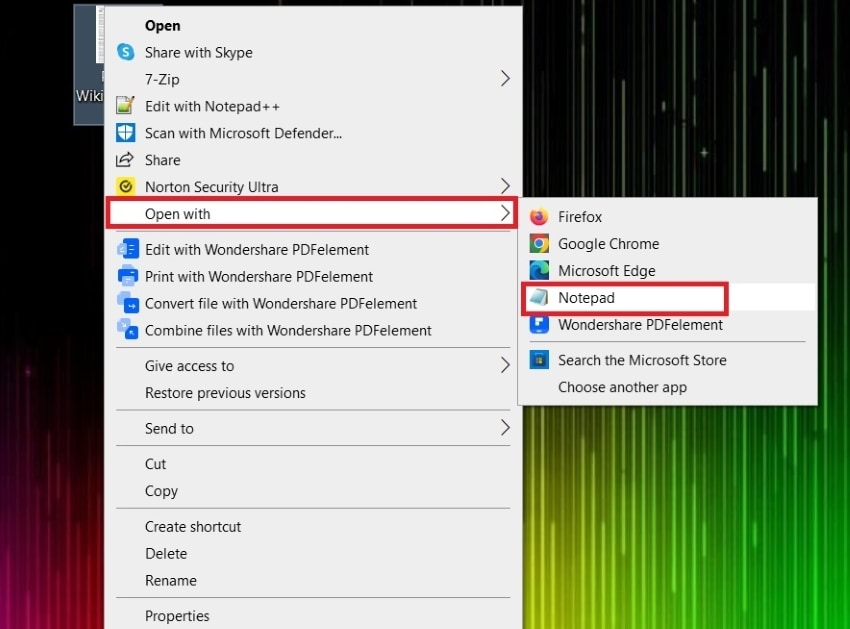
The content will appear as file data rather than readable PDF text. Altering or removing part of this data and saving the file can damage its internal structure.
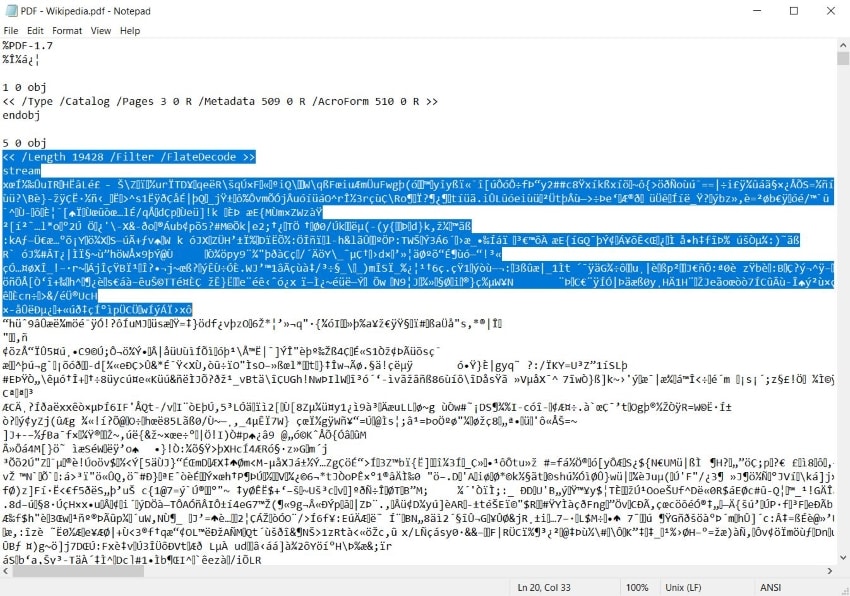
After saving the test copy, try opening it with a PDF reader. Depending on which part of the file was affected, the PDF may fail to open, display an error, show missing content, or remain partly readable.
Important: File corruption is not always predictable. A small change may break the entire PDF, while another change may only affect part of the document. If you need repeatable QA results, a purpose-built test file or corruption tool is usually more consistent.
Part 2. How To Corrupt a PDF File Online
An online file corrupter can be a quicker option when you need a broken PDF for testing and do not want to manually modify file data. These services generally take an uploaded file and return a modified version designed to fail when opened.
However, avoid uploading confidential, legal, financial, HR, or other sensitive PDFs to an unfamiliar third-party service. For sensitive files, use a local test document instead.
Quick Comparison of Online PDF Corruption Tools
| Tool | Best For | What To Know |
|---|---|---|
| Corrupt-a-File.net | Simple one-off test files | Designed to generate a corrupted version of an uploaded file |
| Corruptmyfile | Fast, basic corruption | Minimal workflow with few settings |
| Pinetools | More control over the test file | Provides options for adjusting the degree of corruption |
1. Corrupt-a-File.net
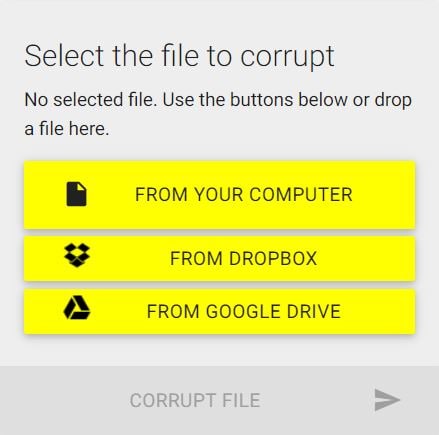
Corrupt-a-File.net is an online service designed to create damaged copies of different file types, including PDFs. It can be useful when you need a quick sample file for testing how a reader, uploader, or recovery workflow responds to invalid PDF data.
Because this is an upload-based workflow, use a non-sensitive test PDF and keep the original file separately.
2. Corruptmyfile
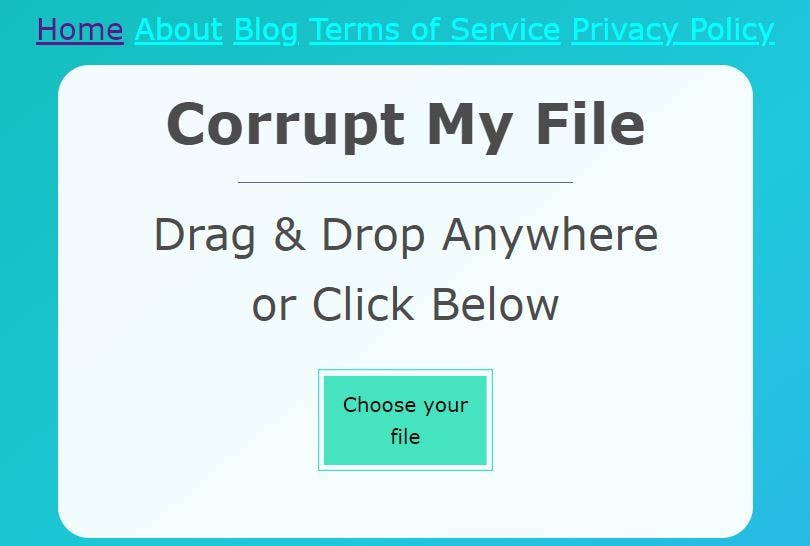
Corruptmyfile provides a simple upload-and-download workflow for creating a damaged file. It may suit users who only need a quick corrupted PDF for an application test or error demonstration and do not need to control how the PDF is damaged.
3. Pinetools
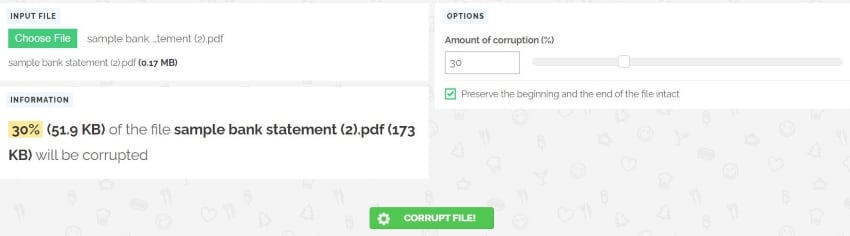
Pinetools provides more control over file corruption than a basic one-click tool. For example, it can let you adjust the amount of corruption and choose whether parts of the beginning or end of the file are preserved.
That makes it more useful when you want to test how a PDF application responds to different levels of file damage.
- Open the Pinetools file corruption tool.
- Click Choose File.
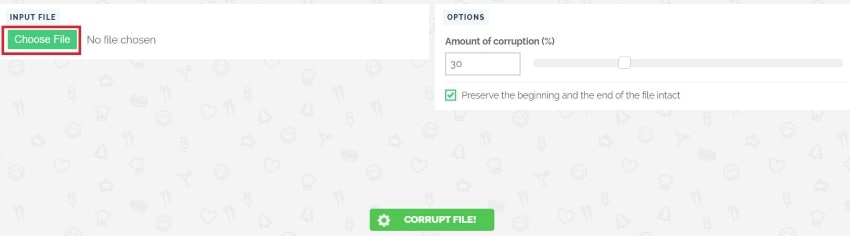
- Select a disposable test PDF.
- Adjust the corruption setting for your test scenario.
- Choose whether to preserve the beginning and end of the file.
- Create and download the corrupted test copy.
Part 3. How To Make a PDF Unreadable by Changing the File Extension
You can also rename a PDF with a different file extension so your computer no longer treats it as a PDF. This can make the file appear unusable in normal PDF workflows, but it is important to understand that renaming the extension does not actually corrupt the PDF data.
This distinction matters. If you rename document.pdf to something such as document.pdf1, the PDF content may remain completely intact. Restoring the .pdf extension can make the document work again.
Therefore, this method is better for testing file-type recognition than for creating a genuinely corrupted PDF.
G2 Rating: 4.5/5 |100% Secure
- Find the PDF in File Explorer.
- Select View and enable File name extensions if extensions are hidden.
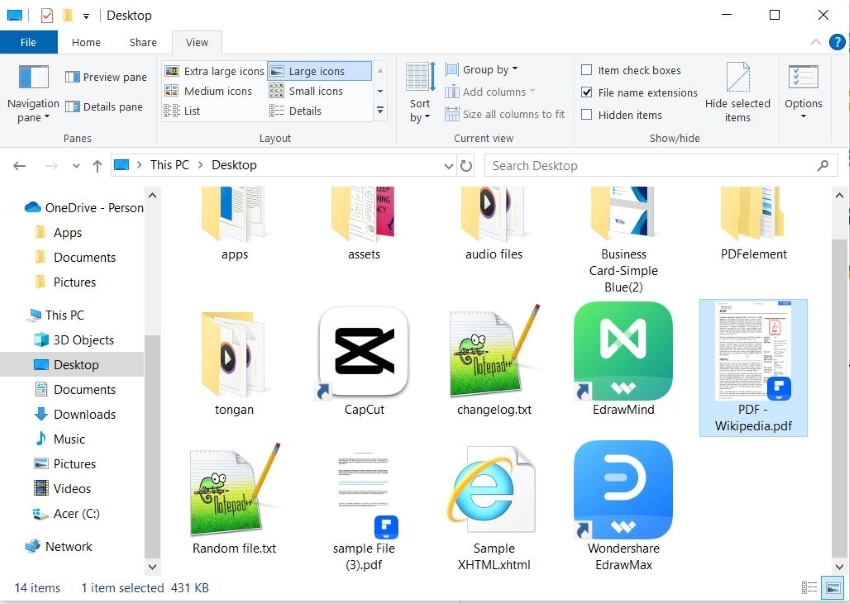
- Right-click the test PDF and select Rename.
- Change only the extension, for example from .pdf to .pdf1.
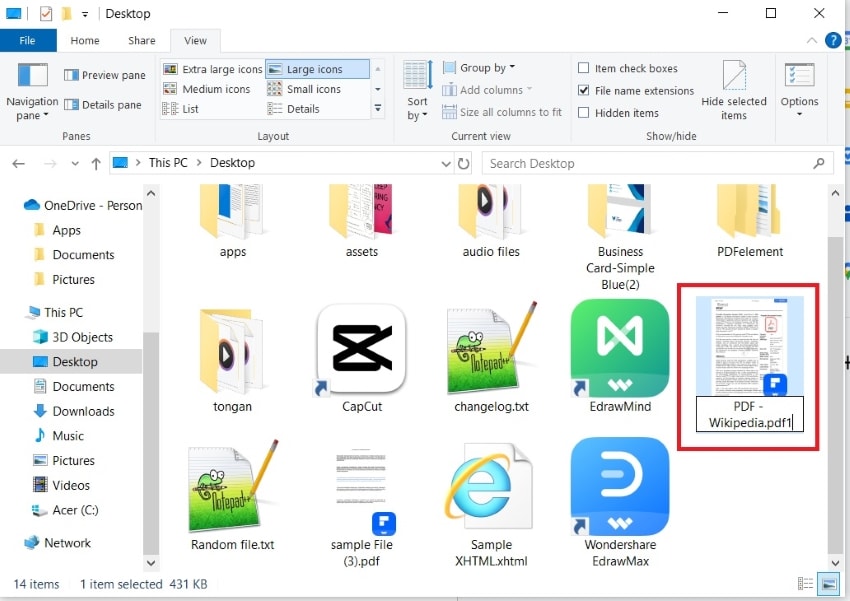
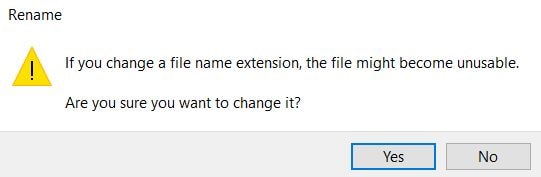
Windows may warn that changing the extension could make the file unusable. Confirm the change only if you are working with a backup copy.
To reverse the test, rename the extension back to .pdf. If the file opens normally afterward, its internal PDF structure was never actually damaged.
Part 4. What Happens When a PDF File Is Corrupted?
A corrupted PDF is a file whose internal structure or data has been damaged enough that a PDF reader can no longer interpret all of it correctly. The result depends on what part of the document is affected.
Common signs of a corrupted PDF include:
- The PDF will not open at all.
- A browser shows “Failed to load PDF document.”
- A PDF reader reports that the file is damaged or cannot be repaired.
- The PDF opens with blank or missing pages.
- Text, images, fonts, forms, or other content appear broken.
- The file opens in one PDF reader but fails in another.
Not every PDF that will not open is actually corrupted. An incomplete download, browser-preview problem, outdated PDF reader, unsupported feature, password protection, or file-permission issue can produce similar symptoms.
Quick check: Try opening the file in another PDF reader or browser. If every application fails on the same file while other PDFs open normally, file corruption becomes more likely.
Part 5. Things To Remember Before You Corrupt a PDF File
Why Would You Intentionally Corrupt a PDF?
The clearest legitimate use case is testing. Developers may need an invalid PDF to verify how an application handles failed uploads, corrupted attachments, malformed documents, or repair attempts. QA teams can also use damaged test files to reproduce errors before releasing software.
A corrupted PDF can also be useful when testing a PDF repair tool. Using a known test file lets you compare whether the software can reopen the PDF, recover pages, or preserve readable content.
Corrupting a PDF is not a reliable privacy or security method. If you want to prevent unauthorized access to a real document, encryption, password protection, permissions, and secure deletion are more appropriate.
Create a Backup Before Corrupting a PDF
Always create a backup before deliberately damaging a PDF. Ideally, keep the untouched original in a separate folder and perform all tests on a duplicate.
This is especially important when you are evaluating a repair workflow because you need the original PDF to compare whether pages, text, images, forms, bookmarks, and other document elements were successfully recovered.
Do Not Corrupt a PDF Owned by Someone Else
Only modify documents you own or are authorized to use for testing. Deliberately damaging another person's or organization's file without permission can result in data loss and may violate organizational policies or applicable laws.
Part 6. Can a Corrupted PDF Be Repaired?
Sometimes. Whether a corrupted PDF can be repaired depends on what was damaged and whether the original content is still present. A PDF with minor structural problems may still open in another reader or become usable after it is saved again. A severely damaged or incomplete file may only be partially recoverable.
Before using a repair tool, work through these checks:
- Download the PDF again. An interrupted or incomplete download can look like corruption.
- Try another PDF reader. If another app opens the file, the original reader may be the problem.
- Check for a clean source. If the PDF came from Word, Excel, a scanner, email, or cloud storage, getting a new copy is often more reliable than repairing the damaged one.
- Keep the damaged original. Perform repair attempts on a copy so you do not make recovery more difficult.
If you need a detailed recovery workflow, see how to open and recover a corrupted PDF file or compare different options in our PDF repair tools guide.
Check a Corrupted or Repaired PDF with PDFelement
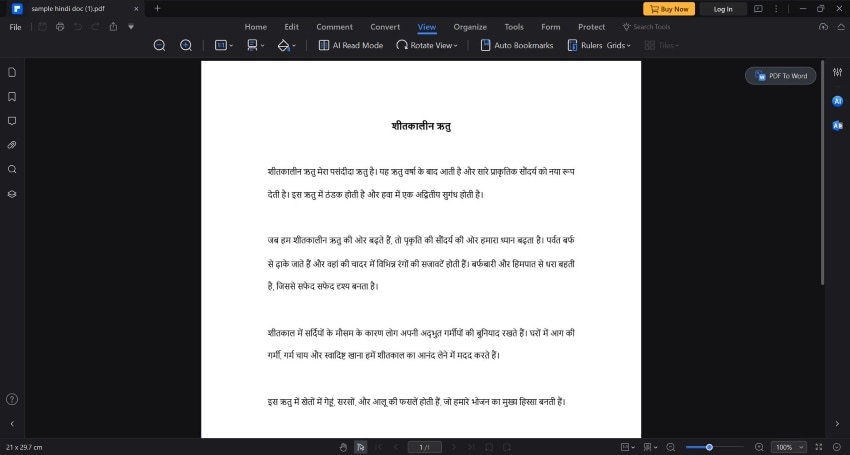
Wondershare PDFelement - PDF Editor Wondershare PDFelement Wondershare PDFelement can be used as a local first check when you want to see whether a damaged PDF still opens on desktop.
A practical workflow is:
- Open PDFelement and select the damaged or repaired PDF.
- Check whether the document opens fully, partially, or not at all.
- If the PDF opens, immediately save a fresh copy.
- Review important pages, text, images, forms, links, and other document elements.
- Open the new copy again to confirm that it remains usable.
If a repaired PDF opens but contains damaged content, PDFelement can also help with follow-up work such as editing text, reorganizing pages, converting files, or applying OCR to scanned content.
Keep in mind that no PDF editor can guarantee recovery of every corrupted file. If important data is physically missing from the PDF, getting another copy or re-exporting the document from its original source may be the safest option.
G2 Rating: 4.5/5 |100% Secure
Conclusion
There are several ways to corrupt a PDF file for legitimate testing. Editing a test copy can damage its internal structure, an online corruption tool can create a broken sample quickly, and changing the file extension can simulate an unsupported file type without actually damaging the PDF data.
If your PDF became corrupted accidentally, skip the corruption methods and focus on recovery instead. Re-download the file, try another reader, look for a clean source copy, or use a PDF repair workflow. If the damaged PDF still opens in PDFelement, save a fresh copy first and check the recovered content before continuing to work with the document.