
Neste artigo
- Como as assinaturas funcionam no Word para Mac
- Como inserir assinatura no Word para Mac usando uma imagem
- Como salvar um bloco de assinatura reutilizável no Word para Mac
- Outras formas de assinar um documento do Word no Mac
- Use o PDFelement quando o documento final precisar ser um PDF
- Como corrigir problemas comuns de assinatura no Word para Mac
Adicionar uma assinatura a um documento do Word no Mac geralmente é simples, mas o método “certo” depende do que você quer dizer com assinatura. Para a maioria dos documentos do dia a dia, o ideal é uma assinatura manuscrita visível colocada no fim de uma carta, contrato, formulário, fatura ou nota de aprovação. Nesse caso, a forma mais fácil é inserir uma imagem da assinatura no Word, redimensioná-la e salvá-la para reutilização.
Se você precisar enviar o documento para outra pessoa, há uma decisão extra a tomar: manter como arquivo do Word ou exportar como PDF? O Word é fácil de editar, enquanto o PDF geralmente é melhor para compartilhar uma cópia final assinada. Este guia cobre os dois fluxos para que você possa inserir uma assinatura no Word no Mac, mantê-la organizada e escolher o melhor formato antes de enviar.


 G2 Rating: 4.5/5 |
 100% Secure
Como as assinaturas funcionam no Word para Mac
O Microsoft Word para Mac não trata todos os tipos de assinatura da mesma forma. Uma assinatura manuscrita digitalizada, um nome digitado, um traço desenhado e uma assinatura digital baseada em certificado são coisas diferentes.
Para a maioria das pessoas que pesquisam como insert signature in Word Mac, a resposta prática é usar uma imagem da sua assinatura manuscrita. Você assina no papel, digitaliza ou fotografa, insere o arquivo no Word e o posiciona onde a assinatura deve aparecer. Ela parece uma assinatura real e funciona bem para cartas, aprovações internas, orçamentos e muitos documentos empresariais.
Uma imagem de assinatura não é o mesmo que uma assinatura digital segura. Ela não comprova identidade por si só e pode ser copiada como qualquer outra imagem. Para documentos casuais ou rotineiros, isso pode ser suficiente. Para contratos, documentos jurídicos, formulários de RH ou aprovações regulamentadas, verifique o que sua organização ou o destinatário exige. A própria documentação da Microsoft explica mais sobre assinaturas digitais e linhas de assinatura caso você precise de um fluxo baseado em certificado: Suporte da Microsoft sobre assinaturas digitais.
O restante deste artigo foca nos fluxos de trabalho de que os usuários de Mac mais precisam: adicionar uma assinatura visível no Word, salvá-la para reutilização e preparar um documento final limpo.
Como inserir assinatura no Word para Mac usando uma imagem
O método com imagem é a forma mais confiável de adicionar assinatura a documentos do Word no Mac porque funciona em quase todas as versões do Word para Mac. Ele também oferece controle sobre tamanho, posicionamento e textos de apoio, como nome, cargo, e-mail ou data.
Passo 1: crie uma imagem limpa da assinatura
Comece assinando em uma folha branca lisa. Use uma caneta escura, de preferência preta ou azul, e deixe espaço suficiente em volta da assinatura para facilitar o corte depois. Evite papel pautado, sombras ou fundo amassado. Pequenas imperfeições ficam mais visíveis quando a imagem é colocada em um documento limpo do Word.
Você pode digitalizar a assinatura ou tirar uma foto com o iPhone. Se usar o celular, coloque o papel em uma superfície plana perto de uma janela ou sob luz uniforme. Segure a câmera reta sobre o papel, e não inclinada. Salve o arquivo em PNG ou JPG no Mac.
O PNG costuma ser melhor se você pretende remover o fundo ou manter a assinatura bem nítida. O JPG serve para a maioria dos documentos simples, mas uma compressão pesada pode deixar a assinatura borrada.
Antes de inserir a imagem, renomeie o arquivo de forma fácil de reconhecer, como assinatura-jane-smith.png. Esse pequeno cuidado ajuda depois, quando você precisar substituir, atualizar ou reutilizar o arquivo.
Passo 2: insira a imagem no Word
Abra o documento no Microsoft Word para Mac e coloque o cursor onde a assinatura deve aparecer. Depois use a faixa de opções do Word:
Vá em Insert > Pictures > Picture from File, escolha a imagem da sua assinatura e clique em Insert.
O Word colocará a imagem no documento na posição do cursor. No início, ela pode aparecer grande demais ou empurrar o texto ao redor. Isso é normal. Os próximos passos servem para ajustar.
Se você está tentando aprender como put signature in Word para uma carta, formulário de aprovação ou rascunho de contrato, insira a assinatura perto da linha de assinatura, e não apenas no final do documento. Isso facilita alinhar a imagem com o texto ao redor.
Passo 3: recorte e redimensione a assinatura
Clique na imagem da assinatura. O Word deverá mostrar a guia Picture Format. Selecione Crop e arraste as alças de corte para dentro até restar apenas a assinatura e uma pequena margem branca ao redor.
Depois de recortar, redimensione a imagem arrastando uma alça de canto. Use uma alça de canto, e não lateral, para evitar que a assinatura fique distorcida. Uma assinatura esticada parece pouco profissional e pode ficar difícil de ler.
O tamanho ideal depende do documento, mas, na maioria dos documentos empresariais, a assinatura deve ficar próxima da largura de uma assinatura manuscrita no papel. Se dominar a página, está grande demais. Se os traços desaparecerem na impressão, está pequena demais.
Você também pode ajustar altura e largura com mais precisão na guia Picture Format. Isso ajuda quando várias pessoas precisam assinar o mesmo documento e você quer que todas as assinaturas tenham aparência consistente.
Passo 4: posicione a assinatura corretamente
Depois de inserir uma assinatura no Word no Mac, o posicionamento costuma ser a parte mais frustrante. O Word trata imagens como objetos, e a configuração de quebra de texto controla como a assinatura se comporta em relação ao texto.
Clique na imagem e procure Wrap Text em Picture Format. Para assinaturas, estas opções costumam ser as mais úteis:
- In Line with Text: melhor quando a assinatura deve se comportar como um caractere digitado dentro de um parágrafo. É mais estável e menos propensa a se mover inesperadamente.
- In Front of Text: útil quando você quer colocar a assinatura diretamente sobre uma linha de assinatura impressa, mas exige mais cuidado no posicionamento.
- Square ou Tight: útil se a assinatura ficar ao lado de informações digitadas, embora seja menos comum em blocos formais de assinatura.
Se a assinatura continuar pulando para outro lugar, troque para In Line with Text e coloque-a em seu próprio parágrafo. Depois use alinhamento de parágrafo, tabulações ou uma tabela para posicionar a área de assinatura. Uma tabela simples de duas colunas com bordas ocultas funciona bem em documentos que precisam ter “Assinatura” de um lado e “Data” do outro.
Passo 5: adicione dados digitados abaixo da assinatura
Muitos blocos de assinatura incluem mais do que a própria assinatura. Você pode querer adicionar seu nome, cargo, empresa, telefone ou e-mail abaixo da imagem. Digite essas informações sob a assinatura e formate para combinar com o documento.
Por exemplo:
Jane Smith
Operations Manager
Example Company
Mantenha esse texto separado da imagem enquanto estiver editando. Quando o bloco de assinatura estiver do jeito certo, você poderá salvar a imagem e os dados digitados juntos como um bloco reutilizável. Essa é a forma mais eficiente de adicionar uma assinatura em documentos do Word no Mac depois, sem reconstruir o layout toda vez.
Como salvar um bloco de assinatura reutilizável no Word para Mac
Se você assina documentos do Word com frequência, não insira e redimensione a imagem do zero toda vez. O Word para Mac permite salvar a assinatura como AutoText, que funciona como um bloco de conteúdo reutilizável. Isso é especialmente útil para cartas empresariais, memorandos de aprovação, propostas e formulários recorrentes.
Salve a assinatura como AutoText
Primeiro, crie o bloco completo de assinatura no documento. Inclua a imagem recortada da assinatura e quaisquer dados digitados que você queira reutilizar. Verifique o espaçamento, o tamanho da fonte e o alinhamento antes de salvar.
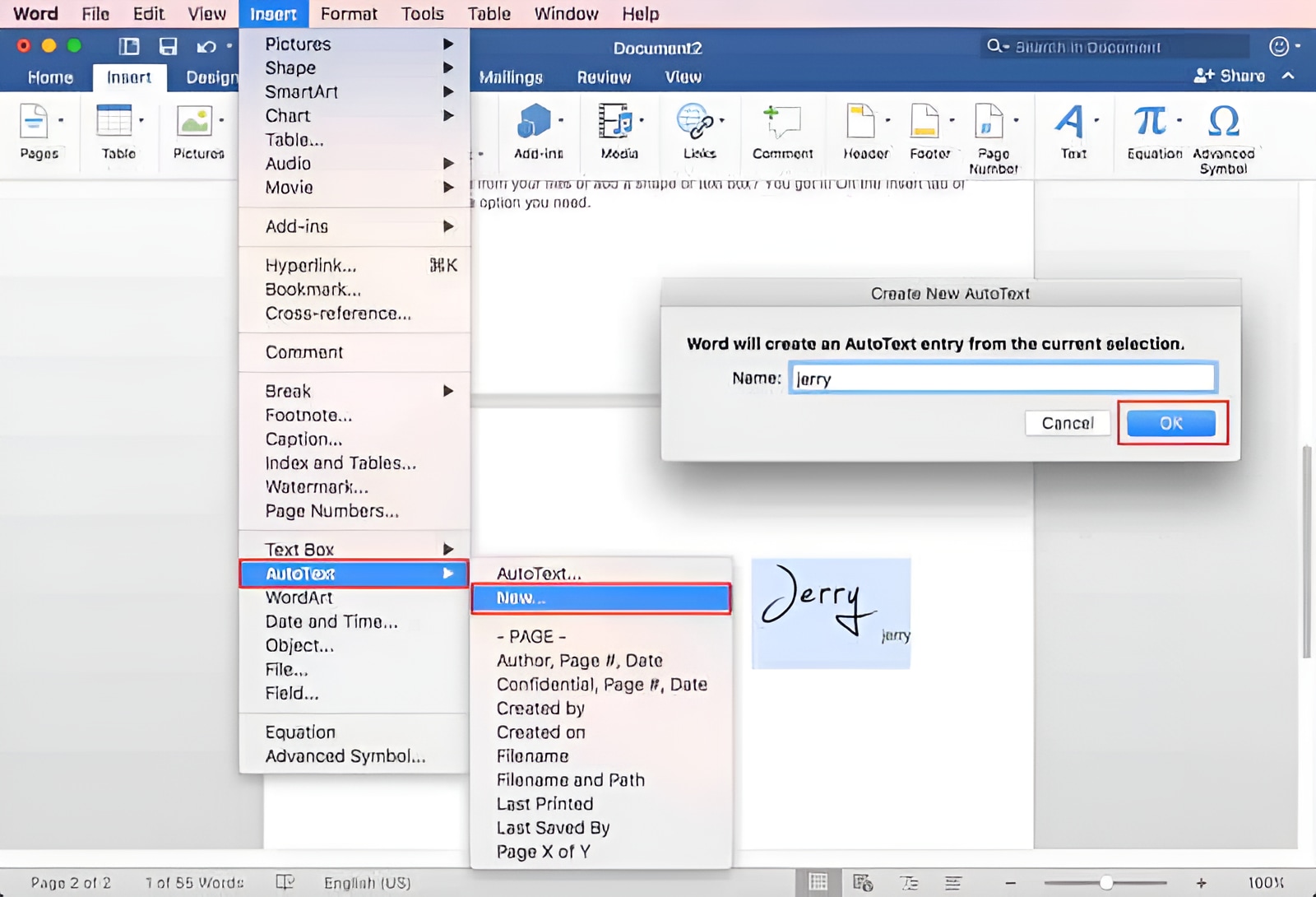
Selecione o bloco inteiro. Isso significa selecionar a imagem e o texto digitado abaixo dela. Se for difícil selecionar os dois juntos, coloque o bloco de assinatura dentro de uma tabela de uma célula sem borda e selecione a tabela inteira. Isso mantém o bloco unido e facilita a reutilização.
Depois, vá em Insert > AutoText > New. Dê ao bloco de assinatura um nome claro, como Assinatura Jane ou Bloco de assinatura de aprovação, e salve.
Os nomes exatos do menu podem variar um pouco dependendo da sua versão do Word para Mac. Se você não encontrar o mesmo comando, use a caixa de busca do Word ou a ajuda e procure por “AutoText”.
Insira a assinatura salva depois
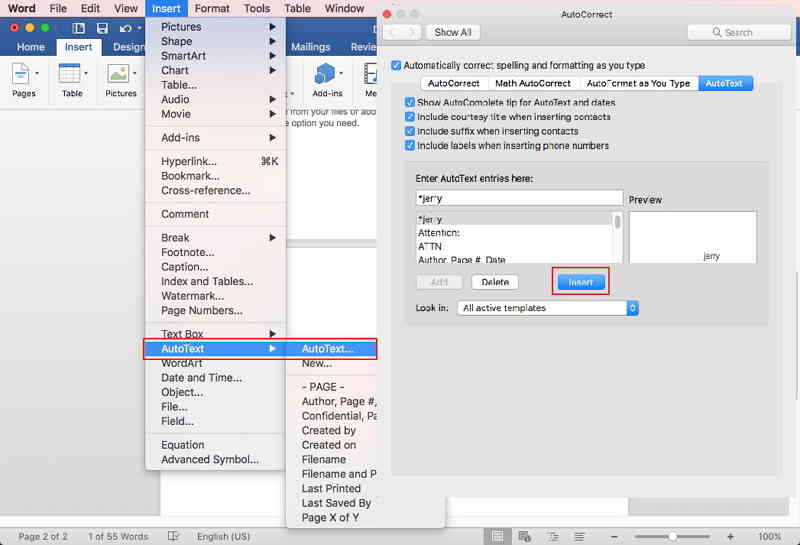
Para usar o bloco salvo em outro documento, coloque o cursor onde a assinatura deve aparecer. Depois vá em Insert > AutoText e escolha a assinatura salva. O Word inserirá a imagem e o texto juntos.
Esse é o fluxo mais rápido para quem costuma procurar como adicionar uma assinatura no Word no Mac, porque você só precisa preparar a assinatura uma vez. Depois disso, adicioná-la leva apenas alguns cliques.
Antes de enviar o documento, revise a página ao redor da área da assinatura. Um bloco reutilizável ainda pode mudar de lugar se o novo documento usar margens, fontes ou espaçamentos diferentes. Se a assinatura ficar próxima demais de um parágrafo ou de uma quebra de página, adicione espaço acima dela ou mova-a para uma pequena tabela sem bordas.
Atualize ou exclua um bloco de assinatura antigo
Você pode precisar substituir a imagem da sua assinatura após mudança de nome, cargo ou identidade visual da empresa. Crie primeiro o bloco atualizado e depois salve-o com um novo nome de AutoText. Se o Word perguntar se deve redefinir uma entrada AutoText existente, confirme apenas se tiver certeza de que deseja sobrescrever a antiga.
Para evitar confusão, não use nomes vagos como sig ou nova assinatura. Use nomes que ajudem a identificar o bloco certo meses depois. Se várias pessoas usam o mesmo Mac, inclua iniciais ou o nome do departamento.
Outras formas de assinar um documento do Word no Mac
O método da imagem geralmente é o melhor, mas não é a única opção. Dependendo do documento e do nível de formalidade, outro método pode funcionar melhor.
Use uma linha de assinatura
Alguns documentos do Word incluem uma linha formal de assinatura com nome, cargo e data. No Word para Windows, os recursos de linha de assinatura são mais destacados. No Mac, a disponibilidade pode depender da versão e do conjunto de recursos do Microsoft 365.
Se a sua versão do Word para Mac oferecer opções de linha de assinatura, você poderá encontrá-las em Insert. Isso pode ser útil para criar um local visível onde alguém deve assinar, especialmente se o documento for impresso depois. No entanto, uma linha de assinatura sozinha não insere a sua assinatura manuscrita. Ela funciona mais como um espaço reservado ou área de instrução.
Se você está preparando um documento para outra pessoa assinar, uma linha de assinatura ainda pode ajudar. Adicione rótulos como “Assinatura”, “Nome por extenso” e “Data”, depois deixe espaço suficiente para a pessoa assinar. Se o documento for assinado eletronicamente depois, exporte como PDF e use uma ferramenta de assinatura em PDF.
Desenhe uma assinatura com as ferramentas de desenho do Word
Algumas versões do Word para Mac incluem uma guia Draw. Se você usa trackpad, mouse ou uma mesa digitalizadora conectada, talvez consiga desenhar diretamente na página.
Isso é prático para notas rápidas, mas nem sempre é a opção mais bonita. Assinar com o mouse geralmente fica irregular, e assinaturas feitas no trackpad podem ser difíceis de controlar. Se você tiver um iPad com Sidecar ou um fluxo com caneta stylus, desenhar pode parecer mais natural.
Use esse método para documentos pouco formais, em que a aparência não é crítica. Para um documento empresarial bem apresentado, uma imagem escaneada ou fotografada da assinatura geralmente fica mais limpa.
Use o Preview para criar uma imagem de assinatura
O app Preview do Mac pode criar assinaturas usando o trackpad, a câmera ou o iPhone. O Preview é mais usado para PDFs, mas também pode ajudar a capturar uma assinatura limpa para depois usar no Word.
Abra um PDF no Preview, escolha as ferramentas de marcação e use o recurso de assinatura. A Apple fornece instruções para esse fluxo no guia do usuário do Preview: Ferramentas de assinatura do Apple Preview.
Depois de criar a assinatura, você ainda pode precisar de um arquivo de imagem utilizável no Word. Dependendo do seu fluxo, você pode criar a assinatura no Preview, colocá-la em um PDF em branco, tirar uma captura de tela só da área da assinatura e inserir essa imagem no Word. É um pouco indireto, mas funciona se você não tiver scanner.
Para melhores resultados, recorte a captura de tela de forma justa e mantenha o fundo limpo. Se a captura incluir áreas cinza ou off-white, a assinatura pode destoar da página.
Assine depois de exportar para PDF
Às vezes, a melhor resposta para como assinar um documento do Word no Mac é: termine primeiro o documento no Word e depois assine a versão em PDF. Essa é a melhor escolha quando o layout do documento não deve mudar depois da assinatura.
No Word para Mac, você pode exportar o documento indo em File > Save As ou File > Export e escolhendo PDF. Depois disso, adicione a assinatura em um editor ou ferramenta de assinatura em PDF. O PDF final é mais fácil de compartilhar porque o layout tem menos chance de mudar em outro dispositivo.
Esse fluxo é comum em contratos, aprovações de clientes, faturas, formulários de RH e documentos que devem ser arquivados depois de assinados.
Use o PDFelement quando o documento final precisar ser um PDF
O Word é excelente para redigir e editar, mas documentos assinados costumam ser enviados em PDF. Um arquivo do Word pode ser editado depois que uma assinatura é adicionada, e a formatação pode mudar se o destinatário o abrir em outro aplicativo ou versão. O PDF costuma ser mais seguro para a cópia final porque preserva o layout da página e facilita revisão, anotação e armazenamento.
É aí que o PDFelement se encaixa naturalmente no fluxo. Você pode preparar o documento no Word, exportá-lo como PDF e depois usar o PDFelement para Mac para adicionar uma assinatura visível, anotar o arquivo, organizar páginas, comprimir o PDF para enviar por e-mail ou aplicar OCR se o documento vier de um escaneamento. Ele não substitui a redação no Word; é útil quando o documento está pronto para ser finalizado e compartilhado.
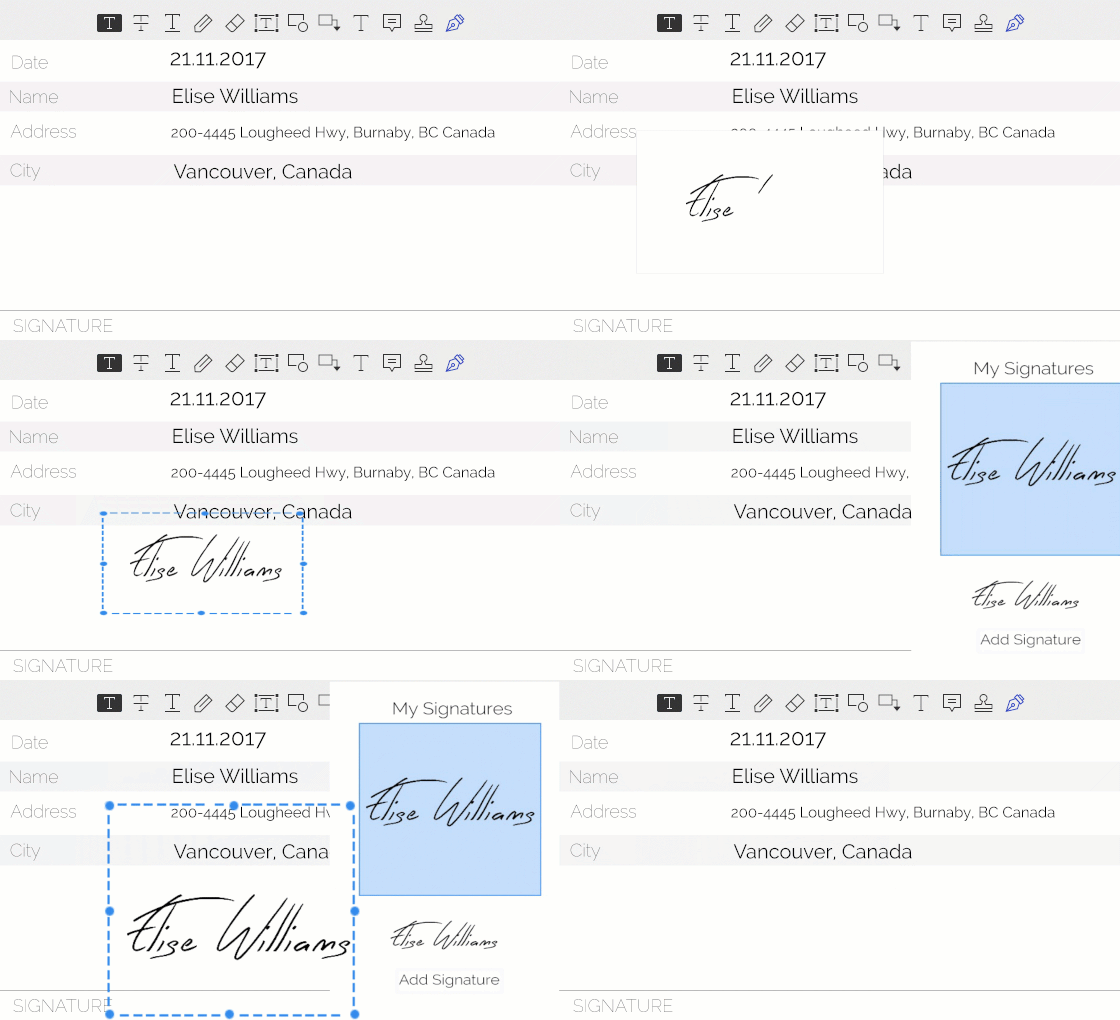
G2 Rating: 4.5/5 |100% Secure
Como adicionar uma assinatura a um PDF no Mac com o PDFelement
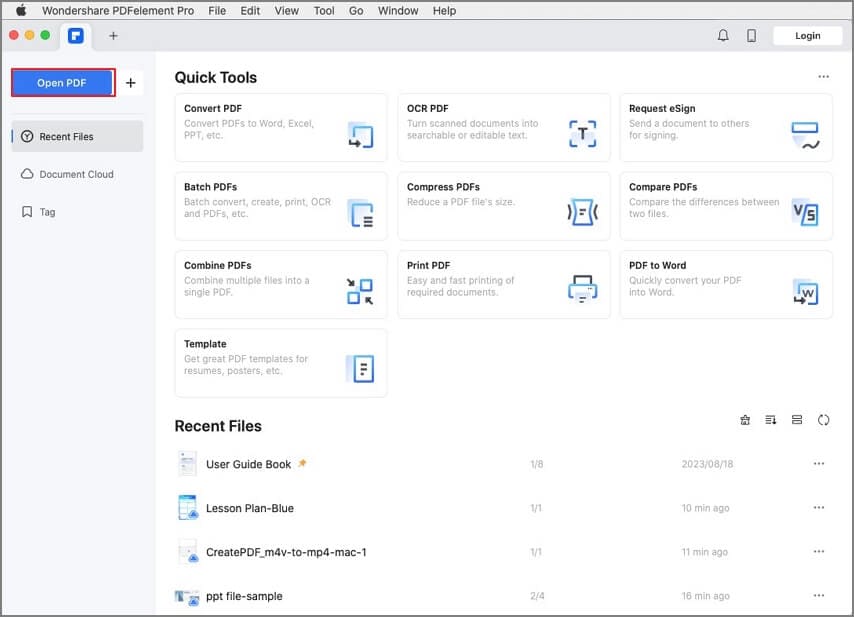
Depois de instalar o PDFelement no Mac, abra o PDF exportado do Word. Normalmente você pode começar pela tela principal, escolhendo Open File e selecionando o PDF.
Quando o PDF estiver aberto, vá até as ferramentas de comentário ou marcação e escolha a opção de assinatura. O PDFelement permite criar uma assinatura de várias formas práticas, dependendo do que você já tiver disponível.
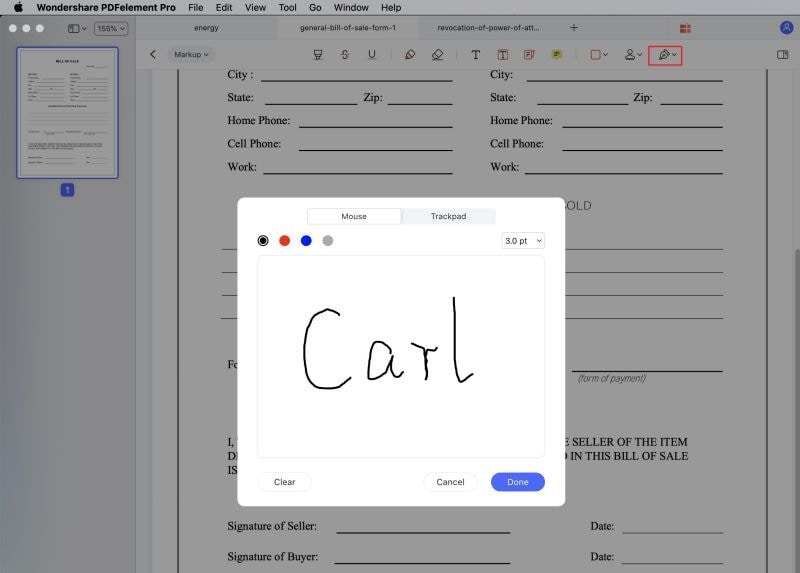
Você pode digitar uma assinatura, importar uma imagem da sua assinatura manuscrita, capturá-la com uma câmera ou desenhá-la com o mouse ou trackpad. Se você já criou uma imagem limpa da assinatura para usar no Word, pode reutilizar o mesmo arquivo no PDFelement. Coloque a assinatura no local correto, redimensione e salve o PDF.
Esse fluxo é especialmente útil quando alguém envia um formulário em PDF, e não um documento do Word. Em vez de converter o arquivo para Word só para assinar, você pode assinar diretamente no PDF e manter o layout original intacto.
Quando converter Word em PDF antes de assinar
Converta para PDF antes de assinar se o documento estiver finalizado e você não quiser que os destinatários façam edições casuais. Isso é comum em orçamentos, cartas de aprovação, confirmações de política interna e formulários assinados.
Permaneça no Word se você ainda estiver colaborando no conteúdo. Adicionar a assinatura cedo demais pode causar confusão, porque edições posteriores podem mudar o significado do documento assinado. Um fluxo mais limpo é: redigir no Word, revisar, finalizar, exportar para PDF, assinar e então enviar.
Se você precisar manter as duas versões, salve o arquivo do Word como fonte editável e o PDF assinado como cópia oficial. Use nomes de arquivo claros, como Contrato-Cliente-Rascunho.docx e Contrato-Cliente-Assinado.pdf.
G2 Rating: 4.5/5 |100% Secure
Como corrigir problemas comuns de assinatura no Word para Mac
Mesmo quando os passos básicos estão corretos, as assinaturas no Word podem se comportar de forma estranha. A maioria dos problemas vem da qualidade da imagem, das configurações de quebra de texto ou do layout do documento.
Se a assinatura aparecer com uma caixa branca ao redor, o fundo da imagem não combina com a página ou foi capturado com sombras. Recrie a imagem da assinatura com melhor iluminação, digitalize novamente ou use ferramentas de edição para remover o fundo. Em documentos formais, um PNG transparente costuma ficar mais limpo do que um JPG com um retângulo visível.
Se a assinatura se mover quando você editar o texto, verifique a configuração de quebra de texto. In Line with Text é a opção mais estável. Se você precisar de posicionamento exato sobre uma linha, use In Front of Text, mas espere fazer ajustes manuais se o conteúdo ao redor mudar.
Se a assinatura parecer borrada, comece com uma imagem de melhor qualidade. Não amplie demais uma captura de tela pequena. É melhor digitalizar ou fotografar a assinatura em resolução maior, recortar e depois reduzir no Word.
Se a assinatura sair muito clara na impressão, use uma caneta mais escura ou ajuste o contraste da imagem antes de inseri-la. Algumas assinaturas cinzas parecem aceitáveis na tela, mas ficam fracas no papel. Imprima uma página de teste antes de enviar um grande lote de documentos assinados.
Se você não conseguir selecionar a assinatura e o texto juntos, coloque-os dentro de uma pequena tabela. Crie uma tabela de uma célula, insira a imagem da assinatura e os detalhes digitados dentro dela e depois remova a borda da tabela. Isso mantém os elementos agrupados visualmente e facilita mover o bloco inteiro.
Se a assinatura aparecer na página errada, verifique quebras de página e o espaçamento de parágrafo acima da assinatura. O Word pode empurrar a imagem para frente se não houver espaço suficiente no fim da página. Reduzir um pouco o tamanho da imagem ou mover o bloco de assinatura para mais acima pode resolver.
Perguntas frequentes
-
Como insiro uma assinatura no Word no Mac?
A forma mais fácil é inserir uma imagem da sua assinatura manuscrita. Assine em uma folha em branco, digitalize ou fotografe, salve em PNG ou JPG e depois abra o Word e escolha Insert > Pictures > Picture from File. Depois de inserir, recorte, redimensione e posicione a imagem onde a assinatura deve aparecer. -
Como adiciono uma assinatura no Word para Mac e a reutilizo depois?
Crie o bloco de assinatura com a imagem e os detalhes digitados e depois selecione o bloco inteiro. Vá em Insert > AutoText > New, dê um nome ao bloco e salve. Depois, basta colocar o cursor em outro documento e inserir a entrada de AutoText salva, em vez de refazer a assinatura. -
Posso desenhar minha assinatura diretamente no Word para Mac?
Sim, se a sua versão do Word incluir ferramentas de desenho, você pode usar a guia Draw para escrever uma assinatura com trackpad, mouse ou mesa digitalizadora. Uma assinatura feita com o mouse pode ficar grosseira, por isso uma imagem escaneada costuma ser melhor para documentos profissionais. -
Como coloco uma linha de assinatura no Word no Mac?
Você pode digitar rótulos como “Assinatura”, “Nome por extenso” e “Data” e usar sublinhados ou uma tabela para criar áreas limpas de assinatura. Algumas versões do Word também incluem recursos de linha de assinatura no menu Insert, mas a disponibilidade pode variar no Mac. -
Uma imagem de assinatura tem valor legal?
Uma imagem de assinatura pode demonstrar intenção, mas não é a mesma coisa que uma assinatura digital segura. Os requisitos legais dependem do tipo de documento, da jurisdição e do processo de assinatura. Para contratos importantes ou documentos regulamentados, use o método de assinatura exigido pelo destinatário, pela empresa ou pelo consultor jurídico. -
Devo assinar um documento do Word ou exportar para PDF primeiro?
Se o documento ainda estiver sendo editado, mantenha-o no Word. Se estiver finalizado, exporte para PDF e assine o PDF. O PDF costuma ser melhor para envio porque o layout é preservado e o arquivo é mais difícil de ser alterado acidentalmente. -
Posso usar o Preview no Mac para criar uma assinatura para o Word?
Sim. Você pode criar uma assinatura no Preview usando o trackpad, a câmera ou o iPhone. Se precisar usá-la no Word, talvez tenha que colocá-la em um documento em branco ou PDF, tirar uma captura de tela limpa da assinatura e inserir essa captura como imagem. -
Por que minha assinatura continua mudando de lugar no Word?
Geralmente a causa é a configuração de quebra de texto da imagem. Selecione a imagem da assinatura, vá em Picture Format > Wrap Text e tente In Line with Text para um layout mais estável. Para posicionamento exato sobre uma linha, In Front of Text pode funcionar, mas pode exigir ajustes manuais. -
Qual é o melhor formato de imagem para uma assinatura no Word?
O PNG geralmente é o melhor porque mantém as bordas nítidas e pode ter fundo transparente. O JPG também funciona, especialmente para assinaturas simples escaneadas, mas pode apresentar artefatos de compressão ou uma caixa de fundo visível. -
O PDFelement pode assinar documentos do Word diretamente?
O PDFelement é voltado principalmente para fluxos em PDF. Uma abordagem prática é finalizar o documento no Word, exportá-lo para PDF e depois usar o PDFelement para adicionar uma assinatura, fazer anotações, organizar páginas, comprimir o arquivo ou preparar o PDF final assinado para compartilhamento.