
In this article
- Understanding PNG OCR: How Does It Work?
- Method 1: The Best Desktop PNG to Text Converter (PDFelement)
- Method 2: Convert PNG to Text Free via Google Drive
- Method 3: Quick Online PNG to TXT Converters
- Method 4: Built-in OS Tools (Apple Live Text & Windows Snipping Tool)
- Bonus: How to Convert PNG to Word
- Choosing the Right PNG to TXT Converter for Your Needs
- Everything You Need to Know About the PNG Format
- Frequently Asked Questions (FAQs)
Have you ever taken a screenshot of a recipe, received a scanned invoice, or downloaded a helpful infographic, only to realize you need to edit the text inside it? Because standard image files do not contain selectable text layers, you cannot simply highlight and copy the words. You must convert PNG to TXT to make that data usable.
Whether you are a student digitizing lecture slides, an administrative professional handling digital receipts, or a developer trying to extract code snippets from a screenshot, finding a reliable way to convert PNG to text is essential. Fortunately, modern software has made this process incredibly accessible.
In this comprehensive guide, we will explore the best methods to extract text from your images. From professional desktop software and free cloud services to rapid online tools, you will find the perfect PNG to TXT converter to suit your workflow.
Understanding PNG OCR: How Does It Work?
Before diving into the tools, it helps to understand the technology that makes this conversion possible. If you have ever searched for "png ocr" or "png to ocr," you are looking for Optical Character Recognition (OCR).
When you look at a PNG file containing text, your human brain immediately recognizes the letters and words. However, to a computer, that image is nothing more than a grid of colored pixels. There is no structural difference to the computer between a pixel that makes up a letter "A" and a pixel that makes up a picture of a cat.
OCR technology bridges this gap. When you run a PNG to text converter equipped with OCR, the software scans the pixel patterns. It uses complex algorithms and machine learning to identify shapes that resemble human letters, numbers, and punctuation marks. Once it identifies these shapes, it translates them into machine-encoded text that you can highlight, copy, edit, and search. You can read more about how OCR technology works to process these pixels.
Without OCR, a PNG in text format is impossible to achieve. Today's advanced OCR engines support dozens of languages, can recognize handwriting, and even preserve the original layout of the document.


 G2 Rating: 4.5/5 |
 100% Secure
Method 1: The Best Desktop PNG to Text Converter (PDFelement)
If you are dealing with confidential documents, handling massive batches of images, or requiring the highest possible accuracy, an offline desktop program is the premier choice. Among the leading options on the market, Wondershare PDFelement stands out as an exceptionally robust PNG to txt converter.
PDFelement features a state-of-the-art OCR engine that can precisely read text from images and scanned documents in over 20 different languages. Because it operates offline, your data remains secure on your local hard drive, making it ideal for financial records, legal documents, and personal information.
Here is how you can convert a PNG file to text using PDFelement:
Step 1 Open Your PNG File
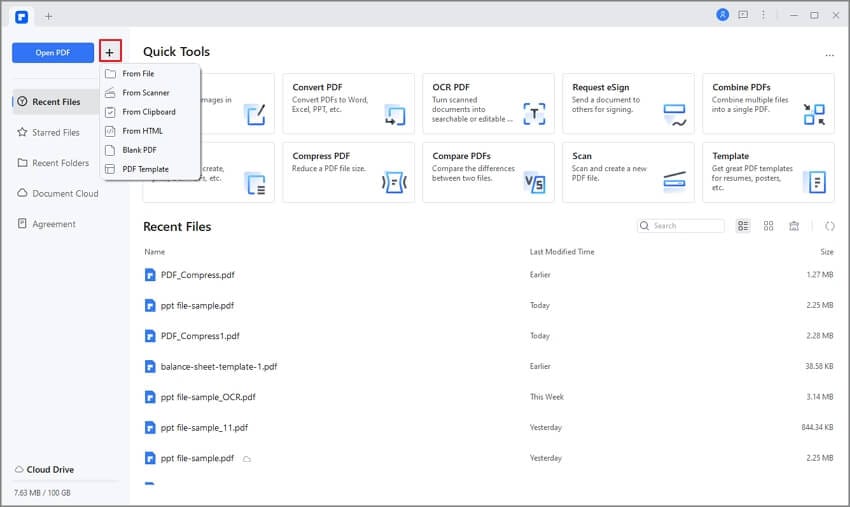
First, launch the software. Simply drag and drop your target PNG file directly into the program's main interface. Alternatively, you can click "Create PDF" and browse your computer for the image. The software will instantly load the image into the workspace.
Step 2 Perform OCR on the PNG
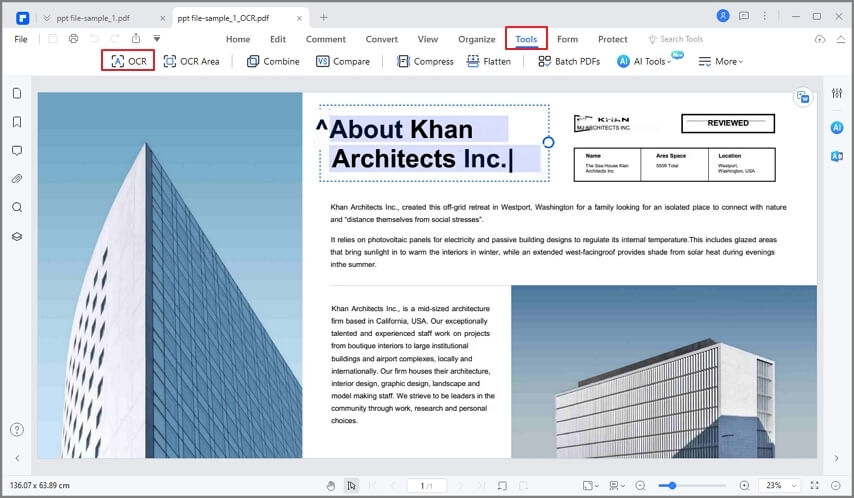
Once the image is open, the program will usually detect that it is an image-based file and prompt you to perform OCR. If not, navigate to the "Edit" tab on the top menu and click the "OCR" button.
A settings dialog will appear. Make sure to select the "Editable Text" option so the software knows you want to manipulate the words. You should also select the correct language of the text inside your image to guarantee maximum accuracy. Click "Apply" to let the OCR engine scan your document.
G2 Rating: 4.5/5 |100% Secure
Step 3 Convert PNG to Text
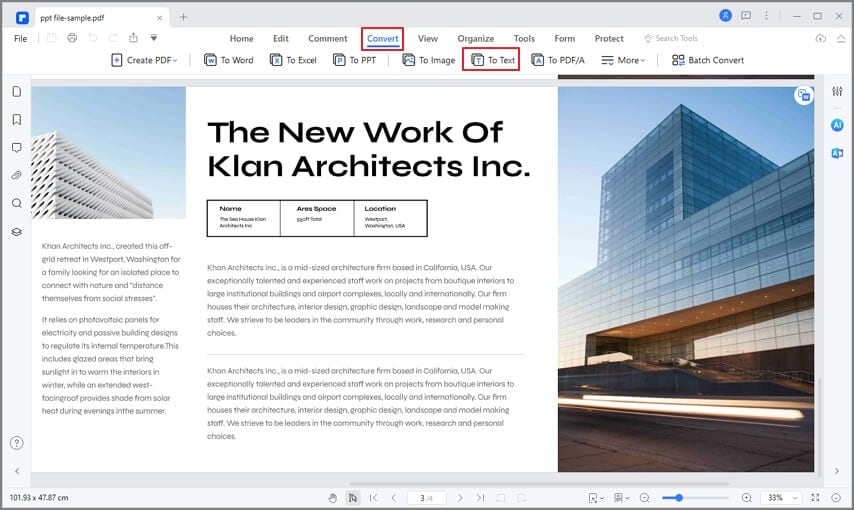
After the OCR process finishes (which usually takes only a few seconds), the text on your screen is fully recognized. To save this as a plain text file, click on the "Convert" tab (or "Home" > "To Others" in older versions), and select the "To Text" option. Choose your destination folder, and you have successfully completed the convert PNG to txt process.
Method 2: Convert PNG to Text Free via Google Drive
If you do not want to install any third-party software and only have a few images to process, you already have a powerful PNG to text converter at your fingertips: Google Drive.
Google Drive features a hidden, built-in OCR capability that works seamlessly with Google Docs. This method is completely free, works entirely in the cloud, and is perfect for casual users who need a quick extraction.
Here is the step-by-step process:
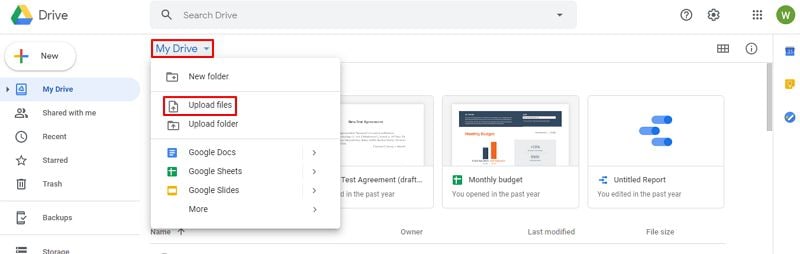
Step 1 Upload Your PNG File
Open your web browser and navigate to your Google Drive account. Drag and drop your PNG file into your Drive, or click the "+ New" button and select "File upload" to import your image.
Step 2 Open with Google Docs to Trigger OCR
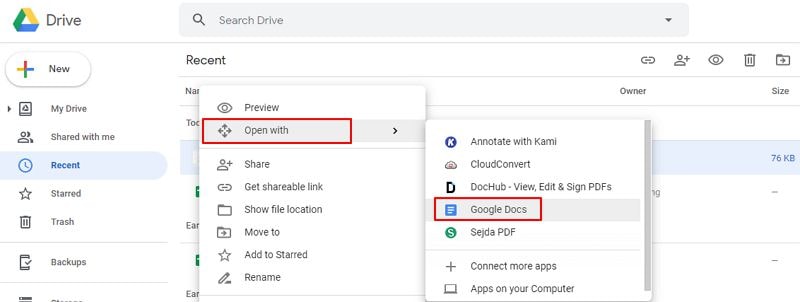
Once the upload is complete, locate the PNG file in your Drive. Right-click on the image file, hover over "Open with," and select "Google Docs."
This action automatically triggers Google's OCR engine. A new Google Doc will open containing your original image at the top, and the newly extracted, editable text directly below it.
Step 3 Save as a TXT File
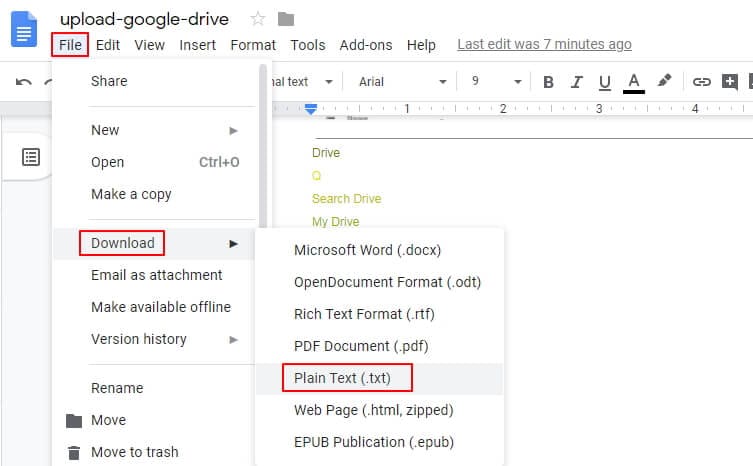
Now that the text is editable, you can clean up any minor formatting errors. To save it directly to your computer as a plain text file, go to the top menu and click "File" > "Download" > "Plain Text (.txt)." The file will immediately download to your hard drive.
Method 3: Quick Online PNG to TXT Converters
For users who are working on a borrowed computer, using a mobile device, or just looking for the absolute fastest way to convert PNG to text without logging into an account, online OCR tools are the perfect solution.
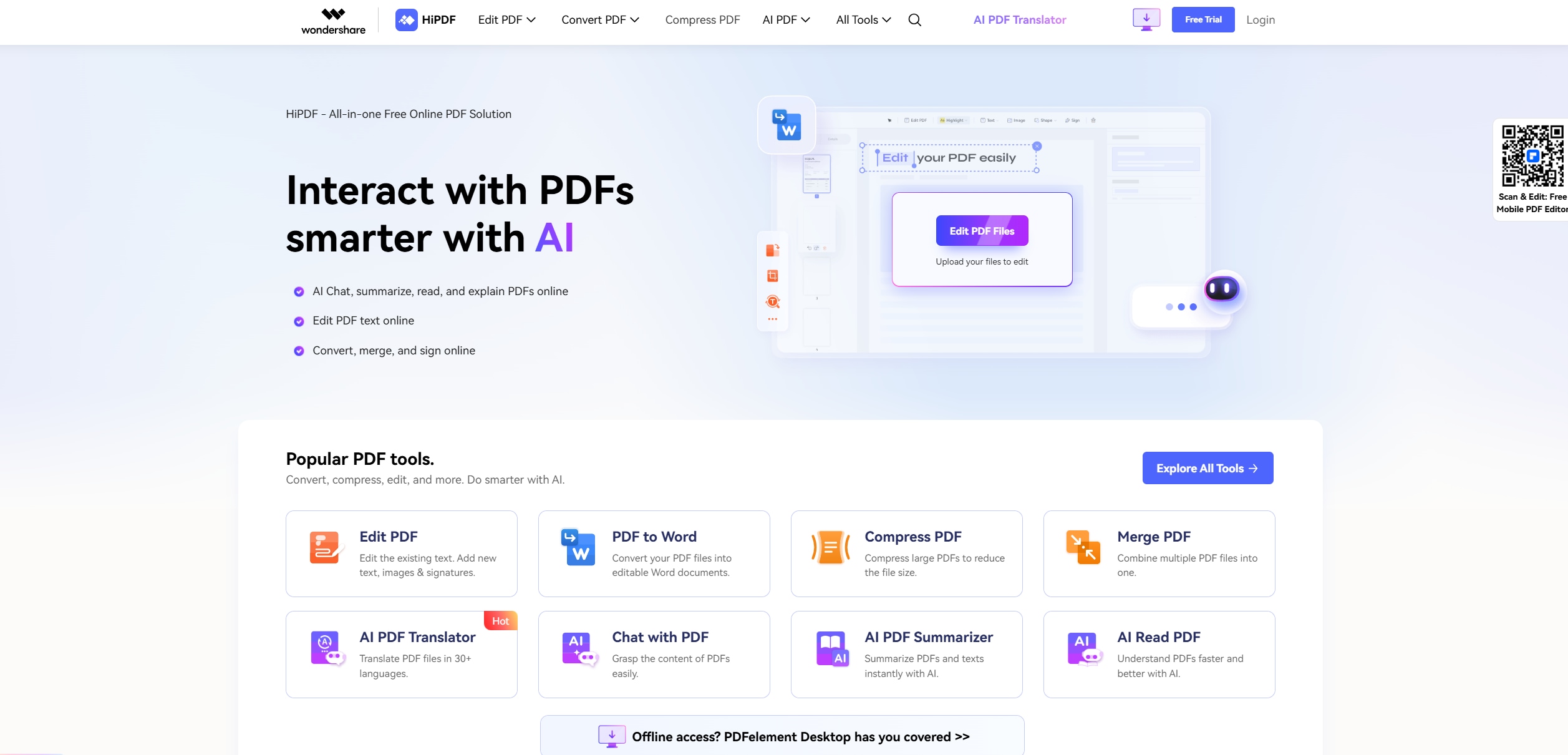
Web-based tools process the image on remote servers and return the text to your browser in seconds. One highly recommended tool is HiPDF, an all-in-one online PDF and image utility suite.
How to use an online converter:
- Navigate to an online OCR tool like HiPDF's Image to Text converter.
- Upload your PNG file using the provided upload button or drag-and-drop area.
- Select your desired output format (in this case, TXT).
- Click "Convert" or "OCR." The cloud server will process the image.
- Download your newly created TXT file to your device.
Method 4: Built-in OS Tools (Apple Live Text & Windows Snipping Tool)
In recent years, operating systems have become incredibly smart, integrating OCR directly into their core functionalities. If you just need to grab a quick snippet of text from an image, you might not need an external converter at all.
For Mac and iOS Users (Live Text):
Apple introduced the "Live Text" feature in recent versions of macOS and iOS. If you open a PNG image in the native Apple Photos app or Preview, you can simply hover your cursor over the text inside the image. The cursor will change to a text-selection tool. You can highlight the text, right-click to copy it, and then paste it into any standard text editor (like Notepad or TextEdit) to save your own TXT file.
For Windows Users (Snipping Tool / PowerToys):
Windows 11 recently updated its native Snipping Tool to include "Text Actions." When you open a PNG in the Snipping Tool, you can click the Text Actions button to instantly highlight all readable text. You can then copy all text and paste it into a blank Notepad file. Additionally, Microsoft PowerToys offers a "Text Extractor" tool (activated via a keyboard shortcut) that lets you drag a box over any image on your screen to instantly copy the text to your clipboard.
Bonus: How to Convert PNG to Word
While a plain text (.txt) file is great for simple data extraction and stripped-down formatting, many users actually want to retain the layout, fonts, and tables of the original image. If you are dealing with a complex document like an invoice or a flyer, you don't just want text—you want structure. In this scenario, you need to convert PNG to Word.
Most of the tools mentioned above offer this capability:
- With PDFelement: Follow the exact same OCR steps outlined in Method 1. However, instead of clicking "To Text," you will click "To Word." The software will create a fully formatted .docx file that mimics the layout of your original PNG.
- With Google Drive: After opening the PNG in Google Docs (Method 2), simply go to "File" > "Download" > "Microsoft Word (.docx)."
- With Online Tools: When using an online OCR converter, switch the output dropdown menu from TXT to DOCX before hitting the convert button.
Converting a PNG to Word is highly recommended for professionals who need to edit contracts, rewrite scanned essays, or manipulate tabular data.
G2 Rating: 4.5/5 |100% Secure
Choosing the Right PNG to TXT Converter for Your Needs
With so many options available, how do you choose the right tool for your specific situation? Here is a quick breakdown to help you decide:
- For High Volume & Data Privacy: Use desktop software like PDFelement. It processes files locally, keeping your data safe, and allows you to run OCR on dozens of images simultaneously (Batch OCR).
- For Casual, Free Extraction: Use Google Drive. It is already integrated into a platform you likely use, and it is highly accurate for standard text.
- For Instant, No-Install Needs: Use Online Converters (like HiPDF). Perfect for one-off conversions on public or restricted computers.
- For Tiny Snippets of Text: Rely on your operating system's built-in features, such as Apple Live Text or the Windows Snipping Tool.
Everything You Need to Know About the PNG Format
When you are working with image conversions, it helps to understand the file format you are starting with. PNG stands for Portable Network Graphics.
Developed in 1996 as a non-patented improvement over the GIF format, PNG has become one of the most popular image formats on the internet, second only to JPEG. Its stable release was solidified in March 2004 under standard ISO/IEC 15948.
The most defining characteristic of the PNG format is its lossless compression. Unlike JPEGs, which discard pixel data to shrink file sizes (resulting in a blurry or "artifact-heavy" look over time), PNGs retain the original image quality completely. This makes PNG the absolute best format for screenshots, digital art, graphics with transparent backgrounds, and—most importantly for OCR—images containing text. Crisp, uncompressed text in a PNG is much easier for an OCR engine to read than blurry text in a highly compressed JPEG.
Here is a quick look at how PNG compares to other common image formats:
| Feature | PNG | JPEG | GIF | TIFF |
|---|---|---|---|---|
| Stands For | Portable Network Graphics | Joint Photographic Experts Group | Graphics Interchange Format | Tagged Image File Format |
| Inception | 1996 | 1992 | 1987 | 1992 |
| Common Extensions | .png | .jpg, .jpeg | .gif | .tiff, .tif |
| Compression | Lossless | Lossy | Lossless | Lossless / Uncompressed |
| Best Used For | Web graphics, transparent backgrounds, screenshots | Photographs, complex gradients, saving space | Simple animations, small icons | High-res printing, professional photography |
Frequently Asked Questions (FAQs)
-
Will I lose my original image after I convert PNG to text?
No. Converting a file generally creates a brand-new, separate file. Your original PNG image will remain exactly where it is, untouched and unchanged. You will simply have a second file (the TXT or Word document) containing the extracted text.
-
Can a PNG to text converter read handwriting?
It depends on the tool and the legibility of the handwriting. Standard OCR is designed for printed, typed fonts. However, advanced tools and AI-driven cloud converters (like Google's engine or premium desktop OCR software) are increasingly capable of recognizing clear, block-style handwriting. Cursive writing remains a challenge for most OCR engines.
-
Why is my converted TXT file full of random symbols and gibberish?
This usually happens for three reasons:
- The original PNG image is too blurry or low-resolution for the OCR engine to read.
- You selected the wrong language in the OCR settings prior to conversion.
- The image has a highly complex, chaotic background that the OCR engine is confusing for letters.
To fix this, try enhancing the image contrast before converting, and ensure your language settings are correct.
-
Is it safe to use free online PNG to txt converters?
For general documents, yes. Reputable online converters delete your files from their servers within a few hours (usually 2 to 24 hours). However, if your PNG contains sensitive information (like bank details, social security numbers, or confidential business data), it is always recommended to use an offline desktop converter like PDFelement to ensure your data never leaves your computer.
-
What is the difference between converting to TXT and converting to Word?
A TXT (Plain Text) file strips away all formatting. It will not save fonts, colors, bold text, images, or tables; it only saves the raw words. A Word document (.docx) supports Rich Text formatting, meaning the OCR engine will attempt to recreate the layout, font styles, and tables to make the new document look as close to the original PNG as possible.