
In this article
- Why Converting BMP to Word Requires Specialized OCR Tools
- Top Scenarios for Converting BMP to Word
- Method 1: Convert BMP to Word Offline Using PDFelement (Best for Accuracy)
- Method 2: Convert BMP to Word Using Google Drive (Free Online Method)
- Method 3: Using Dedicated Online BMP to Word Converters
- Method 4: Extracting Text via Microsoft OneNote
- Comparison Guide: Which Conversion Method is Right for You?
- Expert Tips to Ensure High-Quality OCR Results
- Understanding the BMP Format: What You Need to Know
- Frequently Asked Questions (FAQs)
- Conclusion
The BMP (Bitmap) image format has long been utilized to safeguard high-quality, uncompressed digital images. However, while it is excellent for preserving raw pixel data, it is a static format. When you are dealing with text—such as scanned forms, digital invoices, or screenshots—a static image is not useful if you need to edit, search, or copy that text. Word, on the other hand, is a format widely used for preserving data, formatting text, and facilitating collaborative document editing.
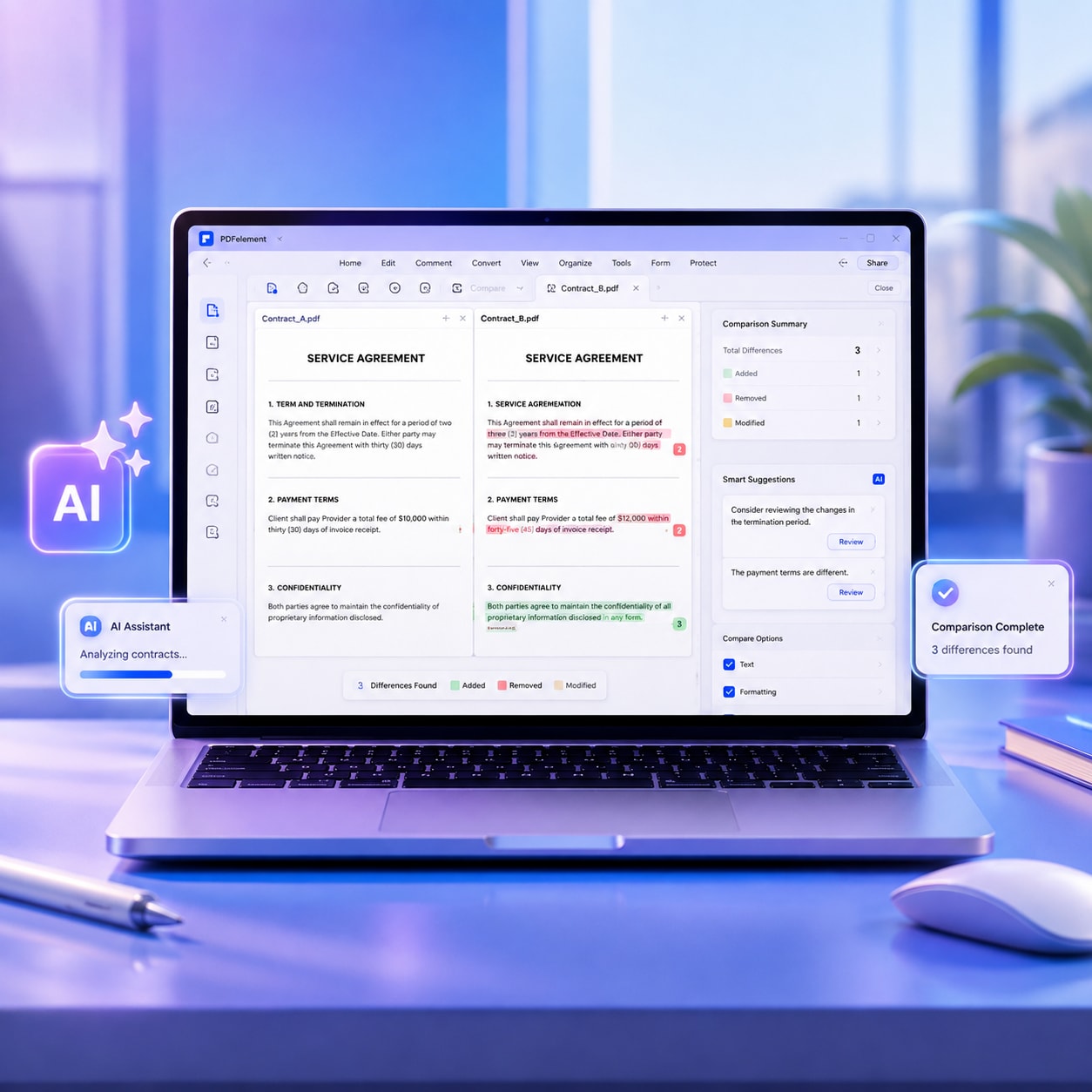
To gain greater control over file management and workflow efficiency, it is expedient for users to have a first-rate bmp to word converter such as Wondershare PDFelement - PDF Editor Wondershare PDFelement Wondershare PDFelement. Because transforming pixels into editable characters is a complex process, utilizing the right Optical Character Recognition (OCR) tools is essential to preserve your original document's layout.
In this comprehensive guide, we will explore the best methods to convert bmp to word, ranging from professional desktop software to free online alternatives, ensuring you can extract text accurately no matter your circumstances.


 G2 Rating: 4.5/5 |
 100% Secure
Why Converting BMP to Word Requires Specialized OCR Tools
If you simply paste a BMP image into a blank Microsoft Word document, you haven't actually converted anything. You just have a static image sitting on a digital page; you still cannot edit the text within that image. True conversion requires a technological bridge.
Understanding the Gap Between Image and Text Formats
A BMP file is essentially a grid of colored squares (pixels). The computer does not "read" the letters in a BMP; it only sees color values assigned to coordinates. Conversely, a Microsoft Word document (.doc or .docx) relies on character encoding (like ASCII or Unicode). The computer understands that pressing a specific key creates a specific editable letter on the screen.
How Optical Character Recognition (OCR) Solves the Problem
To convert bmp file to word doc, you must use OCR technology. OCR algorithms scan the grid of pixels in your BMP file, recognize the geometric shapes that resemble human letters and numbers, and translate those visual patterns into actual, machine-readable text codes. The quality of the OCR engine dictates how well it can distinguish a smudge from a period, or a capital "I" from a lowercase "l," and how well it preserves the original layout of the text.
Top Scenarios for Converting BMP to Word
Understanding why and when professionals need a reliable bmp to word converter can help you tailor your workflow. Here are the most common scenarios where this conversion is necessary:
Digitizing Scanned Business Documents
Many legacy scanners output documents in lossless BMP formats to ensure maximum clarity. However, filing away unsearchable image files makes retrieving data a nightmare. Converting these images to Word documents allows businesses to index, search, and edit contracts, invoices, and reports.
Extracting Text from Archival Records
Historians, researchers, and librarians frequently work with high-resolution BMP scans of old newspapers, books, and public records. Retyping this information manually would take thousands of hours. Running these files through an OCR tool automates data entry and preserves historical data in a modern, accessible format.
Editing Information from System Screenshots
Often, users will take a screenshot (which may save as a BMP or PNG) of an error message, a protected PDF, or a web page where text selection is disabled. Converting that screenshot into an editable Word document allows for easy copying, quoting, and sharing of the information without manual transcription.
G2 Rating: 4.5/5 |100% Secure
Method 1: Convert BMP to Word Offline Using PDFelement (Best for Accuracy)
PDFelement is a robust converter and editor that offers a one-stop solution for file management. It allows users to create, edit, convert, and read files to and from various file formats in a breeze. For users looking to convert bmp to word document without compromising privacy or layout, this desktop solution is the premier choice.
Here is the straightforward method to extract text using PDFelement's integrated OCR engine.
Step 1Load a BMP into the Application
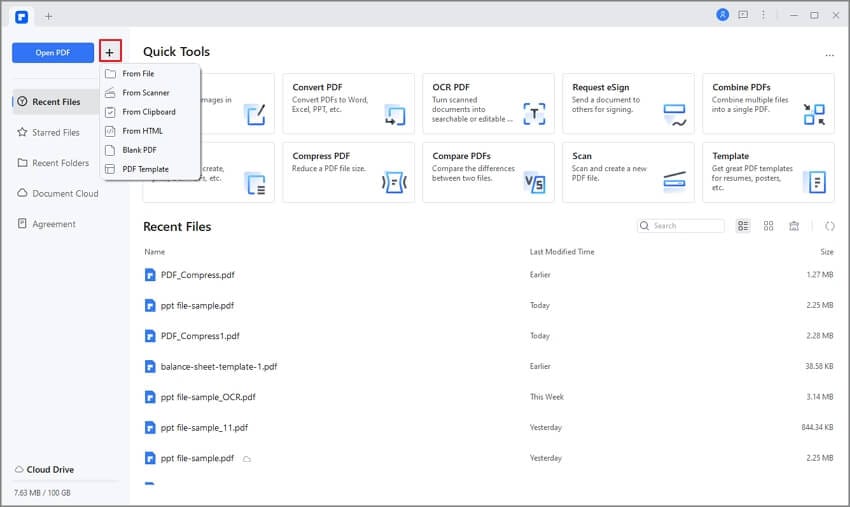
First, download and install PDFelement on your computer. Launch the application. To open your image, simply drag and drop the BMP file directly into the main program window. PDFelement will automatically recognize the image and open it within its interface as a digital document.
Step 2Perform OCR to Change it to be Editable
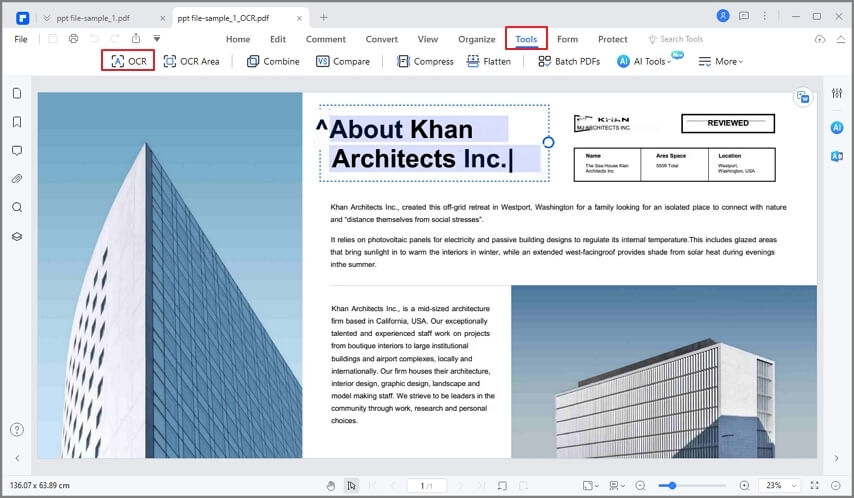
Because the file is currently an image, a blue notice bar will appear at the top of the document recommending that you perform OCR. Click the "Perform OCR" option in the notice bar. A settings menu will pop up. Select the "Editable Text" mode. It is crucial to click the "Change Language" button and select the exact language (or languages) present in your BMP file. This ensures the OCR engine references the correct dictionary for accurate text extraction. Click "Apply" to let the software scan the image.
Step 3Convert BMP to Editable Word
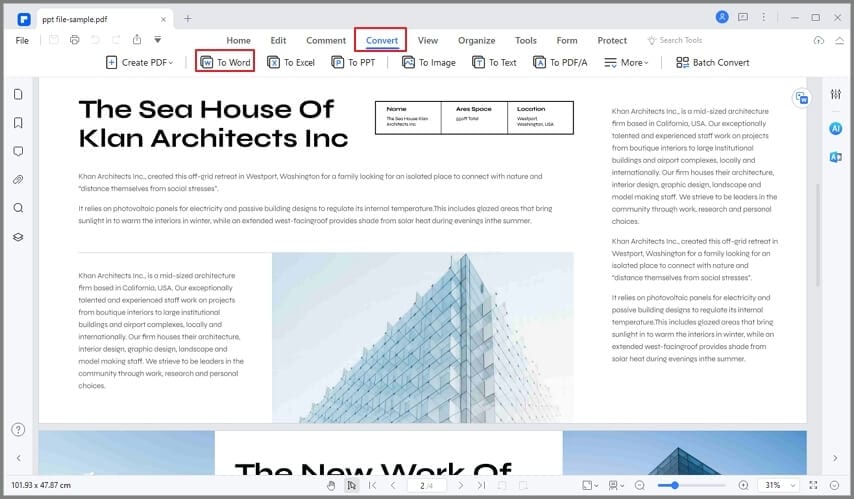
Once the OCR process finishes, the text within the document is now fully selectable and editable. To finalize the conversion, navigate to the "Home" tab (or "Convert" tab in newer versions). Click the "To Word" button. Choose your destination folder, name your file, and hit save. You have now successfully used a bmp to word converter to create an editable .docx file.
Alternative Approach: Adjusting OCR Settings for BMP to Word Conversion First
If you prefer to configure your settings before initiating the OCR process, PDFelement provides a dedicated preferences menu.
Step 1OCR Settings Configuration
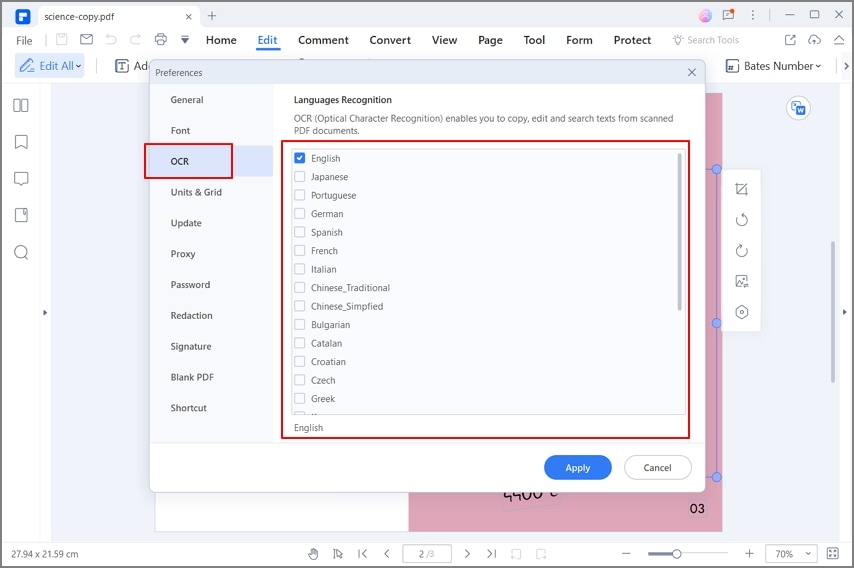
Go to the "File" > "Preferences" menu. In the new window, navigate to the "OCR" tab. Here, you can pre-select the correct language for your BMP file content and download any necessary OCR language packs if you are working with foreign languages.
Step 2Convert BMP to Doc
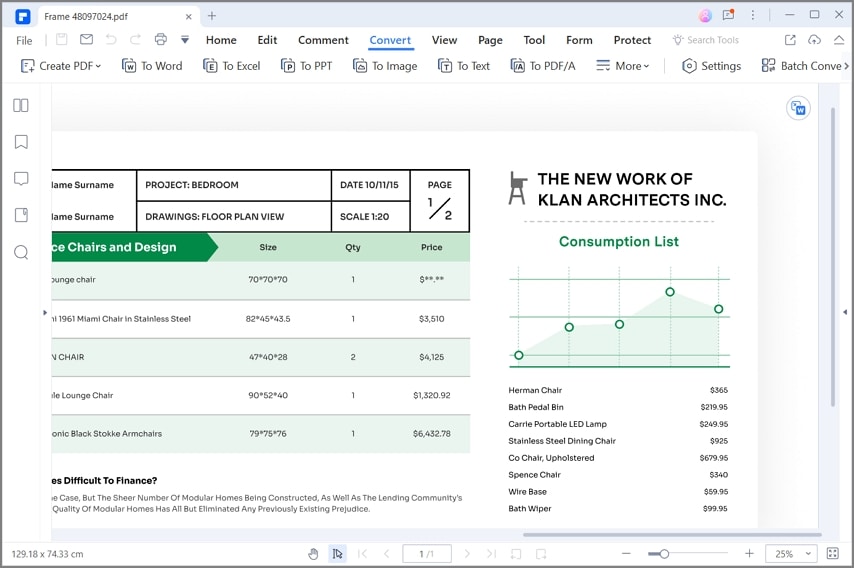
After setting your preferences, open your BMP file. Click the "To Word" button in the Home/Convert tab. In the save dialog window, click the "Settings" button and ensure that "Only scanned PDF" (or OCR recognition) is selected. Click the "Save" button to start the conversion. You will get a perfectly formatted, editable Word document in seconds.
G2 Rating: 4.5/5 |100% Secure
Method 2: Convert BMP to Word Using Google Drive (Free Online Method)
If you are looking for a completely free way to convert bmp to word and do not mind losing complex layouts and formatting, Google Drive possesses a hidden, built-in OCR feature that gets the job done surprisingly well for plain text.
Step 1Upload a BMP File to Your Drive
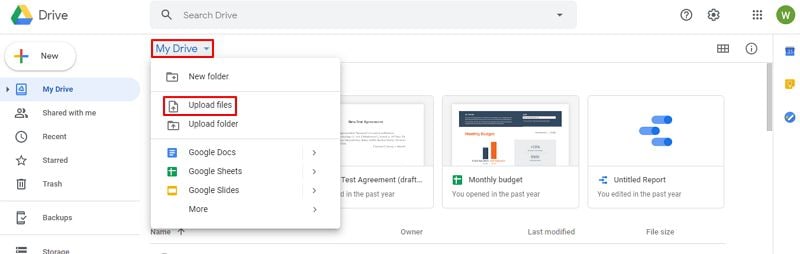
Open your web browser and navigate to your Google Drive account. Click on the "New" button in the top left corner, select "File upload," and choose your target BMP file from your computer. Alternatively, you can simply drag and drop the .bmp file directly into your Google Drive window.
Step 2Open BMP with Google Docs for Automatic Extraction
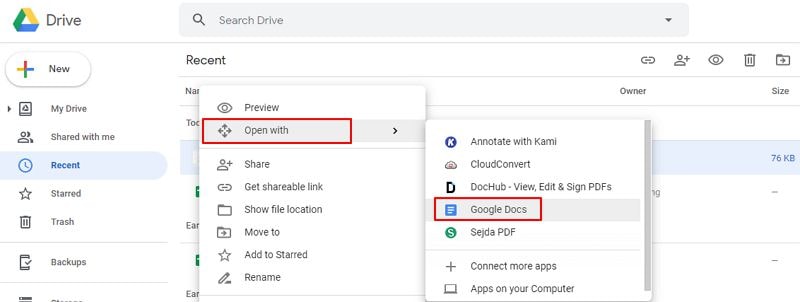
Once the file is successfully uploaded and appears in your Drive list, right-click on the BMP file. From the drop-down menu, select "Open with" and then click on "Google Docs." Google Drive will automatically process the image through its cloud-based OCR engine in the background.
Step 3Download the Extracted Text as a Word Document
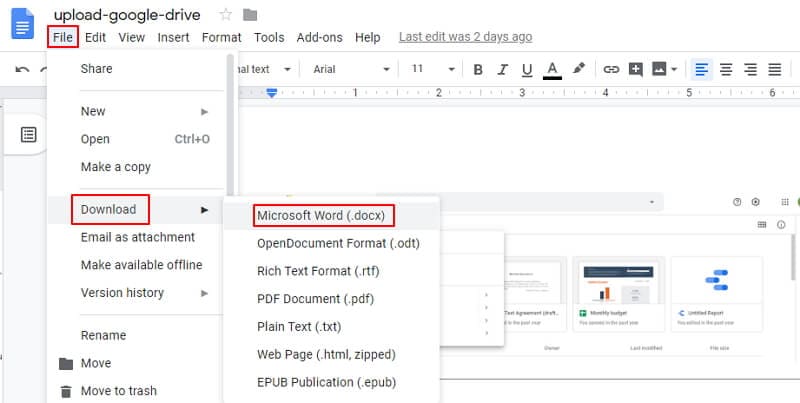
A new Google Doc will open. You will notice that the original BMP image is displayed at the top of the page, and directly beneath it, the extracted, editable text will appear. You can now edit the text as needed. To finalize the process, click "File" > "Download" > "Microsoft Word (.docx)" to save it to your local hard drive.
Method 3: Using Dedicated Online BMP to Word Converters
For users who are working on shared computers or mobile devices and need a rapid conversion without logging into a Google account, dedicated online conversion websites are incredibly popular.
The Mechanics of Web-Based OCR
Online bmp to word converters operate by having you upload your image file to their server. The server runs a script utilizing an OCR engine, translates the text, repackages it into a .docx file, and provides you with a temporary download link. Once the conversion is complete, the better services automatically delete your files to protect your privacy.
Step-by-Step Guide for Typical Online Tools
While there are dozens of platforms (like HiPDF, Zamzar, or OnlineOCR), the workflow is universally similar:
- Navigate to the Tool: Open your browser and go to a reputable online document converter site.
- Upload the File: Click the "Choose File" button and upload your BMP file. Note that most free online tools have a strict file size limit (often 10MB to 50MB).
- Select Output Format: Ensure the output dropdown is set to Microsoft Word (.docx or .doc).
- Activate OCR: Many sites require you to manually check a box that says "Use OCR" and select the document's language.
- Convert and Download: Click "Convert." Wait for the processing to finish, and click the resulting download link to save your new file.
Limitations of Browser-Based Conversions
While incredibly convenient, web-based tools have significant drawbacks. Most free tiers limit the number of pages or files you can convert per day. They often struggle with complex layouts, mixing up text boxes, and failing to accurately capture data from tables. Furthermore, uploading confidential legal, medical, or financial documents to a free third-party server poses substantial security risks.
Method 4: Extracting Text via Microsoft OneNote
If you already have Microsoft Office installed on your computer, you have access to a very capable, albeit basic, OCR tool built right into Microsoft OneNote.
How to "Copy Text from Picture" in OneNote
- Open Microsoft OneNote and create a new, blank page.
- Go to the "Insert" tab, click "Pictures," and select your BMP file to insert it onto the page.
- Right-click on the inserted image.
- Select the option "Copy Text from Picture."
- Open Microsoft Word, right-click on the blank page, and select "Paste."
When Should You Use This Alternative?
The OneNote method is an excellent "quick fix" if you just need to grab a few sentences or a paragraph from a simple graphic. However, it does not export the image layout to Word—it only exports the raw text string. If your BMP contains columns, bulleted lists, or formatted tables, OneNote will likely paste the text in a jumbled, continuous paragraph, requiring heavy manual editing on your part.
Comparison Guide: Which Conversion Method is Right for You?
Choosing the best method to convert bmp file to word doc depends heavily on your specific needs. Use this quick comparison to guide your decision:
| Feature / Need | PDFelement (Desktop software) | Google Drive (Cloud method) | Online Converters (Web tools) | Microsoft OneNote |
|---|---|---|---|---|
| Best Used For | Professional use, complex layouts, batch processing, high privacy | Plain text extraction, users on a tight budget | Quick one-off conversions on shared devices | Grabbing a few sentences from an image quickly |
| Layout Retention | High (Maintains fonts, margins, and tables accurately) | Low (Extracts raw text below the image) | Medium (Varies wildly by service) | None (Copies raw text to clipboard) |
| Internet Required | No | Yes | Yes | No |
| Privacy/Security | Excellent (Processed locally) | Good (Stored on your private Drive) | Variable (Depends on the site's data policy) | Excellent (Processed locally) |
| Cost | Premium (Free trial available) | Free | Free (with limits) | Included with MS Office |
G2 Rating: 4.5/5 |100% Secure
Expert Tips to Ensure High-Quality OCR Results
No bmp to word converter is perfect; the output is only as good as the input. If you find that your converted Word documents are filled with typos, symbols, or gibberish, it is likely an issue with the source image. Follow these best practices to ensure flawless conversion:
Start with High-Resolution Source Images
OCR engines require clarity to distinguish between letters. A minimum resolution of 300 DPI (Dots Per Inch) is highly recommended for text extraction. If your BMP file is pixelated, blurry, or heavily compressed, the OCR software will struggle to read it.
Optimize Image Lighting and Contrast
If your BMP file is a photograph of a physical document, shadows, glares, or uneven lighting can confuse the software. Use image editing tools to increase the contrast, making the text as dark as possible and the background as white as possible, before running the conversion.
Select the Precise Recognition Language
As mentioned in the PDFelement steps, selecting the correct language dictionary is critical. If your document contains French text, but your OCR setting is defaulted to English, the software will try to force English words onto French spelling patterns, resulting in massive errors. Ensure you select multiple languages if your document is bilingual.
Understanding the BMP Format: What You Need to Know
To better understand why conversion is necessary, it is helpful to understand the nature of the file you are working with.
What Exactly is a Bit Map (BMP) File?
Bit Map, or BMP, is a coordinated collection of all the pixels contained in a file. Developed by Microsoft, it is a long-standing raster graphics image format used to store bitmap digital images independently of the display device. It can be opened on almost any device via the use of free, built-in apps like MS Paint.
The Core Advantages of the BMP Format
BMP files can be easily mapped out from the pixel data stored in a patterned array in the memory. Because it provides adequate resolution and bit depth without utilizing complex compression algorithms, it is ideal for capturing real-life images with exact, pixel-perfect fidelity. When you need absolute clarity with zero loss of quality (lossless), BMP is a historically reliable choice.
Why BMP is Ill-Suited for Document Management
Despite its virtues, BMP is ill-suited to a number of modern purposes. The greater the quality of a BMP file, the greater its resolution and bit depth, which all require significant storage space. BMP files are usually quite sizable, especially those with multi-color expressions.
Through data compression, a BMP file's pixel data size can be shrunk, though it must be expanded in order to make it readable, making this rendering procedure a tedious one. Furthermore, because it is purely visual, it lacks the metadata, text encoding, and hyperlinking capabilities essential for modern web pages, data analysis, and professional document management. This is the primary reason users must convert these files to Word.
Frequently Asked Questions (FAQs)
-
Can I convert a BMP file to a Word doc without losing formatting?
Yes, but you must use professional, dedicated OCR software like PDFelement. Advanced software analyzes not just the letters, but the layout geometry—recognizing tables, margins, font sizes, and paragraph spacing—and replicates that exact layout in the resulting Microsoft Word document. Free online tools and Google Drive generally strip away complex formatting.
-
Is there a completely free BMP to Word converter?
Yes. As outlined above, Google Drive acts as a free converter via Google Docs. Additionally, many online websites offer free conversions for small files. However, keep in mind that "free" often comes with file size limits, restricted daily uses, and a loss of document formatting.
-
Does OCR software work on handwritten BMP images?
This depends entirely on the legibility of the handwriting and the power of the OCR engine. Standard OCR tools are optimized for typed, printed fonts. While advanced AI-driven OCR tools are getting better at reading block handwriting, cursive or messy handwriting will typically result in very low accuracy and require heavy manual proofreading in Word.
-
How do I batch convert multiple BMP files to Word documents?
To convert multiple images at once, you will need a robust desktop application. In tools like PDFelement, you can use the "Batch Process" feature. You simply upload a folder containing all your BMP images, set the output parameter to Word (.docx), enable OCR, and let the software process all the files sequentially without further manual input.
Conclusion
The need to transform static image files into usable data is a daily reality in the modern workspace. While the BMP format serves a purpose in preserving uncompressed image quality, it is fundamentally useless for text editing, searching, and document collaboration.
Knowing how to effectively convert bmp to word saves time, eliminates the drudgery of manual data entry, and brings old archives into the digital age. Whether you choose a high-fidelity desktop software like PDFelement for professional, layout-perfect conversions, or opt for the quick, free text extraction offered by Google Drive, integrating a reliable bmp to word converter into your toolkit is an essential step for efficient digital document management.