
In this article
- Why Convert Image to HTML?
- The Best Image to HTML Converter: PDFelement
- How to Convert Image to HTML Using Google Drive (Free Method)
- How to Convert Picture to HTML Using Microsoft Word
- Alternative Online Image to HTML Converters
- The Reverse Process: How to Convert HTML to Picture
- Understanding HTML: A Brief Primer
- Frequently Asked Questions (FAQ)
- Conclusion
Have you ever looked at a screenshot, a scanned document, or a photograph of a printed page and thought, "I need to turn this image file into an editable webpage, and I need a reliable image to HTML converter right now"?
If you have encountered this problem, you are not alone. Many professionals, programmers, and tech-savvy users frequently need to convert picture to HTML formats but find that standard applications fall short of their requirements. Without the right Optical Character Recognition (OCR) technology, converting an image into text-based HTML code is a frustrating, manual data-entry nightmare.
Fortunately, there are several highly effective ways to convert photo to HTML quickly and affordably. In this comprehensive guide, we will explore the best desktop and online tools to handle this task, ensuring your graphics, text layouts, and data are preserved seamlessly.


 G2 Rating: 4.5/5 |
 100% Secure
Why Convert Image to HTML?
Before diving into the tools, it is helpful to understand why someone might want to convert an image to HTML in the first place. Whether you are dealing with a PNG, a TIFF, or looking to convert JPG to HTML, the benefits of making this transition are substantial.
1. Making Scanned Text Web-Ready
If you have a scanned historical document, a printed report, or a magazine article saved as an image, you cannot directly edit the text or publish it as a searchable web page. By converting the pic to HTML, you extract the text so it can be natively rendered by web browsers.
2. SEO Benefits
Search engines cannot easily read text trapped inside an image file. If you have an infographic or a text-heavy flyer, search engine crawlers will ignore the valuable keywords inside it. When you convert picture to HTML, that text becomes readable to search engines, drastically improving your content's SEO value.
3. Editing Legacy Content
Sometimes, original source files are lost, leaving you with only flattened image files. An image to HTML converter acts as a bridge, allowing you to salvage the text and structural data so you can rebuild and edit the content.
The Best Image to HTML Converter: PDFelement
When it comes to handling document conversions involving images, PDFelement stands out as an industry-leading image to HTML converter. It is versatile, user-friendly, and equipped with a highly accurate OCR engine. This software allows you to turn an image file into an HTML format affordably, quickly, and efficiently.
Below, we will show you exactly how to convert photo to HTML using this powerful software.
G2 Rating: 4.5/5 |100% Secure
Step 1Load an Image
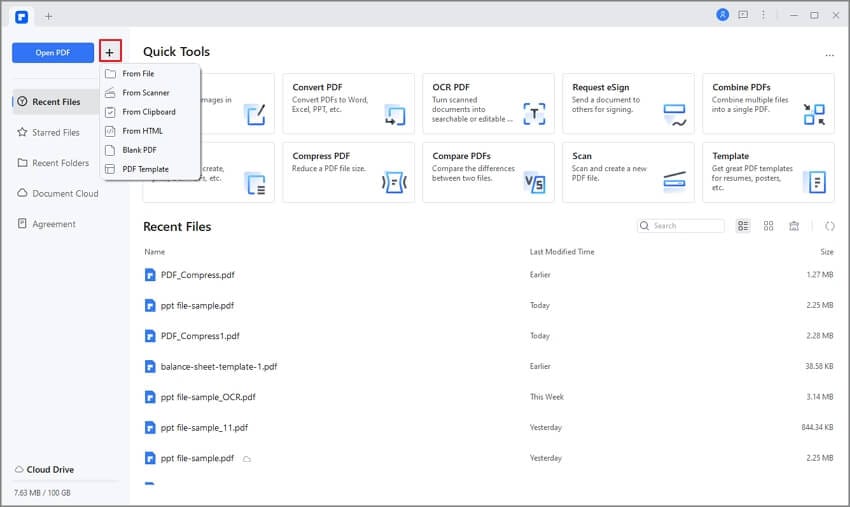
Before you start, ensure you've downloaded and installed the most recent version of PDFelement on your device. Launch the application. On the home screen, click the "Create PDF" tab. A file dialogue box will appear, allowing you to select and load your target image (such as a JPG or PNG file) into the program.
Step 2Perform OCR
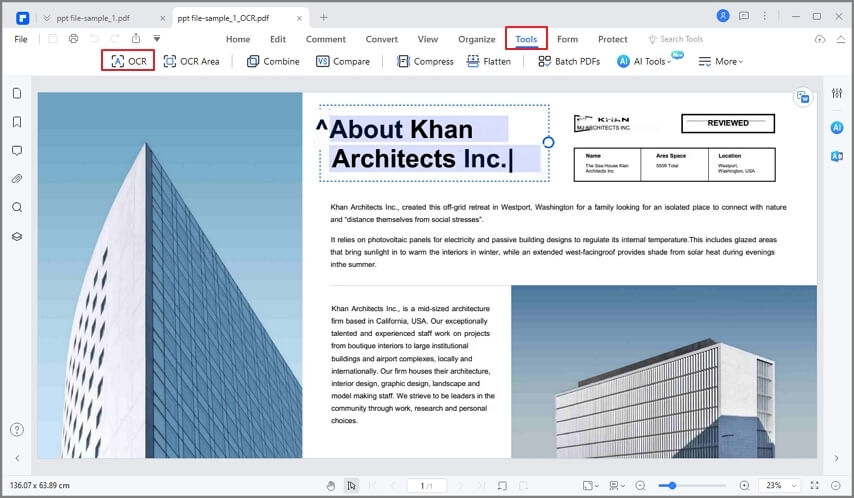
Because your file is an image, the text inside it is not yet editable. You need to use OCR to recognize the characters. Click the "OCR" button found in the "Edit" tab. Select the "Editable Text" option, and then click the "Change Language" button to select the correct language of the text within your image. This ensures the highest level of accuracy during the scan.
Step 3Convert Image to HTML Code
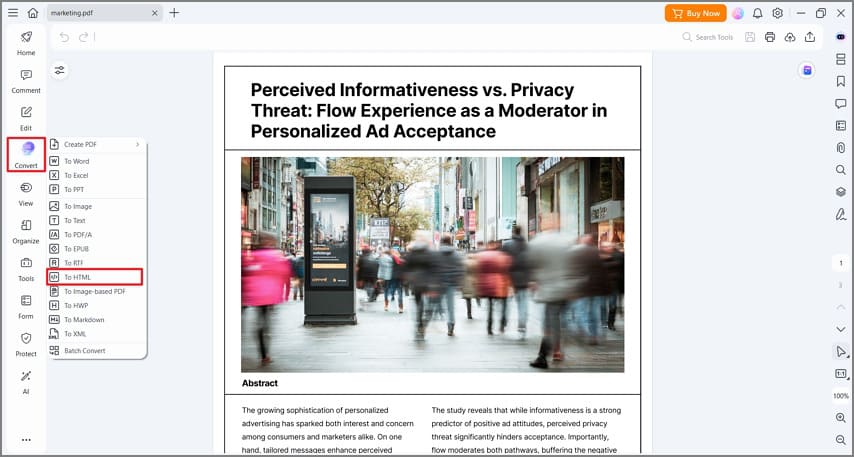
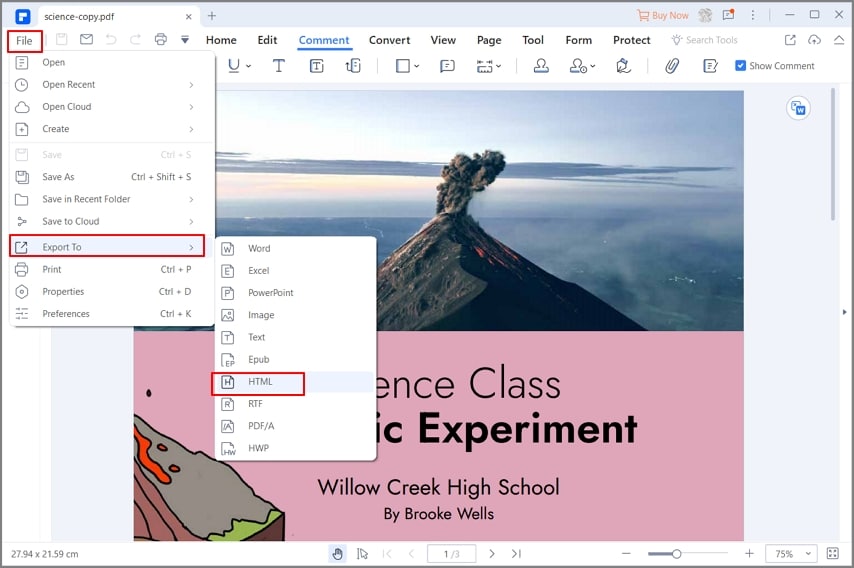
After the OCR process is complete, the text in your image will be fully recognizable. To finalize the process, navigate to the "Home" tab, click the "To Others" button, and select "Convert to HTML" from the dropdown menu. Choose your destination folder, and hit save to start the conversion. You now have a functional HTML document!
Why PDFelement Excels at This Task
PDFelement is widely considered the best image to HTML converter because it goes far beyond simple conversions.
- It helps in converting image to HTML quickly and efficiently without losing layout fidelity.
- It allows you to turn single PDF/image files or multiple ones at a time into several other formats and vice versa.
- After converting from one format to another, PDFelement retains the original graphics, formatting, and layout in the output file.
- The software features advanced OCR that supports dozens of languages.
- It lets you open, create, edit, save, and print PDFs, acting as an all-in-one document manager.
G2 Rating: 4.5/5 |100% Secure
How to Convert Image to HTML Using Google Drive (Free Method)
If you are looking for a completely free, cloud-based solution, Google Drive offers a surprisingly capable built-in OCR feature. While it may not retain complex formatting and layouts as perfectly as dedicated software, it is an excellent method for simple text extraction.
Step 1Upload an Image
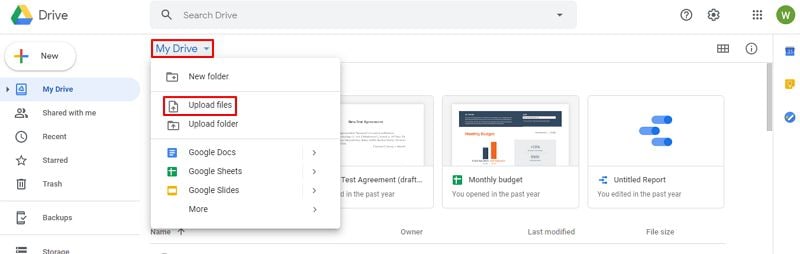
First, navigate to your Google Drive account in your web browser. Click the "New" button and select "File upload" to upload your image (JPG, PNG, etc.) into Google Drive.
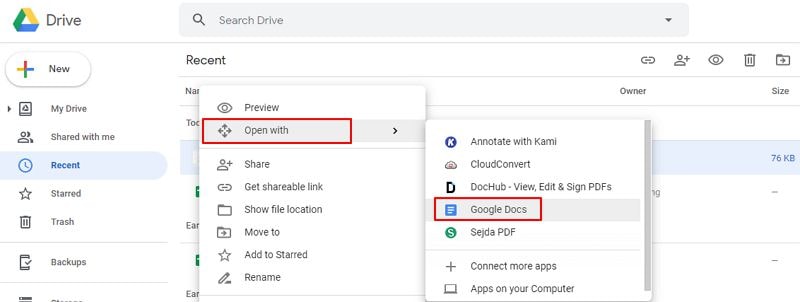
Step 2Open with Google Docs
Once the image is uploaded, locate it in your Drive. Right-click on the image file, hover over "Open with," and select "Google Docs." Google Drive will automatically perform OCR on the image as it opens the new document, placing the image at the top and the extracted text directly below it.
Step 3Convert Image to HTML
Review the extracted text to ensure there are no minor errors. Once you are satisfied, go to "File" > "Download" > "Web Page (.html, zipped)". Google Docs will save the document, including the text and image, as an HTML file to your local computer.
How to Convert Picture to HTML Using Microsoft Word
If you already have Microsoft Office installed on your computer, you possess a hidden yet powerful tool for document conversion. Microsoft Word includes built-in OCR capabilities when handling PDF files, which can be leveraged to convert picture to HTML with ease.
Step 1Insert Image and Save as PDF
Open a blank document in Microsoft Word. Go to the "Insert" tab, click "Pictures," and load the image you want to convert. Once the image is on the page, go to "File" > "Save As" and choose "PDF" from the format dropdown. Save this PDF to your computer.
Step 2Open PDF in Word to Trigger OCR
Close the document, then go back to "File" > "Open" in Word. Browse for the newly created PDF file and open it. A prompt will appear stating that Word will now convert your PDF to an editable Word document. Click "OK." Word will perform OCR on the image within the PDF, converting the text into editable characters.
Step 3Save the Document as a Web Page (HTML)
Review the newly editable text to ensure accuracy. To complete the process and convert pic to HTML, go to "File" > "Save As." In the format dropdown menu, select "Web Page (*.htm; *.html)" and click "Save." Your image text and layout are now successfully converted into an HTML file.
Alternative Online Image to HTML Converters
For users who only need to convert a single, simple image and do not want to install any software, several web-based tools can get the job done quickly. While online tools may have file size limits and privacy considerations (you are uploading files to a third-party server), they are highly convenient.
- PDFelement Online: Free online PDF to HTML Conversion for wider use.
- Online-Convert: A versatile web tool that allows you to upload an image and extract text to HTML. It features basic OCR settings.
- Zamzar: Known for supporting hundreds of file formats, Zamzar provides a quick way to convert basic image files into HTML code, though its OCR capabilities are more limited for complex layouts.
- Convertio: Offers a clean user interface and reliable cloud-based OCR. It allows you to convert pic to HTML with reasonable accuracy, though the free tier restricts the number of daily conversions.
The Reverse Process: How to Convert HTML to Picture
Sometimes, the workflow goes in the opposite direction. You might have designed a beautiful webpage and need to convert HTML to picture format (like a JPG or PNG) to share as a mockup, embed in a presentation, or use on social media.
To convert HTML to picture, you can use several methods:
- Browser Extensions: Tools like "GoFullPage" or "Fireshot" allow you to capture an entire scrolling HTML webpage and save it instantly as a high-resolution image file.
- Online Converters: Websites like HTMLCSStoImage or Convertio allow you to upload an HTML file or paste HTML code and output it as a JPG or PNG.
- PDFelement: You can open an HTML file in PDFelement to convert it to a PDF, and then export that PDF as an image file natively within the software.
G2 Rating: 4.5/5 |100% Secure
Understanding HTML: A Brief Primer
Whether you are looking to convert JPG to HTML or just learning the ropes of web design, having a foundational understanding of HTML is incredibly useful.
HTML (Hypertext Markup Language) is the standard language employed in creating documents for the World Wide Web. As its name implies, it is a markup language. It uses plain text combined with specific tags (codes) to instruct a web browser on how to display content.
When an HTML document is read by a Web browser (like Google Chrome, Firefox, or Safari), the browser interprets these formatting codes and renders the text, lists, and tables visually. HTML documents also contain links to other documents (hence the term "hypertext") and can embed graphics and multimedia.
Interestingly, HTML cares less about the exact visual styling (which is usually handled by CSS) and focuses heavily on document structure.
To give you a broader perspective, here is a quick look at how HTML compares to its close relatives, XML and XHTML:
| Feature/Language | HTML (HyperText Markup Language) | XML (eXtensible Markup Language) | XHTML (eXtensible Hypertext Markup Language) |
|---|---|---|---|
| Primary Use | Used for producing and formatting documents for the World Wide Web. | Machine-independent; employed for representing and storing data so it can be sent electronically. | A stricter, more rigid family of XML markup languages extending versions of popular HTML. |
| Flexibility | Very flexible. Browsers often forgive missing closing tags or minor errors. | Extremely strict. Every tag must be properly closed and nested. | Stricter than standard HTML, requiring clean, well-formed code similar to XML rules. |
Frequently Asked Questions (FAQ)
-
Can I convert a JPG to HTML using just standard Windows or Mac tools?
Not easily. Standard operating system tools like MS Paint or Apple Preview do not feature OCR. To convert text inside a JPG into editable HTML code, you need an image to HTML converter with OCR capabilities, such as PDFelement or Google Drive. -
Does converting an image to HTML retain the exact layout?
It depends on the tool you use. Premium software like PDFelement uses advanced OCR that attempts to replicate the original layout, font sizes, and paragraph structures as closely as possible. Free methods like Google Drive will extract the raw text but will likely lose complex formatting. -
Is it safe to use online tools to convert photo to HTML?
If your image contains sensitive, confidential, or personal data, it is generally safer to use offline desktop software like PDFelement. Online converters require you to upload your files to external servers, which may pose a privacy risk depending on the service's data retention policies. -
What is the difference between embedding an image in HTML and converting an image to HTML?
Embedding an image means using thetag in your HTML code to display a picture on a webpage. Converting an image to HTML usually means using OCR to extract the text from the image and turning that text into actual HTML code that can be highlighted, edited, and read by search engines.
Conclusion
Finding the right image to HTML converter does not have to be an overwhelming task. Whether you are a programmer trying to salvage a lost web mockup, or a professional needing to digitize a scanned report, you have multiple reliable options at your disposal.
For quick, free text extraction, Google Drive is an excellent fallback. However, for users who need professional-grade formatting retention, high-accuracy OCR, and the ability to process multiple files, dedicated software like PDFelement and accessible tools like Microsoft Word stand out as the best solutions. By utilizing these tools, you can seamlessly convert picture to HTML, optimize your content for the web, and vastly improve your digital document workflow.