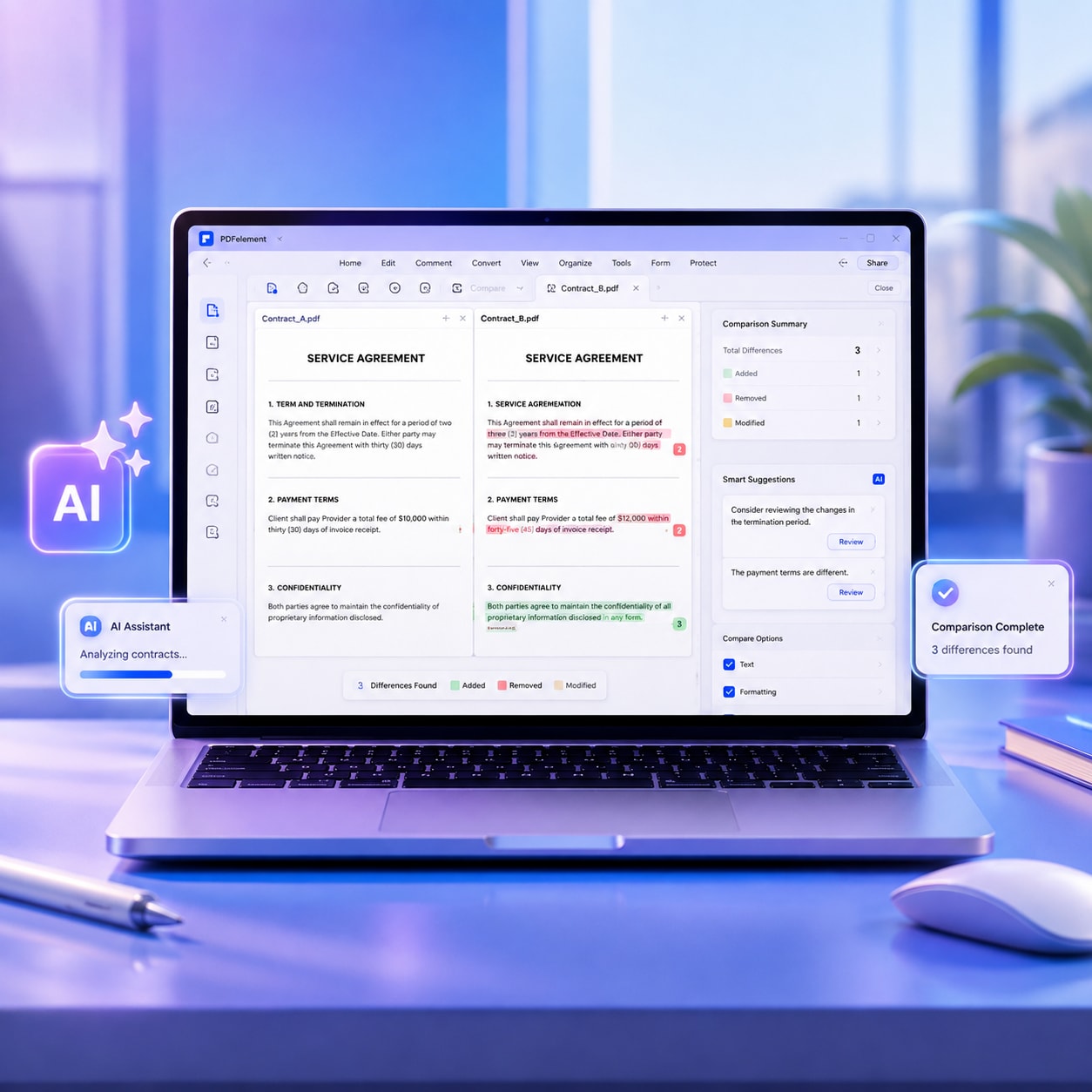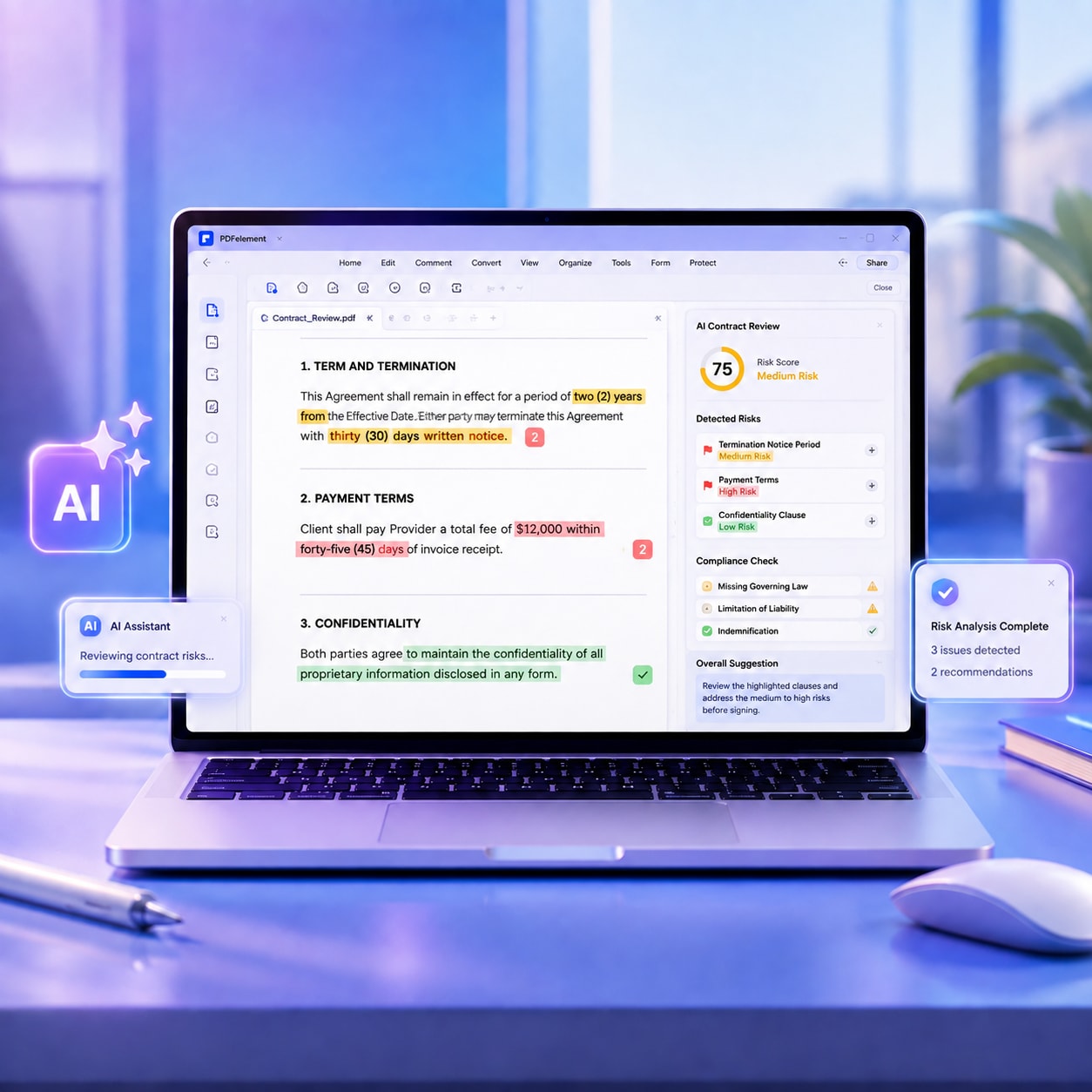

In fast‑paced finance workflows, manually retyping PDF transactions into spreadsheets wastes time and increases error risks. A reliable bank statement PDF to Excel converter transforms static statements into structured Excel data for sorting and analysis. This automation helps you move from raw statements to actionable insights without tedious copy‑paste formulas. It also reduces the chances of human mistakes that can quietly distort budgets and compliance reports.
Instead of struggling with cluttered layouts or scrolling, you upload statements and receive workable transaction tables. This article explains how these converters work, common accuracy pitfalls, and how to convert statements into Excel.
In this article
- Why People Convert Bank Statements to Excel
- Why Bank Statement PDFs are Difficult to Convert
- What Data Must be Preserved During Conversion
- Common Ways Bank Statement Conversion Goes Wrong
- PDF to Excel Converters vs Bank Statement Converters
- How to Convert Bank Statement PDFs to Excel With PDFelement
- Handling Scanned Bank Statements
- Validating Excel Data After Conversion
- Free and Online Bank Statement to Excel Converters: What to Know
Part 1. Why People Convert Bank Statements to Excel
Many individuals and businesses convert bank statement to Excel, so their financial data becomes searchable and usable. Let's explore the most common real‑world reasons people move their bank statements into Excel.
- Expense Analysis: People export statements into Excel to group expenses, track spending patterns, and spot suspicious charges.
- Transaction Matching: Finance teams use Excel to compare bank activity with internal records and find duplicate payments and timing differences early.
- Tax Reviews: Users move statements into Excel to list deductible expenses and income groups for yearly tax reports.
- Financial Reporting: Businesses rely on spreadsheets to convert bank data into dashboards and summaries for informed decisions.
- Budgeting and Forecasting: Companies review past transactions in Excel to compare results with plans and create forecasts.
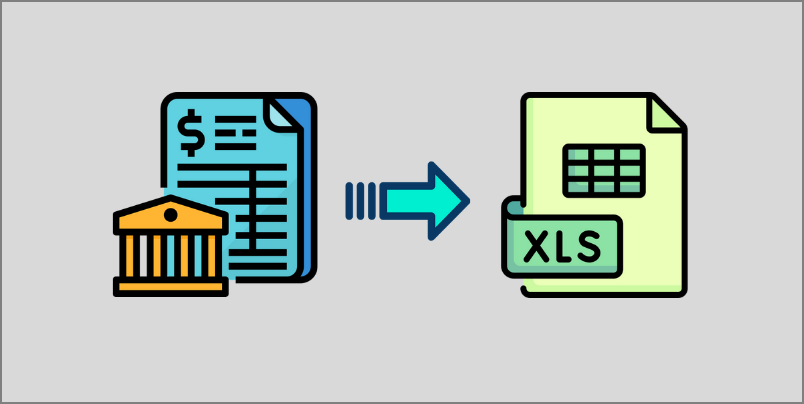
Excel remains a strong choice for bank data because it turns fixed tables into flexible information. It lets people sort, filter, and calculate figures in many ways without complex tools.


 G2 Rating: 4.5/5 |
 100% Secure
Part 2. Why Bank Statement PDFs are Difficult to Convert
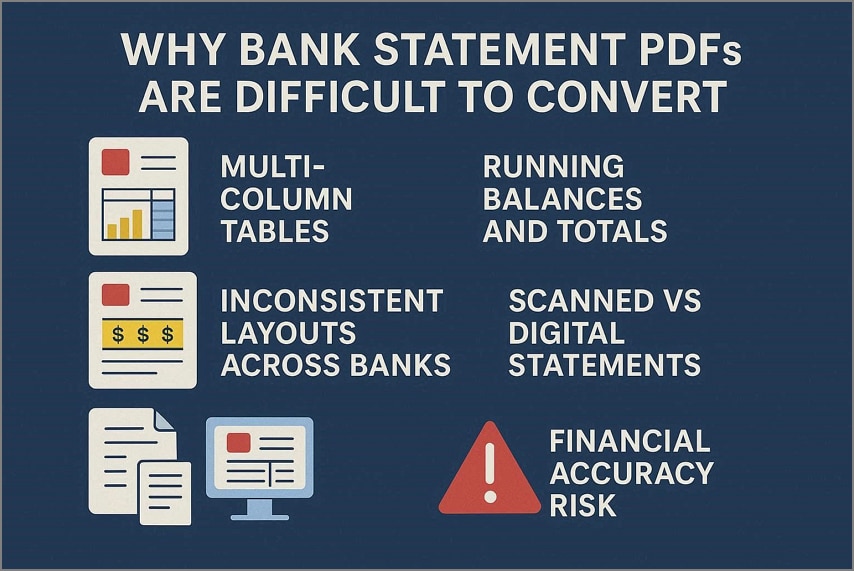
Bank statement PDFs may look simple, but their complex tables and layouts often confuse a bank statement converter. Now, let's see why these files are so hard to turn into clean Excel data.
Multi-Column Tables
Bank statements often use tables with dates, descriptions, debits, credits, and running balances in one row, so simple conversion tools may place values into the wrong columns or merge them together.
Running Balances and Totals
Running balances, subtotals, and grand totals sit inside the transaction table, which can confuse converters and break the structure when the data moves into Excel.
Inconsistent Layouts Across Banks
Each bank designs statements differently, with its own fonts, column order, and spacing, so there is no single layout a converter can follow safely every time.
Scanned vs Digital Statements
Digital PDFs hold real text, but scanned statements are images that depend on OCR, which can misread characters, miss minus signs, or mix rows.
Higher Risk to Financial Accuracy
These layout and OCR issues mean converted sheets can contain quite a few errors that affect reconciliations, reports, and decisions if you do not catch them.
G2 Rating: 4.5/5 |100% Secure
Part 3. What Data Must be Preserved During Conversion
When you move bank data into spreadsheets, some details must stay exact from the original statement. Each key field needs to appear in the right column, on the right row, with no missing values. A bank statement to Excel converter should protect these details, not change or drop them by mistake. Next, we will see which parts matter most and why they deserve extra attention.
- Transaction Date: The date must stay correct so you can track activity by day, week, month, and statement period.
- Description: Description helps you see who sent or received money, so you understand each line quickly.
- Debit and Credit Amounts: These amounts must stay the same so your totals and reports stay correct.
- Running Balance: The running balance should update after each row to keep every step clear from start to end.
- Statement Order: Original order of transactions must remain the same, so timelines and audits stay easy to follow.
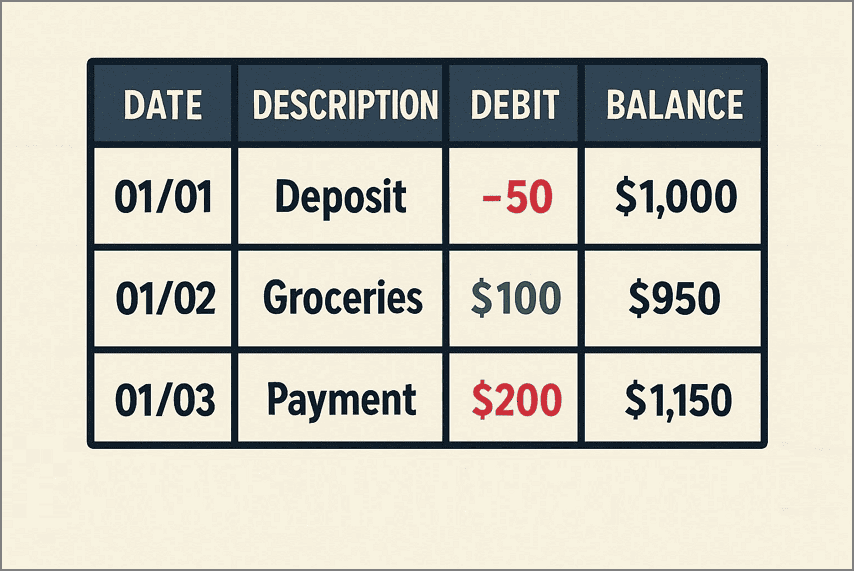
Why Even Small Errors Matter in Financial Data
Small errors in financial data can quietly change totals and balances without easy warning signs. A single wrong digit and a missing minus sign can affect tax reports, budgets, and compliance checks. When many lines have small issues, the final picture becomes unreliable. Moreover, decisions based on that data become weak and less reliable.
G2 Rating: 4.5/5 |100% Secure
Part 4. Common Ways Bank Statement Conversion Goes Wrong
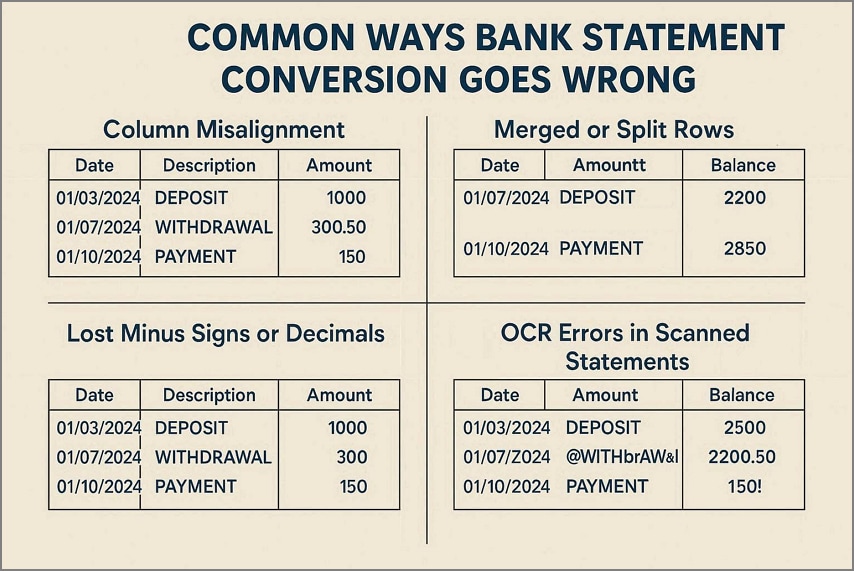
When you convert a bank statement, small issues during bank statement extraction can create serious data mistakes. Columns, rows, and symbols may change place, so the sheet no longer matches the original. Some errors are easy to see, while others hide deep inside long transaction lists. Now, let's explore the most common problems that appear after conversion.
Column Misalignment
Values move into the wrong columns, and dates, descriptions, and amounts no longer line up correctly. This misalignment makes checks and bank statement processing more difficult because each row requires additional manual review.
Merged or Split Rows
Two separate transactions are combined into a single row, which hides details and changes the actual record. One transaction can also be split over two rows, so the amount and description no longer match.
Lost Minus Signs or Decimals
Minus signs are lost, so expenses appear as income, and balances show amounts higher than the actual amounts. Decimal points shift or disappear, turning small fees into huge numbers that clearly look wrong.
OCR Errors in Scanned Statements
Letters change shape, and names no longer match the real statement. Some characters turn into random symbols, breaking sorting and basic formula checks in Excel.
Part 5. PDF to Excel Converters vs. Bank Statement Converters
Most tools can convert PDF data to Excel, but not all handle bank statements well. In this section, we will see how a bank statement converter differs from general tools and why that matters.
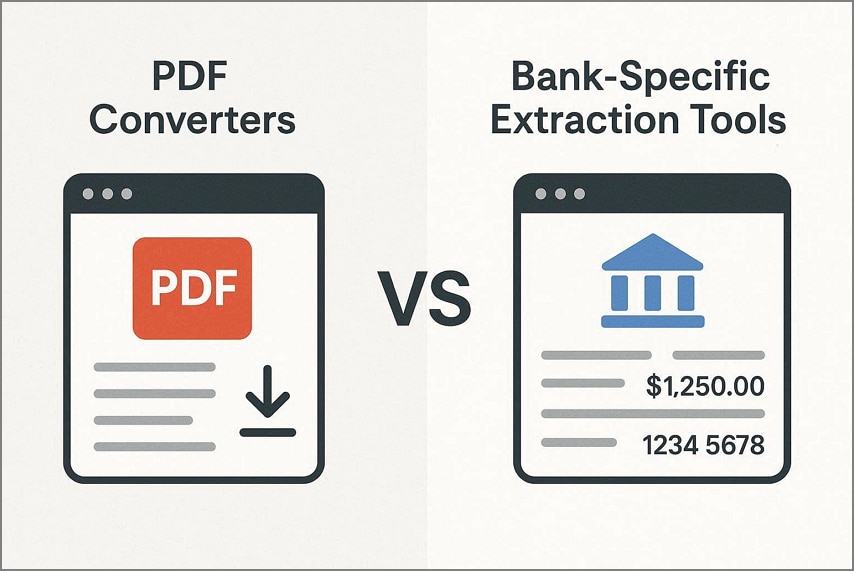
Generic PDF Converters
Generic PDF converters support many document types and attempt to convert any table into a spreadsheet. They usually focus on layout, not meaning, so they keep lines and boxes but may misread dates and amounts. These tools often struggle when a statement contains running balances, merged cells, or an unusual column order. Useful for simple tables, generic converters can still miss important details that matter in financial work.
Bank-Specific Extraction Tools
These tools focus on statements and know common patterns for dates, amounts, and running balances. Unlike a PDF to Excel bank statement converter, these tools read the table structure and map each field into the correct spreadsheet column. Bank-specific extraction tools often detect multiple accounts, currencies, or sections inside the same PDF. They aim to provide cleaner data that supports checks and audits with less manual post-processing.
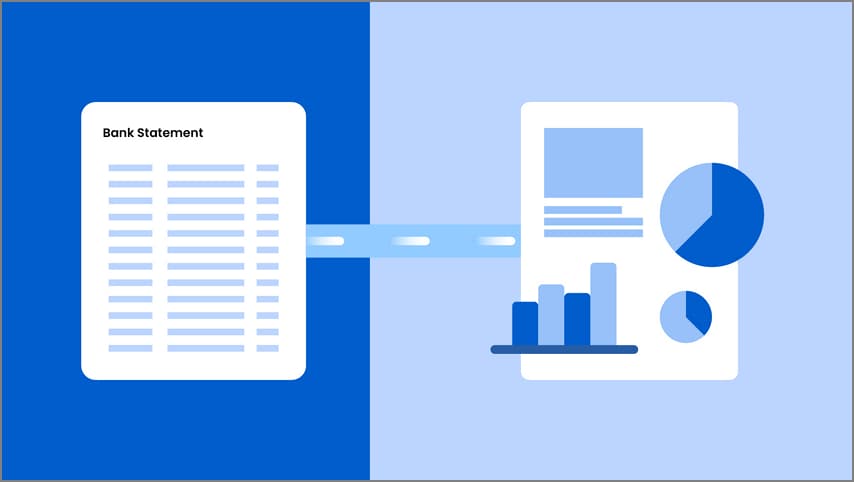
Comparing General and Bank-Focused Tools
Both types of tools move information into Excel, yet they do not give the same level of control. Let's compare how they handle structure, errors, and review steps so you can pick the right option:
| Feature | Generic PDF Converters | Bank-Specific Converters |
| Main Focus | Any document with tables or text | Bank statements and financial transaction tables |
| Handling of Running Balance | Treat balance like normal text, which can break columns | Usually recognize balance and keep it in one column |
| Layout Changes Between Banks | Fail when layout changes between banks or statement types | Designed to handle different bank layouts safely |
| Error Visibility | Errors appear as subtle misalignment or missing values | Tools often highlight or structure data more clearly |
| Need for Manual Review | Needs heavy manual checking and fixing | Still needs review, but often less manual correction |
G2 Rating: 4.5/5 |100% Secure
Limitations of "One-Click" Conversion
Before you rely only on automation, let's look at the limits of simple one-step tools.
- One-click tools can hide errors because they finish fast, and users may not review every converted line carefully.
- Complex layouts with many columns can break, so dates and amounts move into the wrong places without clear warnings.
- Long statements with many pages may cut off rows or skip sections when tools reach internal size limits.
- Scanned statements still depend on OCR, so unclear text can result in incorrect numbers that change balances and totals.
- These tools often provide no detailed logs, making it hard to trace where a problem first appeared.
Part 6. How to Convert Bank Statement PDFs to Excel With PDFelement
Many people struggle when converting bank statement PDFs because values shift, columns break, and totals stop matching. This is where PDFelement steps in as a financial documents management tool that keeps the statement structure consistent. It helps you convert bank statement to Excel while preserving important columns. Careful review inside PDFelement lets you confirm extracted numbers match the original to reduce serious financial mistakes.
Moreover, PDFelement emphasizes preserving the original table layout so information stays organized during every conversion step. It also encourages a structured review process, guiding you to check key figures and ending balances thoroughly. This focus on structure preservation and review helps professionals maintain accuracy, meet reporting requirements, and handle sensitive financial records.
G2 Rating: 4.5/5 |100% Secure
Step-by-Step: Converting Bank Statement PDFs Using PDFelement
At this point, many users want practical steps instead of more theory or explanations. Now, follow the steps below to convert your bank statement PDFs using PDFelement:
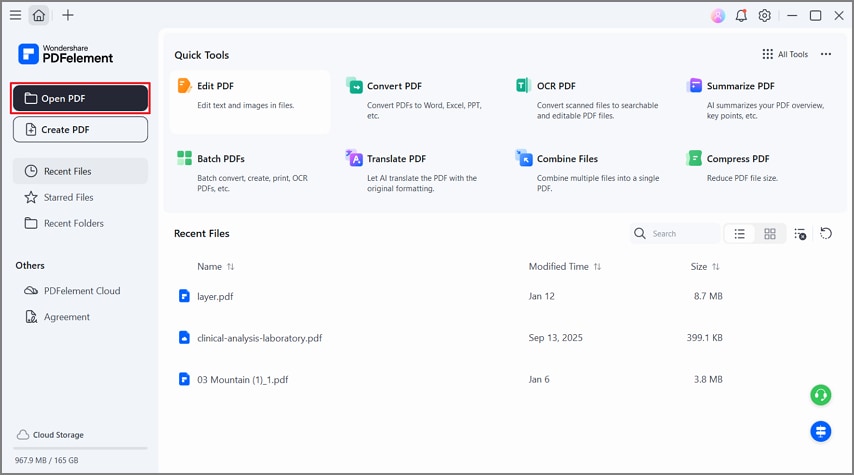
Step 1Import Bank Statement PDF into PDFelement
Once you enter the main interface, press the "Open File" option in the top left corner and choose the bank statement PDF to open it in PDFelement.
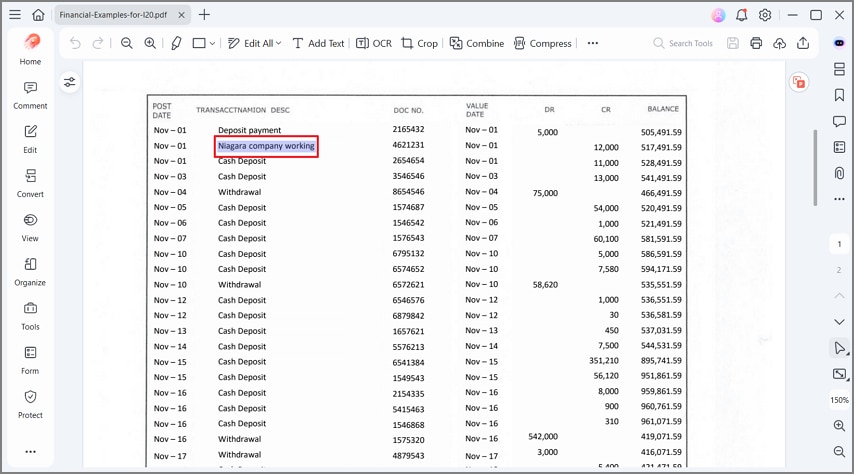
Step 2Check Whether The Document is Digital or Scanned
After the bank statement PDF is imported, detect whether the document is digital or scanned by selecting the text. PDFelement also notifies you through a pop-up at the top if the document is scanned.
G2 Rating: 4.5/5 |100% Secure
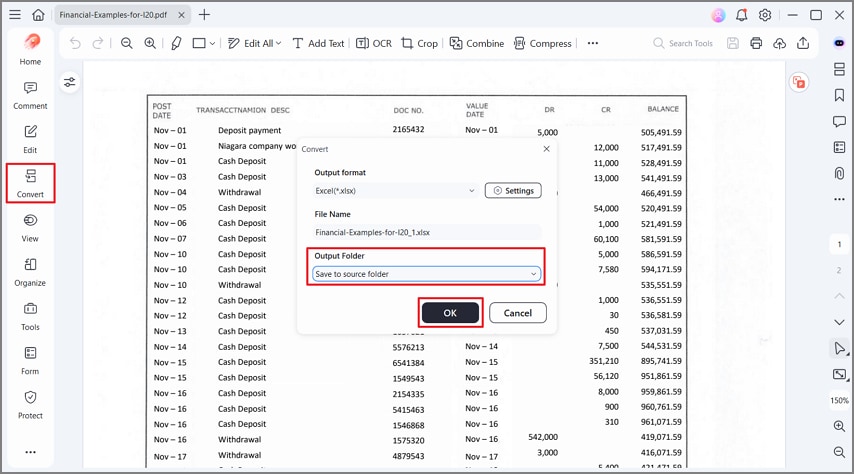
Step 3Convert PDF to Excel
Next, press the "Convert" button in the left side tools menu and click the "To Excel" option. Now, you'll see a pop-up where you need to choose the output location and press the "Ok" option.
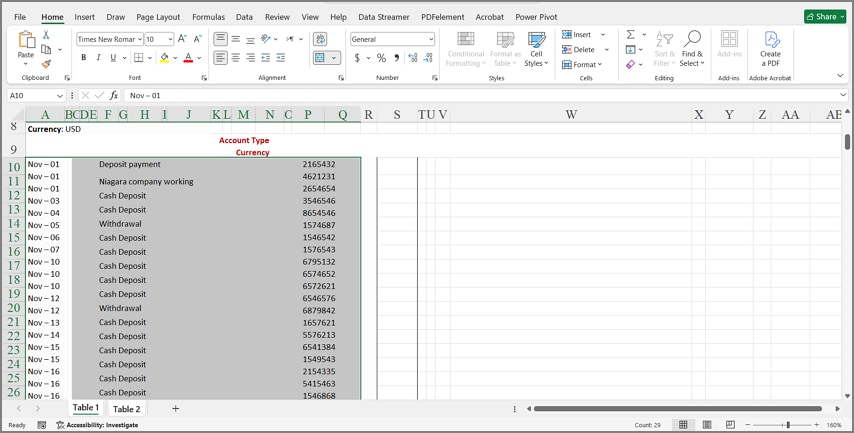
Step 4Review and Analyze Extracted Data
Once converted, the Excel file will be automatically opened. Now, scan each column, row, and total to confirm everything matches your original bank statement before starting any analysis.
G2 Rating: 4.5/5 |100% Secure
Part 7. Handling Scanned Bank Statements
When you work with Excel bank statements, it's important to check if the document is scanned or not. If the document is scanned, an OCR-based bank statement scanner is needed to turn picture-based text into selectable, editable content. OCR lets the software recognize characters, numbers, and symbols that would otherwise stay locked inside images. Without OCR, transactions, dates, and amounts cannot be reliably copied, searched, or analyzed inside your spreadsheet.
Why Scanned Statements Increase Error Risk
Before reviewing solutions, look at the reasons below that make scanned statements more likely to contain hidden conversion errors.
- Blurry or low-resolution scans make characters unclear, so numbers like six and eight can be confused very easily.
- Skewed pages or crooked scans cause table lines to misalign, making it harder to separate correct rows accurately.
- Stamps, signatures, or logos overlap text, so important transaction details may be partially covered and misread during recognition.
- Handwritten notes or annotations near amounts can confuse OCR, increasing the chances of extra characters being added accidentally.
- Different fonts or very small text sizes reduce recognition accuracy when combined with background patterns and watermarks.
How to Improve Accuracy Before Conversion
Many people feel nervous about scanned statements, because misread digits or words can quickly damage financial reports and decisions. Wondershare PDFelement helps here with built-in OCR that converts scanned bank statements into searchable, editable PDFs while preserving layout. Its OCR engine helps when statements mix English with regional terms or foreign currency notes.
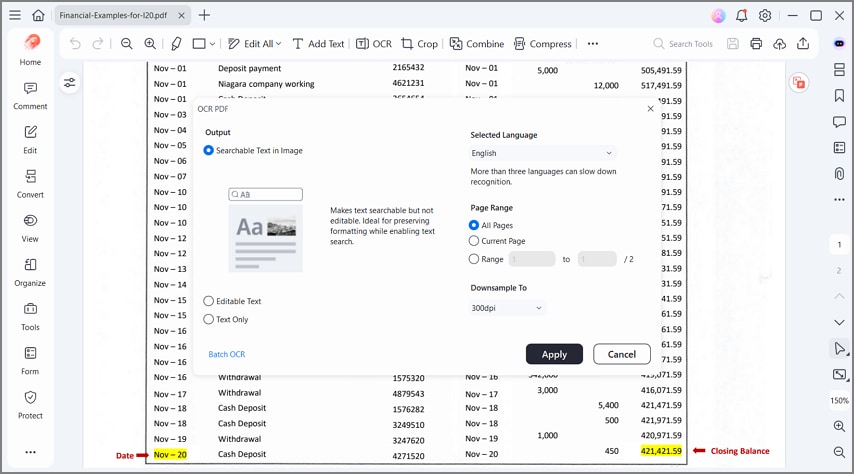
Even with good tools, accuracy still depends on checking your files before running any conversion to Excel. In PDFelement, you can adjust OCR settings, choose the correct language, and keep formatting elements like headers and footers stable. This combination of language-aware OCR and structure preservation makes modern bank statement scanning software more effective for reliable analysis.
Part 8. Validating Excel Data After Conversion
Now that your statement is in Excel, the next step is making sure the numbers are accurate and trustworthy.
Cross-Checking Totals
Start by comparing the opening balance in Excel with the opening balance shown on your original bank statement. Then, check total debits and total credits in Excel against the statement's summary or transaction totals section. Finally, make sure the closing balance in Excel exactly matches the closing balance printed on the original statement.
Spot-Checking Transactions
Choose a few random transactions from different dates on the original statement and locate them in your Excel sheet. Verify that each checked transaction has the correct date and amount in the proper row and column. If any sampled transaction is wrong or missing, investigate further because more hidden errors may exist in the file.
Comparing Balances With the Original Statement
Look at running balances in Excel and confirm they follow the same progression as the bank statement's balance column. Pay special attention to points where large transfers or fees occur, because mistakes there can break the balance chain. If you used a tool to convert bank statements to Excel, these checks help confirm nothing shifted during conversion.
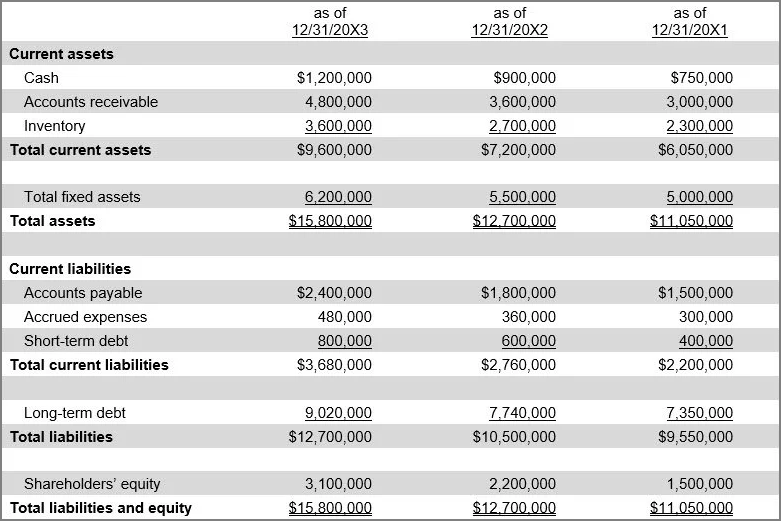
Why Validation is Essential
Before relying on your spreadsheet, explore the reasons why these checks matter for financial work.
- Data Integrity: Verifies that your financial records stay consistent with official bank statements and avoid silent discrepancies.
- Reliable Reporting: Supports accurate cashflow reports and management summaries built from the converted data.
- Audit Readiness: Reduces the risk of issues during audits and loan applications that require clean transaction histories.
- Error Detection: Helps reveal missing rows and shifted columns introduced during the conversion process by any bank statement to Excel converter.
- Compliance Support: Strengthens your ability to meet regulatory or tax requirements that demand precise transaction and balance records.
Part 9. Free and Online Bank Statement to Excel Converters: What to Know
Many users like using a free bank statement converter because it feels quick and budget-friendly. However, it's important to understand both the strengths and the risks before trusting these tools with financial data.
Advantages of Free Tools
Before choosing a paid solution, look at the advantages of using free online tools.
- No upfront cost, so you can test basic conversion without committing to any paid subscription or software.
- Easy to access in a browser, making them convenient for users on shared or low-specification devices.
- Simple interfaces often provide clear upload, convert, and download steps that most beginners quickly understand and follow.
- Useful for occasional conversions when you only handle short statements and non-sensitive example documents or demo data.
- Helpful for quickly checking whether a PDF structure is convertible before investing in more advanced desktop software.
Common Limitations
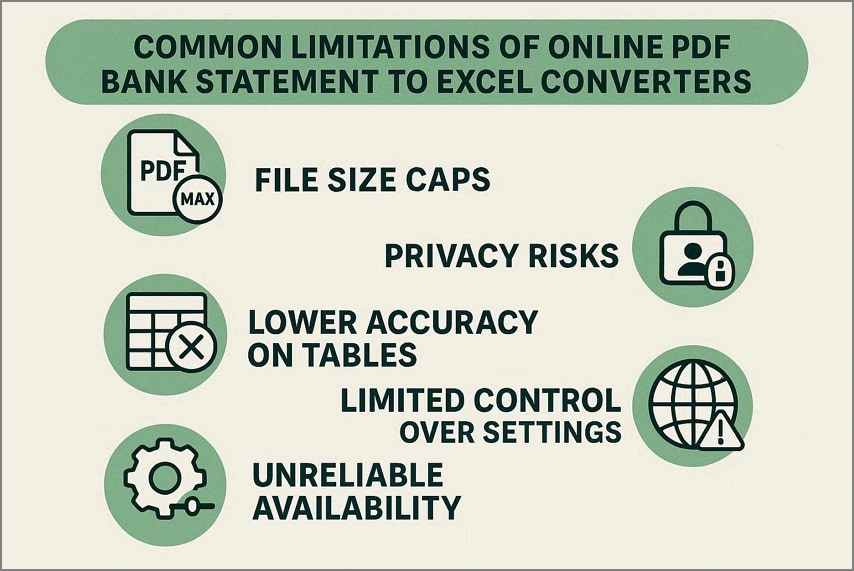
For serious financial work, many PDF bank statement to Excel free converters are not reliable enough for sensitive data. Let's look at how their limits can affect accuracy and risk.
- File Size Caps: Free tools often limit pages or file size, so long statements may be cut off.
- Privacy Risks: Uploading statements online exposes sensitive account details to third parties you do not fully control.
- Lower Accuracy on Complex Tables: Multi-column layouts, multiple accounts, or currencies can cause misaligned columns and missing rows.
- Limited Control Over Settings: Users usually cannot fine-tune recognition, column mapping, or formats, leading to more manual fixing later.
- Unreliable Availability: Free sites may go offline, change limits, or add watermarks without warning, disrupting regular workflows.
People Also Ask
-
How do I convert a bank statement PDF to Excel?
First, use a trusted PDF to Excel bank statement converter like Wondershare PDFelement to convert your PDF while preserving the table structure. Then open the resulting file in Excel, double-check key totals and balances, and fix any misaligned columns before analysis. -
Are free bank statement converters accurate?
Many free tools work fine for simple statements, but they often struggle with complex layouts, multiple accounts, or long histories. For critical financial work, consider more robust software and always review converted data carefully before using it in reports. -
Can scanned bank statements be converted?
Yes, scanned statements can be converted, but you must use OCR-based tools that turn images into real, selectable text first. Solutions like PDFelement combine OCR and structure preservation, making it easier to map columns correctly and reduce recognition mistakes. -
Why does my Excel file look misaligned?
Misalignment usually happens when the converter misreads column borders, merged cells, or multi-line descriptions in the original statement. You may need to adjust column mapping, clean extra line breaks, and re-check running balances to repair the structure manually. -
Is it safe to upload bank statements online?
Uploading statements to PDF to Excel bank statement online converters always carries some risk, because sensitive financial data passes through external servers you do not control. For higher safety, use a trusted online tool like the Online PDFelement PDF to Excel Converter that clearly explains its security measures.
Wrap-up: Converting Bank Statements to Excel With Confidence
In conclusion, bank statements require careful handling, so every conversion from PDF to Excel should prioritize accuracy over speed. Each workflow should include a review step to confirm that balances, dates, and transaction details are transferred correctly. Using PDFelement to convert your bank statement PDF to Excel helps preserve structure, turn scanned statements into editable tables, and makes verification faster and more reliable.