
How to Convert PDF to JPG in Adobe Acrobat
Learn how to convert PDF to JPG in Adobe Acrobat or online for free, adjust image settings, save PDF pages as JPEG, and compare PDFelement as an alternative.
 100% Secure |
 Powered by AI
 Home
>
PDF Software Comparison
> How to Convert PDF to JPG in Adobe Acrobat
Home
>
PDF Software Comparison
> How to Convert PDF to JPG in Adobe Acrobat
Need to convert PDF to JPG in Adobe? The current Adobe Acrobat desktop workflow is straightforward: open the PDF, choose Convert, select Image format > JPEG, and save the exported images. If you do not have the desktop app, Adobe also provides a browser-based PDF-to-JPG tool that can convert PDF pages to JPG, PNG, or TIFF without installing software.
Quick answer
- Using Acrobat desktop: Open the PDF > Convert > Image format > JPEG > Convert to JPEG.
- Using Adobe online for free: Upload the PDF, choose JPG, convert it, and download the resulting images.
- For repeat or batch workflows: PDFelement is another desktop option with PDF-to-image conversion, batch processing, page-range controls, and broader PDF editing tools.


 G2 Rating: 4.5/5 |
 100% Secure
In This Article
Part 1. How to Convert PDF to JPG in Adobe Acrobat
Part 2. How to Convert PDF to JPG with Adobe Online for Free
Part 3. Can Adobe Reader Convert PDF to JPG?
Part 4. How to Convert PDF to JPG with PDFelement
Part 5. Adobe Acrobat vs PDFelement for PDF to JPG
Part 1. How to Convert PDF to JPG in Adobe Acrobat
Adobe Acrobat can save PDF pages as JPEG images from the Convert panel. In the current Acrobat interface, you no longer need to follow older instructions such as File > Save As Other > Image. Adobe's current help documentation uses the Convert > Image format workflow.
Step 1. Open the PDF in Adobe Acrobat
Launch Adobe Acrobat and open the PDF you want to turn into JPG images. You can use File > Open, drag the file into Acrobat, or open it from a connected storage location.
Step 2. Choose Convert > Image Format
Select Convert from the global toolbar. In the Convert panel, choose Image format, then select JPEG. Acrobat also supports JPEG 2000, PNG, and TIFF when another image format better suits the job.

Step 3. Adjust Image Settings if Needed
If output quality matters, open the image settings before conversion. Acrobat provides format-specific controls for image export, including file settings, color management, conversion options, and image extraction settings. For a simple PDF-page-to-JPG workflow, the default settings are usually enough; for print, archiving, or high-resolution graphics, review the quality and color settings first.
Step 4. Convert and Save the JPG Files
Click Convert to JPEG, choose the destination folder, rename the output if needed, and click Save. When you convert the PDF pages rather than extracting embedded images, Acrobat saves the pages in the selected image format.
Important: page conversion vs. image extraction
If you want each PDF page to become a JPG, convert the document to JPEG. If you only want the original raster images embedded inside the PDF, use an export images from PDF workflow instead. These are different workflows.
Adobe's current instructions are documented in its PDF-to-image help guide.
Part 2. How to Convert PDF to JPG with Adobe Online for Free
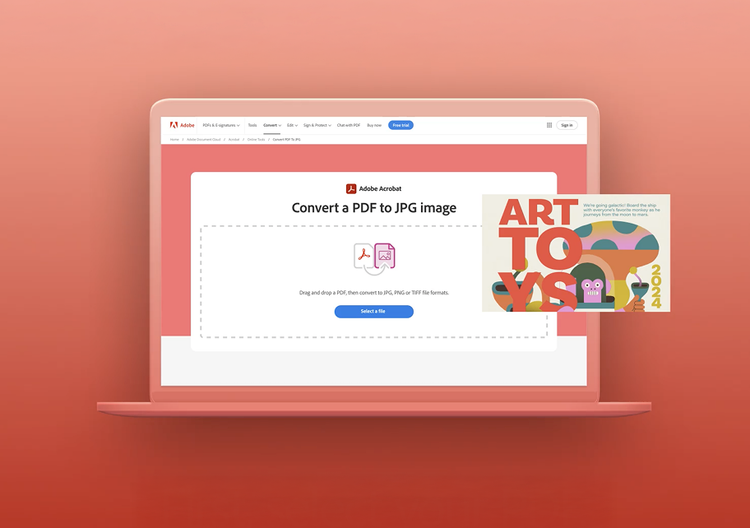
You do not need the Acrobat desktop app for a basic PDF-to-JPG conversion. Adobe Acrobat Online offers a browser-based PDF-to-image converter that supports JPG, PNG, and TIFF.
Step 1. Upload the PDF
Open Adobe's online PDF to JPG converter. Click Select a file or drag the PDF into the upload area.
Step 2. Select JPG
Choose JPG as the output format. If your document contains graphics that need sharper edges or transparency, you can choose PNG instead. TIFF is another option for image-heavy or archival workflows.
Step 3. Convert and Download
Click Convert to JPG. Adobe converts the PDF pages into image files, after which you can download the results or sign in for additional sharing options. Adobe states that files are securely handled on its servers and deleted if you do not sign in to save them.
Best for: occasional conversions, users who do not want to install software, and simple PDF pages that do not require advanced output settings or recurring batch workflows. If you prefer a non-Adobe browser option, you can also use the PDFelement online PDF to JPG converter.
Part 3. Can Adobe Reader Convert PDF to JPG?
Acrobat Reader is primarily a PDF viewing, commenting, form-filling, and signing app, so the simplest free route for PDF-to-JPG conversion is Adobe Acrobat Online. If you regularly need local export controls, image settings, or other advanced PDF tools, a paid Acrobat plan or another desktop PDF editor is more suitable.
This distinction matters because many older tutorials refer to Acrobat Reader, Acrobat DC, Acrobat Standard, Acrobat Pro, and Adobe PDF Pack as if they were the same product. They are not. For this task, focus on whether you need a browser conversion or a desktop conversion workflow, rather than relying on old product names.
Part 4. How to Convert PDF to JPG with PDFelement
PDFelement can convert PDF pages to JPG from the desktop and also supports batch conversion for repeated workflows. It is a practical alternative when you want to edit the PDF before export, convert PDF to image in multiple formats, control page ranges, or continue working with the document after conversion.
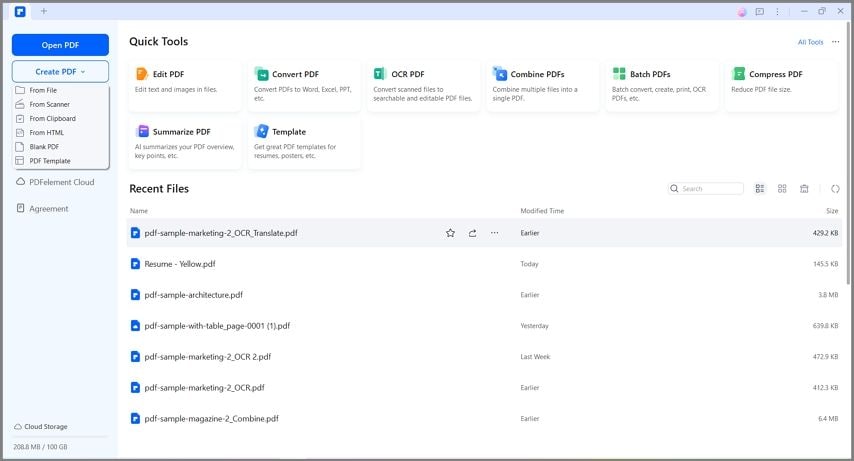
Step 1. Open the PDF
Launch Wondershare PDFelement and click Open PDF, then select the file you want to convert.
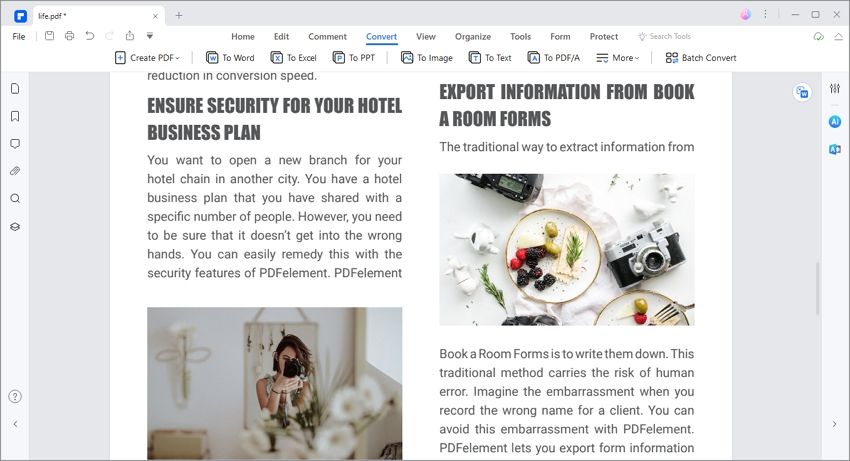
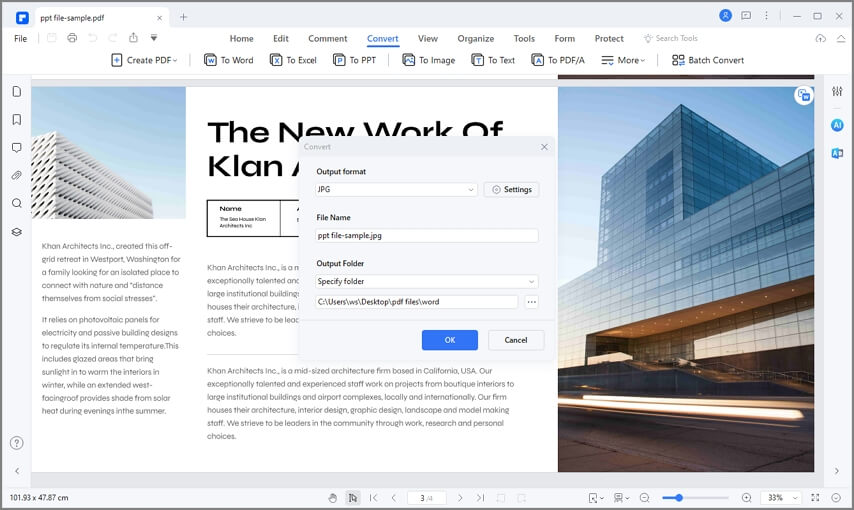
Step 2. Choose Convert > To Image
Open the Convert tool and choose To Image. PDFelement supports image output formats such as JPG, PNG, BMP, GIF, and TIFF.
Step 3. Select JPG and Output Settings
Choose JPG/JPEG as the image format and review the output settings. Depending on the workflow, you can adjust options such as page range, image quality, zoom level, borders, and whether PDF pages are exported as separate images or combined into a longer image. Then choose the output folder and start the conversion. For more output options and platform-specific methods, see the full guide on how to convert PDF to JPG.
G2 Rating: 4.5/5 |100% Secure
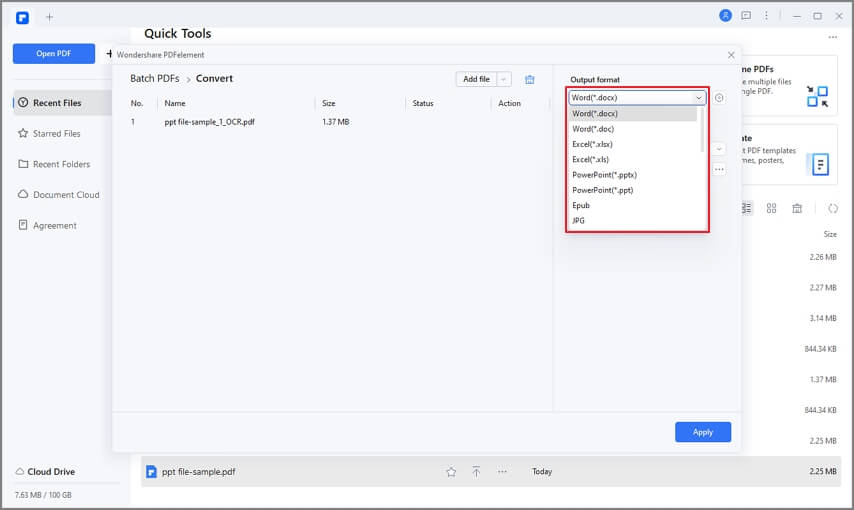
Convert Multiple PDFs to JPG in Batch
If you regularly convert reports, forms, scans, or document archives, batch conversion removes the need to process files one by one. Open Batch PDFs, add the files, choose JPG as the output format, review the settings, and apply the conversion to the full queue.
Where PDFelement V13 adds value
For a one-off PDF-to-JPG task, basic conversion is usually enough. In a larger V13 workflow, the value is stronger when the source PDF needs preparation first: batch processing can handle repeated conversions, while AI-assisted OCR and scan tools can make scanned content editable before you correct, redact, translate, or finalize the document and then export the finished pages as JPG images.
Part 5. Adobe Acrobat vs PDFelement for PDF to JPG
Both Adobe Acrobat and PDFelement can convert PDF pages to JPG; the better choice depends on whether you mainly need Adobe's ecosystem or a broader PDF workflow with batch tools and editing.
|
Feature
|
PDFelement
|
Adobe Acrobat
|
|---|---|---|
| Convert PDF pages to JPG | Yes | Yes |
| Other image formats | JPG, PNG, BMP, GIF, TIFF and more | JPEG, JPEG 2000, PNG, TIFF |
| Desktop offline workflow | Yes | Yes |
| Free browser option | PDFelement Online PDF to JPG | Adobe Acrobat Online PDF to JPG |
| Batch PDF conversion | Built-in Batch PDFs workflow | Available through advanced Acrobat workflows/plans |
| Edit PDF before export | Yes | Yes |
| Best fit | Recurring conversion + broader PDF editing and batch workflows | Users already working in the Adobe Acrobat ecosystem |
Avoid choosing only by a fixed monthly price shown in an old tutorial. PDF plan pricing changes over time. Compare the current plan, the number of files you process, whether you need offline work, and whether PDF-to-JPG is a one-time task or part of a larger document workflow. For a broader product decision, compare PDFelement vs Adobe Acrobat or review more Adobe Acrobat alternatives.
When Should You Convert a PDF to JPG?
PDF-to-JPG conversion is most useful when the destination accepts images more easily than PDF files. Common examples include uploading a PDF page to a website or CMS, adding a page preview to a presentation, sharing a document page in a messaging app, or turning a chart, flyer, receipt, or form into an image that can be viewed without a PDF reader.
- Web and social uploads: JPG is widely accepted by websites, content platforms, and social tools that do not accept PDF files.
- Presentations: Converting a chart or full PDF page to JPG makes it easier to place the content into PowerPoint, Keynote, or other slide tools.
- Document previews: JPG thumbnails can be useful when you need a lightweight visual preview of a PDF page.
- Photo-heavy documents: JPG compression can reduce the size of image-heavy pages when perfect text sharpness is not the main priority.
How Do You Convert Only the PDF Pages You Need?
If you only need a few pages, avoid converting and distributing unnecessary content. In a desktop workflow, you can first extract the pages you need from the PDF, then convert that smaller file to JPG. Adobe's online converter outputs PDF pages as images, so after conversion you can keep only the JPG files you need. PDFelement also provides page-range controls in its PDF-to-image settings, which is useful when a long PDF contains only a few pages that need to become images.
Part 6. JPG vs PNG: Which Format Should You Choose?
Choose JPG when smaller files and broad web compatibility matter; choose PNG when sharper text, line art, or transparency matters more. If PNG better matches your document, see how to convert PDF to PNG on desktop or in batch. Adobe's current guidance also positions JPEG as a web-friendly image format and PNG as the better fit for transparent backgrounds.
- Use JPG for: web uploads, photo-heavy PDF pages, presentation images, email sharing, and smaller files.
- Use PNG for: diagrams, screenshots, UI mockups, text-heavy pages, transparency, or images that may be edited repeatedly.
- Use TIFF for: high-quality archival or professional image workflows where file size is less important.
How Do You Keep PDF-to-JPG Quality High?
Start with the original PDF whenever possible, avoid repeatedly re-saving the JPG, and choose a higher image-quality or resolution setting when text and small graphics need to remain readable. If the JPG will only be used on the web, a moderate setting usually provides a better balance between clarity and file size.
Part 7. Conclusion
To convert PDF to JPG in Adobe Acrobat today, use the current Convert > Image format > JPEG workflow rather than older Save As instructions. For an occasional conversion, Adobe Acrobat Online is the simplest free option. If PDF-to-JPG is part of a larger workflow that also involves editing, batch processing, scan cleanup, OCR, or repeated file conversion, PDFelement provides a broader desktop workflow.
Part 8. FAQs About Adobe PDF to JPG Conversion
1. How do I convert a PDF to JPG in Adobe Acrobat?
Open the PDF in Acrobat, choose Convert, select Image format > JPEG, and click Convert to JPEG. Then choose the destination folder and save the exported image files.
2. Can I convert PDF to JPG with Adobe for free?
Yes. Adobe Acrobat Online provides a browser-based PDF-to-JPG converter. Upload the PDF, select JPG, convert the file, and download the resulting images without installing the desktop application.
3. Can Adobe Reader save a PDF as JPG?
For a free workflow, use Adobe Acrobat Online rather than relying on Reader for a local export process. The desktop Acrobat products provide the more direct local PDF-to-image conversion workflow.
4. Does Adobe convert every PDF page to a separate JPG?
Adobe's PDF-to-image workflow converts PDF pages into image files. With the online tool, pages are converted one page at a time, so you can keep the images you need after conversion.
5. Is JPG or PNG better for a PDF page?
JPG is usually better for smaller, web-friendly images and photo-heavy pages. PNG is better when you need sharper text or graphics, lossless compression, or transparency.
Free Download or Buy PDFelement right now!
Free Download or Buy PDFelement right now!
Try for Free right now!
Try for Free right now!
Elise Williams
chief Editor