
How to Convert PDF to Word with Adobe Acrobat
Learn how to convert PDF to Word with Adobe Acrobat, including scanned PDFs with OCR, formatting fixes, and a PDFelement alternative.
 100% Secure |
 Powered by AI
 Home
>
PDF Software Comparison
> How to Convert PDF to Word with Adobe Acrobat
Home
>
PDF Software Comparison
> How to Convert PDF to Word with Adobe Acrobat
Adobe Acrobat can convert a PDF into an editable Microsoft Word document, which is useful when you need to revise text, reuse content, or work with a scanned file. The steps are straightforward: open the PDF, export it to Microsoft Word, and save the result as a DOCX file. This guide first shows the Acrobat workflow, then explains how to handle scanned PDFs and common formatting issues. If you also want an Acrobat alternative for PDF conversion and editing, Wondershare PDFelement - PDF Editor Wondershare PDFelement Wondershare PDFelement is another option to consider.
Open your PDF in Adobe Acrobat, choose "Export PDF" or the available "Convert" option, select "Microsoft Word" as the output format, and save the converted file as a DOCX document. If the PDF is scanned or image-based, Acrobat may need to recognize the text with OCR before the Word file becomes fully editable.
Steps to Convert PDF to Word with Adobe Acrobat
Step 1. Open Your PDF in Adobe Acrobat
Launch Adobe Acrobat and open the PDF you want to convert. Before exporting, check whether you can select individual words in the document. If the text can be highlighted normally, the file is probably text-based. If each page behaves like a single image, you are likely working with a scanned PDF and OCR may be required.
Step 2. Export the PDF to Microsoft Word
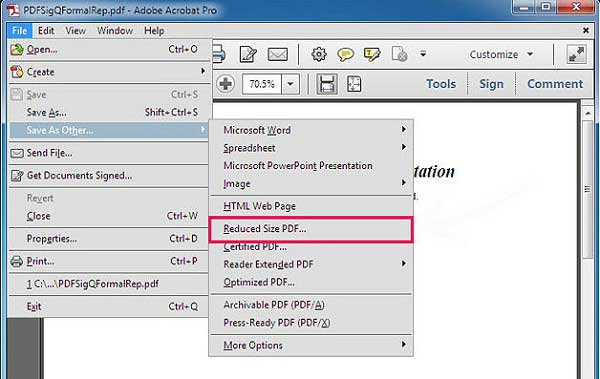
Choose the PDF export or conversion tool in Acrobat and select "Microsoft Word" as the output format. For most current Word workflows, DOCX is the most practical choice because it supports modern document formatting and editing features.
Step 3. Save and Review the Word Document
Start the conversion and save the Word file to your preferred folder. After conversion, open the DOCX file in Microsoft Word and review headings, tables, images, columns, page breaks, and fonts. PDF and Word use different layout systems, so complex documents may need minor formatting adjustments.
How to Convert a Scanned PDF to Word in Acrobat
A scanned PDF usually contains images of text rather than editable text. To create an editable Word document, the text needs to be recognized with OCR (Optical Character Recognition). When exporting a scanned PDF, make sure the correct document language is selected if Acrobat provides OCR or text-recognition settings.
Step 1. Check Whether the PDF Is Scanned
Try selecting a word in the PDF. If you cannot select individual characters or sentences, the page is likely image-based. This is a common sign that OCR is needed before or during conversion.
Step 2. Run OCR and Export to Word
Use Acrobat's OCR or text-recognition workflow, then export the PDF to Microsoft Word. After conversion, check names, numbers, punctuation, tables, and multi-column text carefully. OCR accuracy can be affected by low-resolution scans, skewed pages, faint text, handwriting, stamps, and unusual fonts.
Why Does PDF-to-Word Formatting Change?
PDF is designed to preserve a fixed page layout, while Word uses editable paragraphs, styles, tables, and floating objects. During conversion, the software has to reconstruct the PDF into editable Word elements. That is why complex layouts can change even when the conversion itself is successful.
|
PDF Element
|
What May Change in Word
|
What to Check
|
|---|---|---|
| Multi-column text | Reading order or text boxes may shift. | Review paragraph order and section breaks. |
| Complex tables | Cell widths, borders, or merged cells may change. | Check the table structure and resize columns if needed. |
| Embedded or uncommon fonts | Word may substitute a different font. | Compare headings and body text with the original PDF. |
| Scanned text | OCR may misread characters, numbers, or spacing. | Use the correct OCR language and proofread important text. |
| Forms, stamps, and positioned graphics | Some elements may become images or floating objects. | Keep the original PDF available for comparison. |
Steps to Convert PDF to Word with Acrobat Alternative
If you want to convert PDF to Word while also working with PDF editing, OCR, annotation, batch processing, and other document tools in one application, PDFelement is an Acrobat alternative worth considering. It can convert standard PDFs as well as scanned PDFs that require OCR.


 G2 Rating: 4.5/5 |
 100% Secure
Step 1. Load Your PDF Document
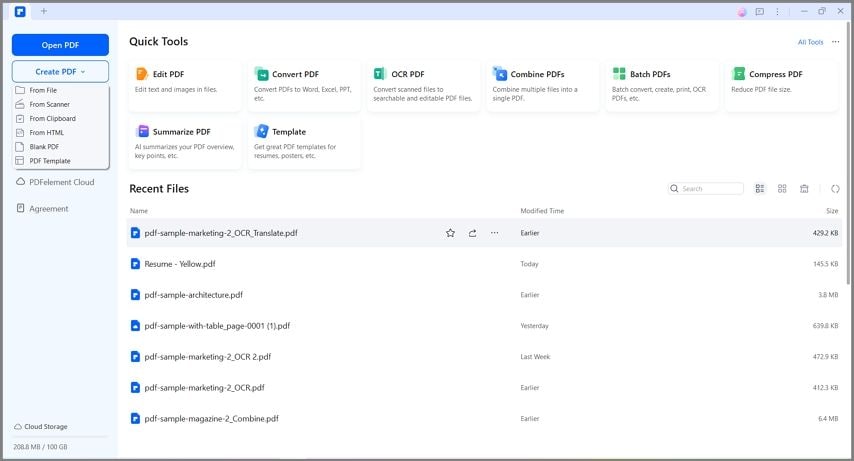
Launch PDFelement and open the PDF you want to convert. If the document is scanned or image-based, run OCR first so the text can be recognized before you export it to Word.
Step 2. Convert PDF to Word
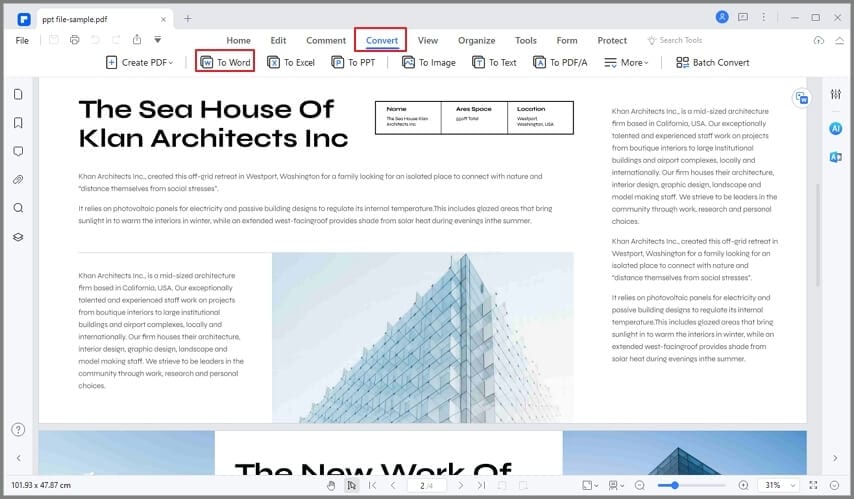
Once the PDF is open, choose the "Convert" function and select "Word" as the output format. If conversion settings are available, choose the option that best matches your document type. For scanned PDFs, confirm the OCR language before starting the conversion.
Step 3. Save and Check the DOCX File
Save the converted Word document and open it in Microsoft Word. For reports, scanned contracts, academic papers, or files with complex tables, review a few representative pages before processing a larger batch.
Comparison between Adobe® Acrobat® and PDFelement
|
Product Features
|
Adobe® Acrobat®
|
|
|---|---|---|
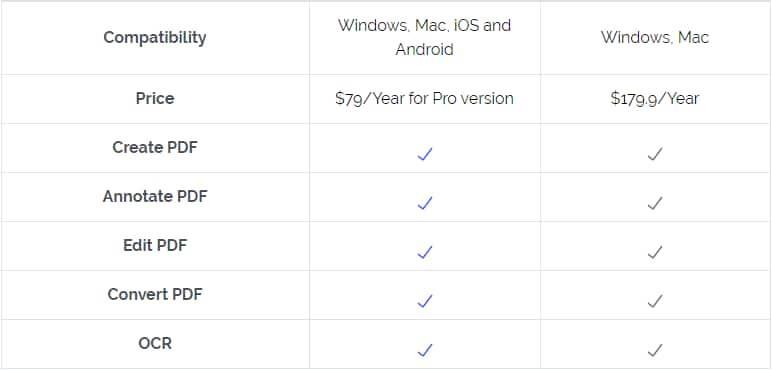
| Convert PDF to Word / DOCX | Supported | Supported |
| OCR for scanned PDFs | Supported | Supported |
| PDF editing and annotation | Supported | Supported |
| Batch PDF workflows | Available for repeated document tasks | Available depending on Acrobat workflow and plan |
| AI-assisted PDF workflows | Available for supported PDFelement AI features | Available through supported Acrobat AI features and plans |
| Best suited for | Users who want conversion, OCR, editing, and broader PDF workflows in one application | Users already working in the Adobe ecosystem or standardized Acrobat workflows |
Which PDF-to-Word Workflow Should You Use?
Choose Adobe Acrobat if...
Acrobat is a practical choice when your workflow is already centered on Adobe products.
- Your team already uses Acrobat or Adobe subscriptions.
- You mainly need PDF export, OCR, editing, and established Adobe workflows.
- You prefer to stay inside the existing Adobe ecosystem.
Consider PDFelement if...
PDFelement is worth considering when you want conversion and broader PDF workflows in one application.
- You want PDF-to-Word conversion together with OCR and editing.
- You regularly handle annotations, batch jobs, or repeated PDF tasks.
- You also want access to supported AI-assisted PDF workflows.
Common PDF-to-Word Problems and How to Fix Them
The Word file is not editable
The PDF may be scanned. Run OCR before converting it again. If the scan contains handwriting, very small text, or poor image quality, some manual correction may still be required.
The formatting changed after conversion
Tables, columns, text boxes, forms, and positioned images can move because Word reconstructs the fixed PDF layout into editable objects. Review the DOCX after export and correct the affected sections.
Some characters are incorrect
For scanned PDFs, make sure the OCR language matches the document. Accents, symbols, numbers, faded text, and multilingual pages may need extra proofreading.
The PDF cannot be converted
Check whether the file is password-protected, permission-restricted, damaged, or generated in a format that the software cannot process correctly. Only remove document restrictions when you are authorized to do so.
Frequently Asked Questions about Converting PDF to Word
Can Adobe Acrobat convert a PDF to Word?
Yes. Open the PDF in Acrobat, choose the PDF export or conversion tool, select Microsoft Word, and save the file as DOCX or another supported Word format.
Can Adobe Acrobat convert a scanned PDF to Word?
Yes. Scanned PDFs can be converted after the text is recognized with OCR. The final Word file should still be reviewed for OCR errors, especially in tables, numbers, special characters, or low-quality scans.
Why does a PDF look different after I convert it to Word?
PDF stores a fixed page layout, while Word uses editable document structures. Complex fonts, tables, columns, images, and positioned elements can therefore change during conversion.
What is an Acrobat alternative for converting PDF to Word?
PDFelement is one option if you need PDF-to-Word conversion together with OCR, PDF editing, annotation, batch processing, and other PDF tools. Compare the current features and plan that best fit your workflow.
Can I convert PDF to Word online?
Yes. For a quick browser-based task, you can use the PDFelement Online PDF to Word converter. Desktop software may be more suitable for repeated, OCR-heavy, sensitive, or editing-intensive document workflows.
Final Takeaway
Adobe Acrobat provides a direct way to export PDF files to Microsoft Word and can also handle scanned documents when OCR is required. For the best result, review the converted DOCX for tables, columns, fonts, images, and OCR accuracy. If you want an alternative that combines PDF conversion with editing, OCR, annotation, batch processing, and broader document workflows, PDFelement is another option to evaluate.
Free Download or Buy PDFelement right now!
Free Download or Buy PDFelement right now!
Try for Free right now!
Try for Free right now!

Elise Williams
chief Editor