
Table of Contents
PDFaid’s online compressor is a quick way to reduce a PDF before attaching it to an email, uploading it to a form, or sending it through a chat app with file-size limits. The basic workflow is simple: upload the PDF, choose compression options, run the tool, and download the smaller file. That makes pdfaid compress useful for one-off jobs where you do not want to install software.
The trade-off is control. Online compression tools can be convenient, but they are not always ideal for large PDFs, scanned documents, confidential contracts, or files where image clarity matters. This guide explains how to use PDFaid to compress PDFs, what its settings mean, what problems to watch for, and when a desktop tool like PDFelement is a better fit.


 G2 Rating: 4.5/5 |
 100% Secure
How PDFaid Compress Works
PDF compression usually reduces file size in a few different ways. It may downsample large images, lower image quality, remove unused data, optimize internal file streams, or simplify embedded font information. If your PDF is mostly text, the size reduction may be modest. If it contains scanned pages, photos, diagrams, or layered graphics, the difference can be much larger.
PDFaid’s compressor gives users several compression choices instead of only offering a single “compress” button. That is helpful if you want to control how much quality you are willing to trade for a smaller file. For example, a PDF with scanned receipts can usually tolerate stronger compression than a PDF containing architectural drawings or small chart labels.
The phrase pdfaid compress pdf often appears in searches because users are looking for the tool’s exact PDF compression workflow. The tool is browser-based, so it works without installing a desktop app. You only need a stable internet connection and a PDF file that the service can upload and process.
PDFaid is best suited for quick, non-sensitive files: class notes, public brochures, simple forms, draft documents, and PDFs you only need to make small enough for sharing. If the file contains private financial data, legal documents, medical information, or internal company material, an offline PDF compressor is usually the safer choice because the file does not need to leave your computer.
How to Compress PDF with PDFaid
The PDFaid compression process is straightforward, but the settings matter. Choosing the strongest compression without checking the output can make images blurry or text in scanned pages harder to read. The steps below show how to use compress PDF PDFaid workflows more carefully.
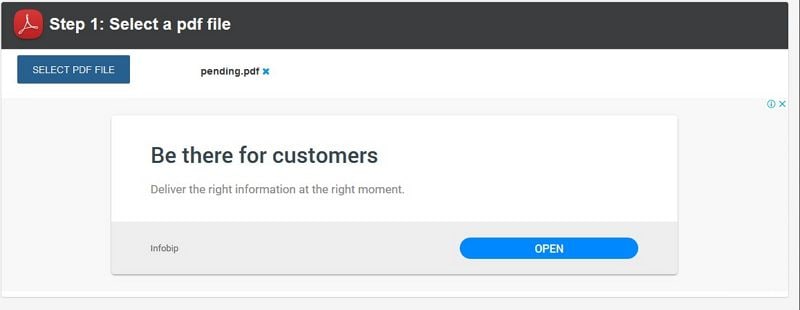
Step 1: Upload Your PDF File
Open the PDFaid PDF compressor page in your browser. Click the button to select a PDF file, then choose the document from your computer. The upload time depends on your internet speed and the file size. A small text-based PDF may upload in seconds, while a scanned PDF with many pages can take much longer.
Before uploading, check that you are using the final version of the document. Compressing the wrong file wastes time, and if you later edit the PDF again, the file size may increase after new images, comments, signatures, or pages are added.
For very large files, close unnecessary browser tabs and avoid running multiple upload-heavy tasks at the same time. Browser-based tools can fail or freeze if your device is low on memory or if the connection drops during upload.
Step 2: Choose PDF Compression Options
After the file is uploaded, PDFaid displays compression settings. These options may include image quality controls for color, grayscale, and monochrome images, plus additional settings such as stream compression, font handling, and flattening.
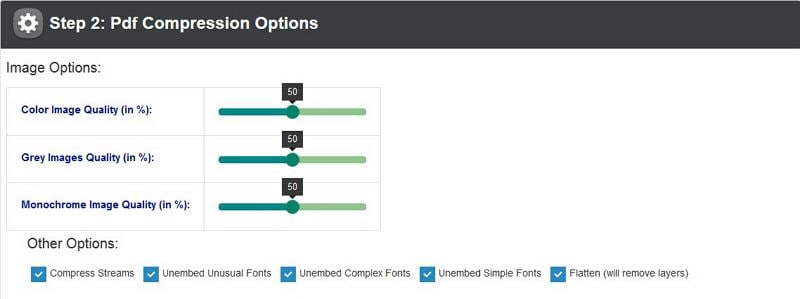
The image settings are usually the most important. If your PDF contains photos or scanned pages, reducing image quality will have the biggest effect on file size. If the PDF is mostly selectable text, the image settings may not change much.
A practical approach is to avoid the most aggressive settings on the first try. Choose moderate compression, download the result, and inspect a few pages at 100% zoom. Pay attention to small text, signatures, stamps, diagrams, and QR codes. A PDF can look fine when zoomed out but become difficult to read when printed or viewed on a larger screen.
PDFaid may also offer options to unembed fonts. Font embedding helps a PDF look the same across devices. Removing or simplifying fonts can reduce size, but it may also affect how the document displays if the viewer does not have the same fonts installed. For formal files, branded documents, or files with unusual characters, be careful with font-related options.
Step 3: Compress and Download the Smaller PDF
Once the settings are ready, click the button to start compression. Wait until the process finishes, then download the compressed PDF. Open the downloaded file before sending it anywhere. Do not rely only on the file-size number.
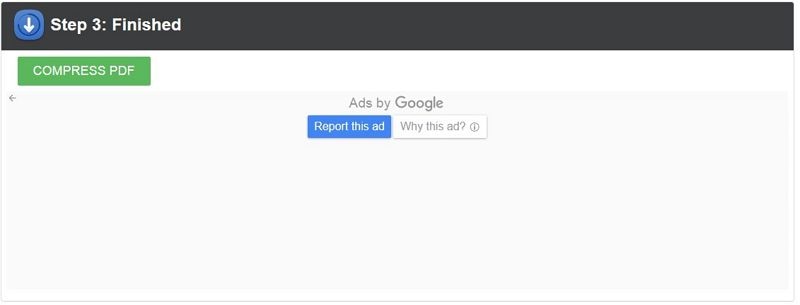
Check three things after downloading:
- The new file size is small enough for your purpose.
- Text, images, signatures, tables, and charts are still readable.
- Pages are complete and in the correct order.
If the result is too blurry, repeat the process with lighter image compression. If the file is still too large, you may need to remove unnecessary pages, resize oversized images before creating the PDF, or use a desktop PDF optimizer with more detailed controls.
Best Settings for a Smaller PDF Without Ruining Quality
Compression is not only about making the number smaller. A 2 MB PDF that no one can read is worse than a 6 MB PDF that opens quickly and prints clearly. The right settings depend on what kind of PDF you have.
For scanned documents, image compression controls most of the final size. Scans often contain full-page images, even when the page appears to be only text. If the document is for reading only, moderate downsampling may work well. If it needs OCR, printing, or archiving, keep quality higher. The U.S. National Archives provides useful background on digital file quality and preservation considerations for long-term documents at archives.gov.
For PDFs with photos, use a balanced setting rather than maximum compression. Product catalogs, portfolios, manuals, and reports can lose credibility if images become blocky or washed out. For files with screenshots, avoid overly aggressive compression because small interface text can degrade quickly.
For text-heavy PDFs, look at font and structure options instead. Stream compression and removing redundant data can reduce file size without visibly changing the document. Font unembedding may help, but it can create display issues in some cases. If you are sending a résumé, proposal, contract, or designed report, preserving fonts is often worth a slightly larger file.
Flattening is another setting to treat carefully. Flattening can reduce file complexity by merging layers, annotations, form fields, or transparency into a simpler page appearance. That may help with size and compatibility, but it can also make form fields uneditable or turn comments into static content. If you need recipients to fill, edit, or review the PDF, save an original copy before flattening.
Searches like compress pdfaid and pdfaid compress pdf file often come from users who only want the smallest possible output. In practice, the best result is usually the smallest file that still serves the job: readable for email, clear enough for printing, and intact enough for signing, reviewing, or archiving.
Common PDFaid Compress Limits and What to Watch For
PDFaid can be useful, but online PDF compression has limitations. Some are technical; others are related to privacy and workflow.
Large files are the most common pain point. A PDF with hundreds of scanned pages can take a long time to upload, process, and download. If the connection is interrupted, you may have to start over. Browser memory can also become an issue, especially on older computers or when several tabs are open.
Privacy is another concern. Any online compressor requires you to upload the file to a server for processing. That may be fine for a public flyer, but it is not ideal for tax records, employee documents, business contracts, medical forms, or files covered by internal compliance rules. Before using any online PDF tool, review its privacy policy and file-handling terms. For general privacy guidance, the Federal Trade Commission shares practical advice on protecting personal information at consumer.ftc.gov.
Quality loss can also surprise users. Compression is often irreversible in practical terms: once images are downsampled and saved at lower quality, you cannot restore the lost detail from that compressed copy. Keep the original PDF untouched, then work from a duplicate. This small habit prevents a lot of frustration.
Another limitation is workflow. PDFaid is mainly for compressing a single file. If you need to compress many PDFs, compare sizes, rename files, remove pages, apply OCR, or secure the final version with a password, you will likely need a fuller PDF application.
A small note on spelling: some users search for pdfaid compres pdf without the second “s” in “compress.” The intent is the same. They are usually looking for the PDFaid compressor or instructions for shrinking a PDF file online.
A Better PDFaid Alternative: Compress PDFs with PDFelement
If PDFaid works for your file, there is no need to complicate the task. But if you handle PDFs often, a desktop workflow is more reliable. PDFelement is a practical alternative when you need to compress PDFs offline, process larger files, or do more than shrink the file size.
The biggest advantage is that you can keep the document on your computer. That matters for confidential PDFs and for files that are too large or slow to upload. PDFelement also fits naturally into the rest of the PDF workflow: after compression, you can edit text, remove unnecessary pages, run OCR on scanned files, add comments, convert the file, protect it with a password, or prepare it for signing.
G2 Rating: 4.5/5 |100% Secure
How to Compress a PDF in PDFelement
Open PDFelement and import the file you want to reduce. You can use the Open option to select a PDF from your computer.
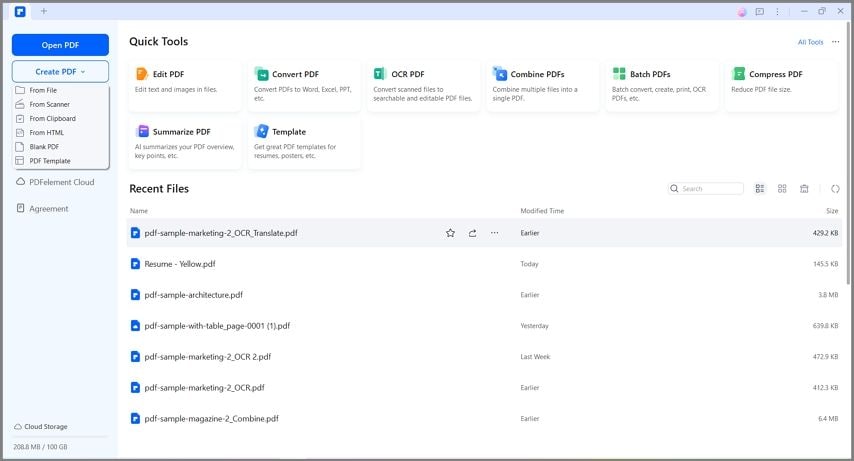
Next, go to the optimization or compression feature. Choose the compression level that fits the document. If the PDF is only for quick email review, a stronger compression level may be acceptable. If it contains charts, scanned text, or detailed images, use a more balanced setting and check the output carefully.
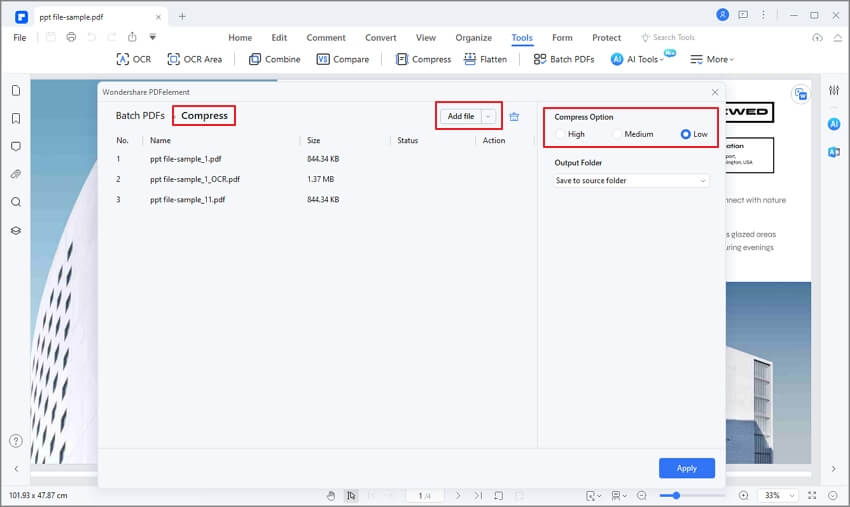
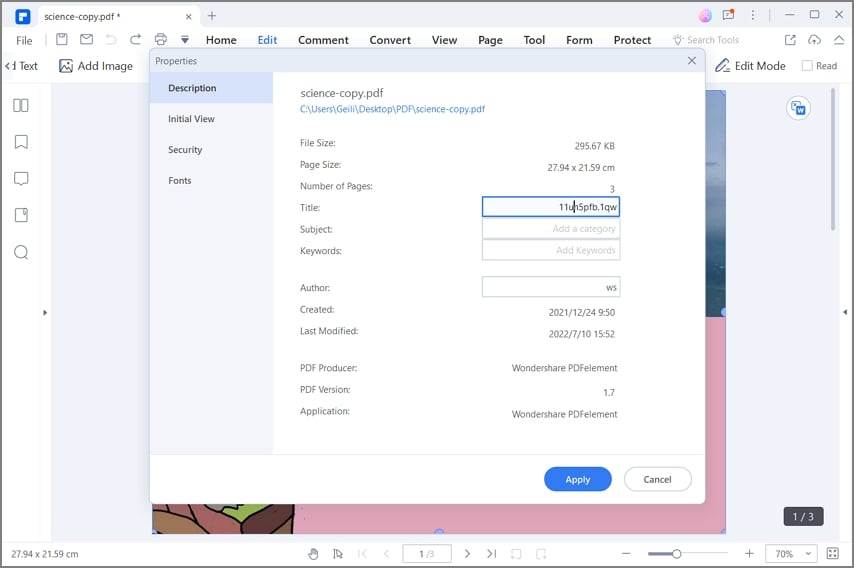
After the file is compressed, compare it with the original. Open several pages, zoom in on detailed areas, and confirm that important content remains readable. You can also check file properties to see the new file size.
This workflow is especially useful when compression is only one step. For example, you might receive a scanned 40-page contract, run OCR so the text becomes searchable, remove blank pages, compress the file, add a password, and then send it for review. An online compressor can reduce size, but it will not handle that full document cleanup process as comfortably.
PDFelement is also helpful for batch work. If you regularly prepare PDFs for email, client portals, school submissions, or internal archives, processing files one by one in a browser becomes tedious. A desktop tool is a better fit when repeatability matters.
PDFaid vs. PDFelement: Which Should You Use?
PDFaid and PDFelement are not really competing for the same exact use case. PDFaid is convenient for quick online compression. PDFelement is better for controlled, private, or repeated PDF work.
Use PDFaid if you have a non-sensitive file, only need a quick size reduction, and do not want to install anything. It is a reasonable choice for simple PDFs, especially when you can tolerate a little trial and error with the compression settings.
Use PDFelement if the file is private, large, scanned, image-heavy, or part of a larger workflow. It is also the better option if you need to edit the PDF before compressing it, remove pages, convert it to another format, apply OCR, add annotations, or protect the final document.
A simple way to decide is this: if the PDF is disposable or public, an online compressor is usually fine. If the PDF is important, private, or needs to remain editable and polished, use a desktop PDF editor and compressor.
People Also Ask
-
Is PDFaid free for compressing PDFs?
PDFaid offers an online PDF compression tool that can be used through a browser. Availability, limits, and current terms can change, so check the PDFaid website if you are working with a large file or using it for repeated tasks. -
How do I compress a PDF with PDFaid?
Open the PDFaid compressor, upload your PDF, choose the compression options, start the compression process, and download the smaller file. After downloading, open the PDF and check that text, images, forms, and page order are still correct. -
Will PDFaid compression reduce PDF quality?
It can. PDF compression often reduces file size by lowering image resolution or quality. The effect depends on the settings you choose and the type of PDF. Scanned files and image-heavy documents are more likely to show visible quality loss. -
What is the best setting for PDFaid compress PDF tasks?
For most files, start with moderate compression rather than the strongest option. Check the output at normal reading size and at 100% zoom. If the file is still too large, compress more aggressively only after saving a copy of the original. -
Is it safe to upload private documents to an online PDF compressor?
For sensitive documents, offline compression is safer because the file stays on your device. Avoid uploading tax forms, contracts, medical files, financial records, or confidential business documents unless you have reviewed and accepted the service’s privacy and retention policies. -
Why is my compressed PDF still too large?
The PDF may contain high-resolution scans, large images, embedded fonts, layers, or other complex objects. You may need to remove unnecessary pages, reduce image resolution more carefully, flatten layers, or use a desktop optimizer with more detailed controls. -
Can I batch-compress multiple PDFs with PDFaid?
PDFaid is mainly suited to quick browser-based compression. If you need to compress many PDFs, PDFelement is a better option because a desktop workflow is easier to manage for repeated or batch document tasks. -
What should I do before compressing an important PDF?
Save a backup copy first. Then compress a duplicate and compare it with the original. Check small text, images, signatures, form fields, page order, and print quality before sending or archiving the compressed version. -
Is PDFelement better than PDFaid?
It depends on the job. PDFaid is convenient for quick online compression. PDFelement is better when you need offline processing, more control, batch work, editing, OCR, password protection, or a complete PDF management workflow.
![[2026] Top 5 Great Alternatives to Preview for Mac](https://images.wondershare.com/pdfelement/images2026/pdf-like-article-2.png)