
A job offer often arrives with only a few days for consideration. The agreement covers pay, notice, confidentiality, responsibilities, and restrictions after leaving work. Many people skip careful reading because excitement and short deadlines create pressure. A proper employment contract review helps identify unclear terms and potential risks.
AI can make reviewing important clauses faster within a limited decision timeline. This guide explains key clauses, AI review benefits, and its important limitations.


 G2 Rating: 4.5/5 |
 100% Secure
In this article
- What an Employment Contract Contains
- Why Employment Agreement Review Matters
- What to Examine in an Employment Contract
- Why AI Suits Employment Agreement Review
- Reviewing an Employment Contract with PDFelement
- Who Benefits From AI Employment Contract Review
- What AI Cannot Do in Contract Review
- Frequently Asked Questions
Part 1. What an Employment Contract Contains
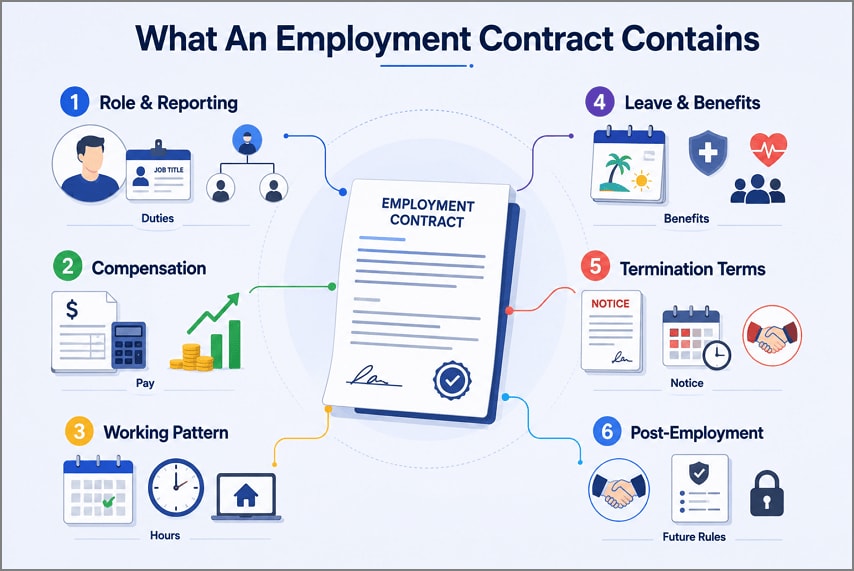
An employment contract explains the working terms and responsibilities agreed by both sides. Understanding these terms makes employment agreement review easier before accepting any job offer.
- Role and Reporting: Shows your job role, main duties, workplace, and reporting manager.
- Compensation: Your contract explains basic pay, possible bonuses, and future salary increases.
- Working Pattern: Covers normal hours and explains overtime or flexible working arrangements.
- Leave and Benefits: Includes holiday allowance and other available employee benefits.
- Termination Terms: Explains notice periods and conditions allowing either side to end employment.
- Post-Employment Terms: Sets certain responsibilities that may continue after your employment ends.
Employment contracts can be permanent, fixed-term, part-time, or based on independent contractor work. Each contract type has different rules for working periods, benefits, and ending employment. According to the U.S. Department of Labor, independent contractors are not covered by employee protections under the Fair Labor Standards Act (FLSA).
Part 2. Why Employment Agreement Review Matters
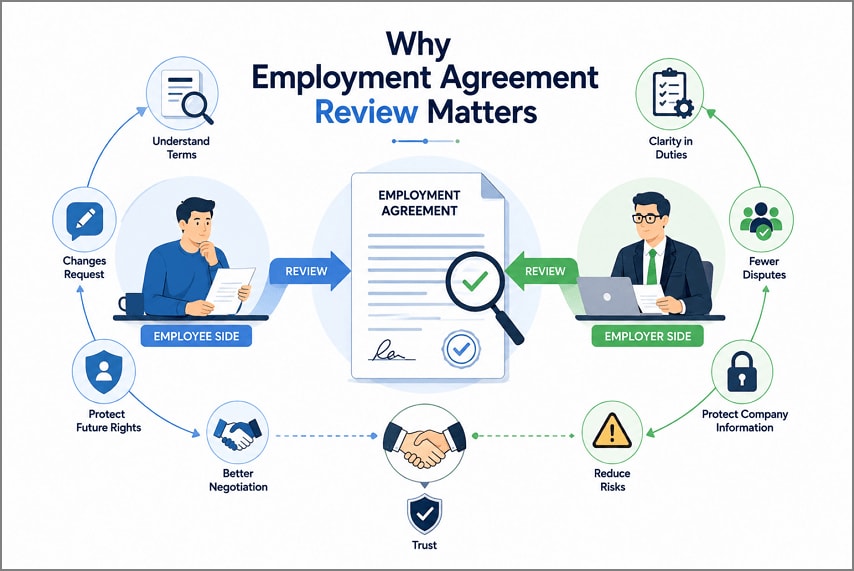
An employment contract review helps both sides understand their rights and responsibilities. Now, let's see why reviewing the agreement matters for employees and employers alike.
For the Employee: The employer prepares the contract before offering it for signing. Important terms can affect your work during and after employment ends. Reviewing everything before signing gives you time to request fair changes.
For the Employer: A poorly written contract can create serious problems for employers later. Unclear duties can make employee performance issues harder to manage. Clear terms also help protect company information when an employee leaves.
Part 3. What to Examine in an Employment Contract
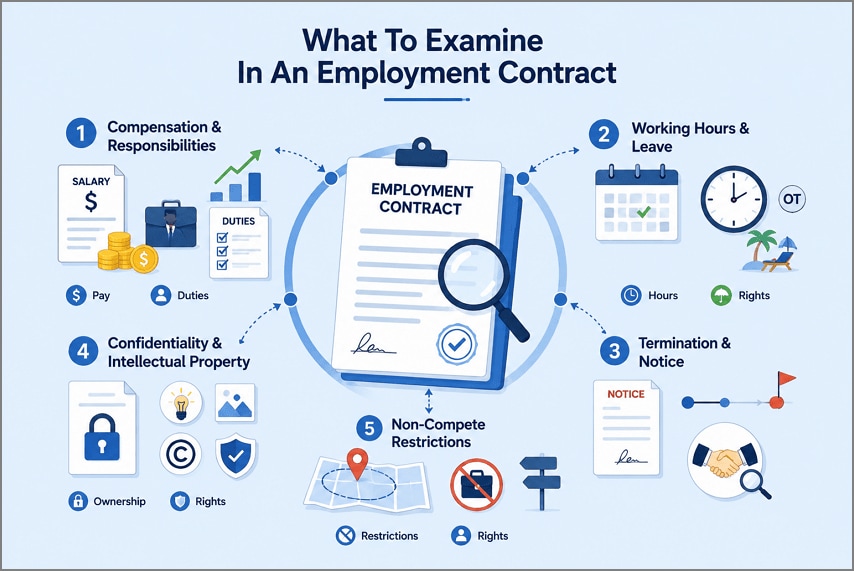
Checking key terms through employment agreement review can reveal problems before signing. Below are the 5 key areas you should check before signing:
Compensation, Benefits, and Job Responsibilities
Check whether bonuses and commissions are guaranteed or decided by your employer. Confirm your listed duties match the role discussed during your job interview. Also check whether employers can change your responsibilities without getting your approval.
Working Hours and Leave
Your contracted hours, overtime rules, and holiday entitlement should be explained. Most locations set minimum employment rights that contracts cannot legally reduce further. Terms below these legal minimums cannot reduce your actual employee rights.
Termination and Notice Periods
Compare notice periods because employees sometimes must provide more notice than employers. Check probation rules, immediate dismissal reasons, and any garden leave requirements. Longer notice protects your income but can delay starting another job elsewhere.
Confidentiality and Intellectual Property Clauses
Confidentiality duties can continue after employment ends, sometimes without any time limit. Check intellectual property terms because they may include work created outside work. Some locations protect created inventions even when contracts suggest otherwise.
Non-Compete and Other Restrictive Covenants
These clauses can restrict your work choices after leaving your current employer. Check restricted activities, how long restrictions last, and where they apply geographically. Non-compete rules can change significantly, making current local law important before judging enforceability. In the U.S., the FTC's nationwide Noncompete Rule is currently not enforceable.
Part 4. Why AI Suits Employment Agreement Review
Professional review can cost more than people expect for one job offer. Short deadlines and requesting extra time can also make professional review difficult. AI supports employment contract review by providing a useful and faster first assessment. The table below compares where AI and manual review offer clear advantages:
| Factor | Manual Review | AI Employment Contract Review |
| Turnaround | May take hours or days | Usually completed within minutes |
| Cost | Professional fees may apply per review | Often included within a reusable tool |
| Coverage | Depends on reviewer expertise and available time | Can scan many clauses in one review |
| Local Law | Can consider local laws and enforceability | May have limited jurisdiction-specific understanding |
| Strongest Role | Legal judgment, complex clauses, and negotiation | Quick first review and potential risk identification |
AI highlights terms needing attention, while professionals handle complex legal questions.
Part 5. Reviewing an Employment Contract with PDFelement
Employment agreements often contain detailed terms that are difficult to understand. Manual reading can also miss unusual clauses, hidden risks, or important differences. This is where PDFelement comes in with AI tools for agreement review.
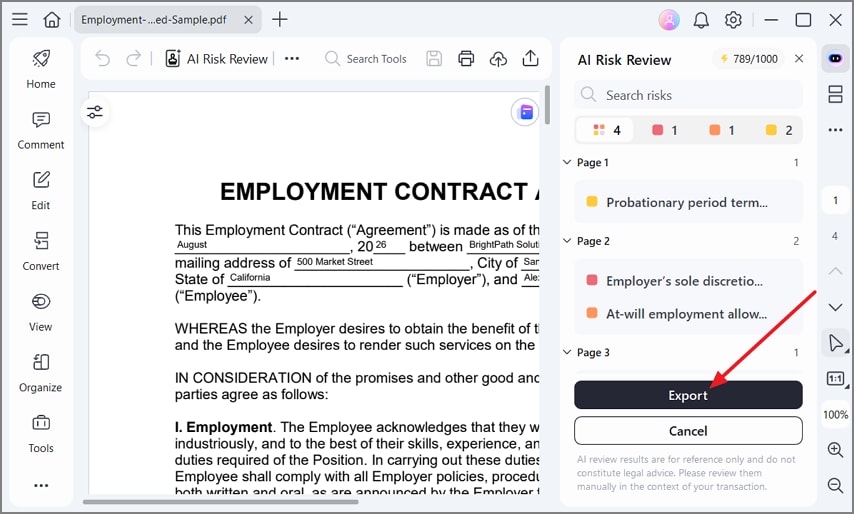
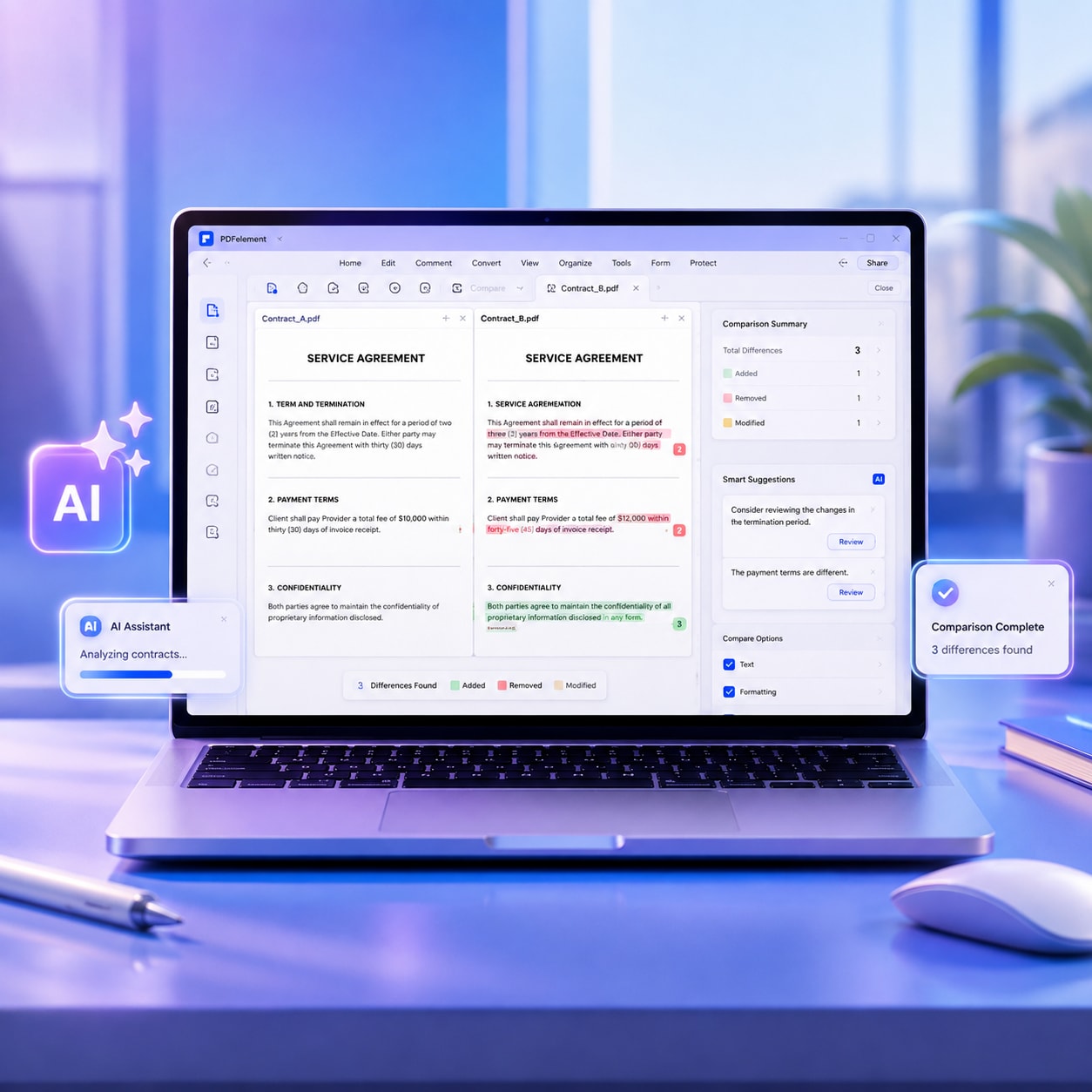
Its AI Risk Review identifies potential concerns and grades risks by severity. Agreement Comparison shows differences between contract versions within the same review process. Its employment agreement review also considers your selected position during contract analysis.
How to Review an Employment Contract
Next, follow the simple steps below to review your employment contract:
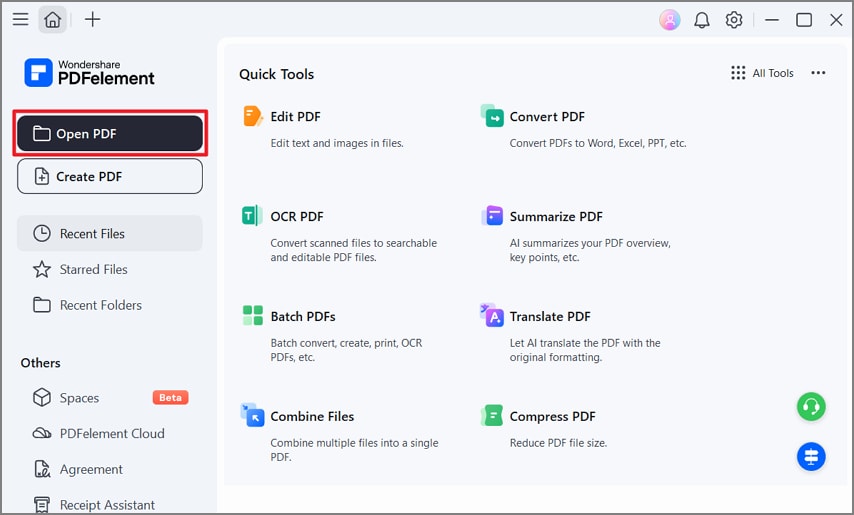
Step 1. Open The Agreement in PDFelement
Once you open PDFelement, press the “Open PDF” option and choose your agreement PDF.
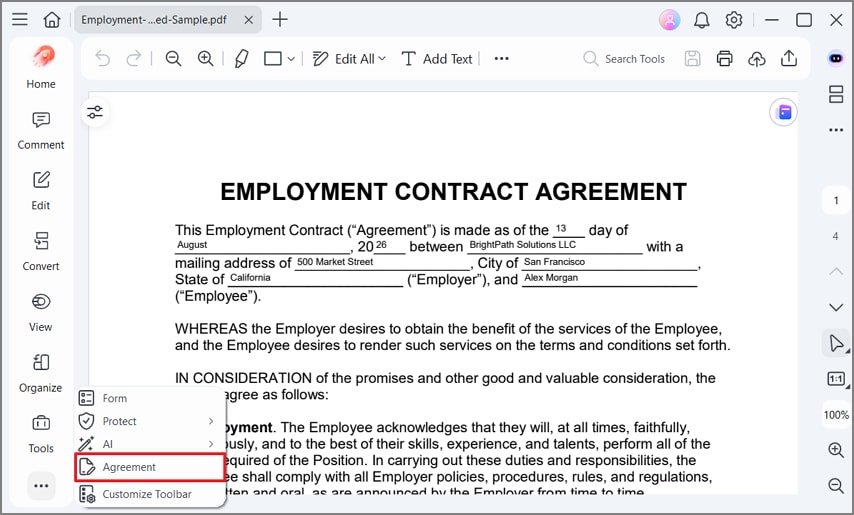
Step 2. Access The Agreement Tools
After that, press the “Three-Dots” icon in the bottom left corner and choose the “Agreement” option.
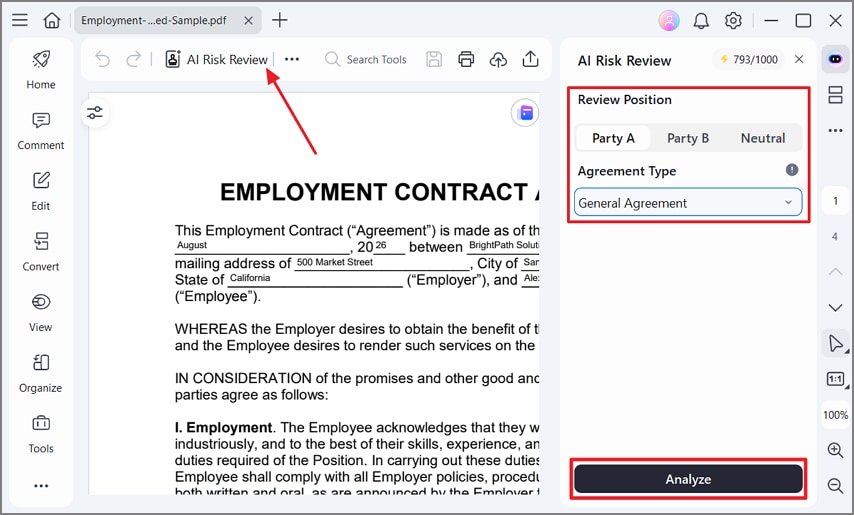
Step 3. Run AI Risk Review With Your Position Set
Next, select “AI Risk Review” in the top toolbar and choose a “Review Position.” Then, pick an “Agreement Type” and press the “Analyze” button.
Step 4. Export The Findings
Once the analysis is done, click the “Export” button to save the report and send it onward.
What Makes PDFelement Suitable for Employment Work
After reviewing the process, let’s explore what makes PDFelement suitable for employment contracts.
- Two Sides, Two Readings: A notice period favoring the employer reads as protection from one seat and a constraint from the other, and the output reflects whichever you chose.
- Risk Graded by Weight: A restrictive covenant running three years surfaces above an ambiguous expenses clause, so attention lands where it matters.
- Contract Type Awareness: Permanent, fixed-term, and contractor agreements carry different norms, and the checks adjust rather than applying one template.
- A Report You Can Use: Findings are left as a document, which an employee can take to a lawyer or an HR team can file against the role.
- No Learning Curve: The process is opening a file and choosing two settings, which matters when the deadline is Monday.
G2 Rating: 4.5/5 |100% Secure
Part 6. Who Benefits From AI Employment Contract Review
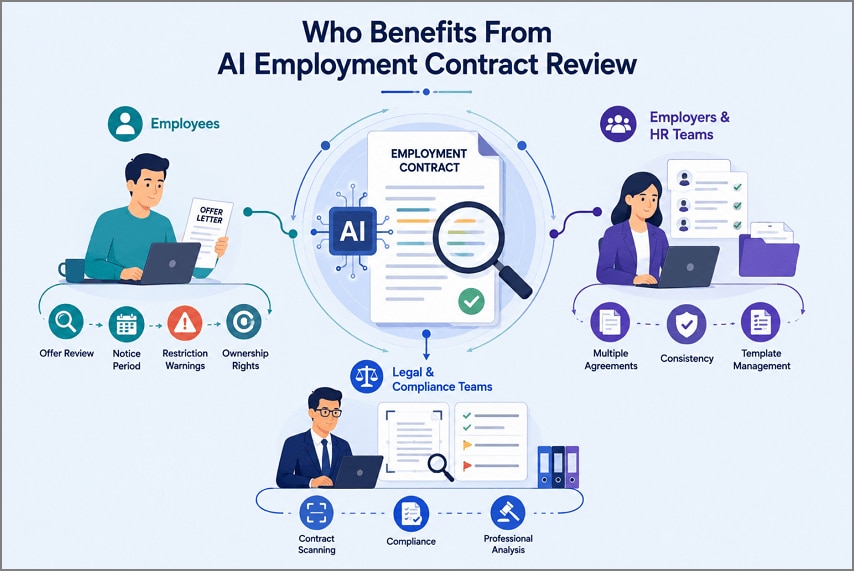
AI employment contract review serves different purposes depending on who uses it. Below, we explain its value for employees, HR teams, and legal professionals.
- Employees: Anyone weighing an offer gains a clear view of notice, restrictions, and ownership terms before the window for questions closes.
- Employers and HR Teams: Template consistency is the concern here, since agreements drift as roles multiply and small variations accumulate across a workforce.
- Legal and Compliance Teams: Reviewing agreements at volume means triaging first and escalating, rather than reading every contract at the same depth.
Part 7. What AI Cannot Do in Contract Review
The limits of employment agreement review become important when legal judgment is required. Some decisions still need local knowledge, personal judgment, and professional legal advice:
- Jurisdictional Law: Whether a restrictive covenant is enforceable depends on where you work. The identical clause can be void in one place and binding in another.
- Statutory Entitlements: Local minimums for notice, leave, and overtime override contract terms. Reading the document alone cannot establish what your legal floor is.
- Negotiation Judgment: Automated analysis can identify contract terms that favor employers. Your leverage and interest in the role guide your response.
- Responsibility for Advice: AI tools cannot accept professional responsibility for their contract guidance. Complex restrictions or financial terms should receive professional legal review.
Frequently Asked Questions
What should I look for in an employment contract?
Pay structure, contracted hours, notice on both sides, confidentiality duration, intellectual property ownership, and any restrictions on future work. Restrictive covenants deserve the closest reading, since they apply after you leave.
Can AI review an employment contract accurately?
It identifies one-sided terms, missing provisions, and unusual wording, since employment agreements follow recognizable patterns. Enforceability under local law falls outside what pattern recognition can determine.
Should I have a lawyer review my employment contract?
Automated review handles the first pass well and narrows what needs expert attention. Senior roles, equity arrangements, and long or wide-reaching restrictive covenants justify professional advice before signing.
Final Takeaway
To conclude, employment contract review helps you understand important terms before signing agreements. Careful review can reveal contract risks affecting your work and future career choices. AI supports faster analysis, but legal judgment still requires qualified professional advice afterward. For quick contract analysis and risk detection, consider using PDFelement before signing agreements.
G2 Rating: 4.5/5 |100% Secure
![[Guide] How to Perform AI Contract Comparison in Seconds](https://images.wondershare.com/pdfelement/images2026/pdf-like-article-2.png)