
Contracts often contain terms that people may overlook before signing the document. Reviewing every clause takes time and requires knowledge of legal contract language. Without legal knowledge, people may misunderstand obligations, deadlines, and termination terms.
Professional legal review can help, but it may involve additional time costs. AI contract review helps examine agreements and identify clauses that need attention. This guide explains contract risks, review methods, limitations, and when lawyers help.


 G2 Rating: 4.5/5 |
 100% Secure
In this article
Part 1. Why Contract Review Is Important
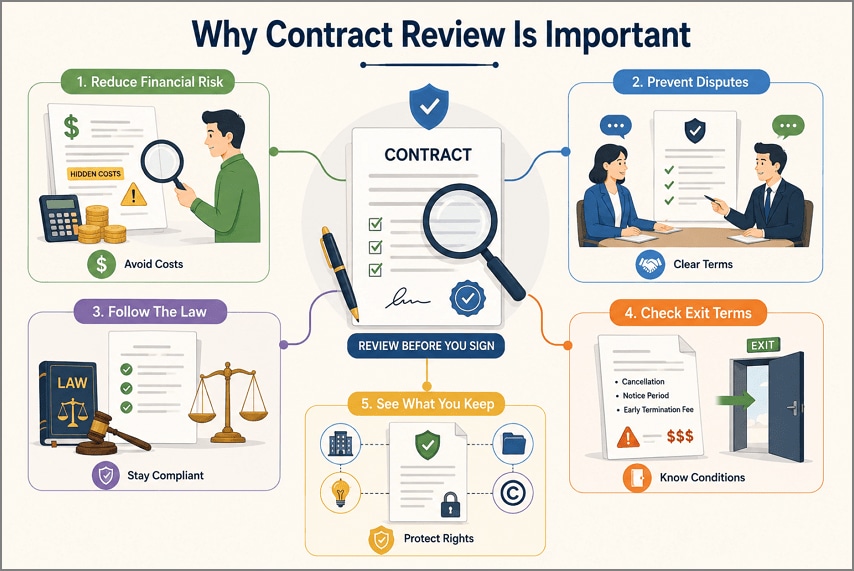
Contract review tells you what the agreement expects from you after signing it. Reading each clause first can save you from problems that appear much later:
- Reduce Financial Risk: Some terms can raise the final amount you pay under the signed agreement.
- Prevent Disputes: Clear wording gives both sides the same understanding of what they must do.
- Follow the Law: Checking the agreement can reveal conditions that may break rules applying to your deal.
- Check the Exit Terms: Ending a deal can bring extra costs when the contract sets strict conditions.
- See What You Keep: The agreement should make clear what remains yours once both sides have signed.
Part 2. Why AI Contract Review Beats Doing It Manually
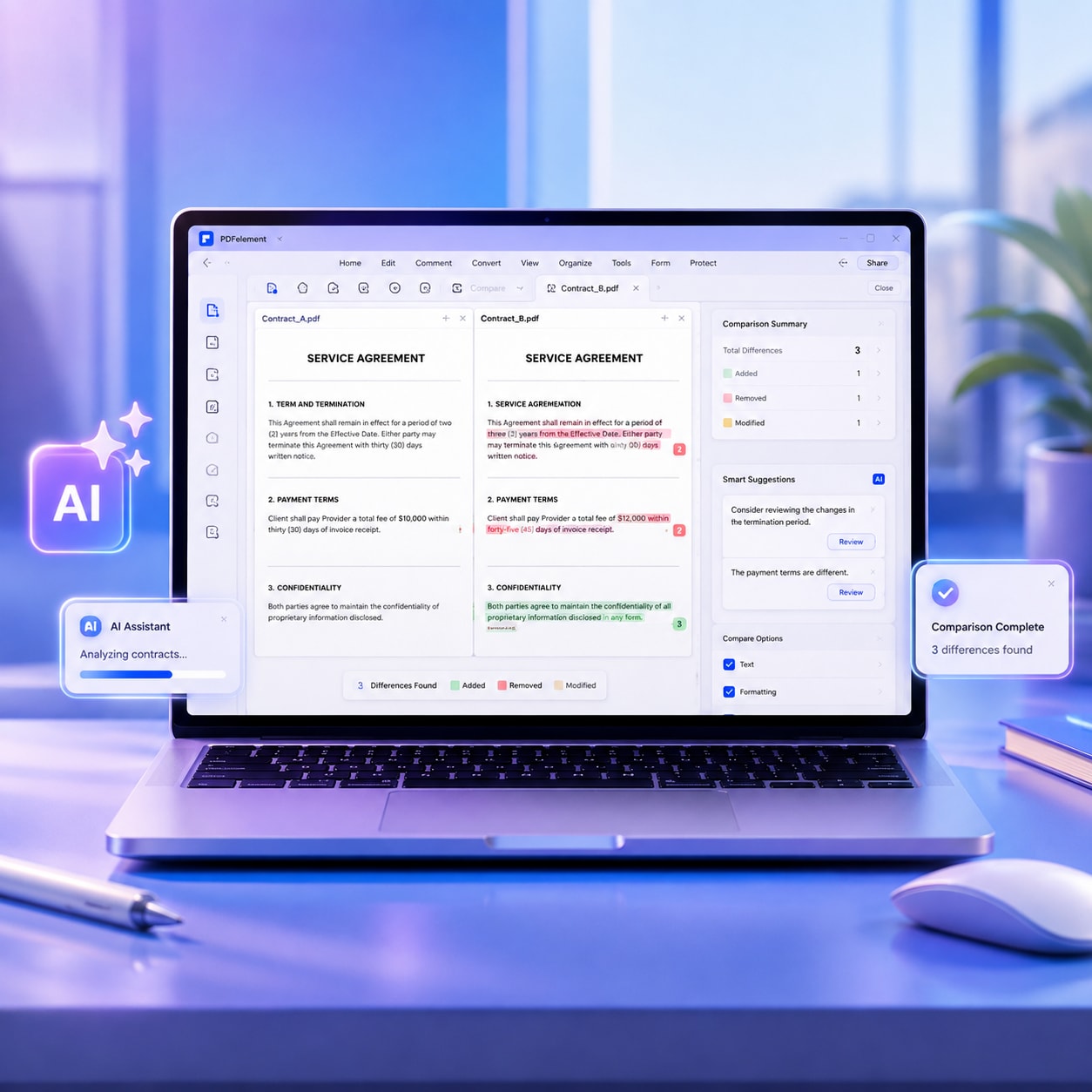
Reading every contract by hand takes time that many people cannot spare. Automated contract review scans the document and points out terms needing attention. The table below compares both methods across several important parts of reviewing contracts:
| Factor | Manual Contract Review | AI Contract Review |
| Time Required | Hours per agreement, longer for complex terms | Minutes, regardless of document length |
| Cost | Professional fees, or your own working time | A subscription spread across every contract |
| Consistency | Varies with attention and fatigue | Identical checks applied every time |
| Legal Judgment | Applies context, precedent, and negotiation sense | Pattern recognition only, with no view on strategy |
| Best Role | Final review of material agreements | First pass on everything |
Part 3. PDFelement as AI Contract Review Software
Legal platforms mainly serve teams handling hundreds of agreements through dedicated review systems. General AI assistants often lack the contract focus needed for this work. This is where PDFelement comes in, treating contracts as everyday document work.
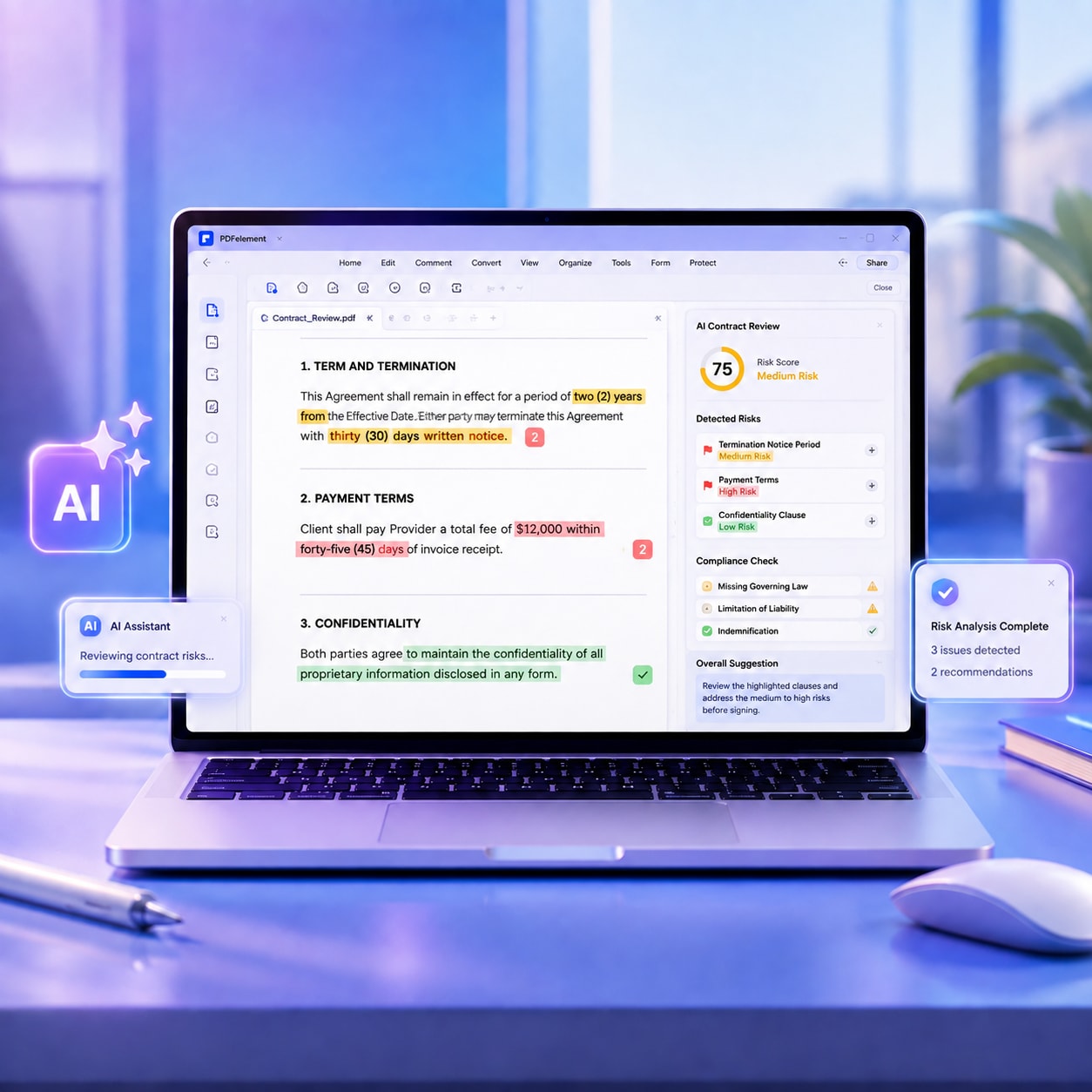
Its AI contract review checks agreements from the position that users select. It grades detected risks by severity, then creates reports with useful next steps. For confidentiality, PDFelement carries ISO 27001 certification plus HIPAA compliance for users. The International Organization for Standardization states that ISO/IEC 27001 helps organizations manage risks involving the security of their data.
How to Review a Contract with PDFelement
PDFelement reviews standard contracts through simple steps that take only minutes. Follow the steps below to check your agreement from the correct position:
Step 1. Import Your PDF into PDFelement
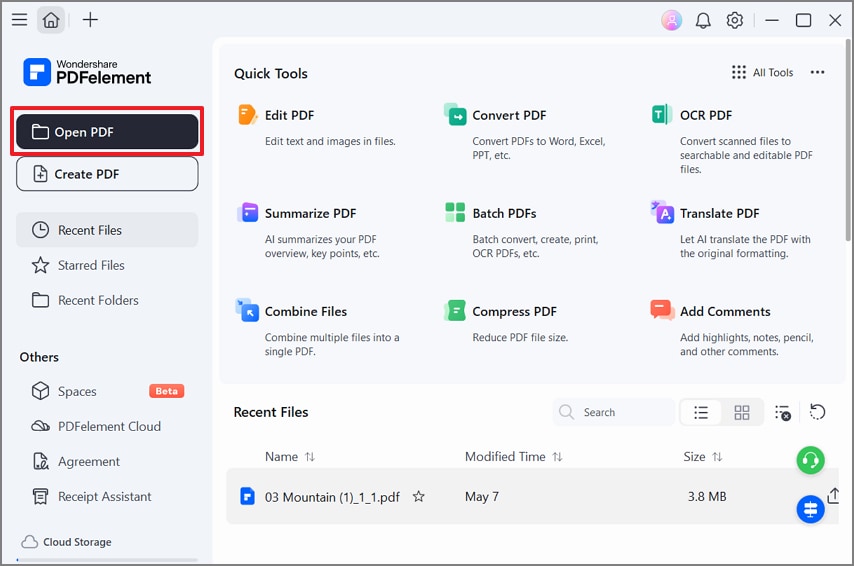
Once you open PDFelement, press the “Open PDF” option and choose your contract PDF to import it.
Step 2. Open the Agreement Tool
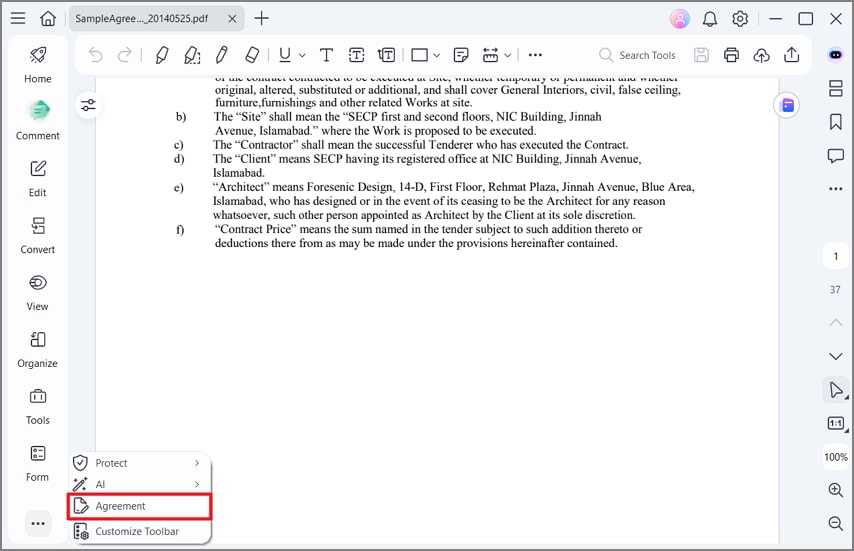
Afterward, press the “Three-dots” icon in the bottom left corner and choose the “Agreement” tool.
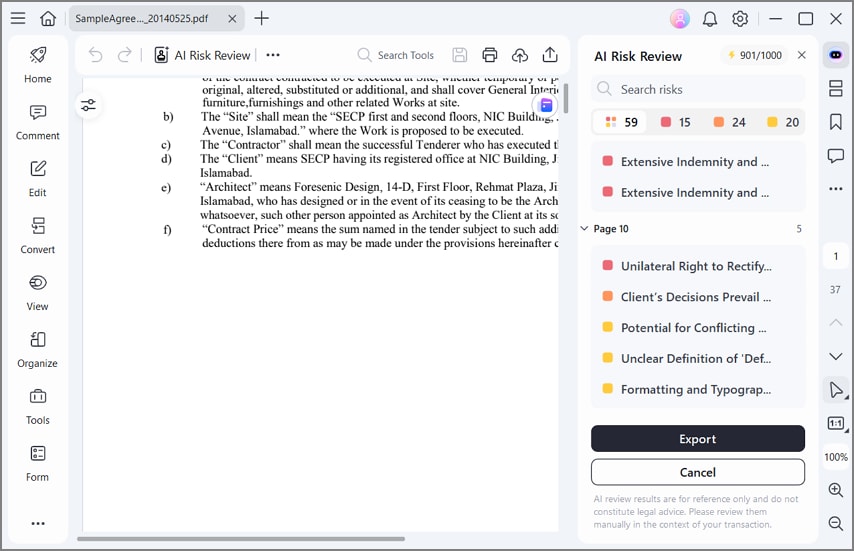
Step 3. Run AI Risk Review
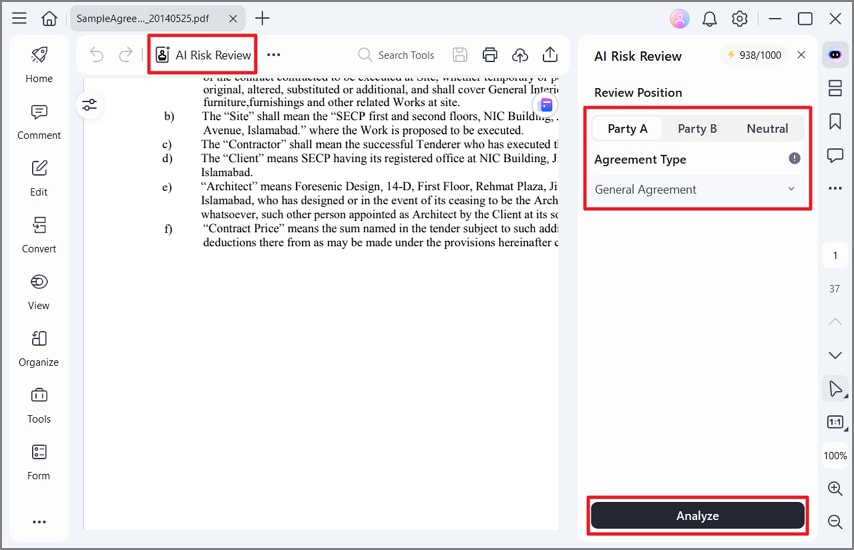
Next, press “AI Risk Review” in the top toolbar and choose the party you represent. After that, choose the kind of agreement and press the “Analyze” button.
Step 4. Export The Final Report
Once the analysis is completed, press the “Export” button to export the findings as a report you can circulate or send to counsel.
G2 Rating: 4.5/5 |100% Secure
Part 4. The Contract Types PDFelement Can Review
Different agreements need different checks since the terms can change with each deal. Below are 6 common contract types that PDFelement can check through AI contract analysis:
- Employment Contracts: The terms can affect your pay, job duties, rights, and options when leaving.
- Service Agreements: A small gap in the work scope can turn into unpaid extra work.
- Confidentiality Agreements: These contracts set limits on sharing private information after the agreement ends.
- Rental Contracts: Your deposit may be at risk if you leave before the agreed date.
- Purchase Contracts: The buyer may face the cost when delivered goods have faults.
- Business Partner Contracts: Control of the company can shift depending on how voting rights are divided.
Of course, in addition to the six types mentioned above, PDFelement supports many other contract types that can meet the needs of the vast majority of people.
Part 5. The Risks PDFelement Can Detect
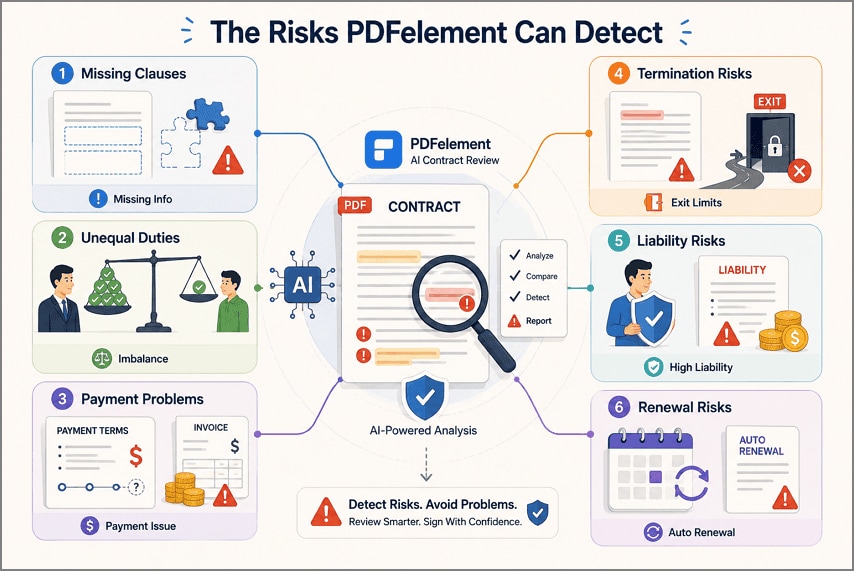
The best AI contract review software should catch problems hidden inside contract terms. Let's look at contract risks PDFelement can bring to your attention:
- Missing Clauses: Important protections may be absent, leaving gaps that cause trouble after signing.
- Unequal Duties: One side may carry more responsibility than the agreement places elsewhere.
- Payment Problems: Poor payment wording can create confusion about when money becomes due.
- Termination Risks: Strict exit terms may make ending the contract harder than expected later.
- Liability Risks: Some clauses can leave you responsible for losses beyond reasonable limits.
- Renewal Risks: Automatic renewal can extend your contract before you plan to continue it.
Part 6. Why PDFelement Suits AI Contract Risk Assessment
PDFelement makes contract risk assessment useful by showing what needs your attention next. After finding contract risks, we will see how PDFelement helps address each issue:
- Review Your Side: The tool reads each clause from the position you choose before starting its review.
- Handle Different Contracts: Checks change with each agreement type, giving results that fit its purpose.
- Show Risk Levels: Serious findings appear with higher risk levels, making them easier to notice first.
- Suggest Better Terms: Each flagged clause comes with changes you can consider before discussing the agreement.
- Export Review Reports: The final report can be saved for your team to review before signing.
Frequently Asked Questions
What is AI contract review?
Software reads contracts and checks their clauses against common agreement standards. It points out missing terms and unclear wording that may need attention.
How does AI contract analysis work?
The system sorts contract clauses by their purpose before checking expected patterns. Any unusual terms found during this check appear inside the final report.
Can AI review legal contracts accurately?
It is reliable at spotting omissions, unbalanced terms, and vague wording, since those follow recognizable patterns. Jurisdiction-specific rules and anything turning on commercial context are less dependable.
Can AI replace lawyers in contract review?
These tools do not replace lawyers, and responsible providers never claim otherwise. AI handles first reviews, reducing the amount lawyers need to read later. Legal advice and contract decisions still require the judgment of qualified lawyers. The American Bar Association says lawyers must review AI-generated legal work since AI lacks their legal expertise.
What types of contracts can AI review?
Employment, service, non-disclosure, lease, supply, and partnership agreements are the most common. Any document drafted as a binding agreement can be analyzed, though heavily bespoke wording produces weaker results.
Final Takeaway
To conclude, contract risks can hide inside terms that seem harmless initially. AI contract review helps find these concerns before you sign the agreement. PDFelement highlights risks, suggests changes, then creates a report for further review. A qualified lawyer should still check contracts involving serious legal consequences carefully.
G2 Rating: 4.5/5 |100% Secure