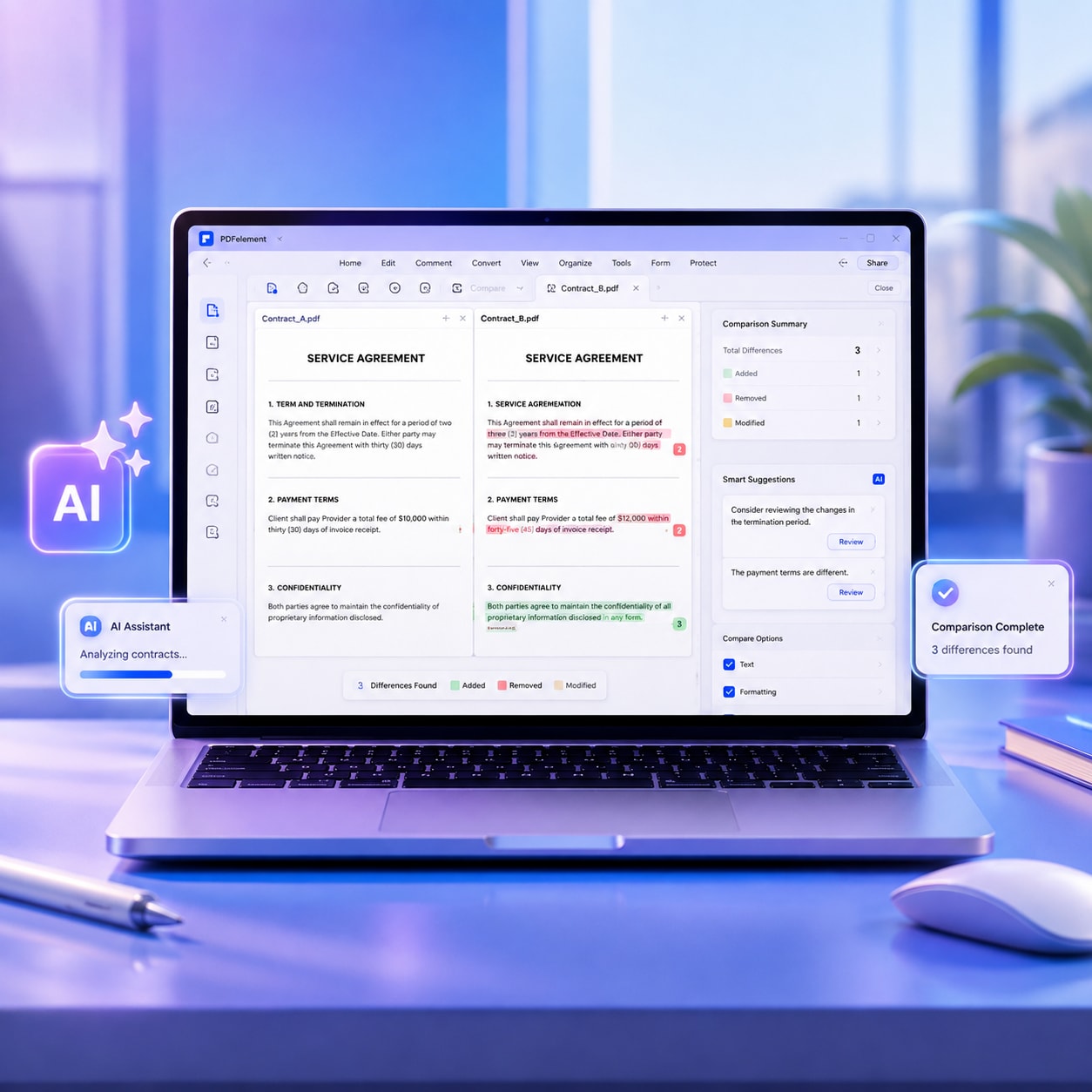

An NDA often arrives attached to an email proposing an introductory business call. Signing takes one minute, while the document may never get opened again. Confidentiality agreements often come before deals, making the paperwork feel simple to sign.
However, these agreements create obligations that can continue after business discussions have ended. A proper NDA review can uncover risks that fast signing may easily miss. This guide explains key clauses, common risks, and how AI supports contract review.


 G2 Rating: 4.5/5 |
 100% Secure
In this article
Part 1. What an NDA Actually Covers
An NDA controls how parties can use or share information between them. Its basic structure seems simple, but the terms can differ between agreements. Understanding these terms helps you spot risks before signing any confidentiality agreement.
Common Types of NDA
Look at the table below to understand the common types of NDA:
| Type | Who Is Bound | Typical Situation |
| Unilateral | One party only, the recipient | A company sharing plans with a candidate or supplier |
| Mutual | Both parties equally | Partnership talks where each side discloses |
| Multilateral | 3 or more parties | Joint ventures and consortium bids |
Key Elements of an NDA
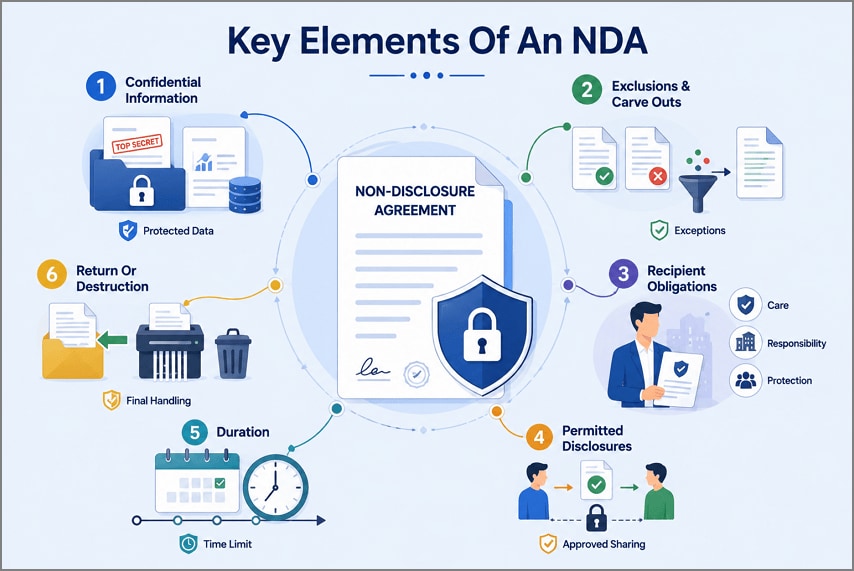
A non-disclosure agreement review should examine 6 key elements before signing:
- Definition of Confidential Information: Defines what information receives protection under the agreement after both parties sign.
- Exclusions and Carve Outs: Covers information that remains outside the agreement and does not require protection. The U.S. Department of Justice notes that trade secret protection depends on information not being known to the public.
- Recipient Obligations: Confidential information requires proper care and protection from the receiving party.
- Permitted Disclosures: Certain situations allow protected information to be shared under the agreement.
- Duration: The agreement sets a time period for keeping shared information confidential.
- Return or Destruction: Covers how shared information gets handled once the business relationship ends.
Part 2. AI NDA Review Explained
AI NDA review uses software to examine confidentiality agreements for possible risks. It compares contract terms with common standards found across similar confidentiality agreements. The software flags unusual clauses, missing protections, and terms needing closer attention.
Benefits of AI NDA Review
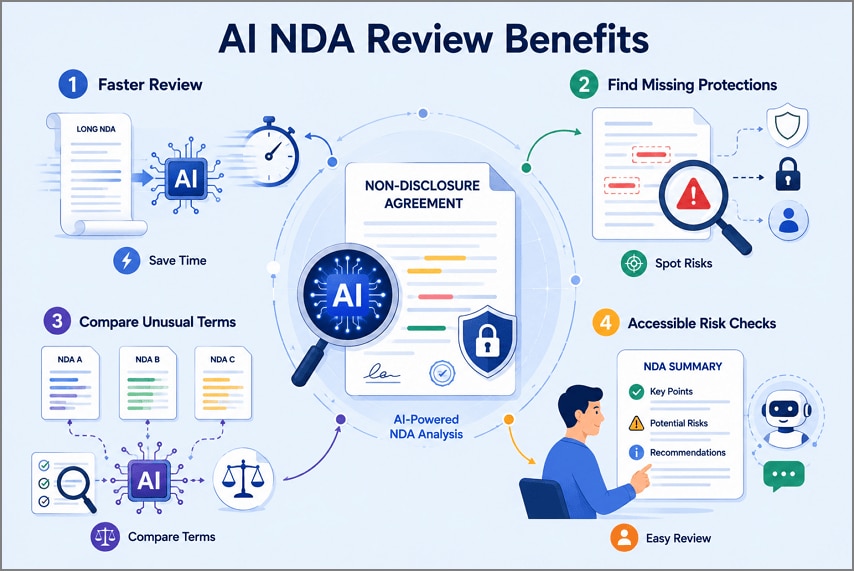
AI offers several benefits when checking confidentiality agreements for risks before signing.
- AI can reduce the time needed to examine long confidentiality agreements before signing.
- It can spot missing protections that people with less experience might overlook.
- Users gain a reference point for judging unusual terms across confidentiality agreements.
- AI also makes contract risk checks more accessible for people without legal experience.
Part 3. Who Needs an NDA Review
Different people focus on different risks when they review NDA terms. Employees and businesses may have different concerns within the same confidentiality agreement. The table below shows six groups and the risks each should consider:
| Who | What They Watch For |
| Employees | Hidden restrictions on future work and obligations surviving departure |
| Employers | Protection of trade secrets, customer data, business plans, and other sensitive information |
| Businesses | Reciprocity, and whether obligations match what each side discloses |
| Startups | Broad confidentiality terms that may affect future investors, partners, or business opportunities |
| Contractors | Whether ordinary use of accumulated skill becomes a breach |
| Legal and Compliance Teams | Jurisdiction, enforceability, and consistency across a signed portfolio |
Part 4. How to Review an NDA with PDFelement
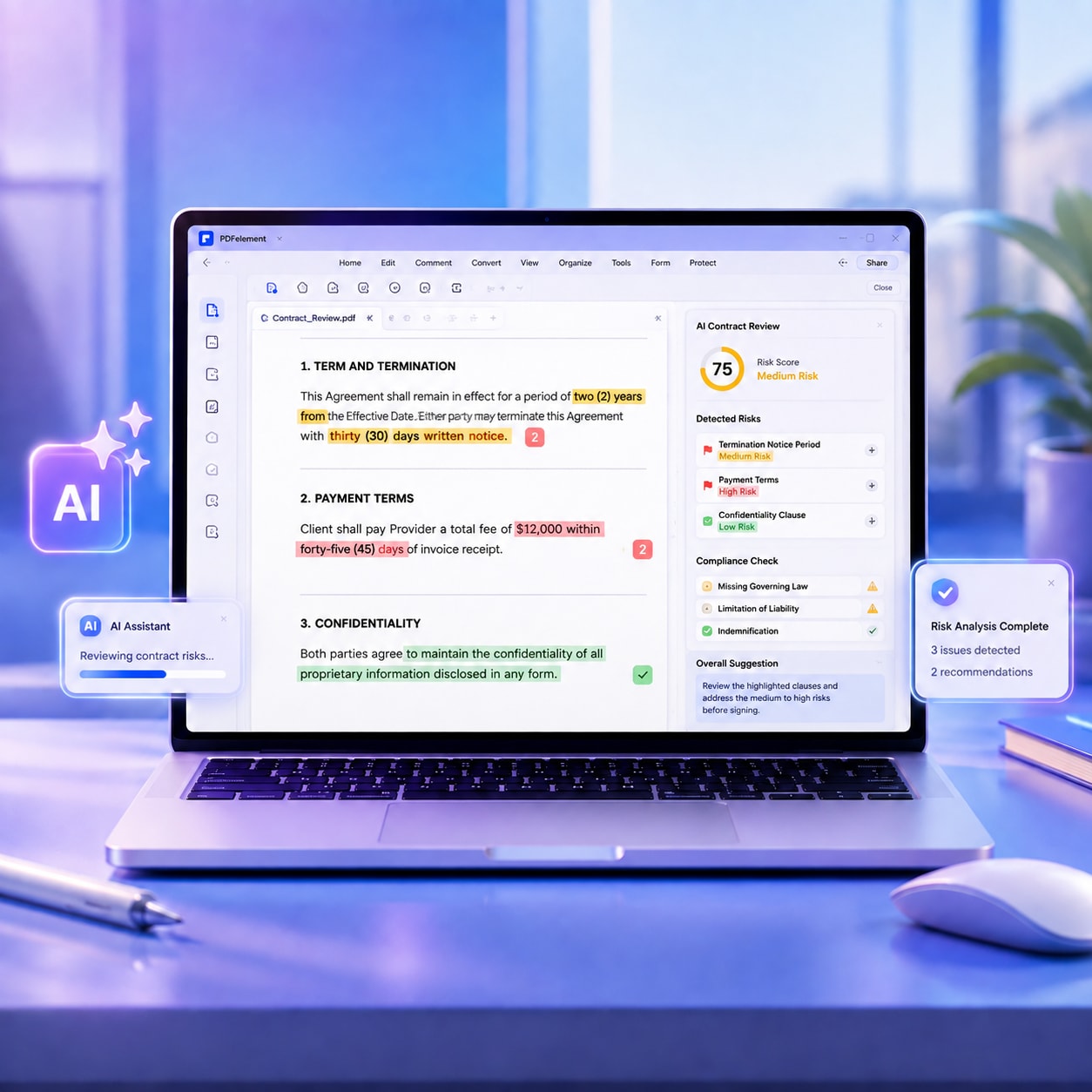
Confidentiality agreements can hide risky terms that people may miss before signing. PDFelement uses AI Risk Review to examine agreements and identify contract risks. Its AI NDA review can assess risks based on your selected position.
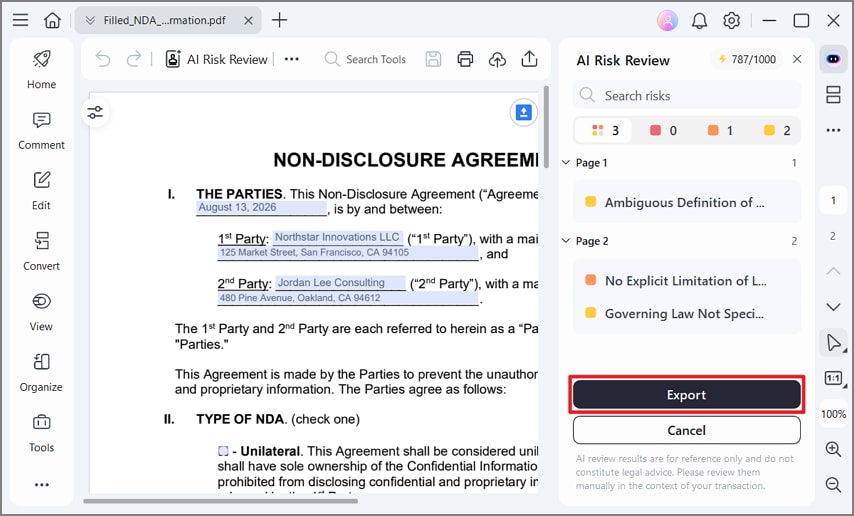
PDFelement grades identified risks by severity for easier review and better understanding. Other AI tools can summarize, explain, translate, and answer questions about PDFs. Go through the steps below to review your NDA with PDFelement software:
Step 1. Import NDA PDF into PDFelement
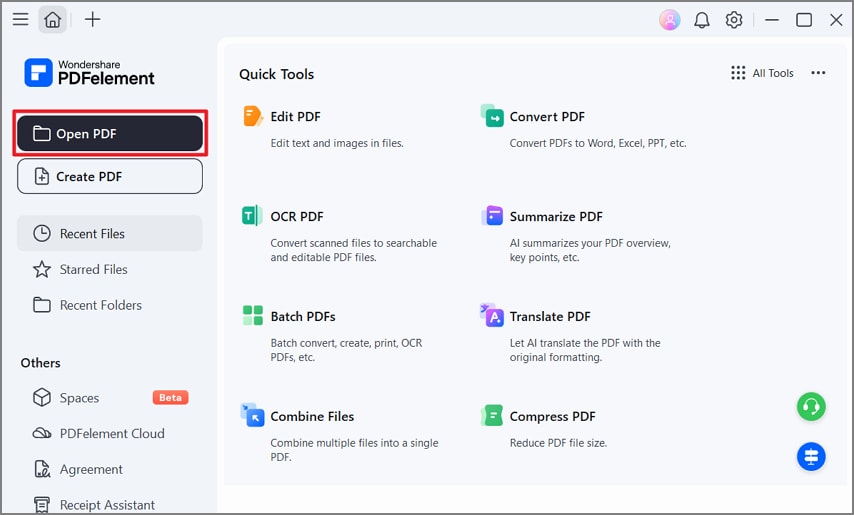
After you launch PDFelement, press the “Open PDF” button and select your agreement PDF.
Step 2. Enter the Agreement Space
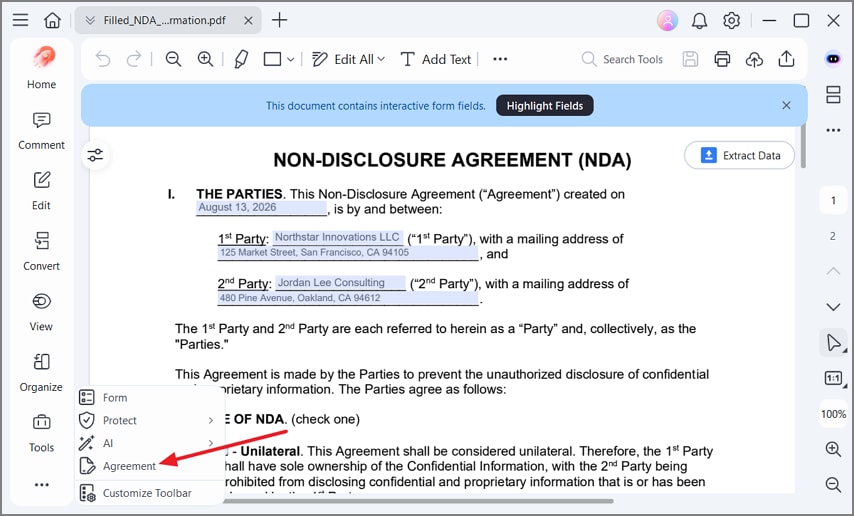
Next, click the “Three-Dots” icon in the bottom left corner and choose the “Agreement” option.
Step 3. Set your Position and Run AI Risk Review
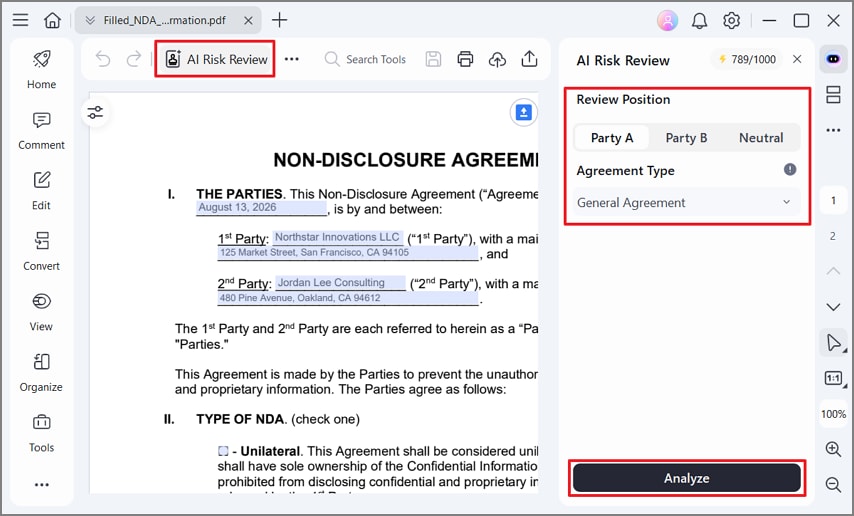
Now, select “AI Risk Review” and choose a “Review Position.” Next, pick an “Agreement Type” and click the “Analyze” button.
Step 4. Export The NDA Risk Assessment Findings
After the analysis is done, press the “Export” button to save the NDA risk analysis report.
G2 Rating: 4.5/5 |100% Secure
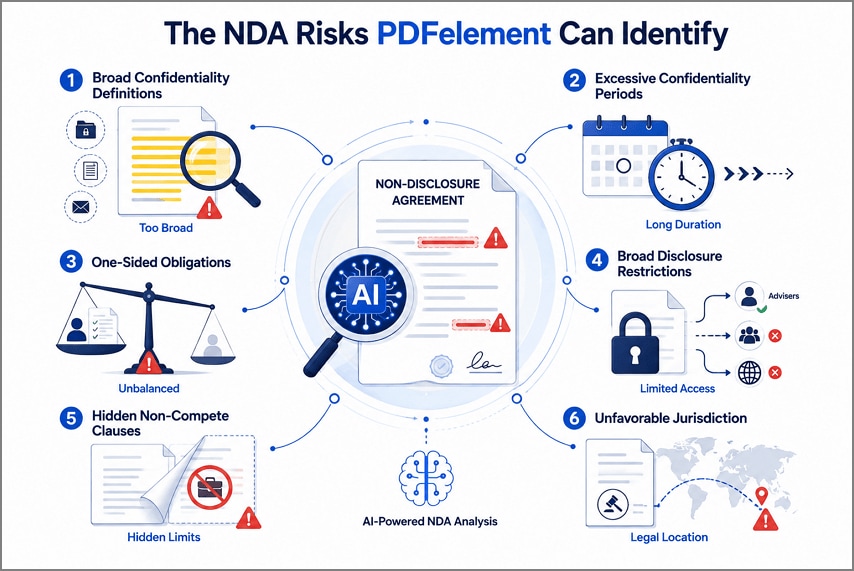
Part 5. The NDA Risks PDFelement Can Identify
NDA terms can create serious problems when important risks remain unnoticed. Now, let’s review NDA risks that PDFelement can identify before signing:
- Overly Broad Confidentiality Definitions: Broad wording may cover all information shared without proper standard exceptions. Missing carve-outs can restrict knowledge you possessed before discussions began. USPTO guidance excludes public, prior held, and lawfully obtained third party information from protected information.
- Unclear or Excessive Confidentiality Periods: Some agreements have no end date for protecting common commercial information. Trade secrets may need permanent protection, unlike old business pricing sheets.
- One-Sided Confidentiality Obligations: Some mutual agreements place active confidentiality duties on just one party. Check which party each clause binds instead of trusting document headings.
- Broad Disclosure Restrictions: Strict terms may prevent sharing information with lawyers, accountants, or colleagues. Fair agreements permit access for advisers and staff who need information. The SEC prohibits confidentiality agreements from blocking people who report possible securities law violations.
- Hidden Non-Compete Clauses: Some NDAs restrict future work despite appearing focused on confidentiality alone. These restrictions can have major consequences but remain easy to miss.
- Unfavorable Jurisdiction: Distant governing law or venue can make defending claims expensive. Enforcement location can matter as much as the contract wording itself.
Part 6. Why PDFelement Suits NDA Review
PDFelement makes the review of NDA terms easier for users. Its AI features support risk checks across different agreements and user positions:
- Results in Minutes: Fast results make checking each NDA practical before signing or sharing it.
- Position-Aware Precision: Results reflect your position, so each clause matches your actual risk level.
- Coverage Across Agreement Types: Checks adjust for unilateral, mutual, and employment agreements instead of one standard.
- Exportable Analysis: Export findings as reports for amendments or sharing with your lawyer.
Frequently Asked Questions
What is a non-disclosure agreement review?
It examines NDA terms for broad wording, missing protections, or unfair obligations. Key areas cover confidential information definitions, duration terms, and permitted disclosures.
How long does an NDA review take?
An AI NDA review can return analysis results within several minutes. Checking flagged clauses and requesting changes may take 15 to 30 minutes.
Can AI identify all legal risks in an NDA?
AI can detect missing carve-outs, indefinite terms, and uneven obligations. Local enforceability and decisions about accepting terms still require human judgment.
What risks can AI identify in an NDA?
AI can detect broad definitions, excessive duration, unfair obligations, and disclosure restrictions. It can flag hidden non-competes and jurisdiction, while residuals need human checking.
Can AI review an NDA from the employee's perspective?
Setting the position before analysis changes what gets flagged. From an employee's side, obligations continuing after departure and restrictions on future work rise to the top of the findings.
Final Takeaway
To summarize, missing terms can create serious risks within confidentiality agreements today. A proper NDA review can uncover absent protections and unclear contract terms. Lawyers remain important when agreement terms seem unusual or involve high stakes. To understand NDA risks before signing, use PDFelement for clear contract analysis.
G2 Rating: 4.5/5 |100% Secure