
If your PDF looks damaged, will not open, or still gets rejected after it opens, first confirm that the file itself is the problem. Then choose the cleanest next step.
This guide shows how to tell a PDF file damage from a viewer issue, how to open a corrupted PDF, and when to stop and get a clean replacement.


 G2 Rating: 4.5/5 |
 100% Secure
In this article
Part 1. Check Whether the PDF Is Really Damaged
Not every PDF that fails to open is truly corrupted. Some problems come from the viewer, the browser, the download, or the device. That distinction changes the right fix.
| What you see | What it often means | Best next step |
| The PDF opens in one app but not another | Usually a viewer or compatibility issue, not full file corruption | Try a different PDF app before assuming the file is damaged |
| The file will not open anywhere, or shows damage-related errors | The PDF itself may be corrupted | Move to a true repair workflow |
| The PDF opens, but pages are blank, broken, or incomplete | The file may be only partly recoverable | Try opening it locally and see whether you can save a usable copy |
| The PDF opens on your computer but gets rejected during upload | The file may still fail structural validation | Resave the file locally or get a new export from the source |
| The file size is 0 KB or far smaller than expected | The file may be incomplete and not meaningfully repairable | Stop and get a new copy from the source |
If your problem is really "PDF will not open for unknown reasons," that belongs in a broader troubleshooting flow. This page is narrower: it is for files that look damaged or behave like damaged files.
G2 Rating: 4.5/5 |100% Secure
Part 2. Ways to Open or Recover a Damaged PDF
Work through these options in order. Start with the method that gives you the clearest answer, use an online tool only when it fits the file and the situation, and stop once a clean replacement is available.
Method 1. Try to Open a corruption PDF with PDFelement on Desktop
PDFelement makes sense as an early step when you want to keep the file on your own computer, see whether it opens at all, and save a new version right away if it does. It can try to open some damaged PDFs on desktop, but success depends on how severe the damage is.
G2 Rating: 4.5/5 |100% Secure
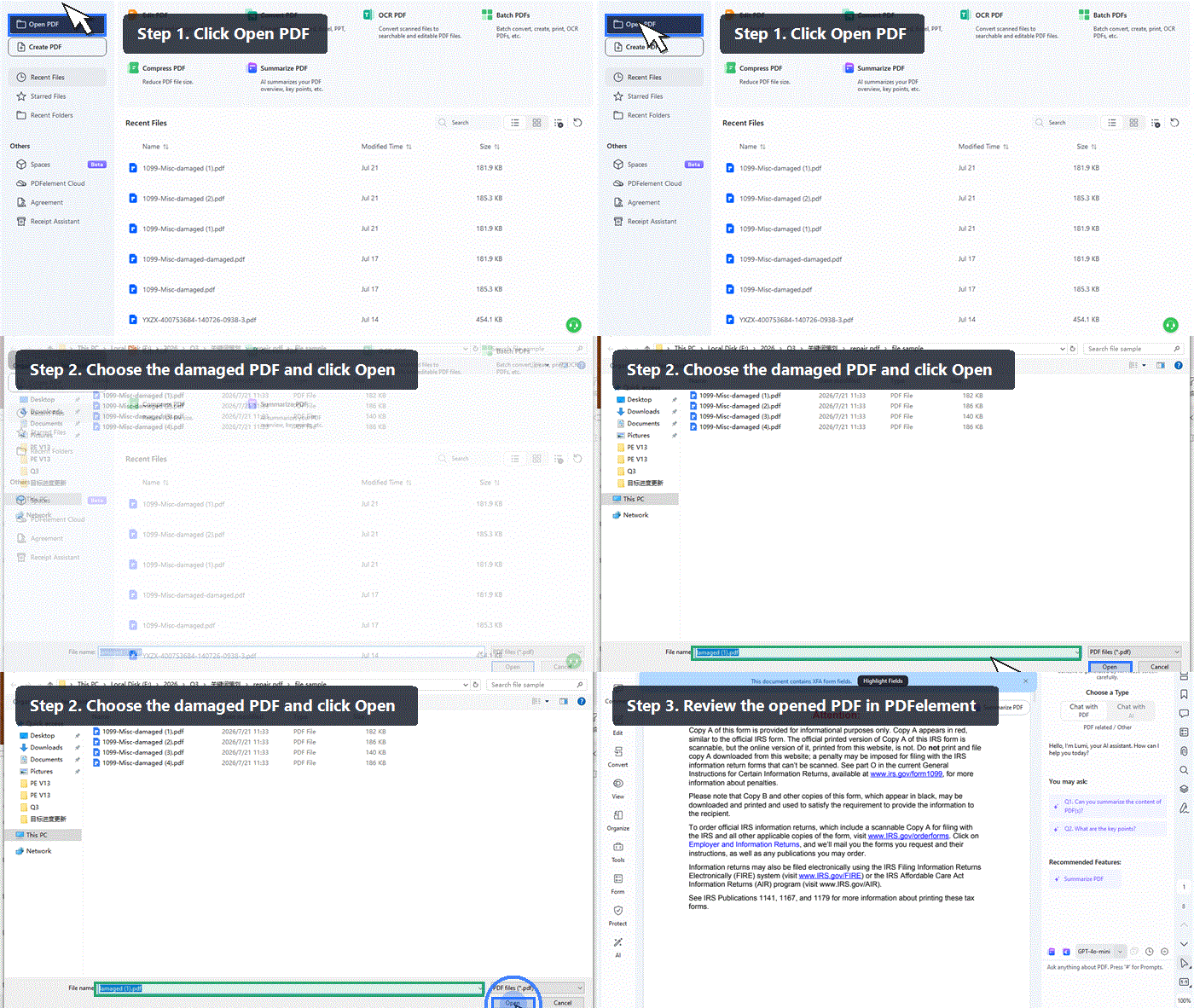
- Open PDFelement on your desktop.
- Click Open and choose the damaged PDF.
- Check whether the file opens fully, partly, or not at all.
- If it opens, save a new copy before making other changes.
- Review the pages to see whether the file is usable or only partly recoverable.

If It Only Opens Partly
That is still useful information. Your goal shifts from "fully repair the file" to "preserve what is still readable and decide whether it is good enough for the next step."
- Save the newly opened version first.
- Check the pages you actually need, not just the first page.
- Compare it with the original if you still have access to the source.
- Test the saved copy before using it for a submission or deadline-driven task.
G2 Rating: 4.5/5 |100% Secure
Method 2. If You Want a Web Option, Pick One
Online repair tools make the most sense when the file is not sensitive and you just want a quick browser-based test. The common mistake is jumping from one service to the next without stopping to check whether the result is actually usable.
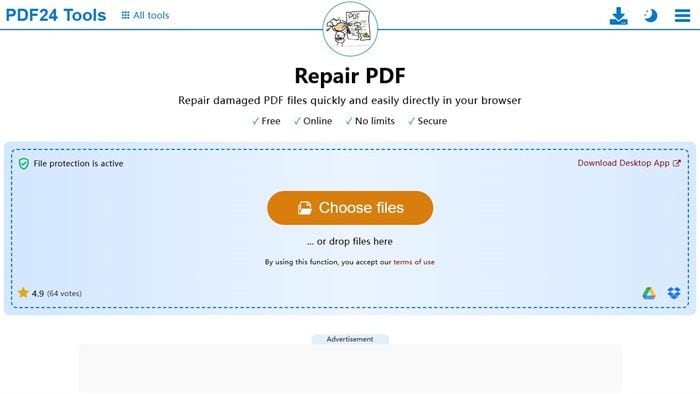
PDF24: a good first try when you want the simplest browser-based workflow. You can use it without installing software or creating an account for a basic repair attempt, and uploaded files are set to auto-delete after about one hour.
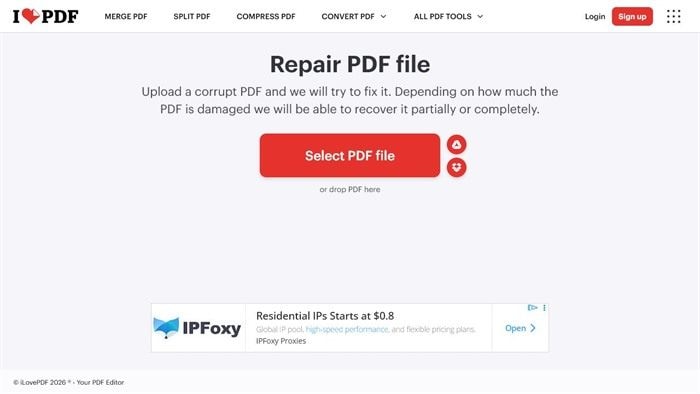
iLovePDF Repair PDF: a reasonable choice if you already use iLovePDF tools. In practice, it works better as a quick first attempt than a deep recovery option, and badly damaged files may still come back only partly usable.
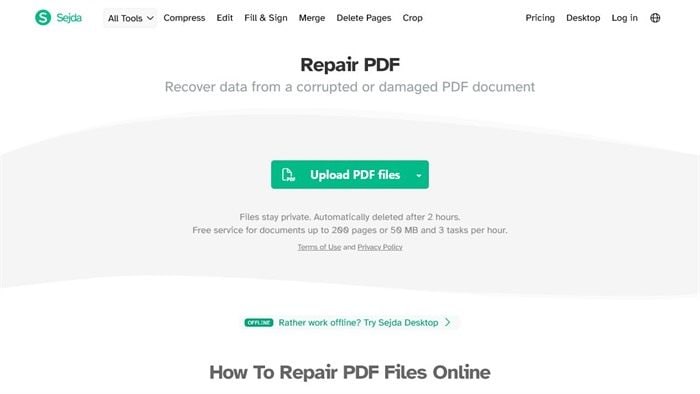
Sejda: useful when you want a web option but may switch to desktop later. Like other browser-based repair tools, it can return a file that opens but is still incomplete.
Pick the one that fits your workflow, try it once, and then check the result. If the file is still broken, stop there and move on to a desktop save or a new export.
Method 3. If Acrobat Already Opens It
If the PDF still opens in Adobe Acrobat or another full desktop viewer, a simple resave may be enough. In real use, saving a new copy is the first thing worth trying. For print-related failures, options such as Print as Image can also help in some cases.
This is not the same as a dedicated repair workflow. It is a practical fallback when the file is damaged but still readable enough to open.
Method 4. If You Still Have the Source File
This is often the cleanest fix of all. If the PDF came from Word, Excel, a scanner, a design app, or another source document, a new export is usually more reliable than trying to rescue the same damaged file over and over.
If the file is for a legal filing, tax submission, school portal, or another strict upload system, a clean source export is often the safest answer.
| If your situation is... | Most practical next step |
| You want to keep the file local and test whether it still opens | Start with PDFelement |
| You want a quick online check for a non-sensitive file | Try one browser-based tool such as PDF24, iLovePDF, or Sejda |
| The file still opens in Acrobat | Save a new copy there and test that version |
| The original source file still exists | Request or create a clean export |
G2 Rating: 4.5/5 |100% Secure
Part 3. Why a PDF Opens but Still Fails Upload
This is one of the most confusing PDF repair scenarios. A file may open on your computer and still be rejected by a court portal, school system, government site, or another strict uploader.
That usually means the file is readable enough for a viewer but still fails a deeper structural check. The pages may display, but the uploader or app still does not accept the file as a valid PDF.
What "invalid PDF structure" usually means
This message usually points to a structural problem in the file rather than a simple viewer issue. It often shows up after interrupted saves, bad exports, or partial recoveries that make the file readable but not fully clean.
What to do next
- If the file opens locally, save a new copy and test that version first.
- If the upload still fails, ask for a new export from the original source.
- If the document is for a high-stakes submission, do not assume "it opens on my computer" means it is fully valid.
For upload-rejected files, a cleaner file is usually more effective than a longer chain of repair attempts.
Part 4. What Causes PDF Damage and When to Stop
Common causes of corrupted PDFs
- Interrupted downloads or transfers: common with browsers, shared drives, email attachments, and message apps.
- Bad exports or incomplete saves: the source app may have failed during save or export.
- Storage or device issues: unstable sync, failing drives, or damaged storage can affect files.
- Partial structural damage: some files remain partly readable even when the full PDF structure is no longer clean.
- Viewer issues mistaken for corruption: some files only fail in one app and are not truly damaged.
How to reduce the risk next time
- Download the file again before assuming it is permanently broken.
- Keep backups of important signed forms, contracts, and submission files.
- Export PDFs directly from the source document when possible instead of repeatedly resaving the same file.
- Store important PDFs in stable local or cloud storage with version history when available.
- Test high-stakes files before a deadline if they must be uploaded to a strict portal.
When to stop repairing and replace the file
- Stop if the file is 0 KB or clearly incomplete.
- Stop if the sender can resend the document quickly.
- Stop if the source file still exists and can be exported again.
- Stop if repeated attempts start changing the layout or losing content.
- Stop if the file is for legal, financial, compliance, or deadline-driven submission and you can still get a clean replacement.
Frequently Asked Questions About Corrupted PDF Files
Can a corrupted PDF be repaired?
Sometimes. A repair attempt may work when the file still contains enough readable structure. Success depends on how severe the damage is, and not every corrupted PDF can be fully recovered.
Should I start with a desktop app or an online repair tool?
If the file is sensitive, or if you want to keep it local and save a new version immediately if it opens, start with a desktop app such as PDFelement. If the file is not sensitive and you only want a quick browser-based check, one online attempt can be reasonable.
Why does my PDF say "the file is damaged and could not be repaired"?
That usually means the app found damage it could not rebuild. The file may be too severely corrupted, incomplete, or badly exported. At that point, a clean replacement is often more realistic than another repair attempt.
What does invalid PDF structure mean?
It usually means the file's internal PDF structure is still not valid enough for the app or upload system that is checking it. A PDF can sometimes display in one viewer and still fail this kind of validation elsewhere.
Why does my PDF open locally but fail during upload?
Because readability is not the same as structural validity. Some portals check the file more strictly than a normal PDF viewer does. Resaving the file locally or getting a clean export is often the best next step.
Can a 0 KB PDF file be repaired?
Usually no. A 0 KB PDF normally means the file contains no usable data. In that case, the practical fix is to get a new copy from the sender or the original source file.
Final Takeaway
Most damaged PDFs fall into one of two groups: they either still open somewhere, or they need to be replaced. The sooner you figure out which kind of file you have, the less time you lose.
That is why a local first pass in PDFelement makes sense for many users. If the file opens, you can keep moving. If it does not, try one web tool or go straight to a fresh export if the source is still available.
G2 Rating: 4.5/5 |100% Secure