
In this article
- Why You Need OCR Screenshot Capabilities on Mac
- Method 1: The Best Software for Document-Level Screenshot OCR (PDFelement)
- Method 2: The Native Way (macOS Live Text)
- Top 4 OCR Screenshot Software for Mac (Updated for 2026)
- Dedicated Screen Snipping OCR Tools (Honorable Mentions)
- Comprehensive Comparison Table: Mac OCR Screenshot Tools
- How to Choose the Right Screen OCR Mac Tool
- Best Practices for High-Accuracy OCR on Mac
- Troubleshooting Common Mac OCR Issues
- FAQs
Have you ever watched a webinar, attended a Zoom meeting, or opened a protected document, only to find you cannot copy and paste the vital information on your screen? Attempting to manually retype long paragraphs, complex data tables, or lines of code is not just frustrating—it is a massive drain on your productivity. This is where mastering the OCR screenshot Mac workflow becomes an absolute game-changer.
OCR stands for Optical Character Recognition. It is a mechanical or electronic technology that identifies printed or handwritten text characters inside digital images and converts them into machine-encoded, searchable, and editable text. When you apply this technology to screenshots taken from the web, print, or scanned documents, you instantly unlock the data trapped within those pixels.
However, not all OCR tools are created equal. When it comes to extracting text from images, the most critical factor is accuracy. Using decent software isn't enough; you need great software. Relying on basic online tools often results in lost formatting, missing fonts, and garbled text. In this comprehensive guide, we will explore the best native methods, dedicated snipping utilities, and heavy-duty mac OCR screenshot software to help you reclaim your trapped text with 100% accuracy.


 G2 Rating: 4.5/5 |
 100% Secure
Why You Need OCR Screenshot Capabilities on Mac
Before diving into the tools, it is helpful to understand the vast array of scenarios where a reliable screen ocr mac tool is essential for modern digital workflows.
1. Capturing Data from Virtual Meetings
During webinars, online courses, or corporate Zoom meetings, presenters frequently share slides containing valuable statistics, quotes, or charts. Instead of scrambling to type out the notes, taking a quick screenshot and running it through an OCR engine allows you to save the exact text into your personal notes immediately.
2. Extracting Text from Protected Documents
Many businesses distribute PDF documents with strict security permissions that prevent highlighting, copying, or modifying the text. If you only need a specific paragraph for a report or quote, taking a screenshot and using OCR bypasses the need to retype the restricted content.
3. Grabbing Code Snippets from Videos
For developers and IT students, watching coding tutorials on YouTube is a daily activity. Often, the instructor will display a block of code on screen. A quick OCR screenshot allows you to extract that exact code snippet and paste it directly into your IDE, saving time and preventing typos.
4. Translating Foreign Text from Images
If you are browsing international websites, viewing foreign social media graphics, or reading scanned historical documents, you cannot natively highlight image text to use in a translation tool. OCR extracts the foreign characters so you can paste them into Google Translate or DeepL.
Method 1: The Best Software for Document-Level Screenshot OCR (PDFelement)
If you are dealing with screenshots that contain complex layouts, multiple columns, detailed tables, or mixed media, lightweight snipping tools will likely fail. You need a professional document management system.
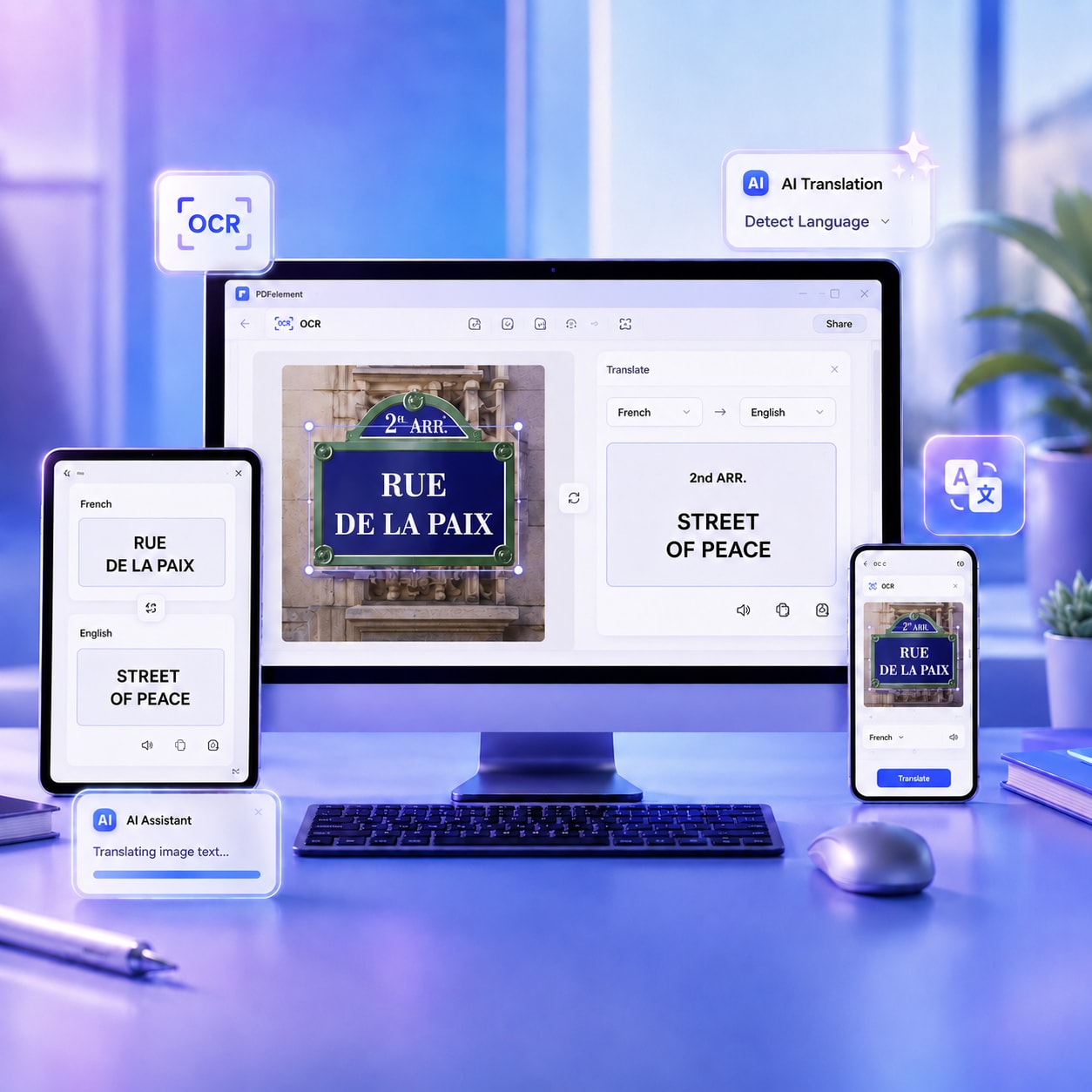
Wondershare PDFelement solves all of your business needs when it comes to document and image management. While it is renowned as a premier PDF editor, it is also one of the most powerful OCR solutions available for macOS. The software allows you to seamlessly convert screenshot images (PNG, JPG) into fully editable documents while flawlessly retaining the original formatting, fonts, and structural layout.
G2 Rating: 4.5/5 |100% Secure
Step 1Capture Your Screenshot
Press Cmd + Shift + 4 on your Mac keyboard, drag your cursor to select the text area, and release to take the screenshot. By default, this saves to your desktop as a PNG file.
Step 2Launch PDFelement
Open Wondershare PDFelement on your Mac.
Step 3Create a PDF from the Image
Go to the "File" menu, select "New," and choose "PDF from File." Select the screenshot you just took. Alternatively, you can simply drag and drop the screenshot image directly into the PDFelement workspace.
Step 4Run OCR
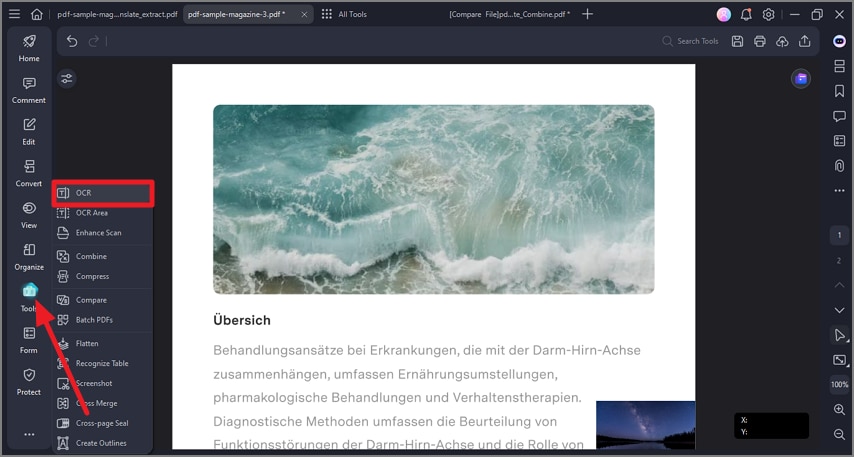
PDFelement will detect that the file is an image and automatically prompt you to perform OCR. Click the "Perform OCR" button in the notification bar, or navigate to the "Tool" menu and select "OCR."
Step 5Select OCR Settings
Choose the correct language of the text in your screenshot. You can choose to make the text "Searchable Text Image" or fully "Editable Text."
Step 6Edit and Save
Once the process is complete, the text in your screenshot will behave exactly like a Word document. You can edit the text, change the font, adjust the layout, and copy it wherever you need.
G2 Rating: 4.5/5 |100% Secure
Method 2: The Native Way (macOS Live Text)
If you are running macOS Monterey, Ventura, Sonoma, or a newer operating system, Apple has built a native screen ocr mac feature directly into the core system called "Live Text." This utilizes Apple's machine learning algorithms to automatically recognize text within images across the OS.
Step 1Take a screenshot
Use Cmd + Shift + 4 or Cmd + Shift + 3 to capture your screen.
Step 2Open the resulting screenshot
Use the default Mac Preview app or the Photos app to open the image.
Step 3Simply hover
Move your mouse cursor over the text in the image. You will notice the cursor change from an arrow pointer to a text-selection "I-beam" cursor.
Step 4Click and drag
Highlight the text exactly as you would in a text document.
Step 5Press Cmd + C
Copy the text and paste it wherever you need it.
Top 4 OCR Screenshot Software for Mac (Updated for 2026)
If your workflow requires more power than native Apple features can provide, these four software suites represent the best options on the market for handling complex image text extraction.
1. PDFelement
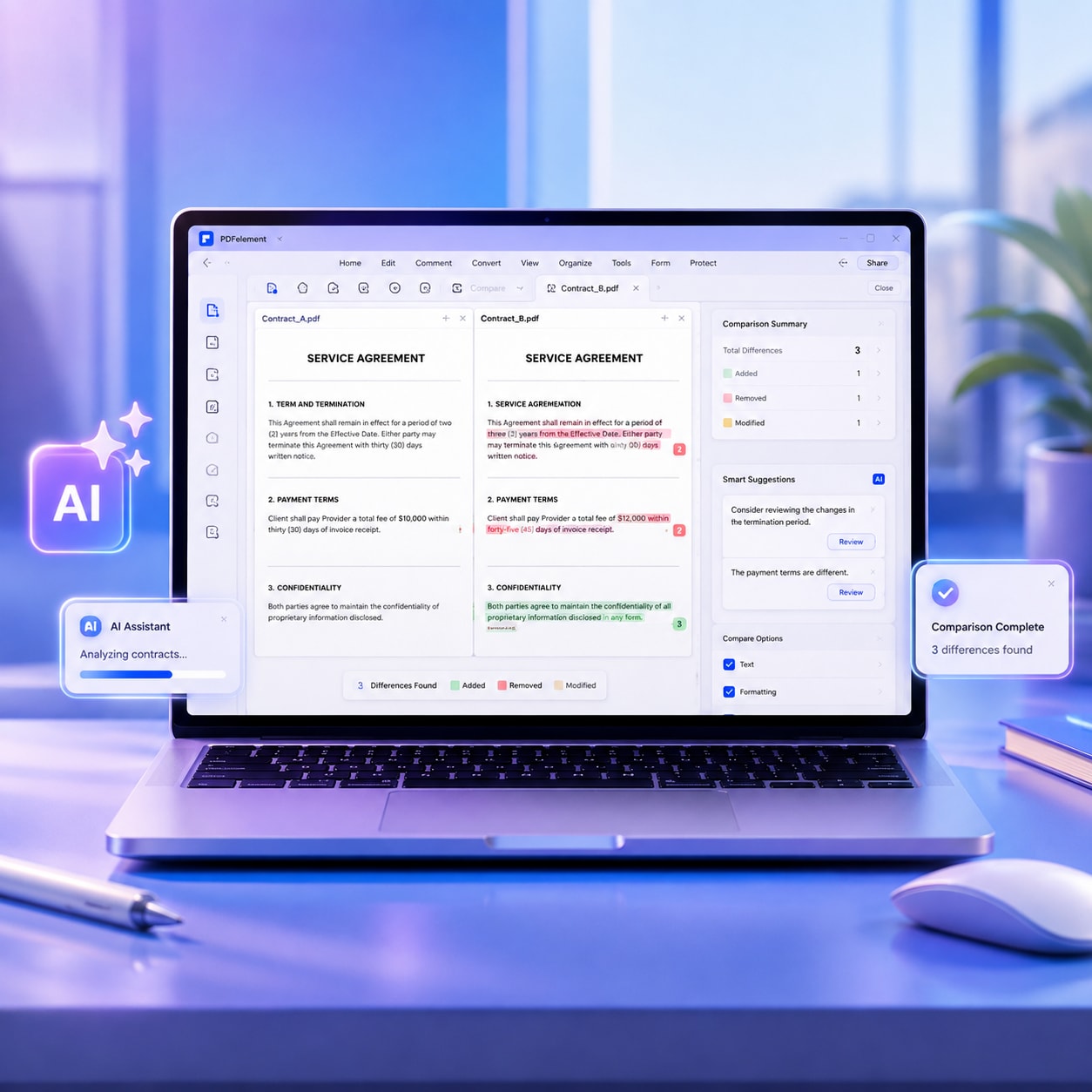
As discussed above, PDFelement is the ultimate hybrid of an advanced PDF editor and a high-powered OCR engine. What makes this software truly special is its ability to recognize different editing areas independently. You can edit multiple sections of a scanned screenshot at the same time. It serves as the absolute best alternative to Adobe Acrobat and PDF Expert—delivering a more cost-effective solution than Acrobat while offering significantly more power than PDF Expert.
2. Adobe Acrobat DC for Mac
Adobe invented the PDF format, so it is no surprise they maintain a strong presence on any Mac OCR software list. Acrobat DC comes with an automatic OCR engine that applies instantly to your imported screenshots and scanned documents. You can use it to turn static images into editable documents, export to Microsoft Office formats, and heavily redact or secure information.
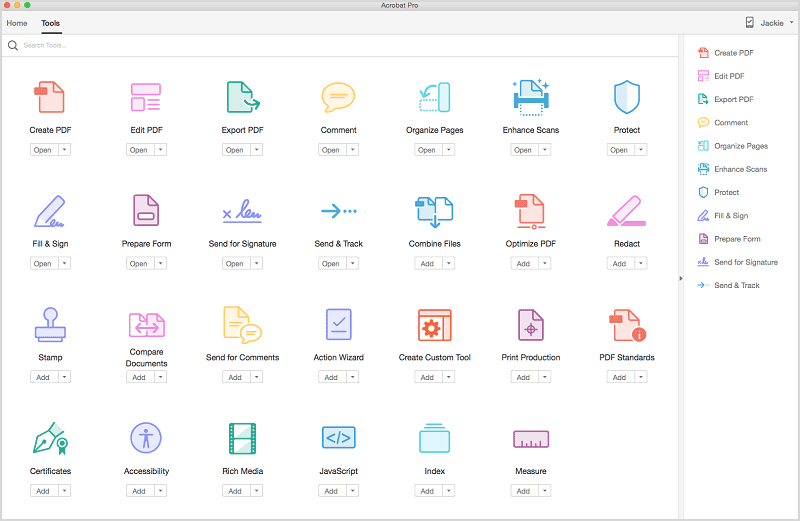
- Pros: Best-in-class range of advanced document features; Deep integration with other Adobe Creative Cloud software.
- Cons: The interface can be overly complicated and cluttered for simple tasks; The perpetual monthly subscription is incredibly expensive.
3. Abbyy FineReader Pro for Mac
Abbyy FineReader is a specialized OCR software rather than a general document editor. It is designed to deliver near 100% accuracy on complex scans and screenshots. Abbyy supports more than 180 languages and excels at batch processing images, including an image editor that allows you to change brightness, increase contrast, and remove blur before running OCR.
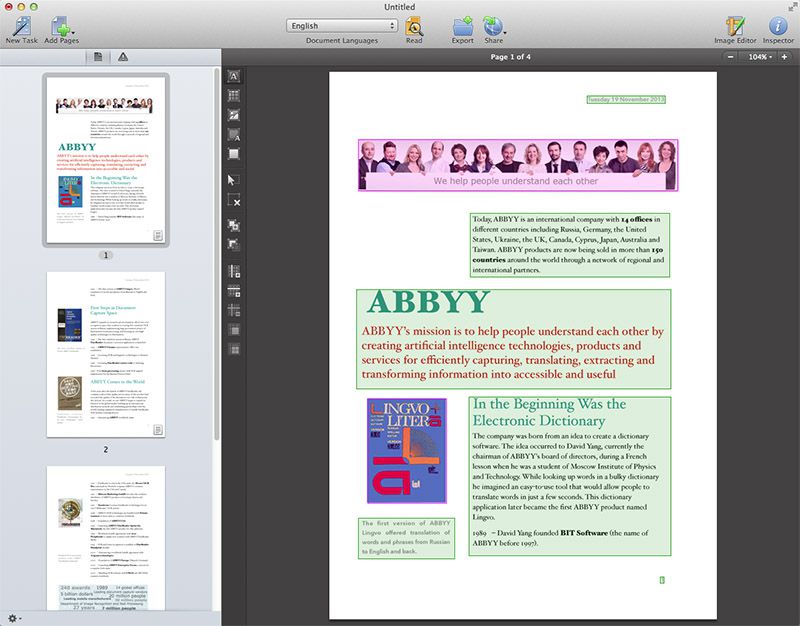
- Pros: Exceptionally high-quality, forensic-level OCR engine; Built-in image preprocessing tools; Exports to a wide variety of formats.
- Cons: Lacks the advanced PDF editing features of PDFelement or Adobe; Extremely expensive for a focused tool.
4. Cisdem PDF OCR Converter
Designed specifically for Mac users, Cisdem handles normal and scanned images, converting them to Word, PDF, Excel, PowerPoint, and more. A notable feature is its ability to convert encrypted PDF files and remove user password restrictions without data loss.
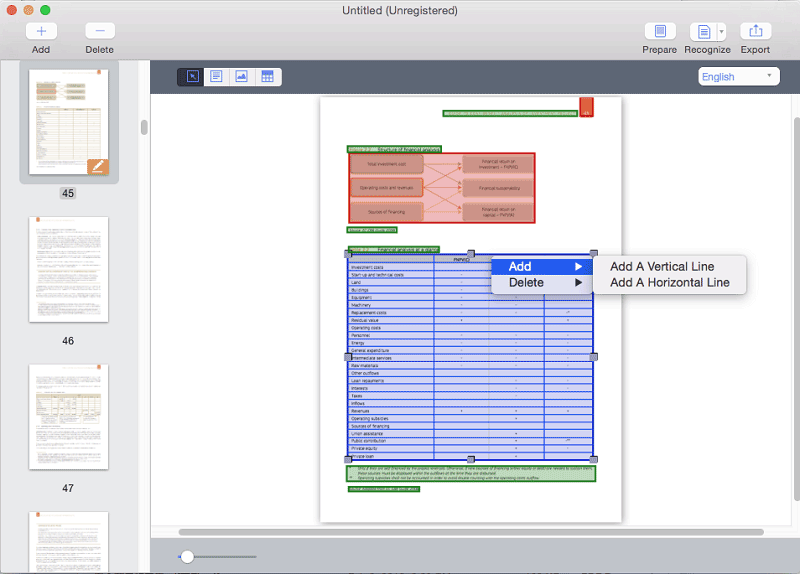
- Pros: Excellent ability to handle and convert encrypted files; Recognizes more than 200 global languages; Easy workflows.
- Cons: No document editing features; Formatting is occasionally lost or shifted; Can be slow with massive batches.
Dedicated Screen Snipping OCR Tools (Honorable Mentions)
While large document editors are perfect for heavy lifting, the modern Mac ecosystem has also seen a rise in "menu-bar snipping tools." Apps like TextSniper, CleanShot X, and Shottr are lightweight utilities designed for one specific task: instantly copying text from the screen to the clipboard.
With these tools, you press a custom keyboard shortcut, drag a box around the text, and the tool uses a built-in OCR engine to instantly copy that text to your Mac's clipboard. They are faster than taking a screenshot and importing it into a heavy editor, though they cannot retain tables, columns, or document formatting.
Comprehensive Comparison Table: Mac OCR Screenshot Tools
| Feature / Criteria | PDFelement | Abbyy FineReader Pro | Adobe Acrobat DC | Cisdem PDF OCR |
|---|---|---|---|---|
| Primary Focus | Comprehensive Document Editing & OCR | Forensic-level OCR & Conversion | Advanced Document Management | Simple Batch Conversion |
| Accuracy & Results | Excellent; retains complex formatting | Best on the market for accuracy | Highly accurate | Great accuracy, formatting sometimes shifts |
| Ease of Use | Familiar, macOS-optimized interface | Clear, straightforward interface | Steep learning curve; bloated | Simple, but very limited |
| Pricing Model | Affordable license/subscription | Expensive, premium pricing | High-cost monthly subscription | Mid-range, one-time purchase |
| Best For... | Editing results seamlessly after OCR | Deeply degraded images/scans | Enterprise Adobe users | Basic image-to-text batch conversions |
How to Choose the Right Screen OCR Mac Tool
Selecting the right mac ocr screenshot software comes down to analyzing your daily workflow. Consider the following factors:
1. Accuracy and Engine Quality
Are you capturing clear digital text or grainy, handwritten documents? For the latter, you need an advanced engine with pre-processing features like PDFelement or Abbyy.
2. Formatting Retention
Do you need to extract data from tables or invoices? Basic snippet tools will merge table data into a single paragraph. You need software that recognizes spatial formatting.
3. Language Support
If you work internationally, check for support of complex characters like Japanese Kanji, Arabic, or Cyrillic alphabets.
4. Post-OCR Capabilities
Do you need to change fonts, add annotations, or export as a secure PDF? If so, full document suites are the only way to go.
G2 Rating: 4.5/5 |100% Secure
Best Practices for High-Accuracy OCR on Mac
- Maximize Screen Resolution: Zoom in on the webpage or PDF (using Cmd + '+') before capturing the snippet. More pixels equal better recognition.
- Ensure High Contrast: Dark text on a light background works best. OCR engines rely on contrast to separate text from the background.
- Avoid Clutter: Crop your screenshot tightly to the relevant text to avoid confusing the software with surrounding images or borders.
- Save in Lossless Formats: Mac saves screenshots as PNG files by default, which is excellent. Avoid converting them to compressed JPGs before OCR.
Troubleshooting Common Mac OCR Issues
Garbled Text Output or Strange Characters
Ensure that the language setting in your software matches the text in the screenshot. It can also happen if the font is overly stylized or cursive.
Missing Columns or Merged Tables
Ensure your software is not set to "Text Only" extraction. In tools like PDFelement, select options that retain layout and formatting.
Blurry Text Rejection
Retake the screenshot at a higher zoom level or use an image editor to increase sharpness and contrast before running OCR.
People Also Ask
-
Can I OCR a screenshot for free on Mac?
Yes. If you are running macOS Monterey or later, you can use the built-in "Live Text" feature in the Preview or Photos app. Hover over the text and drag to highlight and copy it. -
Does taking a screenshot reduce image quality for OCR?
A screenshot captures the exact resolution of your monitor. On high-density Retina displays, quality is excellent. However, always zoom in before snapping to ensure enough pixel density for the engine. -
How do I OCR a scrolling screenshot on Mac?
Use a third-party tool like CleanShot X or a browser extension to capture the full page. Then, import that long image file into PDFelement to run the OCR process. -
Does PDFelement support batch OCR for multiple screenshots?
Yes. You can use the "Combine" feature to merge multiple screenshot images into a single multi-page PDF and run the OCR engine on the entire document at once. -
Why did my OCR tool change the font of my screenshot?
OCR software substitutes custom or proprietary fonts with standard system fonts like Arial or Helvetica if the original font is not installed on your computer.
Transforming static images into editable data doesn't have to be a frustrating chore. For quick, unformatted, on-the-fly text grabs, Apple's native Live Text is a fantastic, free solution. However, for professionals and students who require deep formatting retention and batch processing, Wondershare PDFelement remains one of the premier choices for unlocking text hidden within your screenshots. Stop retyping, and start extracting!
![[2026] 11 Most Recommended Nanonets OCR Alternatives](https://images.wondershare.com/pdfelement/images2026/pdf-like-article-2.png)