
Table of Contents
A PDF that looks simple on screen can still be too large to email, upload, or store comfortably. The usual cause is not the text itself. It is high-resolution images, scanned pages, embedded fonts, hidden objects, comments, form data, or multiple file attachments inside the PDF. To hyper compress PDF files, you need more than a one-click size reducer. You need to choose the right compression level, understand what quality you can afford to lose, and use a tool that fits the document type.
The good news: many PDFs can be reduced dramatically. The caveat: not every file can shrink by 90% without visible damage. A scanned 300-page contract behaves very differently from a two-page text PDF. This guide explains how PDF hyper compression works, which tools are worth considering, and how to reduce file size on Windows, Mac, and online without accidentally making the document hard to read.


 G2 Rating: 4.5/5 |
 100% Secure
What “Hyper Compress PDF” Really Means
Hyper compression means reducing a PDF as much as possible while keeping it usable for its intended purpose. That last part matters. A PDF meant for casual email review can tolerate lower image quality than a legal filing, a print-ready brochure, or a scanned invoice archive where every small number must remain legible.
PDF compression usually works in a few ways. The compressor may downsample large images, remove duplicate resources, discard hidden metadata, flatten layers, subset fonts, clean unused objects, or apply stronger image compression. If the PDF contains scanned pages, the tool may recompress each page image. If it contains mostly digital text, the file may already be efficient, so the size reduction will be smaller.
Why a 90% compression ratio is possible sometimes
A 90% reduction is realistic when the original PDF is inefficient. For example, a PDF made from full-resolution camera photos may contain images far larger than needed for screen reading. A compressor can downsample those images from print-level resolution to web-friendly resolution, creating a much smaller file.
But if a PDF is already optimized, encrypted, mostly text, or previously compressed, the same settings may reduce only a small amount. This is why a hyper PDF compressor should ideally show the new file size before you replace the original.
What usually makes PDFs too large
The largest PDF files often come from predictable sources: scanned documents, image-heavy presentations, exported design files, reports with charts, or PDFs created by combining multiple files without optimization. Sometimes the problem is less obvious. A PDF may include embedded thumbnails, old comments, form calculation scripts, attached source files, or duplicated images used across pages.
Before you compress a critical document, make a copy. Hyper compression can be irreversible if you overwrite the original, especially when the tool downscales images or removes hidden data.
Best Hyper PDF Compressor Options Compared
There is no single best hyper compressor PDF tool for every case. Desktop apps are usually better for large, private, or repeated compression tasks. Online compressors are convenient for quick, non-sensitive files. Built-in tools such as Preview on Mac are useful for simple jobs, but they provide less control.
| Tool | Best For | Platform | Compression Control | Key Limitation |
|---|---|---|---|---|
| Wondershare PDFelement | Editing and compressing PDFs in one workflow | Windows, Mac | Low, medium, high compression options | Requires installation for desktop workflow |
| Adobe Acrobat | Advanced PDF optimization and compatibility settings | Windows, Mac, Web | Detailed optimization options in Acrobat Pro | Subscription cost may be high for occasional users |
| Preview | Quick PDF size reduction on Mac | macOS | Basic Quartz Filter compression | Quality can drop sharply with limited control |
| HiPDF | Fast online PDF compression | Web | Compression level selection | Uploading files may not suit sensitive documents |
| AvePDF | Browser-based compression with strong settings | Web | Several compression levels | Processing depends on file size and connection |
| PDFgear | Simple online PDF compression | Web/Desktop options available | Basic compression choices | Online uploads may have size or privacy limits |
| PDF24 Tools | Adjustable online compression settings | Web, Windows app | DPI and image quality controls | Interface can feel less guided for beginners |
| WinZip | Packaging PDFs into a ZIP archive | Windows, Mac | Archive compression settings | Often does not significantly reduce already-compressed PDFs |
If your PDF contains confidential financial, legal, HR, medical, or personal data, use a desktop compressor when possible. Online tools can be safe for general files, but you should always check the service’s privacy policy and file deletion practices. For context, Adobe explains common PDF optimization concepts in its Acrobat documentation, and Google lists Gmail attachment limits in its Gmail Help documentation, which is one common reason users need smaller PDFs.
G2 Rating: 4.5/5 |100% Secure
How to Hyper Compress PDF Files on Windows
Windows users have several practical choices. If you only need to make a PDF small enough for email once, an online compressor may be fine. If you frequently handle PDFs, need to edit before compression, or work with private files, a desktop tool is usually the better route.
Option 1: Hyper compress a PDF with PDFelement
Wondershare PDFelement is a practical choice when compression is part of a larger PDF workflow. Many people do not just need a smaller file; they also need to delete unnecessary pages, run OCR on scanned pages, correct a typo, add a signature, combine documents, or convert the file afterward. PDFelement keeps those tasks in one desktop workspace, so you do not have to upload the same document to several separate tools.
To hyper compress PDF files in PDFelement on Windows:
- Open PDFelement and import the PDF you want to reduce.
- Go to Tool and choose Compress PDF.
- Select a compression level. For the smallest file size, choose High compression.
- Apply the compression and wait until the process finishes.
- Check the new file size and preview important pages.
- Save the compressed PDF as a new file, especially if you may need the original later.
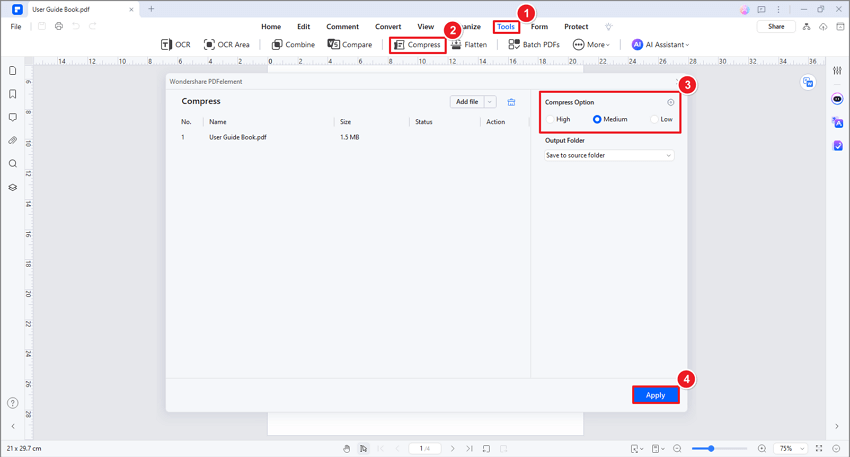
The high compression setting is useful for email attachments, web uploads, and files that mainly need to be read on screen. If the document includes detailed diagrams, small print, stamps, or scanned signatures, review a few pages at 100% zoom before sending it. For files that still look too large after compression, remove blank pages, duplicate pages, unused attachments, or oversized images first, then compress again.
Option 2: Reduce file size with Adobe Acrobat
Adobe Acrobat is another strong desktop option, especially for users who need detailed control over PDF compatibility and optimization. Acrobat’s Optimize PDF and Reduce File Size tools can downsample images, remove unused elements, and create a smaller version of the file.
To compress a PDF in Acrobat:
- Open Acrobat and choose Tools.
- Select Optimize PDF.
- Open the PDF you want to compress.
- Choose Reduce File Size or use the advanced optimization controls if available.
- Select compatibility settings if prompted.
- Save the compressed PDF with a new name.
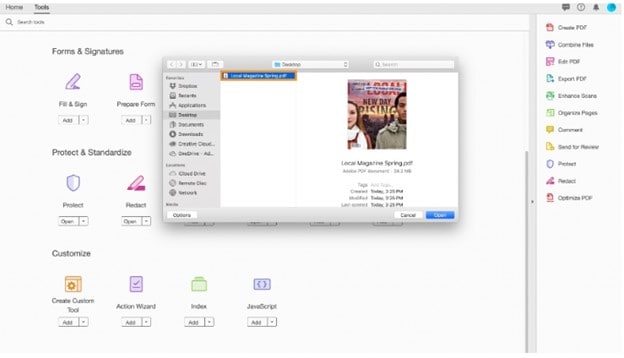
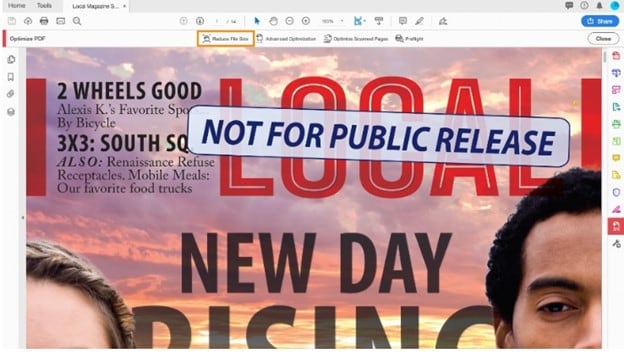
Acrobat is a good fit for teams already using Adobe tools or users who need advanced prepress-style controls. For simple “make this file smaller” tasks, it may feel heavier than necessary.
Option 3: Use WinZip only when you need to package files
WinZip can compress a PDF into a ZIP archive, but it is not the same as PDF optimization. Many PDFs already contain compressed images and streams, so zipping them may produce only a small reduction. In some cases, the ZIP file can be only slightly smaller than the original PDF.
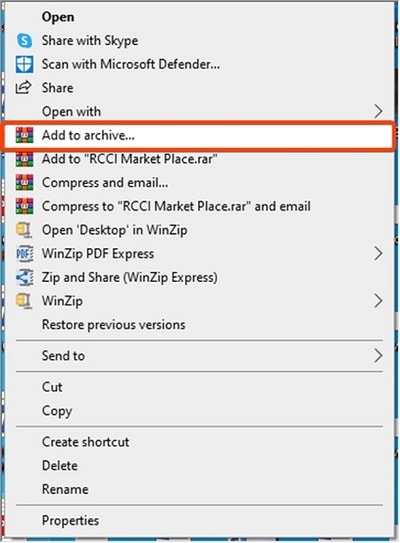
WinZip is most useful when you need to send several PDFs together, preserve a folder structure, or bundle supporting files. If the receiving platform requires the file to remain a PDF, not a ZIP, use a real PDF compressor instead.
How to Hyper Compress PDF Files on Mac
Mac users can start with Preview, which is built into macOS. It is quick, free, and good enough for some basic reductions. For more control, especially when quality matters, use a dedicated PDF editor.
Option 1: Use Preview for quick compression
Preview includes an export filter that reduces PDF file size. It is convenient, but it does not give much control over the final quality. The result can be acceptable for simple documents and disappointing for image-heavy or scanned files.
To compress a PDF in Preview:
- Open the PDF in Preview.
- Click File > Export.
- Open the Quartz Filter menu.
- Choose Reduce File Size.
- Save the file with a new name.
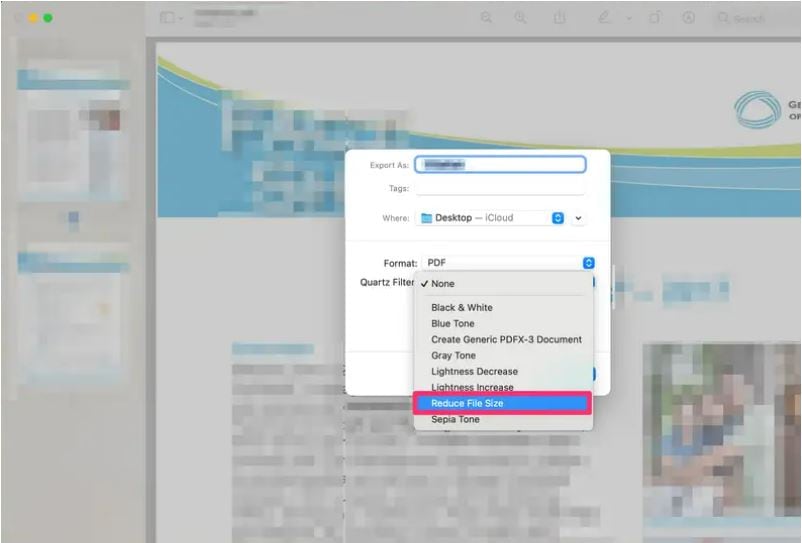
After exporting, compare the compressed file with the original. Pay attention to small text in scans, fine lines in charts, and image-heavy pages. Preview’s filter can be aggressive, so it is not always the best choice for professional documents.
G2 Rating: 4.5/5 |100% Secure
Option 2: Compress with PDFelement for Mac
PDFelement for Mac is better suited when you want to compress a PDF while still keeping control over the document. You can review pages, remove unnecessary content, organize pages, and compress from the same app.
To hyper compress a PDF on Mac with PDFelement:
- Open PDFelement and load your PDF.
- Go to File > Save as Other > Compress PDF.
- Choose the compression level.
- Select High if your priority is the smallest file size.
- Save a new copy and review the result.
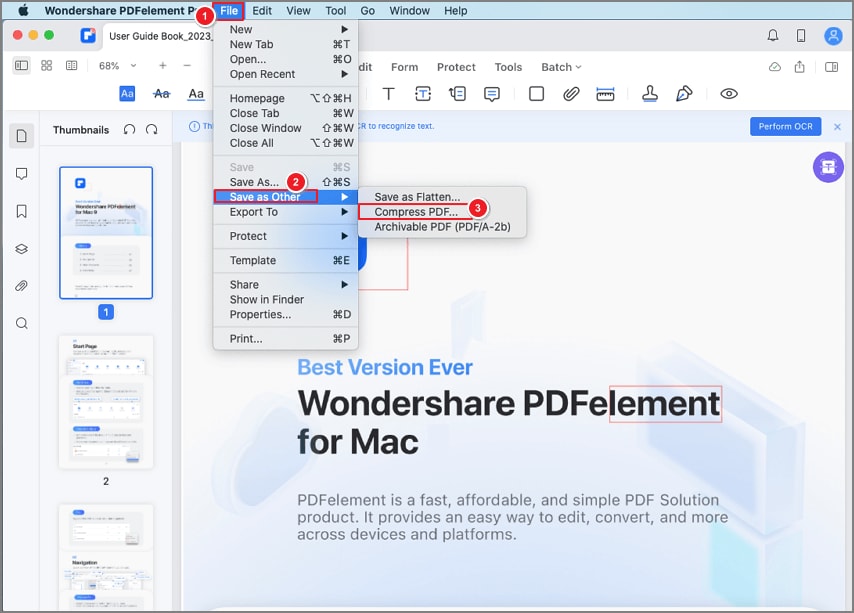
Use high compression when the file needs to meet a strict upload limit. Use medium or low compression when the document contains product photos, architectural drawings, certificates, or scanned pages that must remain easy to read.
G2 Rating: 4.5/5 |100% Secure
How to Hyper Compress PDF Online
Online compressors are the fastest option when you do not want to install software. They work well for public, low-risk, or temporary documents such as brochures, class notes, sample forms, or general reports. Be more cautious with contracts, tax forms, medical records, IDs, confidential business documents, or files containing personal data.
HiPDF
HiPDF is a browser-based PDF tool with a straightforward compression workflow. It is useful when you want to upload a PDF, choose a compression level, and download the smaller file without installing an app.
To use HiPDF:
- Open the PDF compressor and upload your file.
- Choose the compression level. Select a higher level if you need a much smaller PDF.
- Start compression.
- Download the compressed file and check the output.
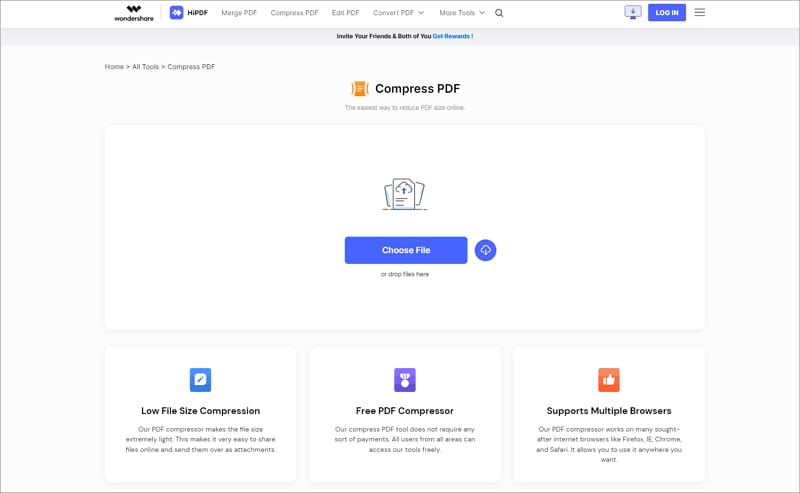
HiPDF is a good option for quick jobs. If you need to edit the file after compressing it, such as deleting pages or fixing text, you may prefer a desktop workflow in PDFelement.
AvePDF
AvePDF offers several web-based PDF tools, including compression. It supports different compression levels, which helps when you want to balance size and readability. A very high setting may produce a much smaller file, but image quality can suffer.
AvePDF is worth considering for image-heavy PDFs where you want stronger browser-based compression. As with any online hyper PDF compressor, avoid uploading sensitive files unless the service’s privacy terms meet your requirements.
PDFgear
PDFgear provides simple PDF compression with a clean workflow. Depending on the version or platform you use, you may see options such as recommended or maximum compression. Maximum compression is the right choice when the upload limit is strict, but recommended compression may preserve better quality.
PDFgear is useful for everyday documents: class handouts, resumes, reports, and PDFs that do not contain confidential information.
PDF24 Tools
PDF24 Tools provides online compression settings such as DPI and image quality. This can be useful if you understand how image resolution affects file size. Lower DPI generally means smaller files, but scanned text and detailed graphics may become less sharp.
If you are compressing a scan that only needs to be read on screen, a moderate DPI setting may work well. If the file must be printed or archived, do not reduce the resolution too far.
How to Get a Smaller PDF Without Making It Unusable
Hyper compression is a trade-off. The smallest PDF is not always the best PDF. A file that uploads successfully but turns signatures into blurry smudges or makes numbers unreadable has not solved the real problem.
Choose compression settings based on the document’s purpose
For screen reading, stronger compression is usually acceptable. For printing, keep more image detail. For scanned contracts, invoices, certificates, or academic papers with small text, test a few pages carefully. Open the compressed file at 100% and 150% zoom. If it is difficult to read on screen, it will likely be worse for the recipient.
A practical rule: use high compression only when you must meet a strict file size limit. If the file only needs to be somewhat smaller, medium compression is often the safer choice.
Fix scanned PDFs before compression
Scanned PDFs are often the hardest to manage because each page is an image. If the scan was made at very high resolution or in full color, the PDF can become huge. Before compressing, consider whether every page needs color. Black-and-white or grayscale scans can be much smaller than color scans, especially for text documents.
OCR can also help the broader workflow. OCR does not always reduce file size by itself, but it makes scanned PDFs searchable and easier to edit or export. In PDFelement, for example, you can run OCR on a scanned PDF, correct or organize the document, and then compress the final file. That is useful when you receive a bulky scanned document and need both a smaller file and searchable text.
Remove what the reader does not need
Some PDFs are large because they contain unnecessary pages or extra content. Before using a hyper compressor PDF tool, look for simple cleanup opportunities. Remove blank scan pages, duplicate appendices, outdated drafts, unused form pages, and embedded attachments. If a PDF contains large images that are not necessary, replace or delete them before compression.
This manual cleanup often produces better results than compression alone because it reduces content instead of only degrading quality.
Be careful with encrypted or signed PDFs
Password-protected PDFs may not compress properly unless you have permission to edit or optimize them. Digitally signed PDFs need extra care because changing the file can invalidate the signature. If the signature is legally or procedurally important, keep the original signed version and ask the recipient whether a compressed copy is acceptable.
For general information about PDF standards and long-term document preservation, the Library of Congress PDF format overview is a useful reference.
Keep an original copy
Always save the compressed version as a new file. A simple naming pattern helps avoid confusion:
Project-Report-original.pdfProject-Report-compressed.pdfProject-Report-under-10MB.pdf
This is especially helpful when testing several compression levels. If the highest setting looks too blurry, you can quickly go back and create a medium-compressed version instead.
People Also Ask
-
What is the best way to hyper compress PDF files?
The best method depends on the file. For private or large PDFs, use a desktop PDF editor such as PDFelement or Adobe Acrobat. For quick, non-sensitive files, an online compressor such as HiPDF, AvePDF, PDFgear, or PDF24 Tools can work well. If the file is scanned or image-heavy, choose a tool that lets you control compression level and review output quality. -
Can I compress a PDF by 90%?
Yes, but not every PDF can be reduced by 90% while staying readable. A file made from oversized images or high-resolution scans may shrink dramatically. A mostly text-based PDF that has already been optimized may not shrink much. Compression results depend on the original file structure, image resolution, fonts, metadata, and existing compression. -
Does hyper compression reduce PDF quality?
Usually, yes, if the tool uses aggressive image downsampling or recompression. Text-based PDFs may show little visible change, while scanned or image-heavy PDFs can become blurry. Always check important pages after compression, especially pages with small text, charts, signatures, or fine details. -
Is an online hyper PDF compressor safe?
Online compressors are convenient, but they require uploading your file to a server. That may be fine for public or low-risk documents. For confidential files, use a desktop PDF compressor instead, or carefully review the online tool’s privacy policy, deletion policy, and security practices before uploading. -
Why is my compressed PDF still too large?
The PDF may contain high-resolution scans, embedded fonts, attachments, layers, or images that remain large even after compression. Try removing unnecessary pages, reducing image resolution, converting color scans to grayscale, or using a stronger compression setting. If the PDF has already been compressed before, there may be limited room for further reduction. -
Can I hyper compress a PDF on Mac for free?
Yes. Preview can reduce PDF size for free using File > Export > Quartz Filter > Reduce File Size. It is quick but offers limited quality control. If Preview makes the file too blurry, use a dedicated PDF compressor with adjustable settings. -
Is WinZip a good hyper compressor for PDF files?
WinZip can put a PDF into a ZIP archive, but it does not optimize the PDF itself. Since many PDFs already use compression internally, zipping may not reduce the size much. Use WinZip when you need to bundle several files together. Use a PDF compressor when the final file must remain a smaller PDF. -
Should I compress a PDF before or after editing it?
Edit first, compress last. Delete pages, fix content, run OCR, add signatures, or combine files before compression. If you compress first and then edit, the PDF may grow again when you save it. A final compression pass gives you the best chance of producing the smallest usable version.
Final Thoughts
To hyper compress PDF files effectively, start with the real goal: email delivery, web upload, storage, or faster sharing. Then choose the compression method that matches the file’s sensitivity and content. Online tools are fast for ordinary files. Preview is handy for quick Mac reductions. Adobe Acrobat gives advanced controls. PDFelement is a strong fit when you need to compress, edit, organize, OCR, and manage the PDF in one desktop workflow.
The safest approach is simple: keep the original, try a high compression setting only when necessary, and review the compressed PDF before sending it. A smaller file is helpful only if the recipient can still read and use it.