
Table of Contents
The Canva PDF editor is useful when your PDF needs a visual touch-up: a corrected typo, a replaced image, a refreshed flyer layout, or a quick export for sharing. It is not the same kind of tool as a traditional PDF editor, though. Canva treats a PDF more like a design file after import, which is great for creative edits but less ideal for scanned documents, long reports, legal files, fillable forms, or precision formatting.
If you want to edit PDF in Canva, the process is simple: upload the file, wait for Canva to convert the pages into editable design elements, make your changes, and download the result as a PDF. The important part is knowing what will edit cleanly and what may need a more document-focused tool such as PDFelement.


 G2 Rating: 4.5/5 |
 100% Secure
What the Canva PDF Editor Is Best For
Canva started as a design platform, so its PDF editing strengths are closest to design work. Think brochures, resumes, social media reports, menus, event posters, proposals, worksheets, simple presentations, and branded handouts.
If your PDF was originally created from a clean digital file, Canva can often identify text boxes, images, shapes, backgrounds, and other page elements. Once imported, these elements can be selected and adjusted much like any Canva design.
What You Can Do With the Canva PDF Editor
The exact result depends on the PDF, but Canva can help with many common lightweight edits:
- Change or replace text that Canva recognizes as editable text
- Add new headings, labels, captions, or callouts
- Replace images, icons, logos, and design elements
- Adjust colors, fonts, spacing, and page layout
- Add your own brand assets if they are available in your Canva account
- Insert signatures as images or drawn elements
- Rearrange, duplicate, or delete pages
- Export the edited file as a PDF for printing or sharing
- Convert visually focused PDF pages into image-based assets for design use
That makes Canva a good option when the PDF is mainly a visual document. For example, if you have a one-page restaurant menu and need to change prices, add a seasonal image, and export a fresh copy, Canva is usually convenient.
What Canva Is Not Designed To Handle
Canva is less suitable when the PDF is mainly a structured document rather than a design asset. You may run into problems if you are working with:
- Scanned PDFs that need OCR
- Long reports with many pages and complex formatting
- Contracts that need redaction, password protection, or audit-friendly signing
- PDF forms with fillable fields
- Documents that must preserve exact fonts, spacing, bookmarks, links, or accessibility tags
- Batch conversions from PDF to Word, Excel, PowerPoint, or image formats
- Files containing tables, footnotes, columns, or technical layouts
For these cases, a dedicated PDF editor is usually safer because it works with PDF structure rather than converting the document into a Canva design.
How To Edit PDF in Canva Online
The easiest way to use the Canva PDF editor is through a browser. You do not need to install anything, and Canva’s free plan allows basic PDF importing and editing. Some limits may apply based on file size, page count, storage, or premium elements, so check Canva’s current plan details if you are editing a large file.
Step 1: Open Canva and Sign In
Go to Canva in your browser and sign in to your account. If you do not have an account, you can create one for free.
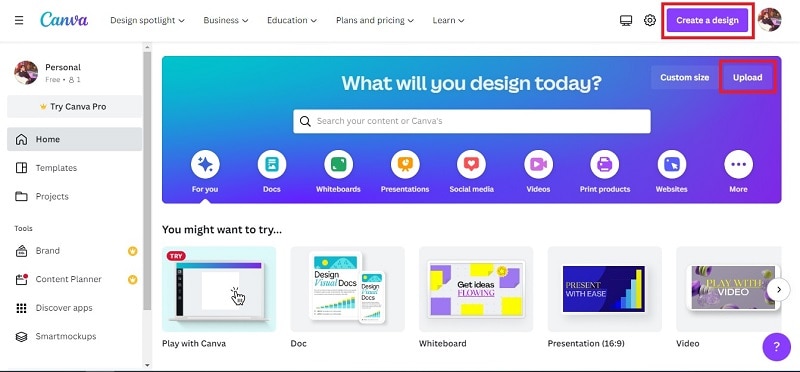
You can start from the Canva home page, the upload area, or Canva’s PDF editor page. The upload route is often the quickest if you already have the PDF saved on your computer.
Step 2: Upload the PDF
Click Upload or Create a design, then choose your PDF file. Canva will import the PDF and convert each page into an editable design page.
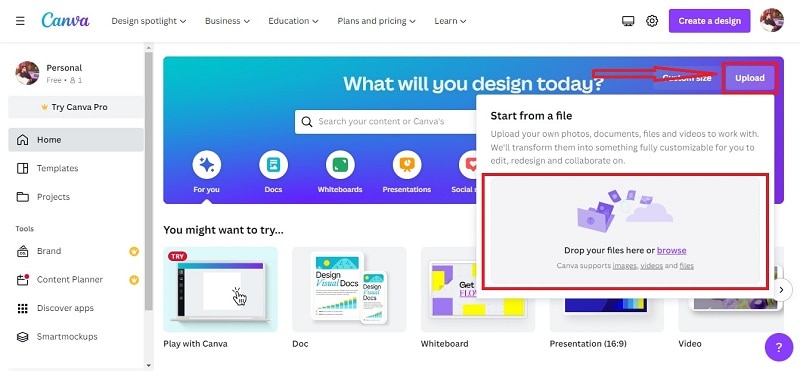
This conversion step is where the final editing quality is decided. A simple digitally created PDF usually imports better than a scanned image, a locked file, or a document with unusual fonts.
If the document has many pages, give Canva time to process it. After upload, open the file from your projects or recent uploads.
Step 3: Edit Text in Canva
To edit text, click on a text box. If Canva recognizes the text correctly, you can type directly into it. You can also change the font, font size, color, alignment, line spacing, and effects.
If you cannot select the text, one of these issues may be the reason:
- The text is part of a flattened image.
- The PDF is scanned.
- Canva did not recognize the text during import.
- The document uses a font or layout that did not convert cleanly.
- The PDF has restrictions or complex layering.
A practical workaround is to cover the old text with a matching background shape and place a new text box over it. This works for flyers and simple pages, but it is not ideal for contracts, invoices, or documents where exact formatting matters.
Step 4: Edit Images, Logos, and Design Elements
To replace an image, select it and delete it, then upload a new one or choose from Canva’s media library. You can crop, resize, rotate, adjust transparency, add filters, or place images behind text.
For logos and brand assets, use high-resolution files whenever possible. Low-quality images may look acceptable on screen but appear blurry after export or print.
If the PDF contains icons, shapes, or decorative elements, Canva may convert them into editable objects. If not, they may appear as part of a flattened image. In that case, you can place new design elements on top instead of truly editing the original object.
Step 5: Add Pages, Comments, or Signature Elements
Canva is helpful for adding new visual sections. You can insert a blank page, duplicate an existing page, add icons, create text callouts, or include a signature image.
For internal review, Canva comments can be useful while the file is still in Canva. However, these comments do not behave like standard PDF annotations once exported. If you need PDF comments, highlights, stamps, or markup that other PDF apps can read, use a dedicated PDF editor.
Step 6: Download the Edited PDF
When the edits are done, click Share or Download, then choose a PDF export option. Canva usually offers PDF Standard and PDF Print options.
- Use PDF Standard for email, web sharing, and smaller file size.
- Use PDF Print for higher-quality printing, especially if the file includes images or graphics.
- Turn on crop marks and bleed only if your printer or print shop asks for them.
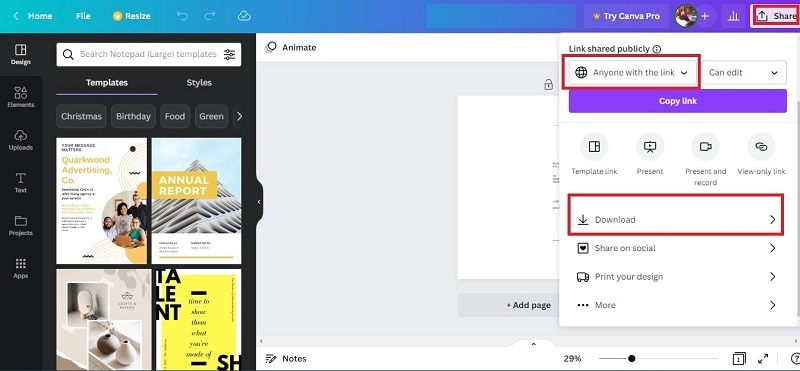
Before sending the file, open the downloaded PDF in a PDF viewer and check every page. Look for font changes, shifted text, missing images, broken spacing, or pages exported in the wrong order.
Quick Export Checklist
Before you call the Canva edit PDF workflow finished, check these details:
- Does the downloaded PDF match the Canva preview?
- Are all pages included?
- Is the page size correct?
- Are important images sharp enough?
- Did any fonts change?
- Are links still clickable if you need them?
- Is the file size reasonable for email or upload?
- Does the document need password protection, redaction, or signatures?
Canva can make a PDF look polished, but it does not replace a final document review.
Editing PDF in Canva on Desktop and Mobile
You can also use Canva apps for desktop and mobile. The editing logic is similar across platforms: upload the PDF, let Canva convert it, edit the design, and export.
Edit PDF Canva Workflow on Windows and Mac
The Canva desktop app is useful if you work in Canva often and prefer not to keep another browser tab open. It also keeps your projects accessible from one place.
To edit a PDF in the Canva desktop app:
- Download and install Canva for Windows or Mac from Canva’s official site.
- Sign in to your account.
- Click Upload or Create a design.
- Select the PDF from your computer.
- Open the imported PDF project.
- Edit text, images, pages, and design elements.
- Click Share > Download and choose your PDF export settings.
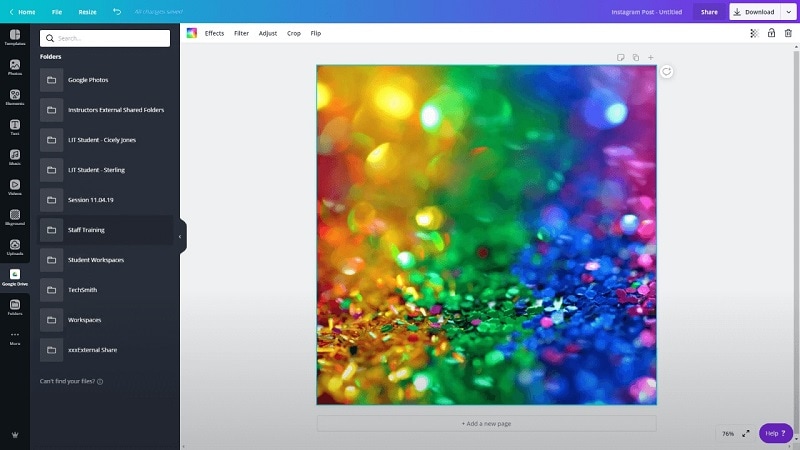
The desktop app is best for users who already create marketing materials, presentations, and branded PDFs in Canva. If you only need to edit a PDF once, the browser version is usually enough.
Editing PDF in Canva on iOS and Android
The Canva mobile app lets you make PDF edits from a phone or tablet. This is handy for small changes, such as replacing a photo, fixing a short line of text, or approving a design while away from your desk.
To edit a PDF in Canva on mobile:
- Install the Canva app from the App Store or Google Play.
- Sign in to your Canva account.
- Tap the upload option and choose your PDF.
- Open the imported PDF from your projects.
- Tap text, images, or elements to edit them.
- Use the download or share option to save the edited PDF.
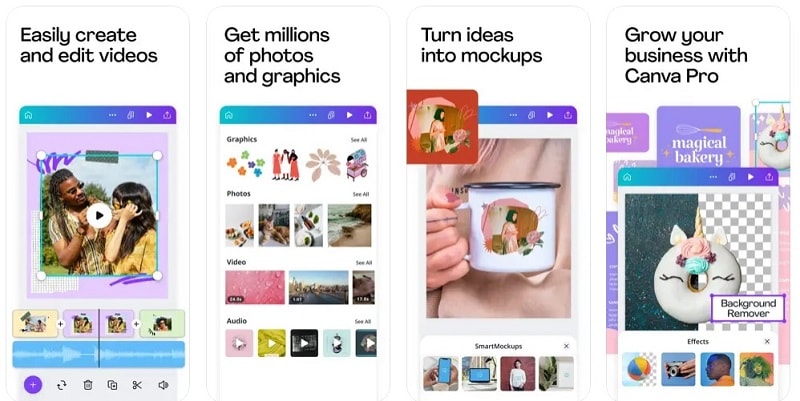
Mobile editing works best on short, visual PDFs. For multi-page reports or files where alignment matters, use a larger screen. It is much easier to notice spacing errors, low-resolution images, and accidental object movement on desktop.
Syncing PDF Projects Across Devices
One useful part of Canva is project syncing. If you upload and edit a PDF on desktop, you can usually reopen it later from your Canva projects on mobile. This is helpful for quick reviews, but be careful with final approvals. A layout that looks fine on a phone may still need checking in a desktop PDF viewer before printing or sending to clients.
Canva PDF Editor Limits To Know Before You Start
Canva can edit many PDFs, but it is not a full PDF engineering tool. The biggest issues appear during import, conversion, and export.
Canva Converts the PDF Into a Design
When you upload a PDF, Canva does not always preserve the original PDF structure. It interprets the file and turns pages into Canva-editable objects. That is why editing can feel easy, but it is also why formatting can shift.
Common conversion issues include:
- Text boxes split into separate lines or words
- Fonts replaced with similar Canva fonts
- Tables turning into hard-to-edit shapes or text blocks
- Backgrounds flattening into images
- Links or interactive elements not working as expected
- Page elements moving slightly from their original positions
For a poster or flyer, small shifts may not matter. For a legal document, financial report, or academic file, they can be a problem.
Scanned PDFs Are a Special Case
A scanned PDF is usually just an image of a page. Canva may let you place new text or design elements on top, but it will not reliably turn the scanned words into editable text.
If your goal is to change scanned text, search scanned pages, or copy text from a scan, you need OCR. Adobe has a helpful explanation of optical character recognition, which is the technology used to detect text inside images and scanned documents.
This is one area where PDFelement is a better fit. Its OCR workflow can recognize text in scanned PDFs so the document becomes searchable and editable. After OCR, you can correct text, export to Word, or continue preparing the file for review.
Canva Is Not Ideal for Sensitive PDF Workflows
Canva is convenient for design collaboration, but some document workflows need more control. If a PDF contains confidential business information, legal terms, HR records, financial data, or private customer details, check your organization’s rules before uploading it to any online design tool.
For sensitive PDFs, you may need features such as:
- Password protection
- Permission controls
- Redaction
- Local desktop editing
- Digital signature workflows
- Secure document sharing
- Metadata review
- Page-level organization without design conversion
Canva is not built around those PDF-specific controls. A dedicated PDF application is the safer choice for files where privacy, compliance, or document integrity matters.
File Size and Page Limits Can Affect the Workflow
Canva’s free and paid plans may have limits related to upload size, storage, page count, or available assets. These details can change, so confirm current limits on Canva’s own help pages or pricing page before planning a large PDF project.
If Canva rejects the upload or slows down on a large file, try these options:
- Split the PDF into smaller sections.
- Compress the PDF before uploading.
- Remove unnecessary pages.
- Convert only the page you need to redesign.
- Use a desktop PDF editor for long files instead.
For long manuals, policy documents, catalogs, or scanned archives, Canva is rarely the most efficient editing environment.
Canva vs PDFelement: Which PDF Editor Should You Use?
The best choice depends on what kind of PDF problem you are solving. Canva is strongest when the PDF is a design. PDFelement is stronger when the PDF is a document that needs editing, conversion, OCR, signing, protection, compression, or organization.
Choose Canva If Your PDF Needs Design Changes
Use the Canva PDF editor when you need to:
- Refresh a visual layout
- Update a flyer, poster, menu, or brochure
- Add branded graphics
- Replace images
- Make a PDF more visually appealing
- Collaborate with design reviewers
- Export a clean PDF for sharing or printing
Canva is especially useful when you are less concerned about preserving the original file structure and more concerned about improving the page design.
Choose PDFelement If Your PDF Needs Document-Level Editing
PDFelement is a better match when you need to work with the PDF as a formal document. For example, you may need to edit paragraphs without rebuilding the page, convert a PDF to Word or Excel, run OCR on a scanned contract, add comments, sign a file, compress it for upload, or protect it with a password.
G2 Rating: 4.5/5 |100% Secure
A practical PDFelement workflow might look like this:
- Open a PDF in PDFelement.
- Use OCR if the file is scanned.
- Edit text, images, headers, footers, or page objects.
- Add comments, highlights, stamps, or signatures.
- Organize pages by splitting, merging, rotating, extracting, or deleting.
- Compress the PDF if it is too large to upload.
- Convert it to Word, Excel, PowerPoint, image, or another format if needed.
- Apply password protection or permissions before sharing.
That workflow is useful for office files, school documents, business reports, application forms, contracts, invoices, and any PDF where accuracy matters more than visual redesign.
A Smart Workflow: Use Both Tools
You do not always have to choose one tool for everything. Canva and PDFelement can work well together if each tool handles the right part of the job.
For example:
- Use PDFelement to clean up a scanned PDF with OCR.
- Convert or extract the page you want to redesign.
- Use Canva to create a more attractive cover page, flyer, or visual section.
- Export from Canva as a PDF.
- Use PDFelement again to merge the Canva-designed page into the full document, compress the final file, add page numbers, protect it, or prepare it for signing.
This avoids forcing Canva to handle technical PDF tasks while still taking advantage of its design tools.
Canva PDF Editor vs PDFelement Comparison
| Need | Canva PDF Editor | PDFelement |
|---|---|---|
| Best for | Visual PDF edits and design refreshes | Full PDF editing and document management |
| Text editing | Works when text imports as editable objects | Edits PDF text directly in a document-focused interface |
| Scanned PDFs | Limited; usually needs overlay edits | OCR can make scanned PDFs searchable and editable |
| Layout design | Strong design tools, templates, graphics, and brand assets | Basic visual editing, stronger document structure control |
| Conversion | Mainly design/export-focused options | Converts PDF to Word, Excel, PowerPoint, images, and more |
| PDF forms | Not ideal for form workflows | Better suited for creating, filling, and managing forms |
| Annotation | Canva comments for design collaboration | PDF comments, highlights, stamps, and markup |
| Security | Limited PDF-specific security controls | Passwords, permissions, and redaction features depending on version |
| Large documents | Can be awkward after import | More practical for long PDFs and page organization |
| Best user | Designer, marketer, teacher, casual user | Student, office worker, legal/admin user, business team |
The short version: use Canva when your PDF should look better. Use PDFelement when your PDF needs to work better.
G2 Rating: 4.5/5 |100% Secure
FAQs About Canva PDF Editor
Is there a free Canva PDF editor?
Yes. Canva lets users upload and edit PDFs with basic tools on the free plan. You can change recognized text, add new elements, replace images, and export the result. Some features, templates, assets, storage, or upload limits may depend on your Canva plan.
How do I edit PDF text in Canva?
Upload the PDF to Canva, open the imported design, and click the text you want to change. If Canva recognizes it as editable text, you can type directly into the text box. If the text is flattened or scanned, you may need to cover the old text and add a new text box, or use an OCR-capable PDF editor first.
Can Canva edit scanned PDFs?
Canva can place new design elements on top of scanned pages, but it is not the best tool for turning scanned text into editable text. For scanned PDFs, use a tool with OCR, such as PDFelement, before making deeper text edits.
Why does my PDF look different after uploading it to Canva?
Canva converts the PDF into a design project. During that process, fonts, spacing, images, tables, and layers may be interpreted differently. This is more common with complex layouts, unusual fonts, scanned pages, and long documents.
Can I use Canva to edit a PDF form?
You can visually edit a PDF form in Canva, but it is not ideal for working with fillable form fields. If you need to create, fill, edit, or preserve interactive PDF fields, use a dedicated PDF editor.
Can I download my Canva design as a PDF?
Yes. Click Share or Download, then choose a PDF option. Use PDF Standard for smaller digital files and PDF Print for higher-quality printing.
Is Canva good for editing large PDFs?
Canva is better for short, visual PDFs. Large documents can be slow to import, harder to manage, and more likely to have formatting issues. For long reports, manuals, contracts, or scanned files, a dedicated PDF editor is usually more reliable.
What is the best Canva alternative for PDF editing?
For design-heavy edits, Canva is convenient. For document-heavy tasks such as OCR, conversion, annotations, signing, page management, compression, and password protection, PDFelement is a stronger Canva alternative.
![[2026] Top 5 Great Alternatives to Preview for Mac](https://images.wondershare.com/pdfelement/images2026/pdf-like-article-2.png)