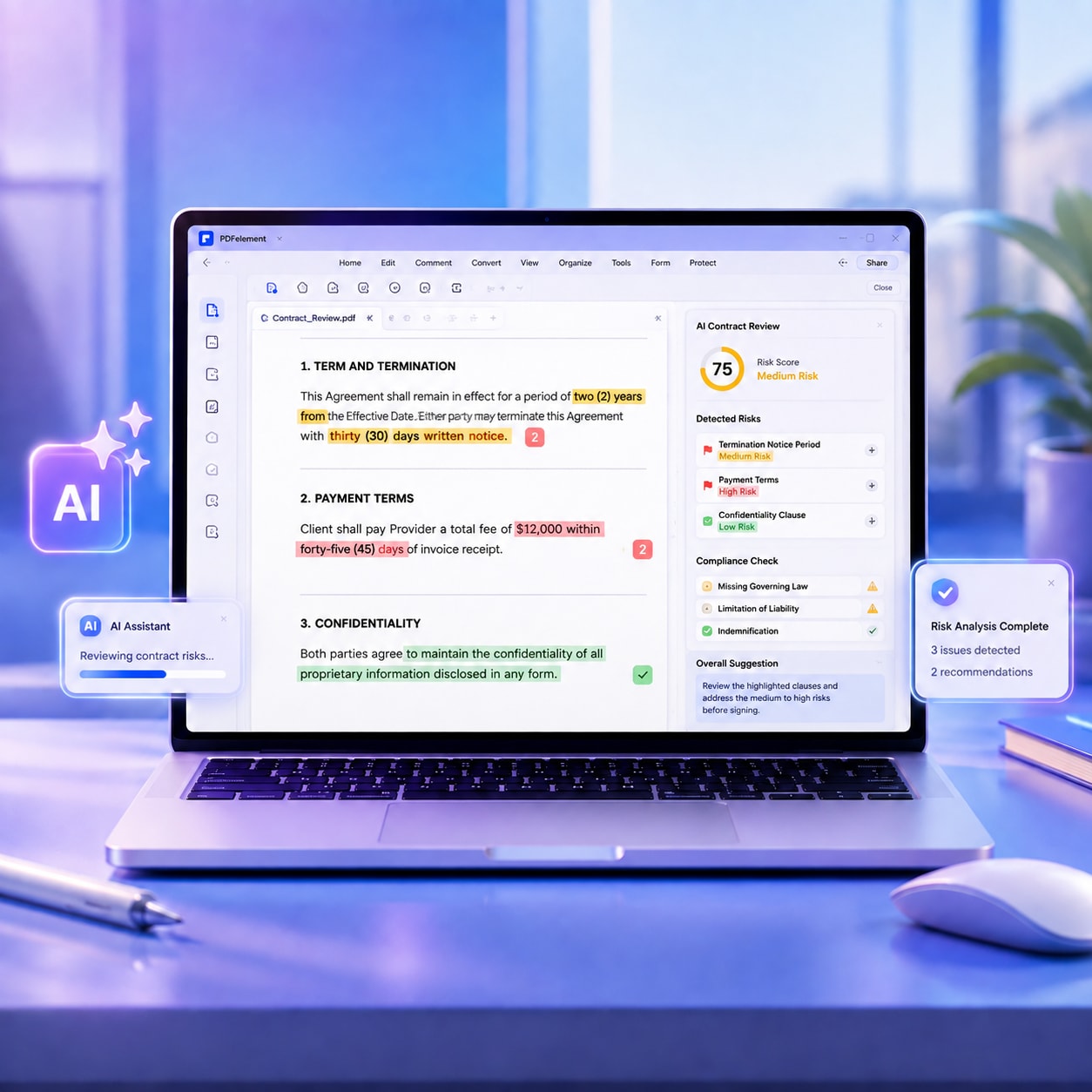

A supplier agreement arrives from Seoul, written in Korean with English attached. Both parties review their versions and assume every contractual term means exactly the same. However, small translation differences can change payment duties, deadlines, liability, or termination rights. Contract translation therefore requires accuracy beyond ordinary business document translation.
Legal wording must preserve meaning while remaining clear across different languages. This guide explains common translation risks and compares AI tools with human specialists. It also covers translating contracts with PDFelement and maintaining their original structure. Lastly, 4 verification checks help confirm accuracy before approving any translated agreement.


 G2 Rating: 4.5/5 |
 100% Secure
In this article
Part 1. Why Accurate Contract Translation Matters
Contract language is deliberately precise, but that precision can shift between languages. A contract translator has to carry the legal meaning across languages, not just the wording. The European Union's legal translation requirements also stress legal knowledge and strong language skills. These 5 examples show where seemingly accurate translations can still change a contract's meaning:
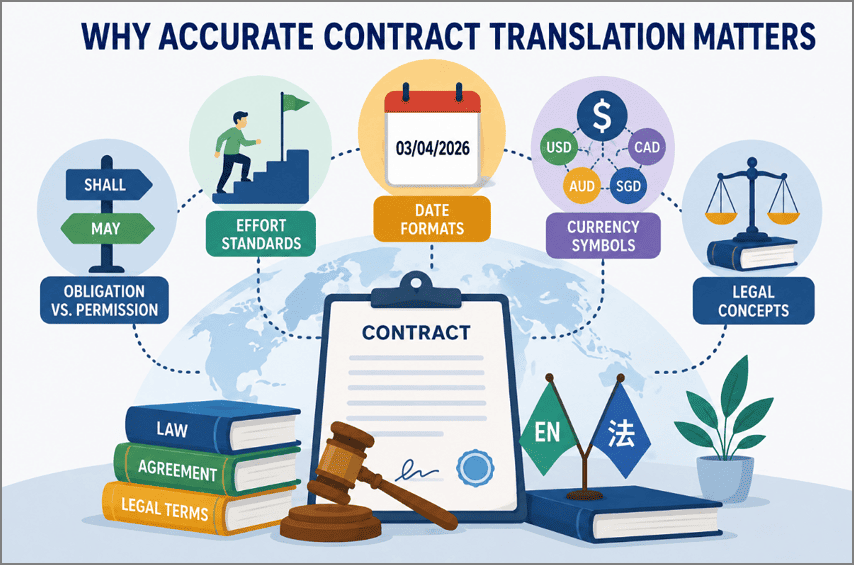
- Obligation Versus Permission: English distinguishes terms such as "shall" and "may" when expressing obligations and permissions. Other languages may express these distinctions differently, requiring careful interpretation of the legal context.
- Effort Standards: Terms such as "best efforts" and "reasonable efforts" can carry different implications depending on the jurisdiction. Another legal system may lack direct equivalents, making context essential during translation.
- Date Formats: A deadline written as 03/04/2026 can mean March 4 or April 3. Spelling out the month helps prevent ambiguity in international contracts.
- Currency Symbols: A dollar sign can represent American, Canadian, Australian, or Singaporean dollars. Payment clauses should identify the intended currency using codes such as USD or CAD.
- Legal Concepts: Terms such as "consideration" and "without prejudice" have specific meanings in common-law contexts. Some legal systems lack direct equivalents, so literal translation may distort their intended effect.
Another important issue is deciding which language version controls when differences arise. Bilingual contracts can include a governing language clause identifying the authoritative version. Its enforceability and effect may depend on applicable law and jurisdiction. Addressing this issue within the contract can reduce uncertainty if the translated versions later conflict.
Part 2. Why Teams Translate Contracts With AI
Professional legal translation remains the standard for documents heading to court or a registry. For everyday contract translation, however, teams increasingly use AI when speed and accessibility matter more.
AI Contract Translator Compared With Manual Translation
The choice for a translation agreement is often framed as speed against quality, but that comparison is too simple. Each approach performs better in different areas, as the table shows:
| Factor | Human Translator | AI Contract Translator |
| Turnaround | Hours or days for longer agreements | Often completes drafts within minutes |
| Cost | Commonly priced per word or project | Depends on subscription or usage limits |
| Terminology Consistency | Uses glossaries and translation tools | Can maintain terms consistently at scale |
| Legal Nuance | Interprets context and legal terminology | May miss jurisdiction-specific legal effects |
| Certification | Qualified translators may provide certified translations | AI output alone cannot provide certification |
Consistency deserves particular attention. The European Commission's translation resources use translation memories and terminology databases to support consistent wording. AI can apply terms quickly across lengthy documents, but neither approach guarantees perfect consistency. Defined terms should therefore be checked during review.
When an AI Contract Translator Fits
AI contract translation works best when teams need a readable working version before deciding whether specialist review is necessary. These 4 situations are common examples:
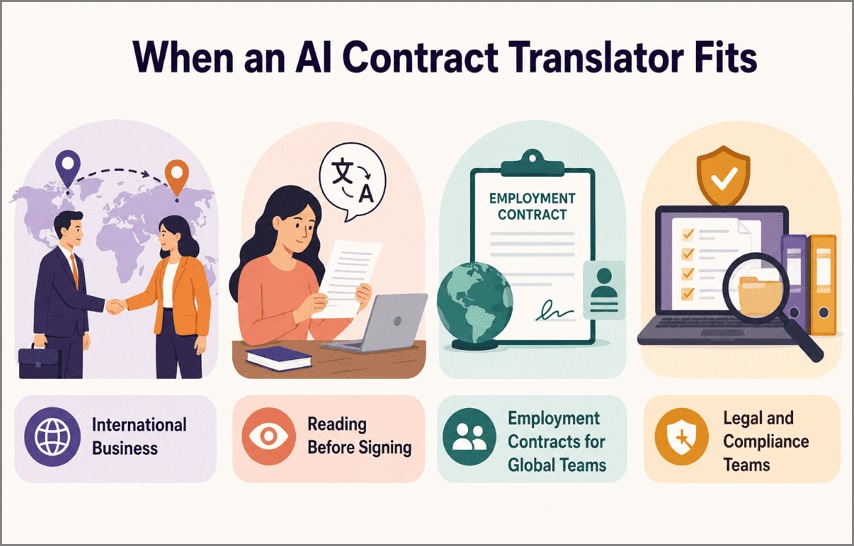
- International Business: Cross border suppliers, distributors, and partners exchange drafts regularly, where waiting days for each revision can slow negotiations.
- Reading Before Signing: Someone receiving an agreement in an unfamiliar language may need to understand its terms before seeking professional legal review.
- Employment Contracts for Global Teams: International employees may need translated terms to understand their agreements, while language requirements vary by local law.
- Legal and Compliance Teams: Reviewing foreign-language agreements at volume often involves initial screening before documents requiring specialist attention are escalated.
Part 3. Translating a Contract with PDFelement
Generic translation tools can create extra work after the translation itself finishes. Tables may shift, clause numbering can break, and formatting often needs rebuilding. Scanned agreements create another obstacle because their text may not be editable. For teams handling contract translation, these problems can slow reviews and complicate document comparisons.
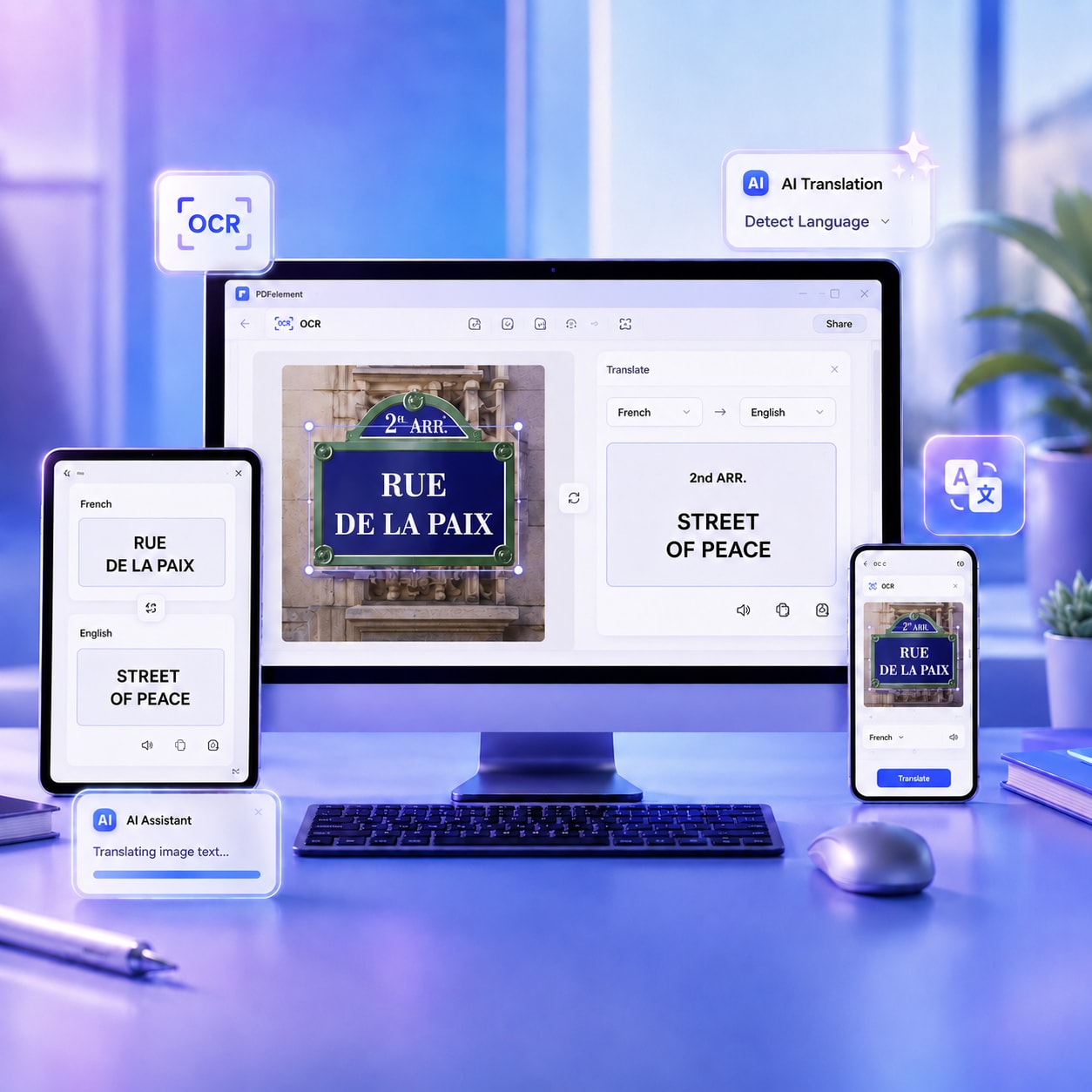
PDFelement addresses these issues by translating content while preserving the original document layout. It supports OCR for scanned contracts and translation into more than 50 target languages. Users can also choose between two translation modes based on their needs. This makes translated agreements easier to read, review, and share without manually rebuilding documents.
How to Translate a Contract With PDFelement
PDFelement simplifies contract translation while keeping the original document structure intact. Follow these steps to translate and review your agreement efficiently:
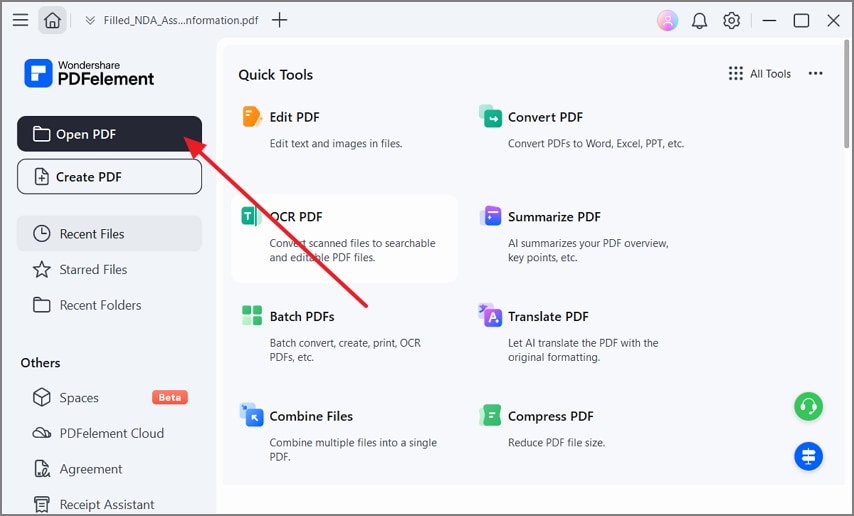
Step 1. Open the Contract in PDFelement
Launch PDFelement and click “Open PDF” to import the contract you want translated.
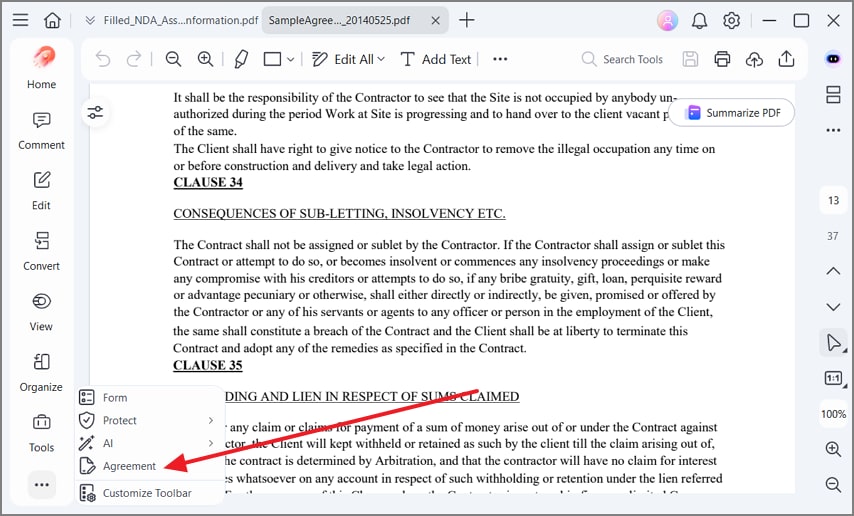
Step 2. Pick the Agreement Tools
After the contract opens, select “Tools” from the left sidebar. Click “Agreement” to access PDFelement's contract-specific AI features.
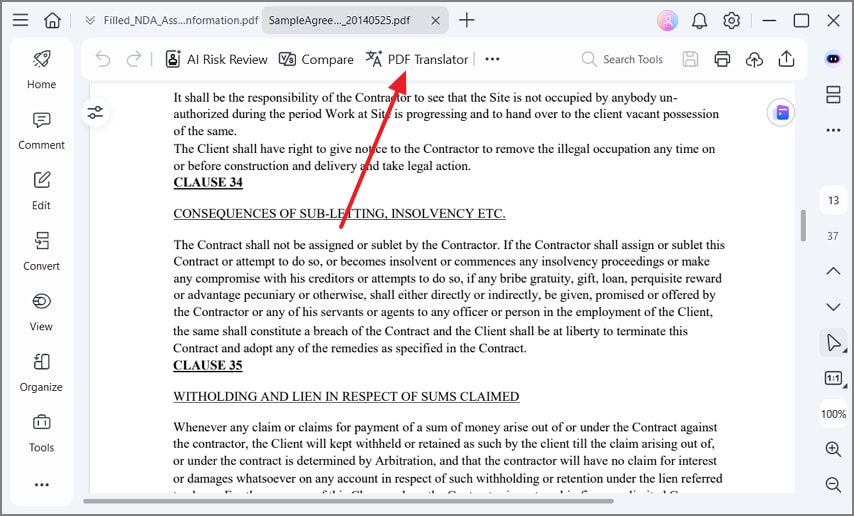
Step 3. Select PDF Translator
Choose “PDF Translator” from the Agreement toolbar at the top. The translation settings panel will then appear beside your contract.
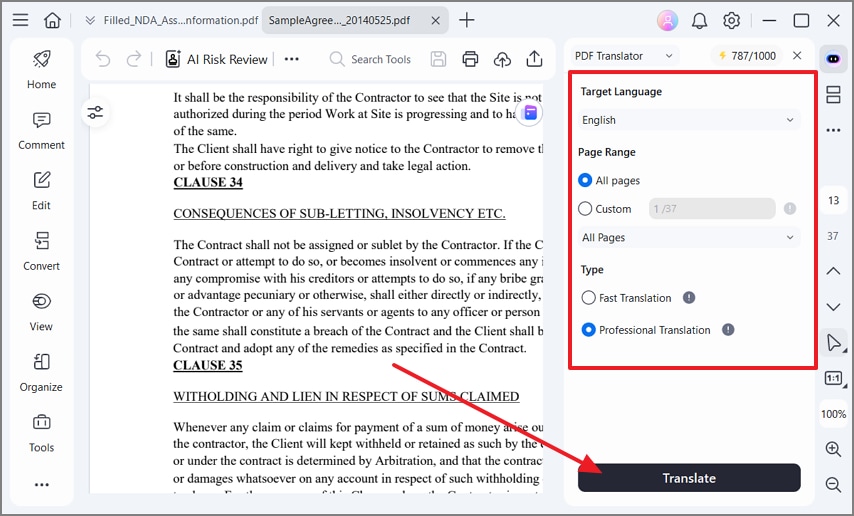
Step 4. Configure and Start Translation
Select your “Target Language” and choose all pages or a custom range. Pick “Fast Translation” or “Professional Translation,” then click “Translate” to begin.
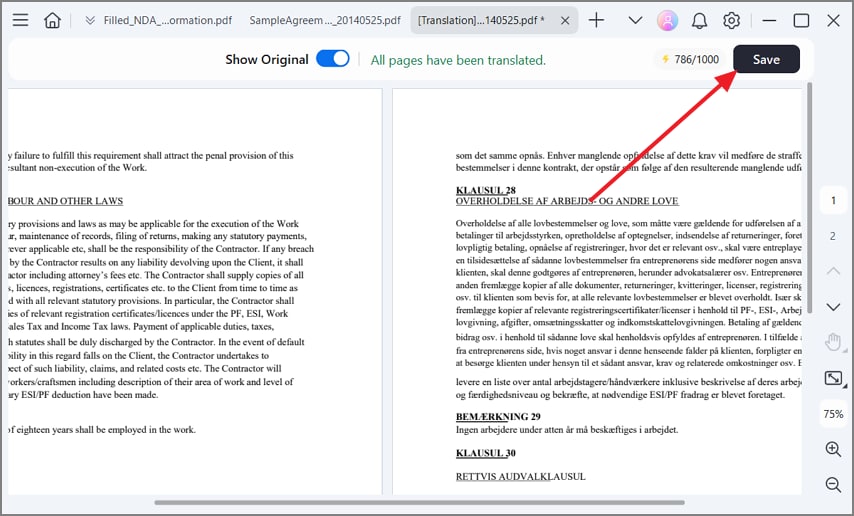
Step 5. Review and Save the Translation
Compare the translated document with the original using “Show Original.” Review important clauses and terminology, then press “Save” to keep the translated contract.
Why PDFelement Suits Contract Work
When teams translate contract documents, preserving structure matters alongside accurate wording. These four PDFelement capabilities make that process easier than basic translation tools:
- Fast Turnaround: A full agreement converts in seconds rather than occupying an afternoon.
- Context-Aware Output: Translation follows the surrounding meaning, which matters where one word carries several possible senses.
- Long Document Handling: Lengthy agreements with schedules and appendices convert without breaking apart.
- Wide Language Coverage: More than 50 target languages are supported, covering most commercial relationships.
G2 Rating: 4.5/5 |100% Secure
Part 4. What to Check When Translating a Contract
Even with a contract translator, the final document needs careful review. These 4 checks help identify errors that could affect the agreement’s meaning:
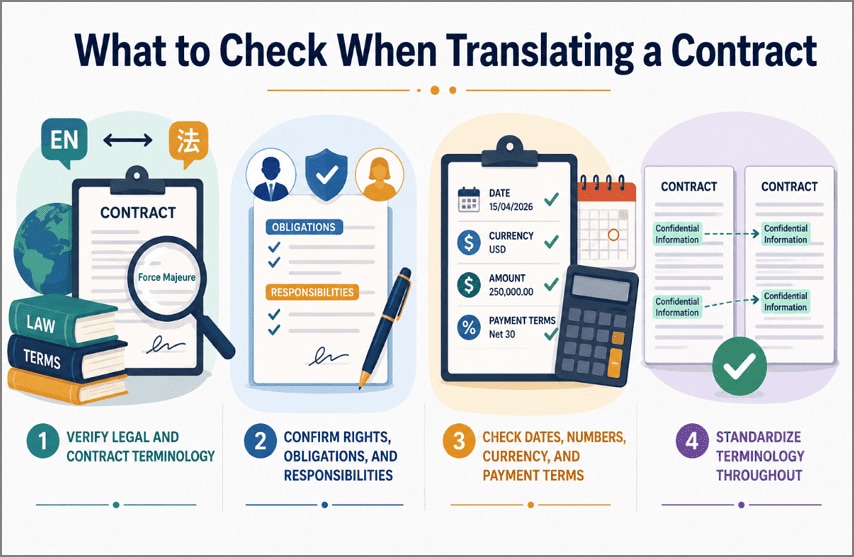
1. Verify Legal and Contract Terminology
Legal terms do not always have direct equivalents across different legal systems. The European Commission's IATE terminology database contained over 6.5 million terms in 2025, including terminology used in legal contexts. Check important defined terms against reliable legal terminology sources and applicable jurisdictional usage.
2. Confirm Rights, Obligations, and Responsibilities
Read clauses stating who must act and check each commitment carefully. A duty translated as an option can materially change the agreement's meaning.
3. Check Dates, Numbers, Currency, and Payment Terms
Numbers may appear unchanged while their surrounding meaning or format shifts. Verify dates, currency codes, amounts, percentages, and payment deadlines against the original.
4. Standardize Terminology Throughout
Defined terms should remain consistent wherever the same concept appears in contracts. Search each key term and review variations that could introduce unintended ambiguity.
Frequently Asked Questions
Can I translate a PDF contract with AI?
Yes, and PDF is among the most common formats for this. Scanned agreements need OCR first, since the text has to be readable before anything can be converted.
What should I check after translating a contract?
Defined terms, obligation wording, dates, currency codes, and payment schedules. Confirm the same term appears consistently throughout, as variation creates ambiguity a counterparty can exploit.
How accurate is AI contract translation?
Reliable for meaning and structure, and increasingly good at commercial language. Jurisdiction-specific legal concepts remain the weak point, so agreements carrying real consequence still warrant specialist review.
What types of contracts can be translated?
Supply agreements, employment contracts, NDAs, leases, and partnership documents all translate readily. The practical limit is purpose rather than document type, since official filings usually require certified translation.
Can PDFelement translate an agreement to Spanish?
Spanish is supported alongside more than fifty other target languages. Selecting a page range lets you convert specific clauses rather than processing an entire agreement unnecessarily.
Final Takeaway
To conclude, errors in contract translation can quietly change obligations even when both versions appear correct. Check the legal terms, dates, payment details, and responsibilities against the original. Some authorities require certified translations, so confirm local rules before submitting documents. For routine work, PDFelement can translate agreements while keeping their original layout and structure.
G2 Rating: 4.5/5 |100% Secure
![[Guide] How to Perform AI Contract Comparison in Seconds](https://images.wondershare.com/pdfelement/images2026/pdf-like-article-1.png)