

You've received a PDF of your office layout and need to check distances, areas, or scale before renovations. Working with digital plans, maps, or technical drawings can be tricky if you don't know how to measure accurately.
PDFs often preserve precise dimensions, but without the right tools or techniques, estimating distances or areas can lead to costly mistakes. This guide will walk you through practical methods to measure PDFs effectively, covering distance, area, and scale calculations for drawings, plans, and maps.
In this article
- What You Can Measure (and When It's Accurate)
- Quick Start: Choose Your Path
- Before You Measure: Calibration & Setup
- Why Measure in PDFelement
- One-Minute Setup: Where the Tools Live
- Calibrate Once, Measure Everywhere (Scale, Units, Precision, Snap)
- A Step-by-Step Understanding of Using Different Measurement Types in PDFelement
- Common Use Cases of Measuring in PDFs
- Accuracy & Readability Tips


 G2 Rating: 4.5/5 |
 100% Secure
Part 1. What You Can Measure (and When It's Accurate)
Before diving into the tools and steps to measure in a PDF, it's important to understand exactly what you can measure and under which conditions the results will be reliable.
What Measurements Mean in PDF
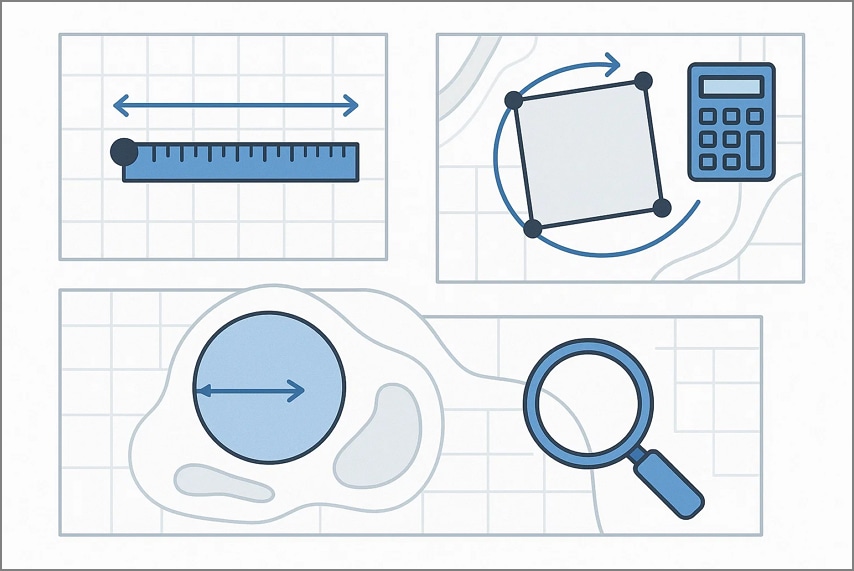
Measurement in PDF typically refers to calculating distances between points, the perimeter of shapes, or the area of objects, whether polygons, circles, or irregular shapes. Distance measurements allow you to determine how far apart elements are. Perimeter calculations help in assessing boundaries, fencing, or the outlines of structures. Each type of measurement provides valuable insights for analyzing drawings, plans, or maps, ensuring accurate planning.
When It is Accurate
Accuracy is only guaranteed when working with vector drawings or scanned plans that are properly calibrated, as these preserve the correct scale and dimensions. Without calibration, measurements may be approximate rather than precise in PDF measurement.
Why Calibration Matters
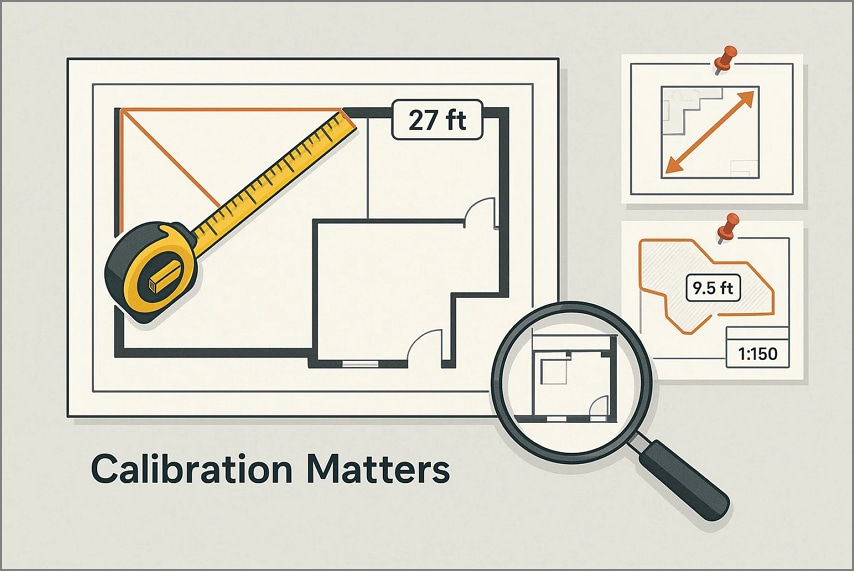
Without proper calibration, distances, areas, or perimeters can be misleading, leading to errors in planning, construction, or mapping projects. Calibration adjusts the PDF's scale so that your tools interpret the drawing correctly, regardless of how the file was created.
- Page Scaling: If the PDF has been scaled during export or printing, measurements can be distorted unless the scale is correctly set.
- Printer Resizes: Printing or exporting a PDF at a different size can alter dimensions, making calibration necessary for accurate measurements.
- Mixed Viewports: Some sheets may contain multiple views with different scales; calibrating ensures each view is measured correctly.
G2 Rating: 4.5/5 |100% Secure
Part 2. Quick Start: Choose Your Path
Getting started with learning how to measure in PDF can be quick if you know which approach fits your needs. Depending on the type of PDF and the level of accuracy required, you can choose a method that saves time while providing reliable results.
- I have a known scale (e.g., 1:100 or 1/8"=1') → If the drawing or plan specifies a scale, simply set that scale in your measurement tool before starting.
- I don't know the scale, but I know one real dimension → You can calibrate your measurement tool using a single known length, such as a wall or plot boundary.
- I just need quick checks online → Browser-based tools with calibration let you measure without installing software, but they may offer fewer snapping and annotation options.
- I need shareable, styled, and summed results → Desktop editors provide advanced measurement features, allowing you to annotate, style, and total distances or area.
Part 3. Before You Measure: Calibration & Setup
Proper calibration and setup are crucial to ensure your results are accurate and reliable. Skipping these steps can lead to distorted distances, incorrect areas, and misaligned annotations in measuring PDF:
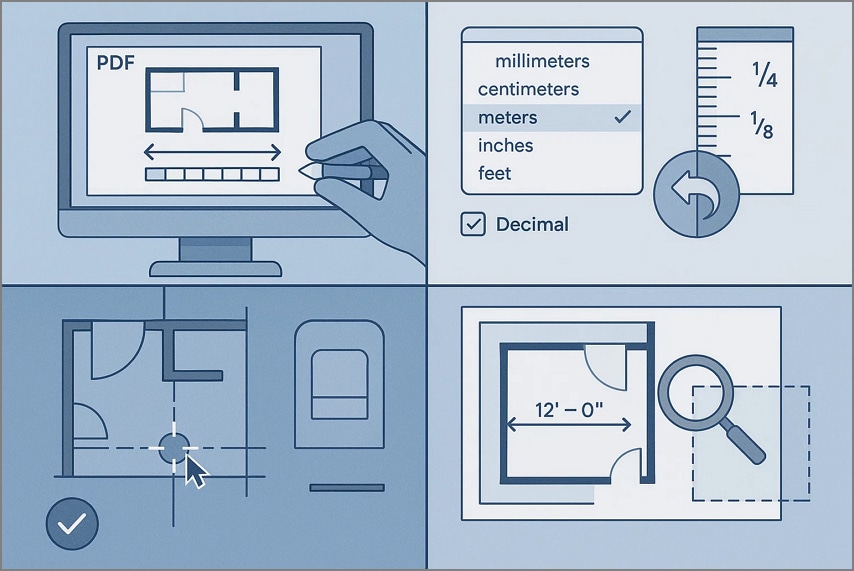
- Calibrate Using a Reference: Use a printed scale bar, a labeled dimension on the drawing, or a standard object such as a door width or parking stall.
- Units & Precision: Choose units that suit your project, millimeters, centimeters, meters, inches, or feet, and decide whether to use decimal values or architectural fractions.
- Snapping: Enable endpoint and intersection snapping to ensure measurements align precisely with lines and corners, which is especially important for vector PDFs.
- Viewport Gotcha: If a PDF contains multiple detail views or sections with different scales, recalibrate for each viewport to maintain measurement accuracy across the entire document.
G2 Rating: 4.5/5 |100% Secure
Part 4. Why Measure in PDFelement
When it comes to measuring PDF drawings with accuracy, PDFelement stands out as a versatile tool. Whether you're working with architectural plans, maps, or shop drawings, it provides everything you need to get precise measurements. Users can achieve shareable results without switching between multiple applications. Mentioned below are some of the reasons why you must use PDFelement to perform measurements in your document:
- Distance Tool: Measure the exact distance between two points on your PDF, ideal for walls, roads, or plot lines.
- Perimeter Tool: Quickly calculate the perimeter of any shape or object, useful for fencing, borders, or layout outlines.
- Polygon Area Tool: Measure areas of irregular polygons, perfect for rooms, plots, or landscaped zones.
- Circle Area Tool: Calculate the area of circular elements such as columns, tanks, or round plots.
- Scale Ratio & Precision Controls: Set the PDF scale and precision for measurements in mm, cm, m, inches, or feet, ensuring accurate results.
- Snap & Annotation Features: Snap to endpoints or intersections for precise selections, and style labels for clarity.
- Automatic Summation: Get totals of distances, perimeters, or areas instantly, saving time and reducing calculation errors.
Part 5. One-Minute Setup: Where the Tools Live
Getting started with PDF measurement in PDFelement is fast. With just a quick navigation through the interface, you can access scale options, choose your measurement type, and view results instantly. Here is how you can access the feature:
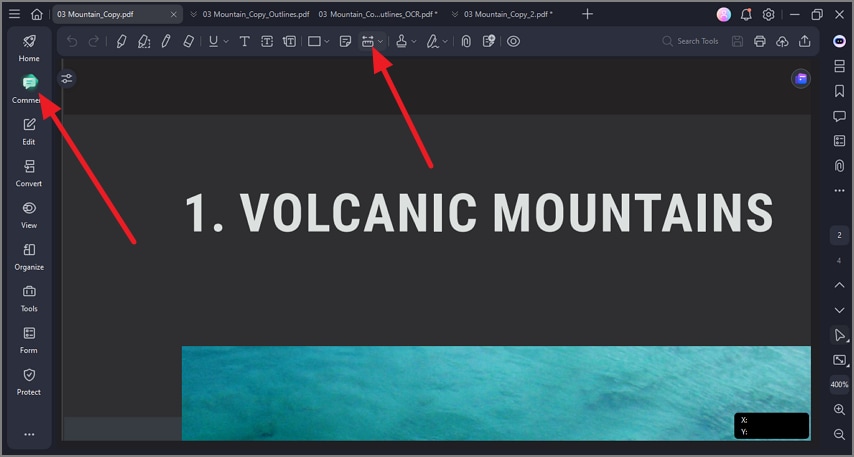
Step 1Open PDF and Access Comments
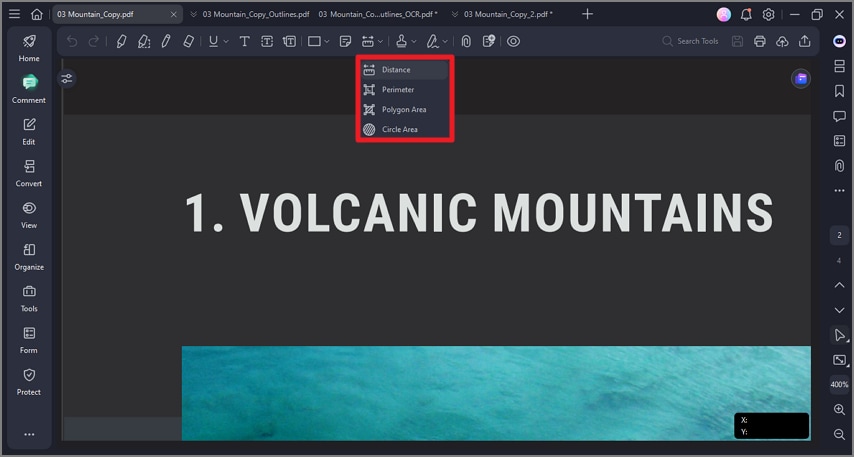
Begin by launching PDFelement and opening the document within the tool's interface. Now, access the toolbar on the left and click on the "Comments" option. Next, choose the "Measurement" option from the toolbar at the top.
Step 2Select Your Measurements
Now select your desired option, such as "Distance," "Perimeter," "Polygon," or "Circle Area," from the expanded list by clicking on your desired option.
G2 Rating: 4.5/5 |100% Secure
Part 6. Calibrate Once, Measure Everywhere (Scale, Units, Precision, Snap)
Before taking a detailed PDF scale measure, PDFelement lets you configure scale, units, and snapping so every measurement you take stays accurate across the entire document. Once these settings are applied, you can measure confidently without reconfiguring each tool.
- Scale Ratio: Right-click an in-progress measurement → "Measurement Settings" → set the "Scale Ratio" to match the drawing's stated scale or calibrate it using a known dimension.
- Units & Precision: Choose between "mm, cm, m, inches, or feet," and set the decimal places or architectural fractions according to your required tolerance.
- Snap: Enable snapping to automatically lock measurement points to endpoints or corners, helping you trace clean, accurate geometry on vector-based PDFs.
Pro Tip: If the sheet includes multiple viewports or details with different scales, make sure to recalibrate for each viewport to maintain accurate measurements.
| Measurement Tool | Primary Use Case | Best For |
|---|---|---|
| Distance Measurement | Calculating straight-line length between two points. | Floor plans, technical drawings, and maps. |
| Area Measurement | Determining the total space within a closed shape. | Room sizing, property boundaries, and landscaping. |
| Perimeter (Polygon) Measurement | Measuring the total outline distance of multi-sided shapes. | Irregular architectural plans and complex fencing. |
Part 7. A Step-by-Step Understanding of Using Different Measurement Types in PDFelement
Once you've set up calibration, units, and snapping, it's time to put PDFelement's measurement tools into action. Each tool is designed for a specific type of measurement, making it easy to tackle a wide range of tasks:
Measure Linear Distance
The Distance tool in PDFelement is ideal for measuring straight-line distances on PDFs. The feature allows styling of measurement labels and lines, ensuring annotations remain clear and professional in reports or shared documents. Follow the steps mentioned below to learn how to measure PDF linear distance in PDFelement:
Step 1Open Document and Acquire Comments Option
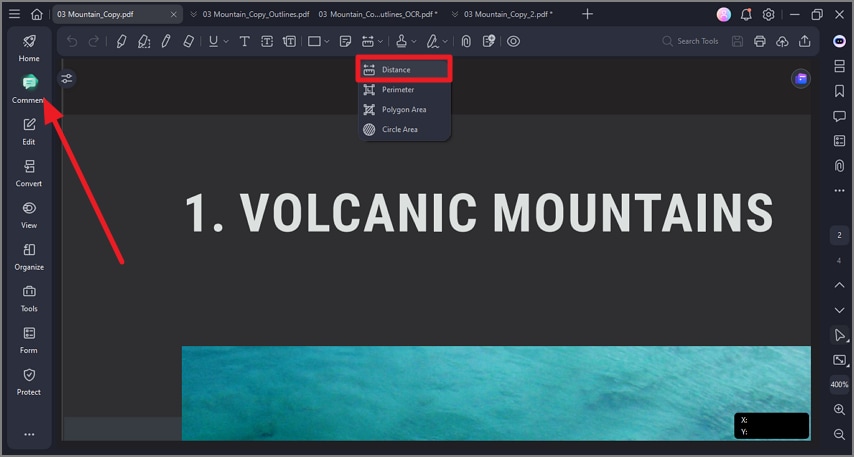
After opening the document within PDFelement's interface, head to the toolbar on the left and click on the "Comments" option. Next, select the Measuring tool from the toolbar at the top and opt for "Distance."
Step 2Draw Area to Measure
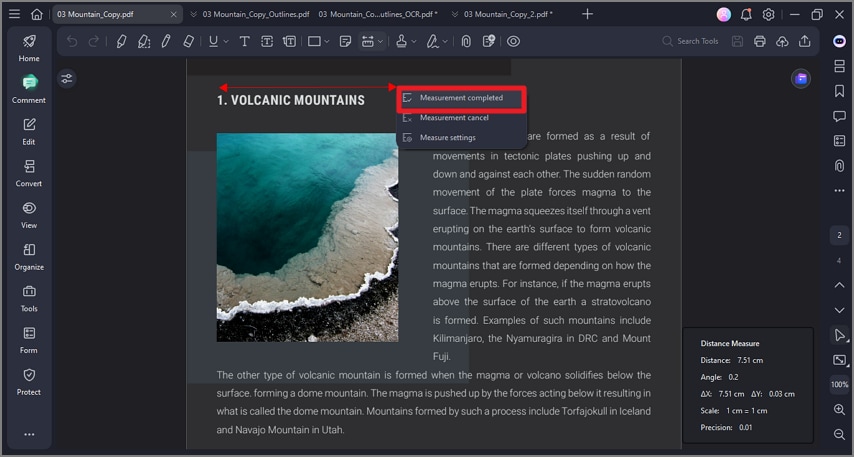
Drag the cursor from the starting point to the ending point to cover the distance that you want to measure. Right-click and choose the "Measurement Completed" option to finalize.
G2 Rating: 4.5/5 |100% Secure
Step 3Preview the Results
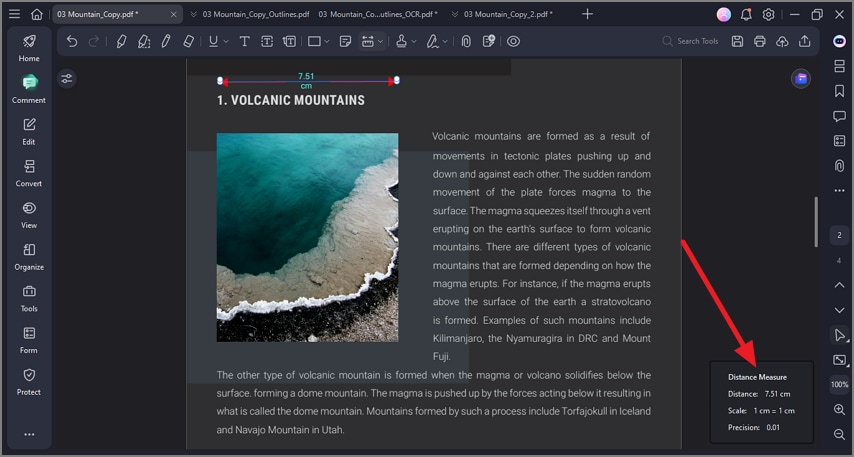
Once done, preview the measurement on the selected distance or within the small box located at the bottom right corner of the interface.
Use For: Door Widths, Spans, Offsets, and Grid Spacing.
Measure Perimeter
The Perimeter tool measures the total length around any shape or path, providing a comprehensive way to track linear extents. It is effective for complex shapes or irregular structures, making it easier to quantify long paths without manually adding segments in PDF measurements. To learn how to calculate the perimeter within your PDF document, read the steps mentioned below:
Step 1Open the Document and Select the Perimeter Tool
After opening the PDF in PDFelement, go to the left toolbar and click on the Comments option. From the top toolbar, select the Measuring menu and choose "Perimeter" as your measurement type.
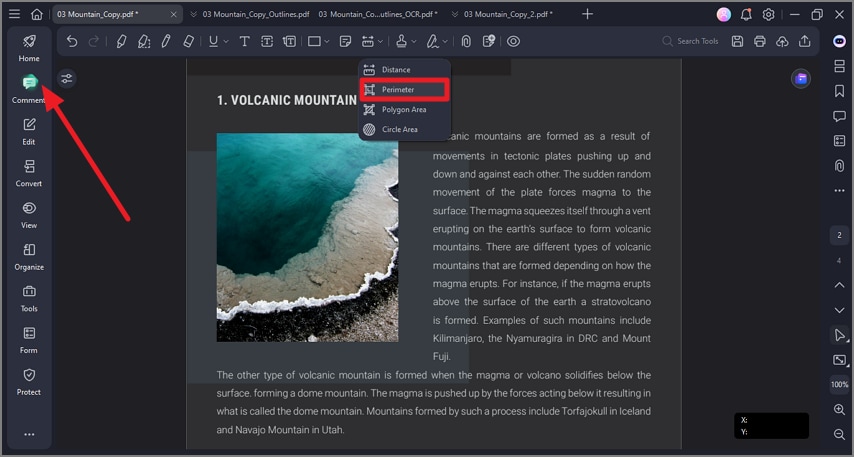
Step 2Trace the Shape
Click along the vertices of the path you want to measure, following the shape's outline. Once the path is complete, double-click or right-click and choose "Measurement Complete" to finalize the perimeter.
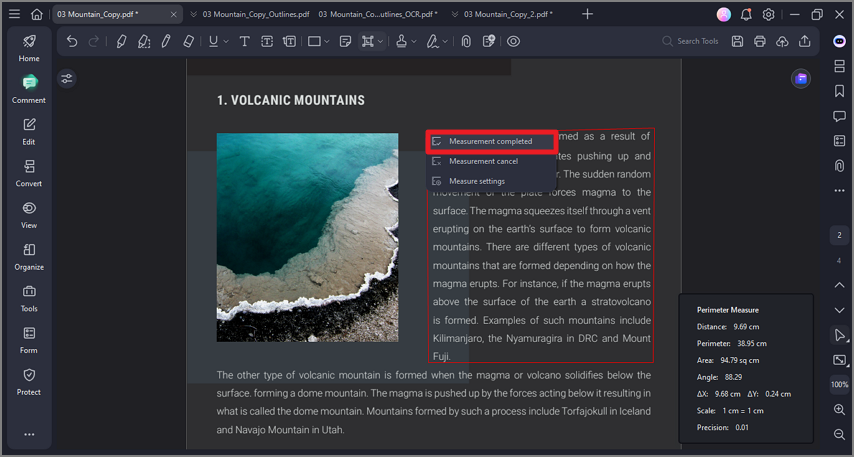
Step 3Preview the Results
After completing the measurement, view the total length in the bottom-right info panel. You can also adjust the appearance of the line and labels in the left properties panel for clarity and presentation purposes.
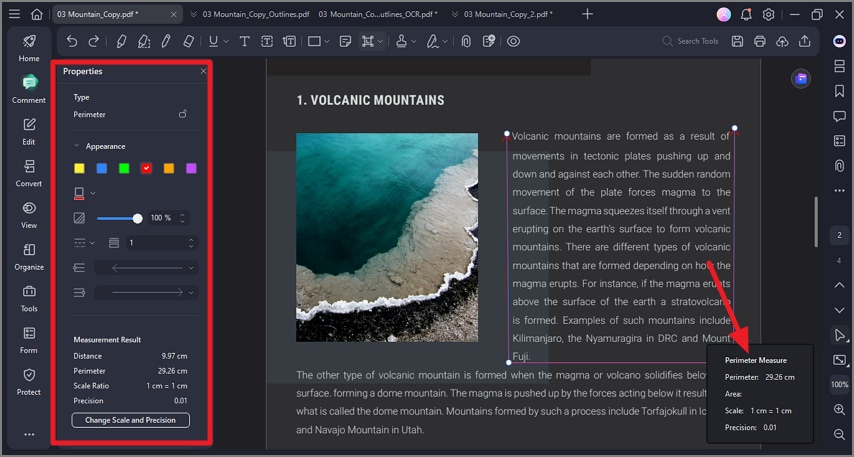
Use For: Room Perimeters, Fencing, Cable Runs.
Measure Polygon Area
The Polygon Area tool calculates the area of irregular shapes while also providing perimeter information, making it ideal for architectural and construction projects. Labels can be customized for clarity, and automatic summation provides quick totals for multiple areas while learning how to measure on a PDF. Read the steps provided next to learn how to measure the Polygon area:
Step 1Select Polygon Area Tool
Open your PDF in PDFelement, go to the left "Comments" toolbar, and choose "Polygon Area" from the top Measuring menu.
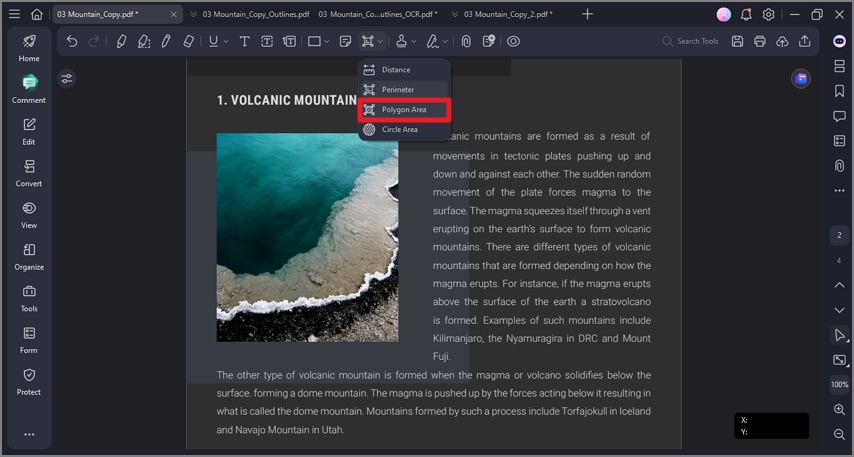
Step 2Trace the Area
Click along the boundary points of the shape you want to measure in PDF. Double-click or right-click "Measurement Complete" to see the area and perimeter in the bottom-right info panel.
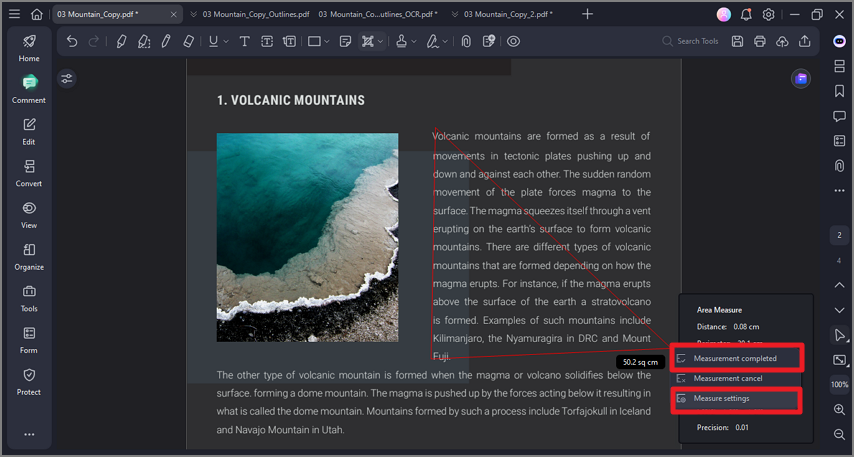
Step 3Adjust Measurement Settings
Right-click the measurement and open "Measurement Settings" to refine Scale Ratio, Units, Precision, and Snap for accurate, real-world dimensions.
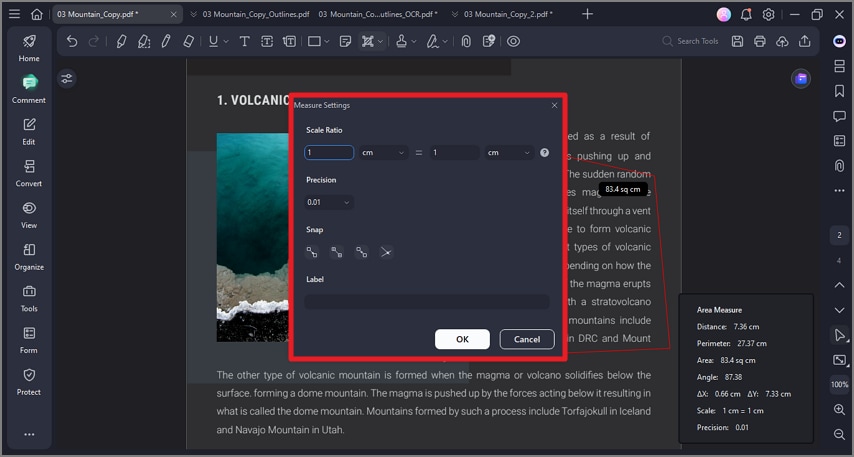
Use for: slab pours, floor areas, paint coverage.
Measure Circle Area
The Circle Area tool is designed for measuring circular or cylindrical elements in PDFs, reporting both area and perimeter accurately. Here is how you can use this tool for measuring the circle area on your PDF document:
Step 1Select Circle Area Tool
Open your PDF in PDFelement, go to the left "Comments" toolbar, and choose "Circle Area" from the top Measuring menu.
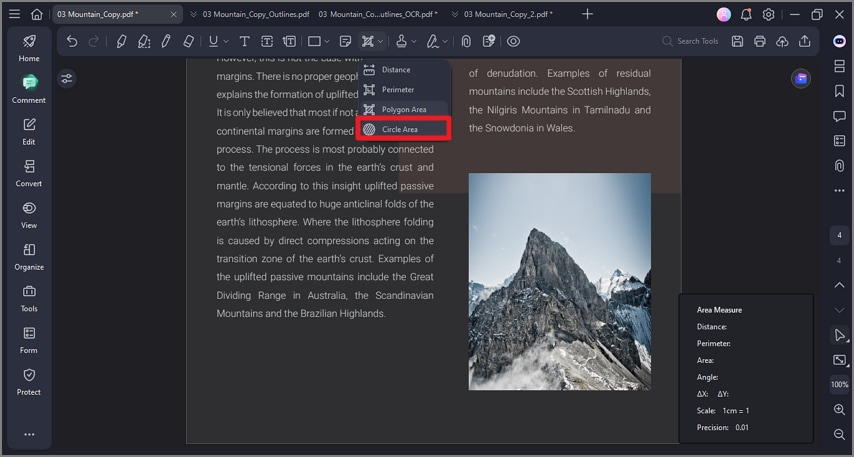
Step 2Measure the Circle
Drag over the circular region you want to measure. PDFelement will automatically display the area and perimeter in the bottom-right info panel.
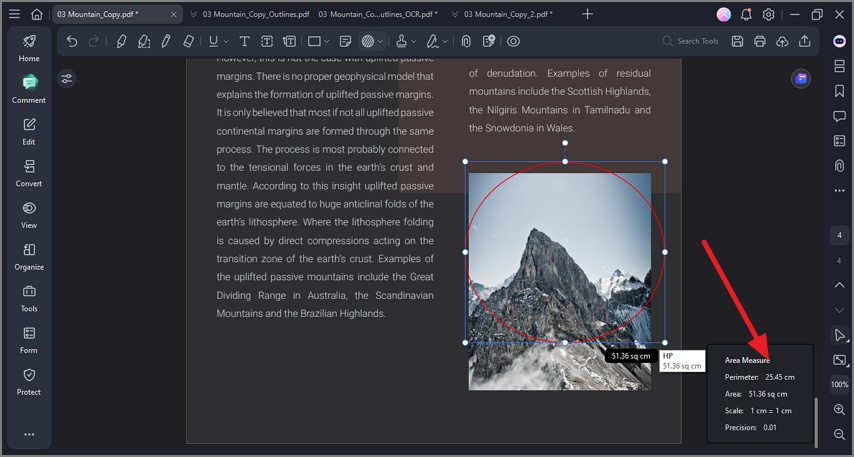
Used For: Columns, Circular Pads, Tanks.
Part 8. Common Use Cases of Measuring in PDFs
Professionals across many industries rely on PDF measurement tools to extract accurate dimensions without returning to source CAD files. Mentioned below are some of the common use cases for this measuring tool:
- Architecture/Interiors: You can measure room areas, corridor lengths, and façade segments to confirm that design layouts match required dimensions.
- Construction: Polygon and circle measurements support slab takeoffs and column pad sizing, ensuring accurate quantities for bidding and site preparation.
- Planning/Maps: Distance tools allow you to check right-of-way widths, road alignments, and setback compliance. Polygon measurements help determine parcel areas for zoning, land division, or GIS-related tasks.
- Manufacturing: Panel perimeters can be verified to ensure components fit their intended assemblies. Circle measurements also help calculate hole diameters or circular cutouts, preventing fabrication errors.
Part 9. Accuracy & Readability Tips
Ensuring both accuracy and clarity in your PDF scale measurements is essential, especially when the results are shared with teams. Provided below are some of the tips to avoid errors and keep your annotations clean and professional:
- Verify Calibration: Re-check with a second known dimension to confirm accuracy. This quick step helps prevent costly mistakes.
- Avoid Rescaling: Don't resize the page after calibration; if you do, recalibrate. Page adjustments can throw off your entire measurement set.
- Use Color Coding: Color-code labels for different trades and ensure font sizes stay readable when printed. Clear formatting improves collaboration.
- Per-Viewport Scaling: Calibrate each detail that uses a different scale and add the scale to the label. This avoids confusion on multi-scale sheets.
- Raster Caution: Measure close to the calibration area and watch for distortion in scanned drawings. Raster warping can reduce accuracy across the page.
People Also Ask
-
How do I measure in a PDF?
Start by calibrating the PDF to a known scale or dimension so the software understands real-world proportions. Once calibrated, you can use distance, perimeter, or area tools to measure any element accurately. -
Can I measure without a printed scale?
Yes, any labeled or known dimension on the drawing can be used for calibration. After setting it, verify accuracy by checking a second known length. -
What units are supported?
PDF measurement tools typically support all common metric and imperial units. You can also choose your preferred precision, including decimals or architectural fractions. -
Are measurements shareable?
Measurements remain as annotations that stay attached to the PDF when you send it to others. For locked, read-only sharing, you can flatten the annotations before exporting. -
Is online measuring accurate?
Online tools can be accurate, but only when you calibrate correctly. Always verify the measurement by comparing it to a second known dimension.
Conclusion
To wrap it up, this article provided a comprehensive guide on how to measure in a PDF effortlessly. Reliable PDF measurements always begin with accurate calibration, whether from a printed scale bar or a known dimension already on the sheet. Once calibrated, PDFelement's "Distance," "Perimeter," "Polygon Area," and "Circle Area" tools handle precise measurement work with ease. Clear labels, automatic totals, and styling options make your results both accurate and presentation-ready.