
Table of Contents
- What You Can and Cannot Remove from a Signed File
- How to Remove a Digital Signature from a PDF with PDFelement
- How to Remove an Electronic or Scanned Signature from a PDF
- How to Remove a Signature in Adobe Acrobat or Online
- How to Remove a Digital Signature from Your Computer
- Troubleshooting: Why You Can’t Remove Signature from a File
Removing a signature sounds simple until the PDF refuses to cooperate. Sometimes the signature is a real certificate-based digital signature. Sometimes it is just a typed name, a drawn signature, or an image placed on top of the page. In other cases, the PDF is a scan, so the signature is baked into the page like any other picture.
The right method depends on what kind of signature you are dealing with and whether you have permission to change it. This guide explains how to remove digital signature elements from a PDF or file, how to remove a regular electronic signature, and how to clean up saved signatures from your computer when you no longer want them available in your signing tools.
What You Can and Cannot Remove from a Signed File
Before choosing a tool, it helps to identify the signature type. PDF apps often use the words “digital signature” and “electronic signature” loosely, but they are not the same thing.
A digital signature is usually certificate-based. It is tied to a digital ID and records whether the file has changed after signing. If someone edits the document after the signature is applied, the signature status may change to invalid or modified. Adobe explains this concept in its documentation on certificate-based signatures.
An electronic signature is broader. It can be a typed name, a drawn signature, an uploaded signature image, or a signature field placed through an e-signing workflow. It may not always include a certificate that validates file integrity.
A scanned or flattened signature is part of the page image. You cannot select it as a separate object because the PDF no longer sees it as a signature. To remove signature marks like this, you normally need redaction or image editing.
In practical terms:
If you signed the PDF yourself with a certificate-based digital signature, many PDF editors can clear it.
If another person signed it, you usually cannot remove their valid digital signature without invalidating the signing workflow or starting over.
If the signature is a visible image or annotation, you may be able to select and delete it.
If the signature is part of a scan, use redaction instead of trying to “delete” it.
For contracts, invoices, HR documents, government forms, or anything legally sensitive, keep an original copy before editing. Removing a signature can change the evidentiary value of the document, even if your reason is harmless, such as fixing a signing location or replacing an outdated version.
How to Remove a Digital Signature from a PDF with PDFelement
If your goal is to remove digital signature from file copies you control, a desktop PDF editor is usually the most reliable option. Wondershare PDFelement is a practical choice for this workflow because it handles signing, signature validation, PDF editing, redaction, OCR, and document protection in one place. That matters when the next step is not only clearing a signature, but also correcting the PDF, preparing a new version, and sending it out for signing again.


 G2 Rating: 4.5/5 |
 100% Secure
Step 1: Open the Signed PDF
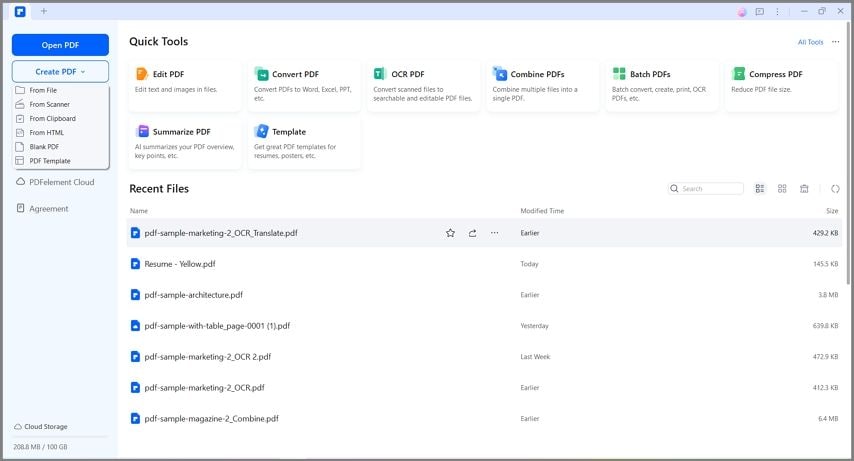
Install and launch PDFelement on your Windows PC or Mac. Open the signed PDF from the start screen, or drag the file into the main workspace.
If the file is important, work on a duplicate. A simple naming convention helps avoid confusion later, for example:
Contract_original_signed.pdfContract_unsigned_for_revision.pdfContract_resigned_final.pdf
This is especially useful when the signature was valid and you need to prove which version was originally signed.
Step 2: Clear the Digital Signature
With the PDF open, go to the Protect tools. Select the signature area or signature panel option, then choose the command to clear signatures. In PDFelement, this workflow is commonly handled through Protect > Clear All Signatures for certificate-based signatures.
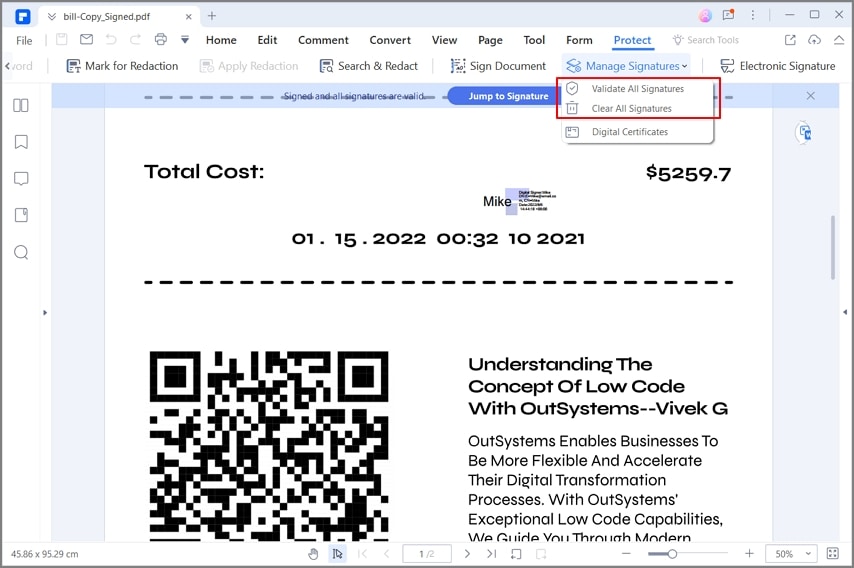
This removes the digital signature from the PDF. If the document contains several signatures, pay close attention to whether your tool clears one selected signature or all signatures. In many business workflows, removing all signatures means the document needs to be circulated again from the beginning.
Step 3: Save the Unsigned Copy
After removing the signature, save the file as a new copy. Do not overwrite the original unless you are certain you no longer need the signed version.
This is also a good moment to make any necessary PDF changes before asking people to sign again. PDFelement can help with the follow-up work: editing text, replacing pages, converting Word or Excel files back to PDF, running OCR on scanned pages, adding comments for review, and applying password protection before sharing. That makes the signature-removal step part of a cleaner document workflow rather than a one-off fix.
When This Method Works Best
Use this method when you are the signer, you control the document, and the file is not locked against changes. It is also suitable when a signing process changed before final approval and you need to remove digital signature fields from a draft before sending a corrected version.
If the PDF says you do not have permission, or if the signature belongs to another person, do not try to bypass the restriction. Ask the signer or document owner to void the current version and issue a new one.
How to Remove an Electronic or Scanned Signature from a PDF
Not every visible signature is a certificate-based digital signature. If the signature was added as an annotation, stamp, image, or typed text, the removal process is different. This is where many “how to remove signature” tutorials become confusing: the tool may not be clearing a digital certificate at all; it may simply be deleting a visible object.
G2 Rating: 4.5/5 |100% Secure
Delete a Selectable Electronic Signature
Open the PDF in PDFelement and click the signature. If it is selectable, it may show a bounding box like an image, comment, or form object. In that case, you can usually right-click and choose Delete, or select it and press the Delete key.
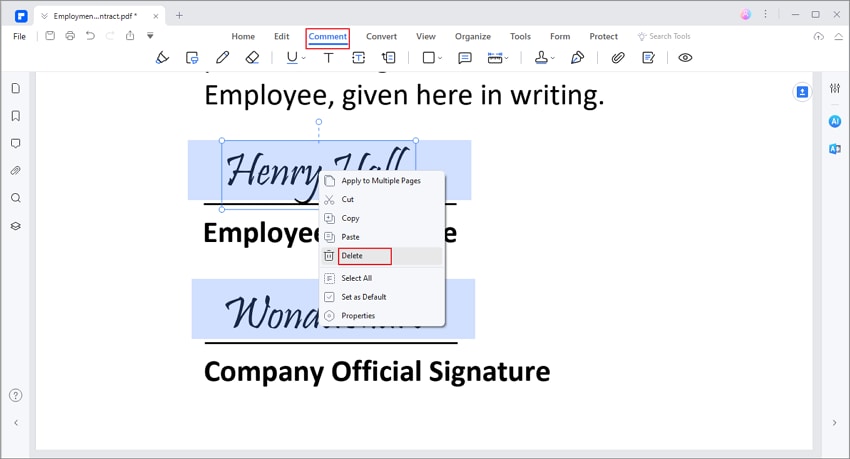
This works for many signatures added through comment tools, fill-and-sign tools, stamps, and pasted images. After deleting it, zoom in to check the surrounding area. Some signature images have a transparent background; others may leave behind a date, initials, or a separate text field that also needs to be removed.
Redact a Signature in a Scanned PDF
If you click the signature and nothing happens, the PDF may be scanned or flattened. In that case, the signature is not an independent object. It is part of the page image.
Use redaction for this situation. In PDFelement, go to the Protect tab and choose Mark for Redaction. Draw a rectangle over the signature area, adjust the redaction properties if needed, and apply the redaction.
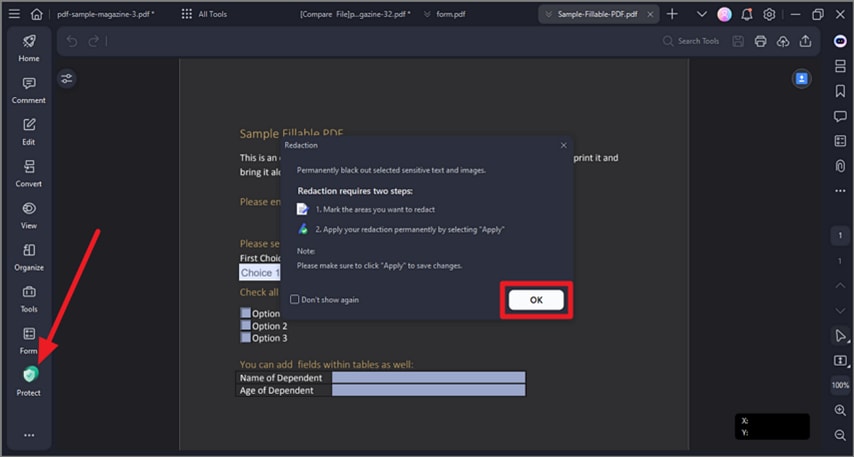
If you want the page to look clean rather than visibly blacked out, set the redaction fill color to white before applying it. Just remember the purpose of redaction: it permanently removes the underlying content from that area. That is different from placing a white shape over the signature, which may only hide it visually.
G2 Rating: 4.5/5 |100% Secure
Why Redaction Is Better Than Covering a Signature
A white box can be moved, deleted, or exposed depending on how the PDF is edited later. Redaction is designed to remove content permanently. For sensitive files, that distinction matters.
For example, if a scanned signature contains a handwritten name, employee ID, or other private information, covering it is not enough. A recipient may still be able to extract or reveal hidden layers in some PDFs. Redaction gives you a cleaner and safer result when the signature should no longer be visible.
The U.S. National Archives provides practical guidance on redacting information in electronic documents, and the same principle applies here: remove the information, do not merely mask it.
How to Remove a Signature in Adobe Acrobat or Online
PDFelement is convenient if you want a PDF editor that covers the full workflow, but it is not the only option. Adobe Acrobat and online tools can also remove signatures in certain cases. The best choice depends on file sensitivity, signature type, and whether you need to keep working on the PDF afterward.
Remove Signature in Adobe Acrobat
If you signed a PDF using Adobe Acrobat and the signature can still be cleared, open the PDF in Acrobat. Select the signature field, right-click it, and look for Clear Signature. For signatures added through Fill & Sign, select the signature appearance and use the delete option.
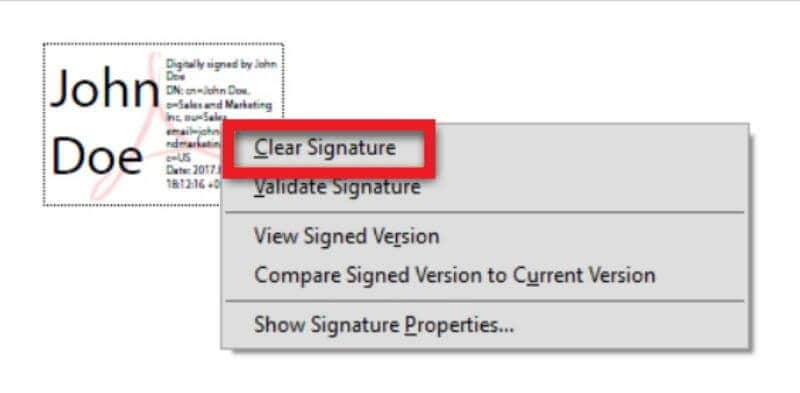
There is one common catch: once a signed PDF has been saved, certified, locked, or completed through a signing workflow, Acrobat may not let you remove the signature directly. In that situation, you may need to return to the unsigned source document, request a new version, or use redaction only for a visible signature appearance.
Adobe’s help pages on signing PDFs are useful if you need to understand which Acrobat signing tool created the signature.
Remove Signature from PDF Online
Online PDF editors can remove a visible signature if it behaves like an image or if you use an erase/redaction-style tool. The usual process is simple: upload the PDF, choose an erase or edit tool, cover or remove the signature area, then download the updated file.
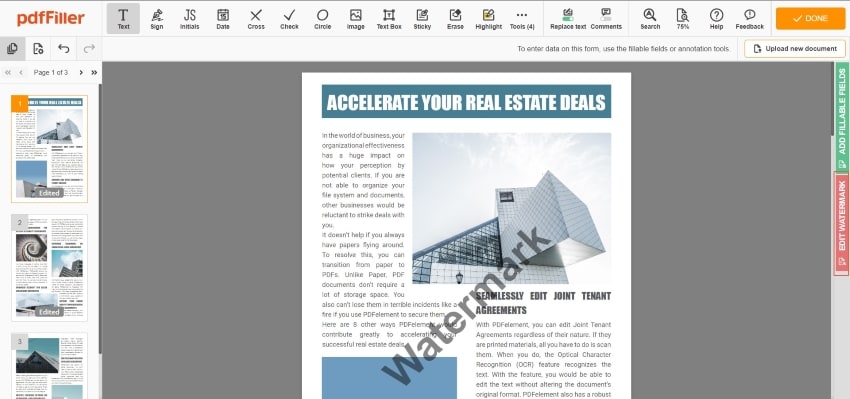
Online tools are convenient for non-sensitive files, quick drafts, or forms that do not contain private data. Be more cautious with contracts, bank documents, medical forms, tax files, employee records, and anything containing identification numbers. Uploading a file to an online service means the document leaves your device, even if only temporarily.
Desktop vs Online: Which Should You Use?
A desktop editor is usually better when the file is confidential, large, scanned, password-protected, or part of a business approval process. It also gives you more control over redaction, OCR, page replacement, and saving separate versions.
An online tool may be enough when the signature is just a visible mark on a low-risk file and you do not need advanced editing afterward. If the site asks you to create an account before download, check the export limits and privacy terms before uploading more documents.
How to Remove a Digital Signature from Your Computer
Some users searching for how to remove digital signature from computer are not trying to edit a PDF. They want to delete a saved signature, signing certificate, or signature profile from their device so it no longer appears in signing apps.
This is a different task. Removing a saved signature from your computer does not remove signatures already placed on PDF files. It only prevents future use of that saved signature or certificate.
Delete Saved Signature Appearances in PDF Apps
Many PDF tools store signature appearances such as a typed name, drawn signature, initials, or uploaded image. If you want to remove signature appearances from your computer, open the app where the signature was created and check the signing or Fill & Sign settings.
In a PDF editor, this may appear under areas such as:
- Fill & Sign saved signatures
- Signature appearance settings
- Digital ID or certificate settings
- Account profile or e-signature preferences
Delete only the signature appearance you no longer need. If several people use the same computer, make sure you are removing your own saved signature, not a shared profile used for a business workflow.
Remove a Digital Certificate Carefully
Certificate-based digital signatures rely on a digital ID or certificate. On Windows, certificates may be managed through Certificate Manager. On macOS, they may be stored in Keychain Access. Removing a certificate can affect more than PDF signing. It may also affect encrypted email, VPN access, secure websites, or company authentication.
For that reason, do not delete certificates casually. If the certificate came from your employer, IT department, or a certificate authority, ask before removing it. A safer first step is to remove the saved signing profile inside the PDF application rather than deleting the certificate from the operating system.
Microsoft provides general information about certificate management in Windows through its security documentation, though business-managed certificates may require administrator support.
Remove Signature Files Stored Locally
Some users save signature images as PNG or JPG files and reuse them in PDFs. If that is your concern, search your computer for filenames such as “signature,” “initials,” or your name. Delete the image file if you no longer need it, then empty the recycle bin or trash if appropriate.
For sensitive signatures, also check cloud sync folders such as OneDrive, Google Drive, Dropbox, or iCloud Drive. Deleting a local copy may not remove cloud copies or shared versions.
Troubleshooting: Why You Can’t Remove Signature from a File
If the remove option is missing or grayed out, the problem is usually permissions, file state, or signature type. Here are the most common causes.
The PDF Is Locked After Signing
Some PDFs are locked when signed to prevent further editing. This is common for contracts, approvals, and forms where file integrity matters. If the document is locked, you may not be able to edit content, delete pages, or remove signature fields.
The clean fix is to return to the source document, make the correction, and send a new copy for signing. If the document went through a formal e-signature platform, void the envelope or signing request rather than altering the completed PDF.
You Are Not the Signer
You generally cannot remove someone else’s certificate-based digital signature while preserving the document’s validity. Even if you own the PDF file, the signature belongs to the signer’s digital identity.
If a signer made a mistake, ask that person to clear their signature if the workflow allows it. If not, create a revised document and restart signing.
The Signature Is Flattened
If the signature was flattened into the page, your PDF editor may not recognize it as a signature. This often happens after printing to PDF, scanning, exporting from another system, or combining files.
Use redaction for a flattened signature. If the signature overlaps important text, you may need the original editable file instead. Redacting over the signature could also remove nearby words, lines, or form fields.
The File Shows “Signature Not Verified”
“Signature Not Verified” does not always mean the signature is fake or broken. It may mean the PDF app does not trust the certificate chain, cannot reach the validation server, or has not been configured to trust the signer.
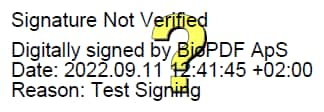
In PDFelement, you can check signature validation from the Protect area by using signature management or validation options, such as validating all signatures. In other PDF viewers, look for a signature panel that shows signer details, certificate information, timestamp status, and whether the file changed after signing.
Do not remove a signature just because it says “not verified.” If the document matters, first determine whether the issue is trust settings or actual document modification.
The Document Needs to Be Signed Again
Once you remove a digital signature and edit the PDF, treat it as a new document version. If the signature was used for approval, compliance, or authorization, the corrected file should be signed again. This avoids the awkward situation where the visible document has changed but the approval trail belongs to an older version.
People Also Ask
-
Can I remove another person’s digital signature?
Usually, no. A certificate-based digital signature is tied to the signer’s identity. You may be able to invalidate it by editing the file, but that is not the same as properly removing it. If another person’s signature needs to be removed, ask the signer or document owner to cancel the signed version and issue a corrected file. -
Does removing a digital signature invalidate the PDF?
Removing a digital signature changes the signing status of the PDF. If the document was signed to prove integrity, clearing the signature means the file no longer carries that signer’s validation. For important documents, save the original signed copy and send a revised version for signing again. -
How do I remove “Signature Not Verified” from a PDF?
First, try to validate the signature rather than remove it. Open the signature panel in your PDF editor and check the certificate details. The message may appear because your app does not trust the signer’s certificate or cannot validate the timestamp. If the signature is no longer needed, you can remove it only if you have permission and the file allows editing. -
Can I remove a digital signature from Word or Excel?
If the signature is a Microsoft Office digital signature, open the file in Word or Excel and check the signature line or document info panel. Microsoft Office typically provides signature management options for signatures you applied yourself. If the file is marked as final, restricted, or signed by another person, you may need the signer or document owner to create a new version. -
Can I remove a digital signature from any file type?
Not always. “Remove digital signature from file” means different things depending on the format. PDFs, Word documents, Excel files, installers, and code-signed applications all handle signatures differently. Removing a code signature from software, for example, is not the same as clearing a PDF signature and may make the software untrusted or unusable. -
Is it safe to remove signatures with an online PDF tool?
It can be safe for ordinary, non-confidential files, but avoid uploading sensitive documents unless you trust the service and understand its privacy policy. For contracts, legal documents, financial records, HR files, and IDs, use a desktop PDF editor instead. -
What is the difference between deleting and redacting a signature?
Deleting removes a selectable object, such as an image signature or annotation. Redaction permanently removes visible content from a selected page area. Use deletion when the signature is a separate object. Use redaction when the signature is part of a scan, flattened page, or image. -
Why can’t I click the signature in my PDF?
The signature may be flattened into the page, part of a scanned image, or protected by document restrictions. Try opening the signature panel to see whether the PDF contains a real digital signature. If the visible signature is not listed there and cannot be selected, redaction is usually the better option.