
Table of Contents
- Why a Forgotten PDF Password Is Not Always the Same Problem
- First Things To Try When You Forgot a PDF Password
- PDF Password Recovery Options: What Works and What To Avoid
- How To Remove a PDF Password You Already Know
- What To Do If the PDF Opens but Editing, Copying, or Printing Is Restricted
- How To Avoid Losing PDF Passwords Again
Forgetting a PDF password is frustrating because the file looks perfectly fine, but one small missing word or phrase blocks the whole workflow. The right fix depends on what kind of password is protecting the document. A PDF that will not open at all is a different problem from a PDF that opens but refuses to print, copy, or edit.
This guide explains what to try when you forgot a PDF password, how PDF password recovery actually works, and when a PDF editor such as PDFelement can help you remove password protection from files you’re authorized to access. It also points out a few common “tricks” that are often repeated online but rarely work in real life.


 G2 Rating: 4.5/5 |
 100% Secure
Why a Forgotten PDF Password Is Not Always the Same Problem
PDF password problems usually fall into two categories. Before trying tools or workarounds, identify which one applies to your file.
Open password: the PDF will not open
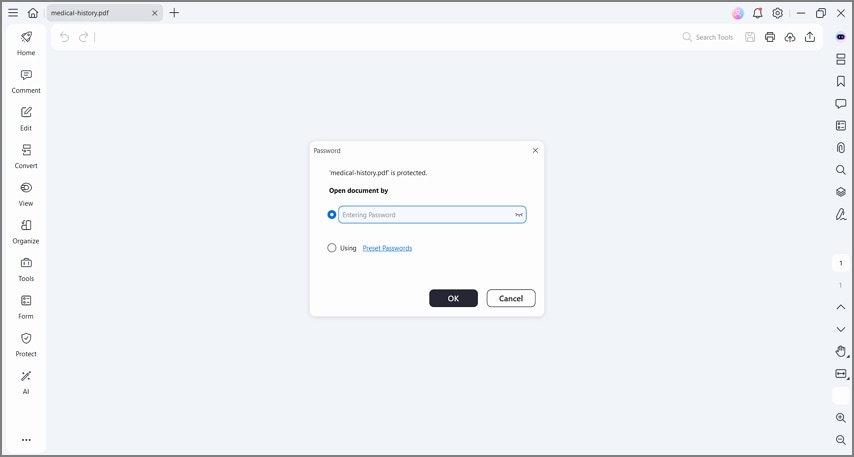
An open password, sometimes called a user password or document open password, blocks access to the file. When you double-click the PDF, the viewer asks for a password before showing any page content.
If this is the password you forgot, your options are limited. You need to recover or remember the password, get it from the owner, find another copy of the document, or use a legitimate PDF password recovery tool. A normal PDF editor cannot simply remove an open password if you cannot open the document first.
Permission password: the PDF opens but has restrictions
A permission password, also called an owner password, allows the file to open but restricts certain actions. You may be able to read the PDF, yet copying text, editing pages, adding comments, printing, or extracting pages may be blocked.
This is often easier to fix if you own the file or have permission to modify it. In many cases, once you enter the correct permission password, a PDF editor can remove those restrictions and save a normal working copy.
A quick way to choose the right path
If your PDF asks for a password before displaying any page, focus on password recovery. If it opens but certain actions are disabled, focus on permission removal or saving a new authorized copy.
Do not waste time using editing tools on a document that cannot be opened. Likewise, do not upload sensitive files to random recovery sites if the issue is only a permission restriction you can remove locally with the right password.
First Things To Try When You Forgot a PDF Password
Before using any recovery software, try the low-risk options. They are not exciting, but they often work faster than a brute-force tool, especially if the PDF was created by a colleague, bank, school, client, or government office.
Contact the sender or document owner
If someone sent you the PDF, ask them for the password or for an unprotected version. Many protected PDFs use predictable context-based passwords: a customer ID, date of birth, invoice number, project code, ZIP code, or the last digits of a phone number.
Keep the request specific. Instead of saying “the PDF doesn’t work,” mention exactly what happens: “The PDF asks for an open password before showing the first page” or “I can open the PDF, but printing and copying are restricted.” That helps the owner send the right password or export a new copy.
Search your saved passwords and notes
If this is your own PDF file and the PDF file password forgot scenario is part of a larger password-management mess, check the places where you normally store important credentials. That may include a password manager, secure notes app, email archive, cloud drive, project documentation, or an old notebook.
Search for the file name, client name, project name, document title, and terms such as “PDF password,” “protected PDF,” “invoice password,” or “statement password.” If you received the file by email, the password may have been sent in a separate message for security reasons.
Try likely password variations carefully
If you remember part of the password, test variations in a controlled way. Try old project codes, capitalized and lowercase versions, common separators, and date formats you normally use. For example, a password based on “March 2024 invoice” could have been saved as March2024, Mar2024, invoice0324, or ClientName-2024.
Avoid random guessing for too long. It wastes time and may trigger lockouts in some document portals, even though a local PDF file itself usually does not lock you out after repeated attempts. If you have a rough idea of the password pattern, a desktop recovery tool may be able to use that information more efficiently.
Check for another unlocked copy
People often protect one exported version of a document but forget that the source still exists somewhere else. Look for the original Word, Excel, PowerPoint, InDesign, or scanned image file. Also check shared drives, email attachments, cloud backups, and earlier PDF versions.
If the protected PDF came from a form, statement, invoice, or contract system, you may be able to download it again after signing in. Some systems let you regenerate the document or choose a different delivery format.
PDF Password Recovery Options: What Works and What To Avoid
PDF password recovery is possible in some cases, but it is not magic. The success rate depends on the password length, complexity, PDF encryption, and how much you already know about the password pattern.
Only attempt recovery on PDFs you own or are authorized to access. Bypassing security on someone else’s document may violate contracts, workplace policies, or law.
Online PDF password recovery services
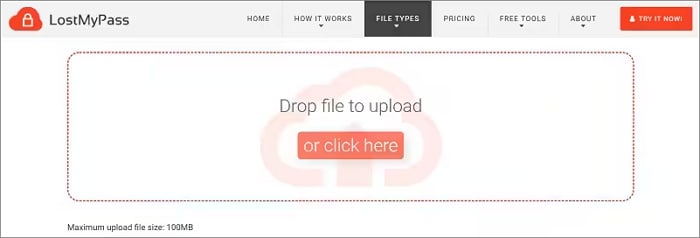
Online recovery services ask you to upload the locked PDF. The service then tries to identify or crack the password. Some services can recover weak passwords quickly, especially if the password is short, common, or based on dictionary words.
The tradeoff is privacy. You are sending the file to a third party, so this is a poor choice for contracts, tax documents, medical records, HR files, legal documents, financial statements, or confidential client work. If you decide to use an online service, read its privacy policy, retention policy, and pricing terms before uploading anything.
The old article mentioned LostMyPass as one example of an online recovery service. That kind of tool may be useful for non-sensitive files, but it should not be treated as a guaranteed fix. Strong passwords may require a paid recovery attempt and still fail.
Desktop PDF password recovery tools
Desktop recovery tools run on your own computer, so the PDF does not need to be uploaded to a website. That is usually safer for private documents, assuming the tool itself comes from a reputable source.
These tools typically use one or more methods:
Dictionary attacks: trying words and common password patterns.
Mask attacks: trying combinations based on clues, such as “starts with client name and ends with four digits.”
Brute-force attacks: trying every possible character combination within a defined length and character set.
Brute force sounds powerful, but it becomes slow very quickly. A short numeric password may be recoverable. A long password using uppercase letters, lowercase letters, numbers, and symbols may be unrealistic to crack with ordinary hardware.
Why strong passwords may not be recoverable
Modern encryption is designed to resist guessing. If the PDF uses strong encryption and the password is long and random, there may be no practical way to recover it. In that case, your best options are finding the password from the source, locating an unprotected copy, or recreating the document from another format.
This is why password managers matter. A well-made password is good security, but only if you can retrieve it later. The National Institute of Standards and Technology has long emphasized password length and usability because human memory is a weak place to store complex credentials.
Be careful with “instant unlock” claims
Some websites suggest that any PDF can be unlocked instantly. Treat that claim with suspicion. If a PDF has an open password and strong encryption, the content is not available until the password is supplied or recovered.
Also avoid downloading unknown “free PDF unlocker” programs from pop-up-heavy sites. Password recovery tools operate on sensitive files and often require deep system access. A malicious tool can do more harm than a forgotten password.
How To Remove a PDF Password You Already Know
If you know the password and simply want to stop typing it every time, use a PDF editor to remove the protection and save a clean copy. This is also useful for internal documents that were protected during review but are now ready for everyday use.
G2 Rating: 4.5/5 |100% Secure
Remove password protection with PDFelement
PDFelement is a practical option when you can open the PDF or have the permission password and want to manage the file afterward. The important distinction is this: PDFelement is not a magic PDF password recovery tool for a document open password you do not know. It is useful once you can access the file and want to remove known protection, edit the document, convert it, OCR scanned pages, organize pages, compress the file, add signatures, or prepare a cleaner copy for future use.
Here is the typical workflow:
- Download and install PDFelement from the official Wondershare website.
- Open PDFelement and choose Open PDF.
- Enter the document password if prompted.
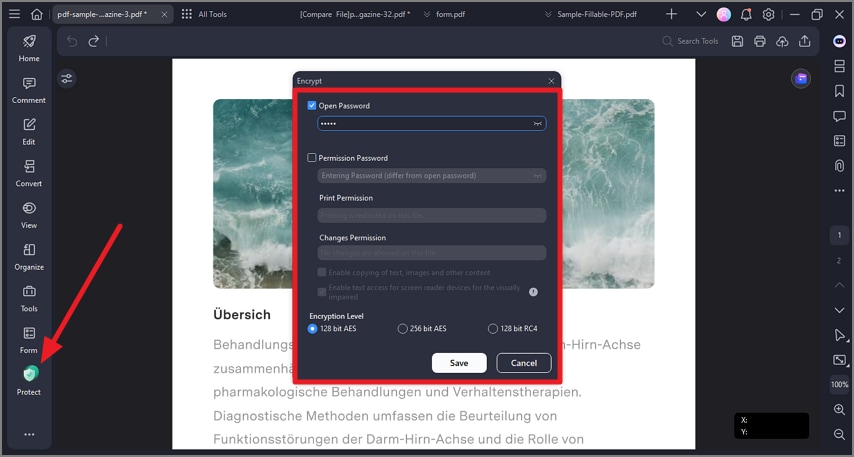
- Go to the file’s security or protection settings.
- Change the security setting to remove password protection or restrictions.
- Apply the change and save the PDF as a new copy.
After the password is removed, save the file with a clear name such as Contract-unprotected-internal-copy.pdf or Manual-accessible-copy.pdf. That reduces the chance of confusing it with the original protected version.
This workflow is especially helpful if the password issue is only one part of a larger document task. For example, after opening a previously protected HR form, you might use PDFelement to correct text, add comments, combine it with supporting documents, run OCR on scanned pages, compress the final file for email, or add a signature field before sending it back.
Save a new copy with Chrome or another PDF viewer
If you can open the PDF and printing is allowed, a browser or PDF viewer may let you print the file to a new PDF. In Google Chrome, for example, open the PDF, enter the password if required, press Ctrl + P on Windows or Command + P on Mac, choose Save as PDF, and save a new copy.
This method is not the same as recovering a forgotten open password. You still need to open the file first. It also may not preserve every interactive element, such as form fields, bookmarks, layers, attachments, or certain annotations. Use it for simple read-only documents, not for files where structure and form behavior matter.
Use Adobe Acrobat if you already have it
Adobe Acrobat can remove PDF security when you have the required password and permission to change the document. Adobe’s own help documentation explains PDF password and security settings in more detail on its official Acrobat help pages.
If your organization already uses Acrobat, it may be the approved route. If you need a more budget-conscious editor for regular PDF editing, conversion, OCR, and page management, PDFelement is worth considering as part of your document workflow.
What To Do If the PDF Opens but Editing, Copying, or Printing Is Restricted
A PDF that opens normally but blocks editing is less alarming than a file with a forgotten open password. You can at least read the content, take notes, and confirm whether the document is the one you need. The next step depends on whether the restrictions are intentional and whether you are allowed to change the file.
Use the correct permission password
If the PDF asks for a permission password when you try to edit or print, ask the document owner for that specific password. The open password and permission password can be different.
Once you have the permission password, use a PDF editor to remove the restriction or make the allowed change. In PDFelement, that may mean removing security, editing text, adding comments, inserting pages, or exporting the file to Word or another format for further work.
Convert or recreate a working copy when allowed
If the document owner says the restrictions are no longer needed, you may be able to create a working copy. For simple text-heavy PDFs, conversion to Word can make revisions easier. For scanned documents, OCR is usually necessary before text can be edited properly.
This is where PDFelement fits naturally after access is restored. A common workflow is to open the authorized PDF, run OCR if the pages are scanned, convert it to Word for heavy rewriting, then export it back to PDF. If the final file needs to be shared, you can add a new password, apply print/edit restrictions, or leave it unprotected depending on the audience.
Avoid unreliable shortcuts
Some old tips suggest renaming a protected PDF file to remove the password. That does not remove real PDF encryption. Changing report.pdf to report-new.pdf only changes the file name, not the security settings inside the document.
Opening a PDF in WordPad is also unreliable. WordPad is not a PDF editor, and it may show broken text or damage formatting. Microsoft Word can open some PDFs and convert them to editable Word documents, but results vary, especially with scanned pages, complex layouts, tables, and forms.
If the PDF matters, use a proper PDF tool and keep a backup of the original file before trying any conversion or print-to-PDF workaround.
How To Avoid Losing PDF Passwords Again
Once you recover access, take a few minutes to prevent the same problem from happening again. Password problems usually repeat when teams protect files casually without a storage convention.
Use a password manager
Store PDF passwords in a password manager instead of a spreadsheet, sticky note, or email draft. Add useful context in the entry: file name, project name, document owner, creation date, and whether the password is for opening the PDF or changing permissions.
If your workplace has a shared password manager, use the approved vault rather than keeping a private copy. That way, colleagues can still access important documents when someone is on leave or changes roles.
Keep an unprotected archive copy when appropriate
Not every PDF should remain password-protected forever. For example, a draft contract sent externally may need protection during review, while the final internal archive copy may be better stored in a secure document management system without a separate PDF password.
Be careful with sensitive documents. Removing a password does not mean the file is safe to store anywhere. Use folder permissions, encrypted drives, or approved cloud storage where appropriate.
Create a naming convention
A clear file name can prevent confusion between protected and unprotected copies. Instead of saving multiple files called final.pdf, use names such as:
Vendor-Agreement-2025-protected.pdfVendor-Agreement-2025-internal-copy.pdfTax-Statement-2024-password-required.pdf
This small habit helps future you, and it helps anyone else who needs to work with the document.
Document the owner and purpose
For business files, note who created the PDF and why it was protected. A short comment in your document management system can save hours later: “Protected for external review; permission password stored in team vault under Project Atlas.”
That detail is often more useful than the password itself because it tells the next person where to look and who to ask.
People Also Ask
-
Can I open a PDF if I forgot the PDF password?
If the PDF has an open password and you do not know it, you cannot open the file with a normal PDF reader or editor. Your best options are to contact the document owner, search for the password in your records, find another copy, or try a legitimate PDF password recovery tool. Strong passwords may not be recoverable in a practical amount of time. -
Is PDF password recovery guaranteed?
No. PDF password recovery depends on the password strength and encryption. A short or common password may be recovered quickly. A long, random password can be effectively impossible to crack with typical tools. -
Can PDFelement recover a forgotten PDF open password?
PDFelement is useful for removing known password protection and managing PDFs after you can access them. It should not be presented as a guaranteed recovery tool for an unknown document open password. If you cannot open the PDF at all, focus first on recovering the password or getting it from the owner. -
Can I remove a PDF password if I know it?
Yes. If you know the password and have permission to modify the file, you can open the PDF in a PDF editor such as PDFelement, go to the security settings, remove the password or restrictions, and save a new copy. -
What should I do if my PDF file password forgot issue involves a bank statement or tax file?
Avoid uploading sensitive financial, tax, medical, or legal documents to online recovery services. First check the sender’s instructions, your email archive, and your online account portal. Many banks and agencies use predictable password formats, such as birth dates, ZIP codes, account digits, or customer IDs, and they often explain the format in the email or download page. -
Does printing to PDF remove password protection?
Printing to PDF can create a new copy without some restrictions, but only if you can already open the file and printing is allowed. It does not recover an unknown open password. It may also flatten forms, remove bookmarks, or change the document structure. -
Is it legal to use a PDF password recovery tool?
It is appropriate to use recovery tools on PDFs you own or are authorized to access. Using them to bypass protection on someone else’s document may violate law, contracts, or company policy. If the file belongs to an employer or client, ask for approval before attempting recovery. -
Why does my PDF open on one device but ask for a password on another?
One device may have cached credentials, stored the password in a viewer, or opened a different copy of the file. Check the exact file name, location, and viewer app. If possible, export or save an authorized copy from the device where the PDF still opens. -
Can Google Drive or Google Docs unlock a PDF password?
Google Drive cannot open an encrypted PDF without the correct open password. If you can open the PDF and have permission to work with it, Google Docs may convert some PDFs into editable documents, but formatting can change. It is not a reliable password recovery method. -
What is the safest first step after recovering access?
Save a backup copy, then store the password in a password manager with a note explaining what the password controls. If the PDF no longer needs protection, remove the password with an authorized PDF editor and store the file in a secure location.