Yes, ChatGPT can summarize a PDF that you upload to a conversation. For a useful summary, however, do more than ask it to "summarize this PDF." Tell ChatGPT the audience, output length, sections to prioritize, and which facts, numbers, or conclusions must be preserved. Then verify important points against the source document.
This guide shows how to summarize a PDF with ChatGPT for free, how to handle long or scanned PDFs, which prompts produce more useful results, and what current file and visual-reading limits can affect the answer. It also explains when PDFelement V13 is a better fit for OCR, source-backed PDF work, multi-document analysis, and turning verified content into flashcards, quizzes, mind maps, or other study outputs.
Quick Answer:
Upload the PDF to ChatGPT, ask for a summary with a clear format and audience, then request evidence or source locations for the points that matter. For long PDFs, summarize by section before asking for a final synthesis. For scanned or image-heavy PDFs, check whether the text and visuals are actually readable before trusting the result.


 G2 Rating: 4.5/5 |
 100% Secure
In this article
Can ChatGPT Summarize a PDF?
Yes. ChatGPT supports PDF uploads and can extract the main ideas, create an executive summary, explain difficult sections, identify action items, and answer follow-up questions about the document. The best results usually come from text-based PDFs with a clear structure and from prompts that define exactly what the summary should include.
According to OpenAI's current File Uploads FAQ, an uploaded file can be up to 512 MB, while text and document files are capped at 2 million tokens per file. OpenAI currently lists a limit of three file uploads per day for Free users, although usage limits can change during peak periods.
A file being accepted does not guarantee that every part of the PDF is equally easy to summarize. Scanned pages, charts, diagrams, complex tables, and very long documents need more care. OpenAI currently states that embedded PDF visuals use visual retrieval in ChatGPT Enterprise, while other plans rely on text-based retrieval for document files. If a chart, scan, or diagram carries an important fact, verify that ChatGPT actually had access to that information before using the summary.
How to Summarize a PDF with ChatGPT for Free
For a normal one-off task, the fastest method is to upload the PDF directly to ChatGPT and give it a structured summarization prompt. You do not need Python, a custom GPT, or a separate extraction tool when the PDF already contains readable digital text.
Step 1. Check the PDF Before Uploading
Open the PDF and confirm that you can select or search its text. If you cannot, the file may be a scan or image-only PDF. In that case, OCR can make the document easier to process and easier for you to verify later.
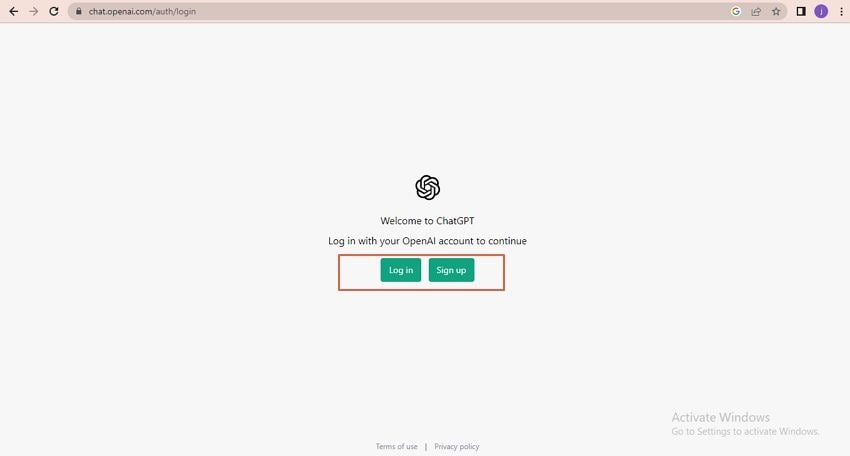
Step 2. Upload the PDF to ChatGPT
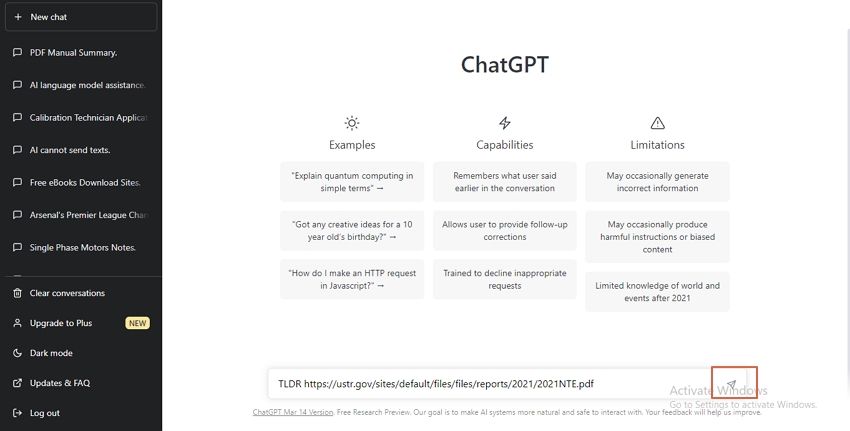
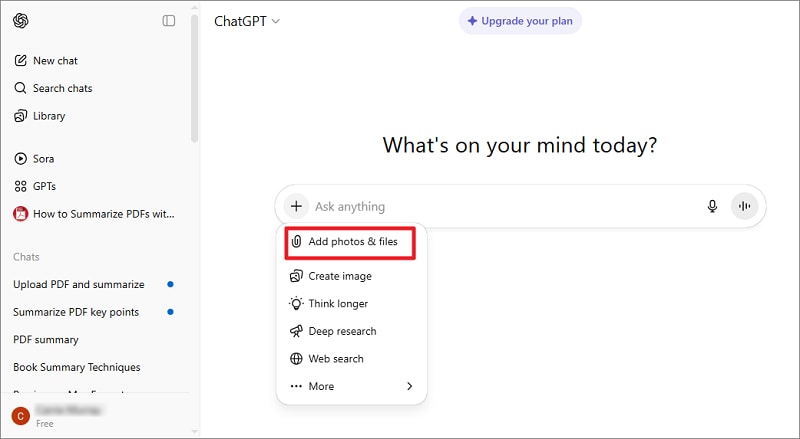
Go to ChatGPT, start a new conversation, and use the attachment button to add the PDF. If the document contains confidential, regulated, or unpublished information, review your account's data controls and your organization's policy before uploading it.
Step 3. Ask for the Summary You Actually Need
Instead of writing only "summarize this PDF," define the audience, scope, format, and verification standard. For example:
Prompt: Summarize this PDF for a non-technical manager. Start with a 150-word executive summary, then list the five most important findings, three risks, and any recommended next steps. Preserve important numbers and dates. Use only information supported by the PDF and tell me which points I should verify in the source.
Step 4. Verify the First Summary
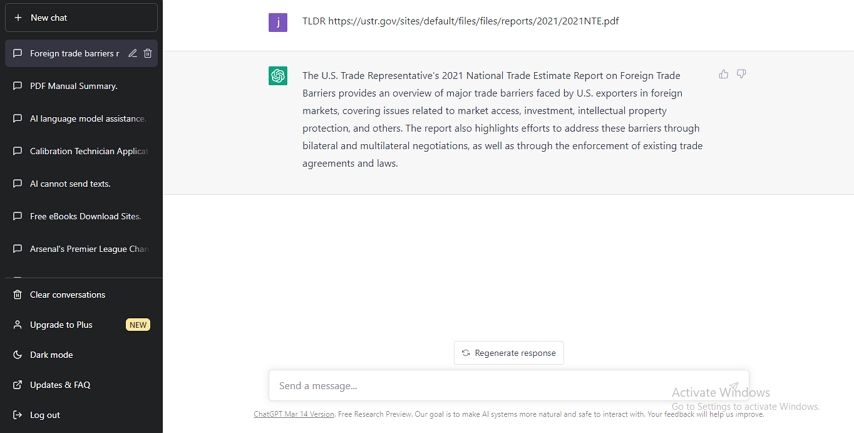
Treat the first answer as a reading aid, not as a replacement for the PDF. Ask follow-up questions such as "Which section supports point 3?", "What limitation did the author mention?", or "Which numbers should I double-check?" Then compare important claims with the original pages before you reuse them in a report, assignment, or decision.
How to Summarize Long, Scanned, or Research PDFs with ChatGPT
Different PDFs fail in different ways. A 15-page text report may work well with one prompt, while a 200-page report, scanned textbook, or research paper needs a more controlled workflow. The goal is to reduce omissions and make important claims easier to trace back to the source.
How to Summarize a Long PDF with ChatGPT
Start with the document structure before asking for detail. Ask ChatGPT to identify the title, purpose, major sections, and recurring themes. Then summarize the sections that matter using the same output format. Finish by asking for a synthesis that explains agreements, contradictions, risks, and unresolved questions across the full document.
For very long PDFs, avoid arbitrary page chunks unless necessary. Logical sections such as chapters, report divisions, or appendices usually preserve context better. If you are comparing several files, use a dedicated multiple-PDF summarization workflow rather than repeatedly copying isolated summaries between chats.
How to Summarize a Scanned PDF with ChatGPT
A scanned PDF may contain page images instead of machine-readable text. If the text cannot be selected, run OCR first and check several pages for recognition errors before summarizing. This is especially important for tables, names, numbers, formulas, and documents with unusual fonts or poor scan quality.
If the PDF depends heavily on embedded charts or diagrams, remember that OpenAI currently limits PDF visual retrieval to ChatGPT Enterprise. On other plans, document files are processed with text-based retrieval, so important visual information may be omitted from the summary unless it is available as digital text.
How to Summarize a Research Paper with ChatGPT
For research papers, ask for the research question, method, data or sample, main findings, limitations, and conclusion as separate fields. Do not let the abstract stand in for the whole paper, and do not treat an AI-generated source marker as an academic citation. For a deeper workflow, see our guide to summarizing research papers and our guide to summarizing PDFs with source citations.
7 Best ChatGPT Prompts to Summarize a PDF
A strong PDF summarization prompt defines four things: what to extract, who the summary is for, how the answer should be structured, and what must be verified. Use the templates below as starting points rather than fixed scripts.
1. Quick overview
"Summarize this PDF in 200 words. State its purpose, three to five main ideas, the most important conclusion, and any action the reader should take. Do not add information that is not supported by the PDF."
2. Bullet-point summary
"Summarize this PDF in 10 bullet points. Each bullet should capture one major finding, argument, recommendation, or risk. End with a one-sentence explanation of why the document matters."
3. Executive summary for work
"Create a 300-word executive summary for [audience]. Highlight decisions, key metrics, risks, recommendations, and next steps. Separate facts reported in the PDF from your interpretation."
4. Long PDF or chapter-by-chapter summary
"Map this PDF by chapter or section first. For each section, provide a short summary and one key takeaway. Then write an overall synthesis explaining how the sections connect and where they disagree."
5. Research paper summary
"Summarize this paper using these headings: research question, methodology, sample or data, main findings, limitations, and conclusion. Do not overstate the results beyond what the authors report."
6. Numbers, tables, and evidence
"List the important numbers, dates, and quantitative findings in this PDF. For each item, explain what it means and where it appears. If you cannot reliably read a table, chart, or image, say so instead of guessing."
7. Verification prompt
"Review your summary as a skeptical editor. Identify any statements that may be incomplete, too confident, or weakly supported. For each one, tell me what I should verify in the original PDF before reusing it."
ChatGPT PDF Limits, Accuracy, and Privacy
ChatGPT can make PDF reading much faster, but three limitations matter most: what it can access, what it may omit, and how sensitive files are handled. These issues become more important as the document gets longer, more visual, or more consequential.
Current ChatGPT PDF File Limits
- Maximum file size: OpenAI currently lists a 512 MB hard limit per uploaded file.
- Text/document limit: Text and document files are capped at 2 million tokens per file.
- Free upload rate: OpenAI currently lists up to three uploads per day for Free users.
- Visual content: OpenAI currently documents embedded PDF visual retrieval for ChatGPT Enterprise. Other plans use text-based retrieval for document files.
These rules can change. If you are working near a limit, check OpenAI's current documentation rather than relying on an older screenshot or article.
Can ChatGPT Miss Important Information in a PDF?
Yes. A short summary can omit exceptions, footnotes, methodology details, minority viewpoints, definitions, or clauses buried in a long document. A fluent answer can also make an inference sound more certain than the source supports. Ask ChatGPT to separate reported facts from interpretation and verify high-impact details such as money, dates, percentages, legal obligations, and research conclusions.
Is It Safe to Upload a PDF to ChatGPT?
Do not upload confidential or regulated documents simply because a file upload is available. OpenAI's current Data Controls let personal ChatGPT users turn off "Improve the model for everyone" so new conversations are not used to improve models. OpenAI also states that inputs and outputs from ChatGPT Business, ChatGPT Enterprise, ChatGPT Edu, and the API are not used to train models by default. Your organization may have additional rules, so check both the product policy and your internal policy before uploading sensitive material.
When Should You Use PDFelement V13 Instead of ChatGPT?
Use ChatGPT when you mainly need a fast conversational summary. Use a PDF-native workspace such as Wondershare PDFelement - PDF Editor Wondershare PDFelement Wondershare PDFelement when the summary is only one step in a larger document workflow: OCR a scan, compare several PDFs, verify source-backed answers, annotate the original, translate sections, or turn the material into reusable study outputs.
PDFelement V13 is designed to keep those tasks connected to the source document. Instead of moving a summary into separate apps, you can continue from reading to verification and document work in the same PDF-centered workflow.
What V13 Adds to a PDF Summarization Workflow
- Summarize single PDFs: generate an overview, key points, and follow-up answers while keeping the source document open.
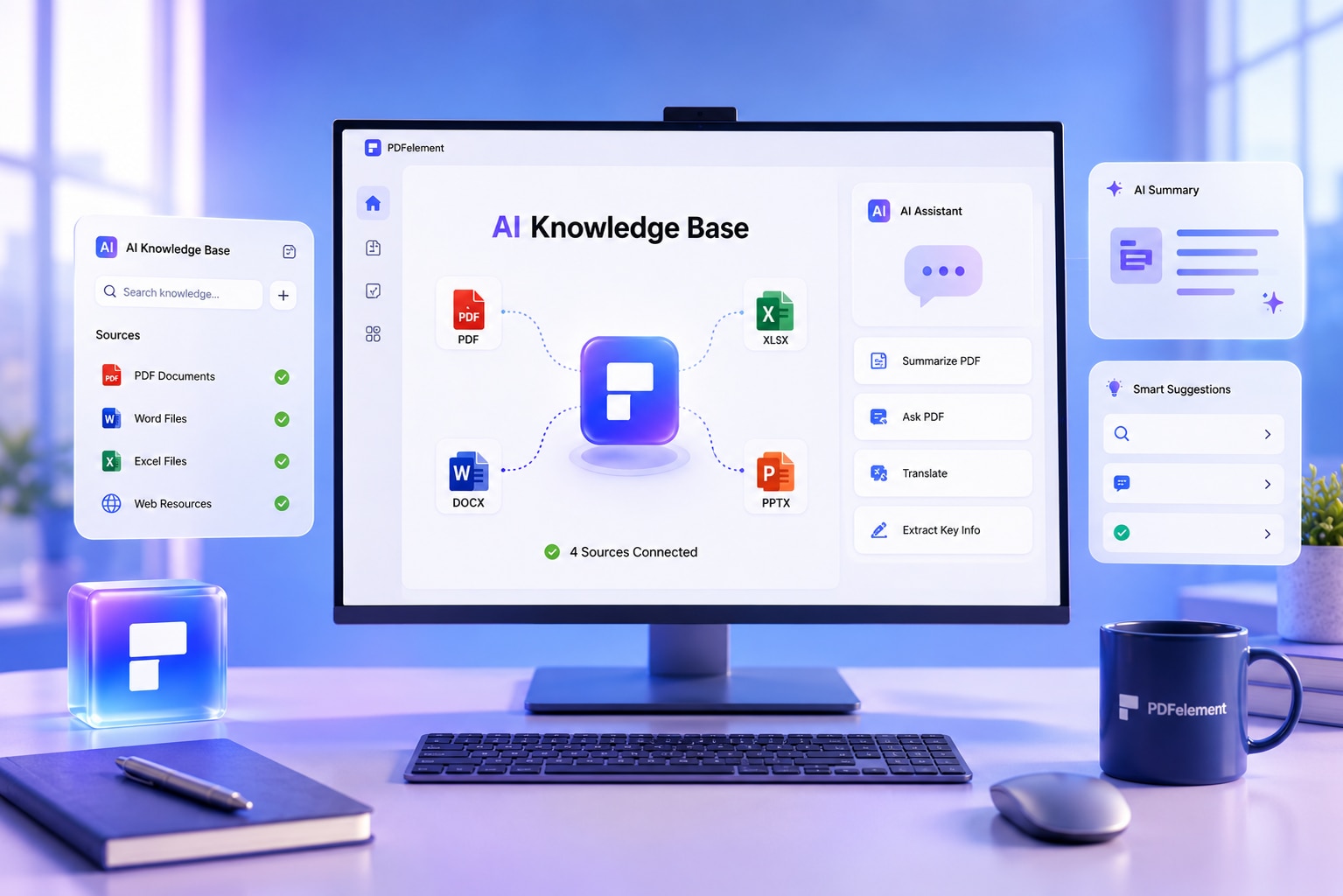
- Work across multiple sources: add related documents to a Knowledge Space and ask questions across files instead of summarizing them one by one.
- Verify source-backed answers: use source references as a path back to the supporting material before reusing important claims.
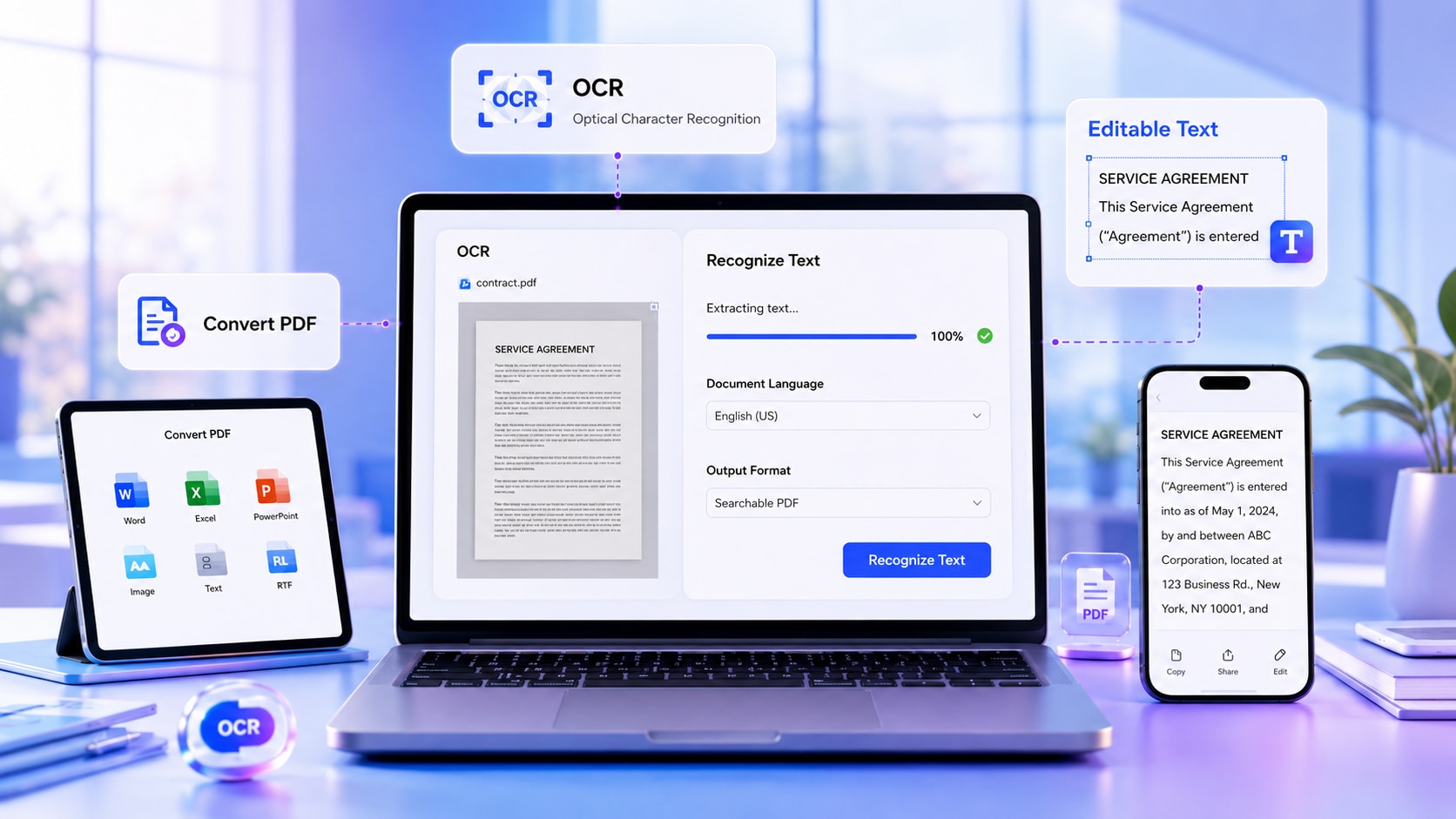
- OCR scanned PDFs first: turn image-based pages into searchable text before AI analysis.
- Reuse what you learned: create flashcards, quizzes, mind maps, reports, or podcast-style outputs from source material when those formats fit the task.
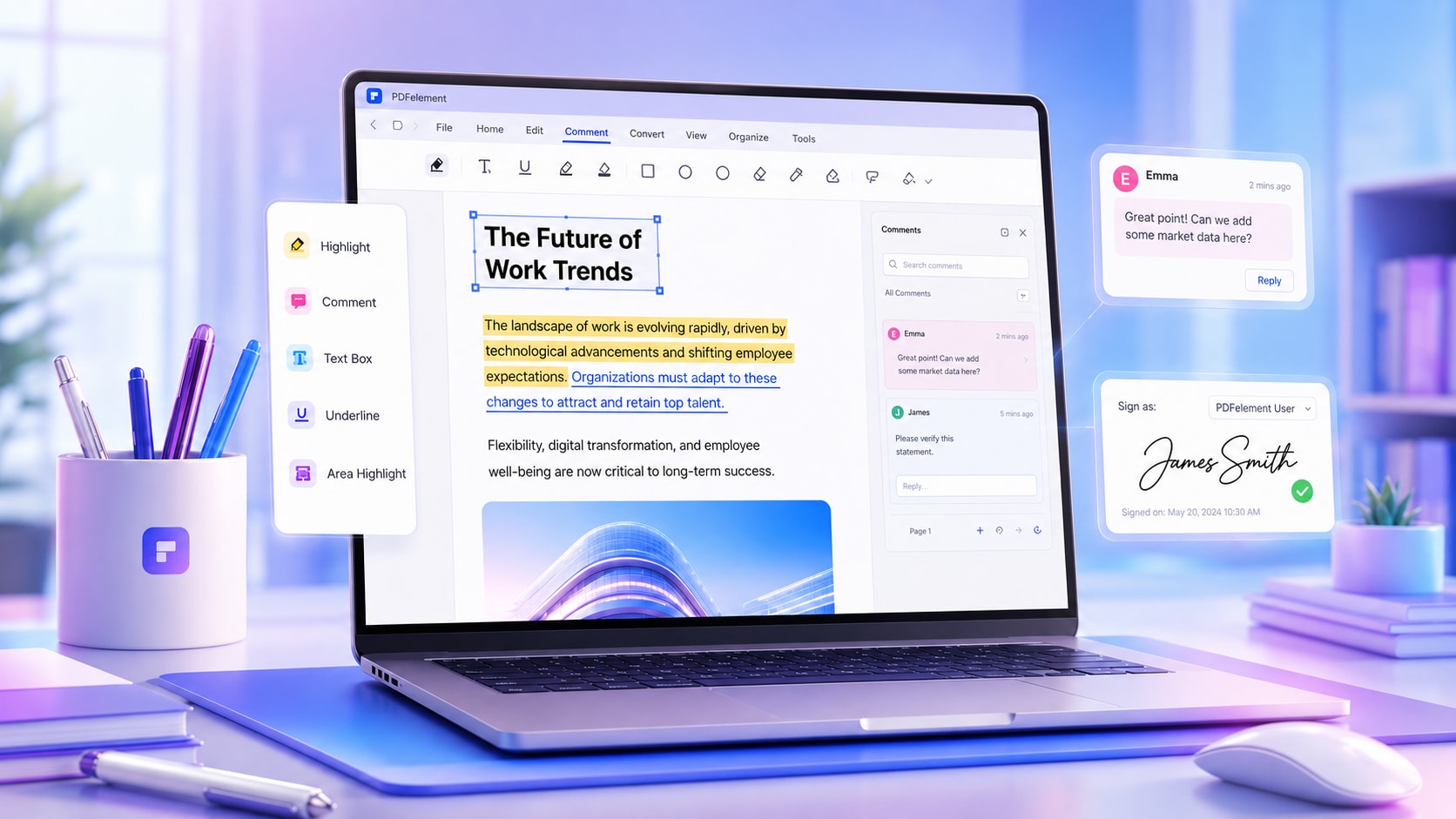
- Continue working on the PDF: edit, annotate, translate, convert, or organize the document without leaving the PDF workflow.
G2 Rating: 4.5/5 |100% Secure
How to Summarize and Verify a PDF in PDFelement V13
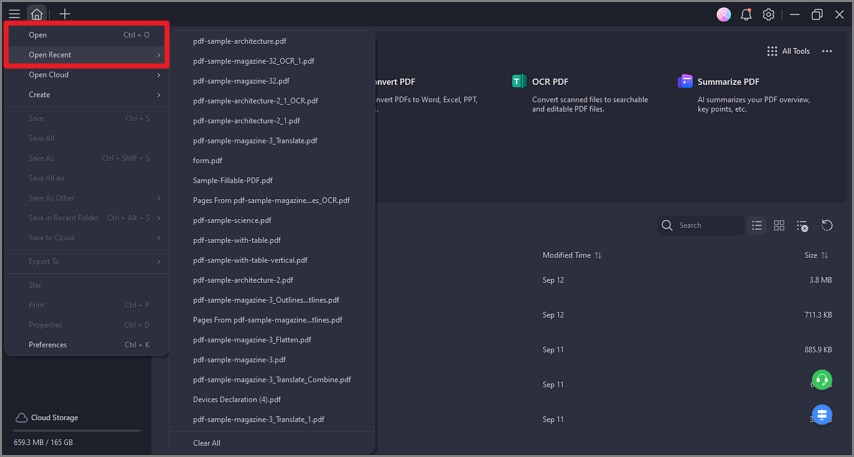
Step 1 Open the PDF in PDFelement. If the text is not selectable, run OCR first and check the recognized text before asking AI to summarize it.
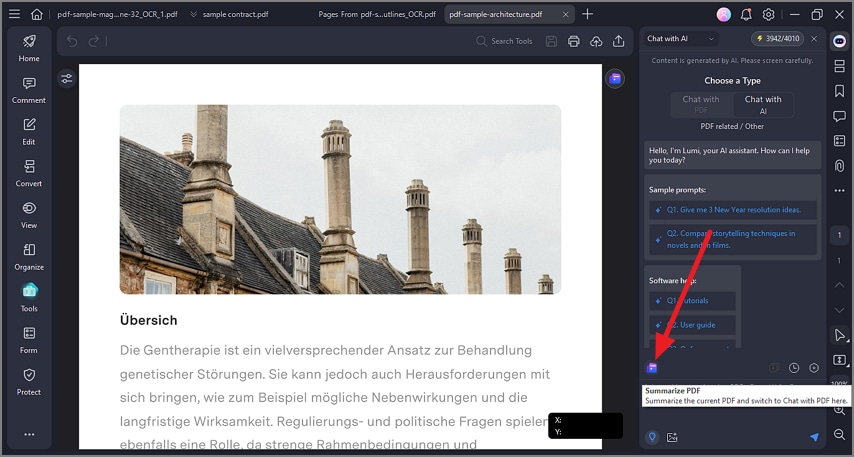
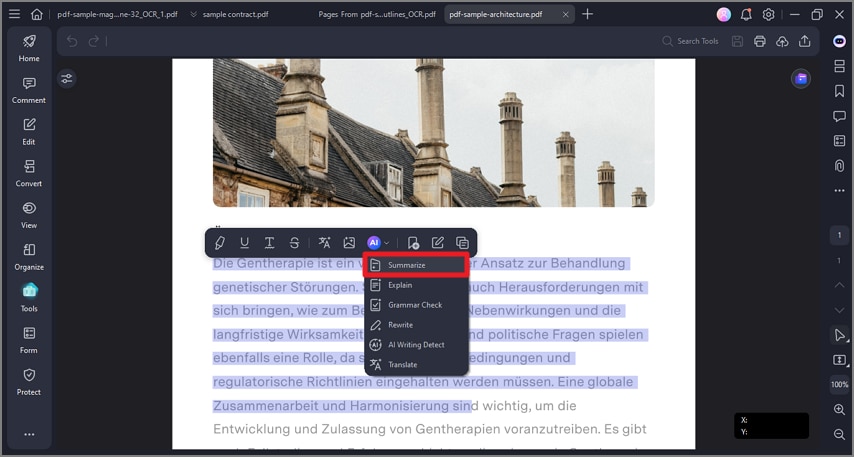
Step 2 Use the AI summarization workflow to create a short overview, key points, or a structured summary. Follow with questions about evidence, exceptions, risks, or specific sections instead of treating the first answer as final.
Step 3 For a multi-file project, add related PDFs to a Knowledge Space so you can compare documents, ask cross-document questions, and keep the source set together.
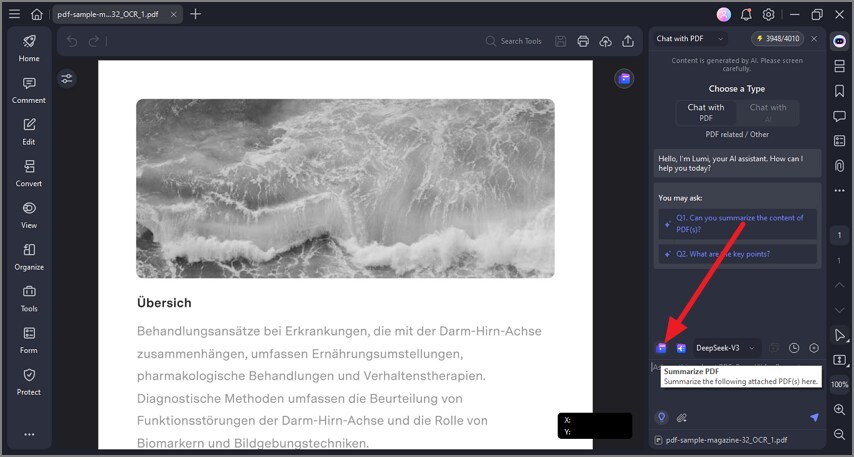
Step 4 Open the supporting source location for any claim that matters. Once verified, continue with notes, annotations, editing, translation, flashcards, quizzes, mind maps, or other outputs that fit your task.
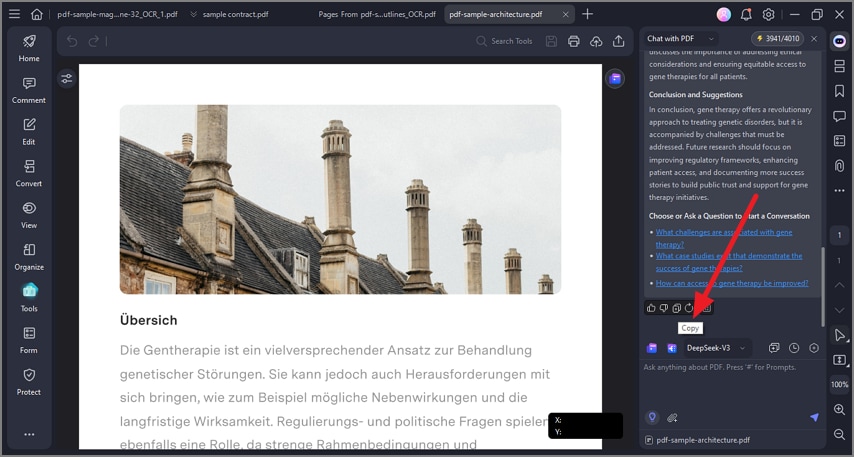
Tip: If you only need one paragraph or section, summarize selected text instead of the whole file. If you are working with several papers, use the shared Space workflow and keep each important answer traceable to its source.
G2 Rating: 4.5/5 |100% Secure
FAQs About Summarizing PDFs with ChatGPT
Can ChatGPT Summarize a PDF for Free?
Yes. Free users can upload supported files within the current usage limits. OpenAI currently lists up to three file uploads per day for Free users. If you only need to summarize one or two PDFs occasionally, direct upload is usually the simplest method.
How Many Pages of a PDF Can ChatGPT Summarize?
OpenAI documents file-size and token limits rather than a universal page limit: up to 512 MB per file and 2 million tokens for text and document files. In practice, page count alone is a poor measure because a 100-page scan, a 100-page academic paper, and a 100-page slide deck contain very different amounts and types of information.
Can ChatGPT Summarize a Scanned PDF?
It depends on whether the content is accessible as text or supported visual input. For reliable results, OCR a scanned or image-only PDF first, then check the recognized text before asking for a summary. This is especially important outside ChatGPT Enterprise because OpenAI currently documents PDF visual retrieval as an Enterprise feature.
Can ChatGPT Summarize Multiple PDFs at Once?
ChatGPT can work with multiple uploaded files subject to account and file limits, but cross-document accuracy depends on the size and complexity of the source set. For repeated multi-document analysis, use a consistent comparison schema and ask which file supports each answer. A dedicated multiple-PDF workflow can make source management easier.
Can ChatGPT Summarize a PDF with Citations?
You can ask ChatGPT to identify source locations or page references when available, but you should verify each reference against the PDF. A source marker is not automatically a correct APA, MLA, or Chicago citation. See our guide to summarizing PDFs with citations for the difference between source verification and academic citation formatting.
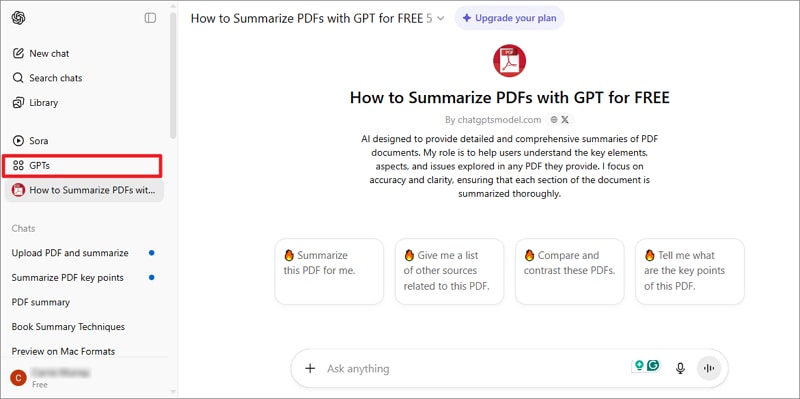
Do I Need a Custom GPT to Summarize PDFs?
No. Direct file upload is enough for most one-off PDF summaries. A custom GPT is more useful when you want the same instructions, output format, or document-analysis workflow repeated across many files. Review the GPT creator and any external actions before uploading sensitive content.
Can I Automate PDF Summaries with the OpenAI API?
Yes. OpenAI's API supports file-based workflows, but the API is separate from a ChatGPT subscription and has its own models, billing, retention rules, and technical documentation. For a production workflow, follow the current OpenAI API documentation rather than copying an older code example from a ChatGPT tutorial.
Conclusion:
The most reliable way to summarize a PDF with ChatGPT is simple: upload a readable file, define the summary you need, ask follow-up questions, and verify the details that matter. Long, scanned, research-heavy, or visual PDFs need extra checks because a polished summary can still omit context or miss information that was difficult to retrieve.
ChatGPT is a strong choice for fast conversational summarization. When the task expands into OCR, multi-document analysis, source-backed verification, annotation, translation, or study outputs, PDFelement V13 offers a more PDF-centered workflow that keeps the AI result connected to the document you still need to use.