We rechecked the major alternatives below against official sources, refreshed availability and copyright notes, and separated licensed/public-domain options from services with higher rights or domain risk. Availability can vary by country, library, title, and publisher.
In this article
- Quick answer: What are the best OceanofPDF alternatives in 2026?
- Is OceanofPDF down or still working in 2026?
- How we evaluated OceanofPDF alternatives
- 7 safer OceanofPDF alternatives
- What about PDF Drive, Z-Library, and LibGen?
- Which OceanofPDF alternative should you choose?
- How to manage downloaded ebooks and scanned PDFs
- FAQ about OceanofPDF alternatives
What are the best OceanofPDF alternatives in 2026?
The best OceanofPDF alternative depends on what you want to read. For public-domain classics, start with Project Gutenberg or Standard Ebooks. For current ebooks and audiobooks through a library, Libby is the strongest legal option. For textbooks and scholarly books, OpenStax and the Directory of Open Access Books (DOAB) are better fits. Google Books is useful for public-domain downloads and previews, while Open Library remains useful for discovery and borrowing but requires more careful copyright context.
If you are specifically searching for sites like OceanofPDF because you want large free-download catalogs, you will also see PDF Drive, Z-Library, and Library Genesis mentioned frequently. Their content-rights status can vary or be disputed, so we cover them separately rather than presenting them as equivalent to licensed or public-domain libraries.
| Alternative | Best for | Access model | Common formats | Rights / risk note |
|---|---|---|---|---|
| Project Gutenberg | Classic literature and public-domain books | Free download / online reading | EPUB, Kindle, HTML, text | Low risk for U.S. public-domain titles; check local copyright rules outside the U.S. |
| Libby | Current ebooks, audiobooks, and magazines | Licensed library borrowing | In-app / web reading; device support varies | Low risk; titles are supplied through participating libraries |
| Standard Ebooks | Well-formatted public-domain classics | Free download | EPUB and ereader-friendly editions | Low risk; project focuses on U.S. public-domain texts |
| OpenStax | College and high-school textbooks | Openly licensed textbooks | Web, PDF and course formats | Low risk; peer-reviewed and openly licensed |
| DOAB | Peer-reviewed academic books | Open-access discovery and access | Varies by publisher | Low risk; indexes open-access scholarly books |
| Google Books | Book discovery, previews, and public-domain PDFs | Full view, preview, snippet, or catalog record | PDF for eligible public-domain books; web preview | Low risk when using Full View or publisher-authorized access |
| Open Library | Discovery and time-limited digital borrowing | Online reading / borrowing | Browser, PDF or EPUB for eligible loans | Mixed legal context for some scanned copyrighted lending; check title availability and rights |



 G2 Rating: 4.5/5 |
 100% Secure
Is OceanofPDF down or still working in 2026?
OceanofPDF should not be treated as a permanently stable service. The original OceanofPDF.com was taken offline in 2018 after copyright complaints, and the New Zealand Society of Authors documented the shutdown at the time. More recently, the Authors Guild described OceanofPDF as an ebook piracy site that had returned online after previous takedowns and host changes.
This history explains why users may see changing domains, inconsistent access, broken links, or unofficial look-alike sites. It also means that "OceanofPDF working" and "OceanofPDF safe" are separate questions: a domain can be reachable without every file, mirror, advertisement, or download being trustworthy.
For current books, the most dependable path is a licensed library service such as Libby. For older works, public-domain libraries such as Project Gutenberg and Standard Ebooks avoid the recurring domain and rights uncertainty that follows shadow-library-style services.
Sources: New Zealand Society of Authors, 2018; The Authors Guild, 2024.
How we evaluated OceanofPDF alternatives
We prioritized access model, rights clarity, usefulness, and file practicality rather than library size alone. A site with millions of files is not automatically a better alternative if users cannot tell whether the material is authorized, whether the domain is stable, or whether the downloaded file is safe to open.
1. Is the content licensed, public domain, or openly licensed?
We favor services that explain why a book can be read or downloaded. Public-domain status, an open license, publisher permission, or a library lending license gives users a clearer basis for access than an unidentified upload source.
2. Can users find the right type of book?
Different platforms solve different needs. Project Gutenberg is strongest for older literature, OpenStax for textbooks, DOAB for academic monographs, and Libby for library-controlled access to current titles. Matching the source to the reading task is more useful than ranking every platform on a single list.
3. Are the formats usable on common devices?
EPUB is usually best for reflowable reading on phones and ereaders, while PDF is better for fixed layouts, textbooks, scans, and documents where page design matters. We also note when a service mainly supports browser reading or app-based lending.
4. Are the limits obvious?
Good alternatives make restrictions visible. That can include a required library card, time-limited loans, public-domain-only collections, preview-only access, or publisher-specific availability. Clear limits are more useful than vague claims that a platform has "everything for free."
7 safer OceanofPDF alternatives
These seven options are the best starting points when you want free or low-friction access with clearer rights and fewer domain-stability concerns. They are not identical to OceanofPDF, but each solves a common OceanofPDF use case more transparently.
1. Project Gutenberg - best for free public-domain classics
Project Gutenberg is the strongest OceanofPDF alternative for classic literature that is out of copyright in the United States. As of August 2026, its homepage lists more than 77,000 free ebooks and states that users do not need to pay or register. The collection focuses on older works digitized and proofread by volunteers.
- Best for: classics, older fiction, history, and public-domain reference works.
- Why it stands out: no registration, no subscription, and clear public-domain context for most U.S. users.
- Formats: EPUB, Kindle-friendly formats, HTML, and plain text depending on the title.
- Limit: copyright status can differ outside the United States, so users should check local rules.
Verified source: Project Gutenberg and its copyright guidance.
2. Libby - best for recent ebooks through a public library
Libby is the best option here for readers who want current ebooks and audiobooks without relying on unauthorized download catalogs. The app is built by OverDrive and lets users borrow digital titles from participating libraries with a valid library card. Availability depends on what your library licenses.
- Best for: contemporary fiction, popular nonfiction, audiobooks, and magazines.
- Why it stands out: licensed library access, offline reading, holds, and broad device support.
- Cost: the Libby app itself is free; a valid library card is required.
- Limit: catalog size and waiting times vary by library and region.
Verified source: Libby by OverDrive.
3. Standard Ebooks - best for polished public-domain editions
Standard Ebooks is a better choice than a generic download archive when you care about ebook formatting and reading quality. The project produces carefully formatted editions of texts believed to be in the U.S. public domain and releases its own editorial and production work into the public domain as well.
- Best for: readers who want clean typography, metadata, and consistent ebook files.
- Why it stands out: quality-focused editing and semantic markup rather than raw scans.
- Formats: modern ereader-friendly ebook files.
- Limit: the catalog is selective and centered on public-domain works, not current bestsellers.
Verified source: Standard Ebooks public-domain policy.
4. OpenStax - best for free textbooks
OpenStax is the best OceanofPDF alternative for students who need legitimate, free textbooks rather than general fiction. The Rice University nonprofit publishes peer-reviewed, openly licensed textbooks for high school and college courses, with more than 80 titles available free online as of 2026.
- Best for: business, science, math, social science, nursing, computer science, and other courses.
- Why it stands out: peer review, open licensing, and no paywall for core textbook access.
- Formats: online reading and downloadable formats depending on the book.
- Limit: it is a textbook publisher, not a broad fiction library.
Verified source: OpenStax.
5. Directory of Open Access Books (DOAB) - best for scholarly books
DOAB is the most useful option on this list for readers who need peer-reviewed academic books with open-access rights. In 2026, DOAB reports more than 100,000 peer-reviewed open-access books and provides free discovery across subjects, publishers, collections, and languages.
- Best for: research monographs, academic reading, graduate study, and literature reviews.
- Why it stands out: open-access focus and publisher-level quality signals.
- Formats: vary because downloads are provided by participating publishers and repositories.
- Limit: it is strongest for scholarly content, not mass-market fiction.
Verified source: Directory of Open Access Books.
6. Google Books - best for discovery, previews, and public-domain PDFs
Google Books is useful when you want to verify a title, search inside a book, preview it, or download a public-domain copy where available. Google distinguishes Full View, Limited Preview, Snippet View, and no-preview records. Public-domain books in Full View can be downloaded as PDFs, while copyrighted books are generally limited unless the rightsholder has granted broader access.
- Best for: finding editions, checking quotes, previewing books, and locating public-domain PDFs.
- Why it stands out: powerful full-text discovery and links to places to buy or borrow books.
- Limit: it is not a universal free-download library for copyrighted titles.
Verified source: Google Books.
7. Open Library - best for discovery and time-limited borrowing, with legal context
Open Library remains useful for finding and borrowing digitized books, but it should not be described simply as a "fully legal" substitute for every title. Its current help pages state that eligible books can be borrowed for one hour or 14 days and that users can borrow up to 10 books at a time. However, the U.S. Court of Appeals for the Second Circuit ruled in 2024 that the Internet Archive's challenged controlled digital lending of 127 copyrighted works was not fair use.
- Best for: book discovery, browser reading, and eligible time-limited loans.
- Why it stands out: millions of catalog records plus lending and full-text search features.
- Limit: lending rights and availability vary; not every scanned copyrighted book should be treated as an unrestricted legal download.
Verified sources: Open Library borrowing FAQ and Hachette Book Group v. Internet Archive, Second Circuit, 2024.
What about PDF Drive, Z-Library, and Library Genesis?
PDF Drive, Z-Library, and Library Genesis are commonly searched as OceanofPDF alternatives, but they carry more uncertainty than the licensed, public-domain, or openly licensed options above. The main issue is not only whether a domain loads; it is whether a particular file is authorized, whether the active domain is genuine, and whether local copyright rules permit the access.
| Service | Why users search for it | Main concern | Recommended approach |
|---|---|---|---|
| PDF Drive | Large PDF search/index experience | Rights status can vary by indexed file and source | Verify the original publisher/source before downloading; use our PDF Drive alternatives guide for other options |
| Z-Library | Large general and academic catalog | Copyright enforcement, changing domains, and unauthorized copies | Prefer library/open-access sources; see our Z-Library alternatives guide |
| Library Genesis (LibGen) | Academic books, textbooks, and technical material | Copyright disputes and unstable mirror domains | Use DOAB, OpenStax, institutional libraries, or our LibGen alternatives guide |
We do not recommend choosing an unfamiliar mirror simply because it uses the same brand name as a well-known archive. If a site asks you to install executable software, disable browser security, or enter unnecessary payment credentials, leave the site and use a trusted source instead.
Important distinction: a search listing, online preview, temporary library loan, and downloadable public-domain ebook are different types of access. Check the rights and available formats on the specific book page before assuming that a free title can be downloaded or kept. For recent commercial titles, library lending through Libby is usually a better fit than a public-domain archive.
Which OceanofPDF alternative should you choose?
Choose the alternative by reading goal, not by which site claims the largest library. This reduces wasted searches and makes the legal and format tradeoffs easier to understand.
| If you need... | Start with... | Why |
|---|---|---|
| Classic novels and older literature | Project Gutenberg or Standard Ebooks | Public-domain focus with clear access terms |
| Recent popular ebooks or audiobooks | Libby | Licensed access through participating libraries |
| Free college textbooks | OpenStax | Peer-reviewed, openly licensed course books |
| Academic monographs and research books | DOAB | Peer-reviewed open-access scholarly titles |
| Preview a book or find a public-domain scan | Google Books | Full View for eligible books and previews for others |
| Borrow a digitized book for a limited period | Open Library | Browser reading and time-limited loans for eligible titles, with rights context noted above |
What should you check before downloading any free ebook?
Before downloading, confirm the source, the file type, and why the book is available for free. Public-domain labels, open licenses, publisher permission, and library lending terms are stronger signals than a generic "free download" button.
- Prefer the publisher, author, library, university, or recognized open-access repository when possible.
- Avoid executable files such as .exe or .msi when you are trying to download a book.
- Check whether the title is public domain or openly licensed in your country.
- Keep your browser and security software updated before opening files from unfamiliar sources.
- If a PDF looks like a poor scan, run OCR locally before trying to copy, search, or annotate the text.
How to manage downloaded ebooks and scanned PDFs
Once you have obtained an ebook from a source you are allowed to use, the next challenge is making the file easy to read, search, annotate, and organize. This is especially relevant for scanned PDFs, image-based textbooks, and research documents with fixed layouts.
Make scanned PDFs searchable with OCR
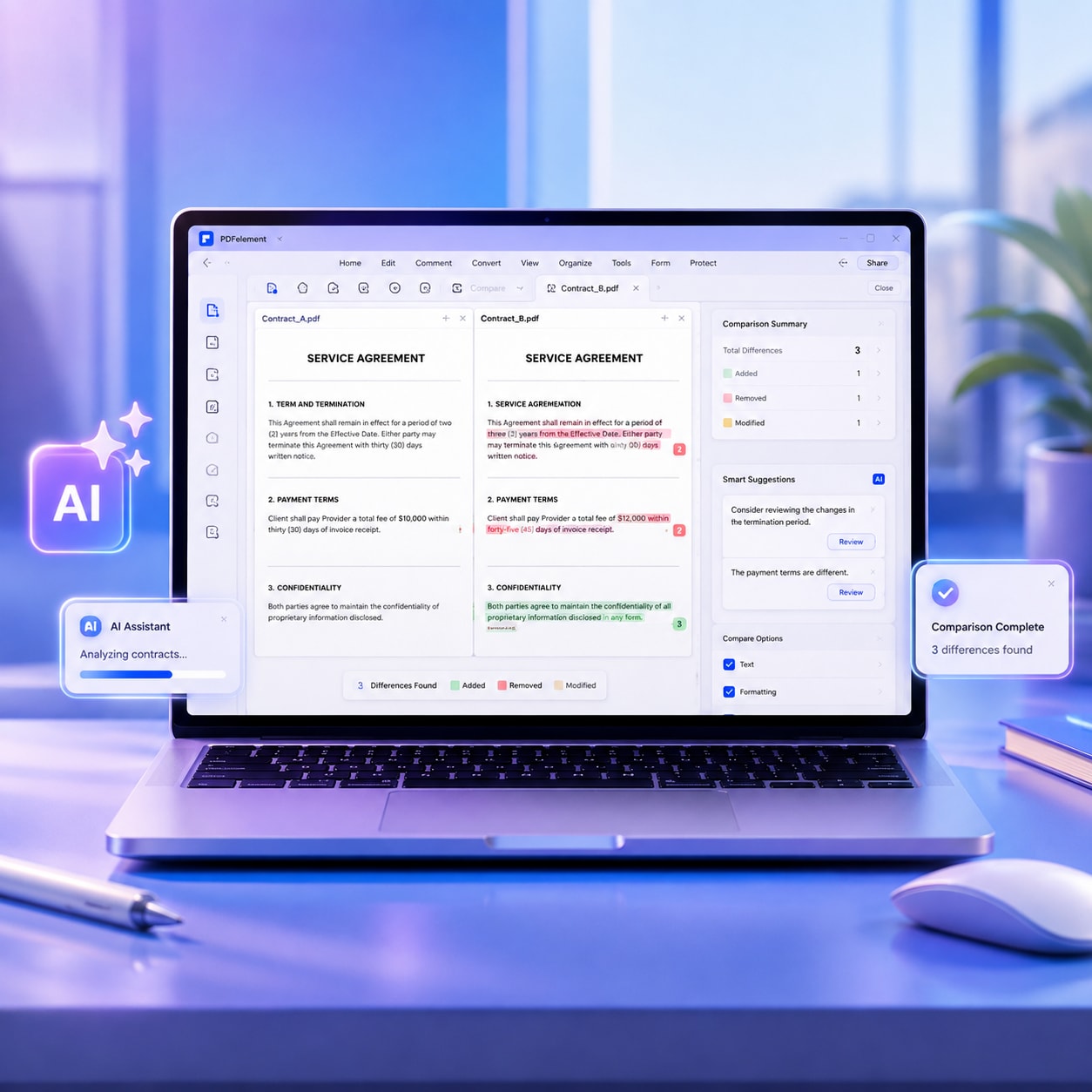
OCR converts image-based text into a searchable text layer. In PDFelement, OCR can be used on scanned PDFs so you can search, copy, edit, or convert recognized text instead of treating each page as a flat image.
PDFelement's official feature list includes OCR for scanned PDFs, batch OCR, annotation, page organization, conversion, and other document tools.
Annotate and organize reading material
For study or research, annotation and page organization are often more useful than simply opening a PDF. PDFelement supports highlights, notes, shapes, stamps, drawing tools, page extraction, splitting, combining, and page reordering.
Learn how to annotate a PDF with PDFelement.
Use AI summaries and translation with appropriate review
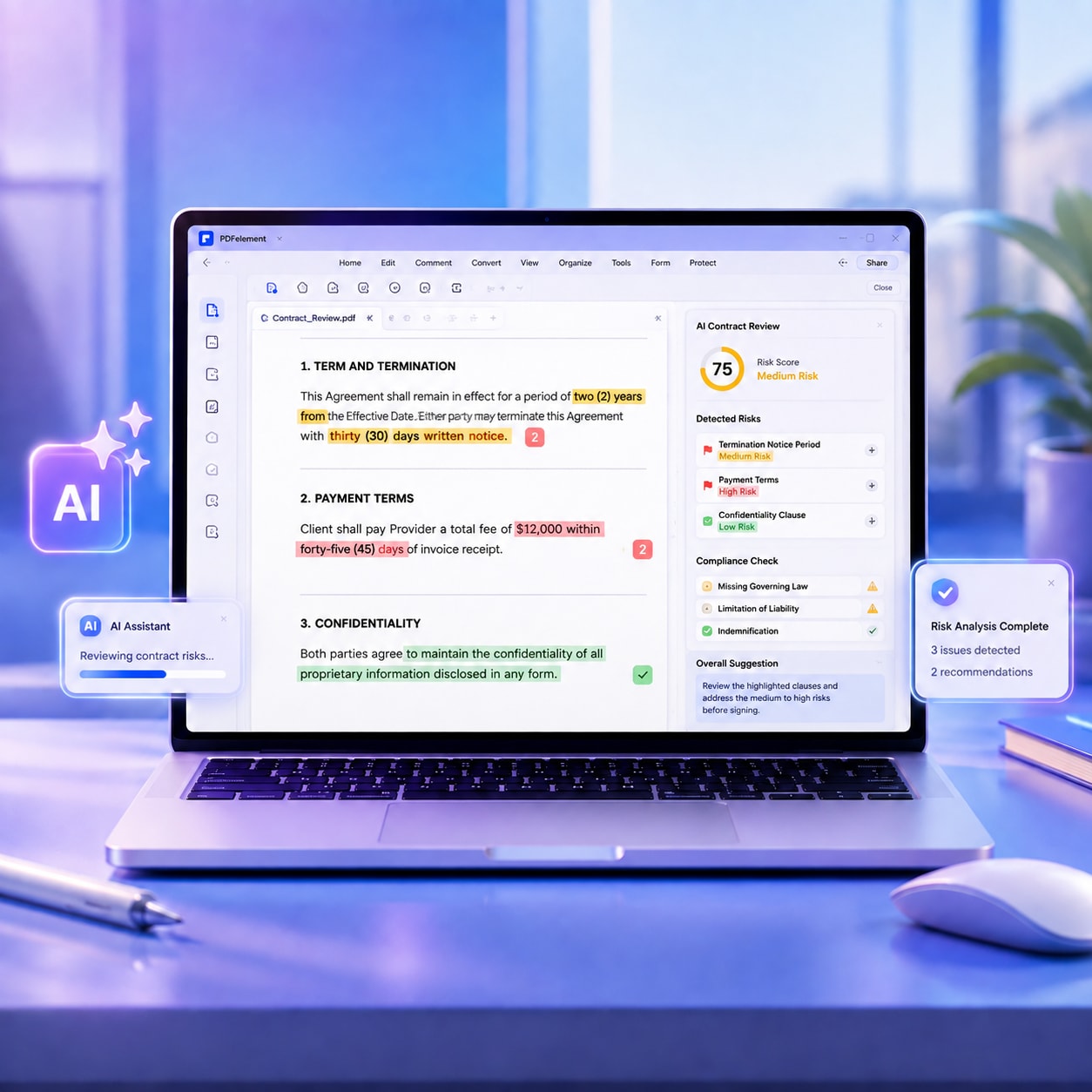
AI can speed up first-pass reading, but generated summaries and translations still need human review. PDFelement's current AI features include PDF summarization, chat, translation, rewriting, proofreading, and explanation. Wondershare's AI terms also state that AI-generated content is not guaranteed to be 100% accurate and that certain AI features upload PDFs to the user's PDFelement Cloud for processing.
For sensitive, copyrighted, confidential, or regulated material, review the document's usage rights and your organization's privacy requirements before uploading it to any cloud or AI service.
People Also Ask
-
What is the best OceanofPDF alternative in 2026?
For most readers, there is no single best replacement. Project Gutenberg is best for public-domain classics, Libby is best for licensed current ebooks through a library, OpenStax is best for free textbooks, and DOAB is best for peer-reviewed open-access academic books. Choose the platform that matches the type of book you need. -
Is OceanofPDF legal?
OceanofPDF has a documented history of copyright complaints and takedowns. The original site was taken offline in 2018, and the Authors Guild described the service in 2024 as a piracy site that had returned after previous enforcement efforts. Copyright rules differ by country, so use licensed, public-domain, or openly licensed sources when you want clearer legal footing. -
Is OceanofPDF safe to use?
Safety cannot be judged from the brand name alone because domains and look-alike sites can change. Avoid unfamiliar mirrors that ask you to install software, disable security features, or enter unnecessary payment details. For lower risk, use established library, university, publisher, public-domain, or open-access services. -
Where can I download free ebooks legally?
Project Gutenberg and Standard Ebooks provide public-domain books, OpenStax publishes openly licensed textbooks, DOAB indexes open-access academic books, and Google Books allows full downloads for eligible public-domain titles. Libby provides licensed borrowing through participating libraries rather than unrestricted downloads. -
What is the best OceanofPDF alternative for textbooks and research?
Start with OpenStax for openly licensed textbooks and DOAB for peer-reviewed open-access monographs. University library databases and institutional repositories are also strong choices. Open Library can help with discovery and eligible loans, but its scanned-book lending has specific U.S. legal history that users should understand. -
Can PDFelement convert or clean up ebook PDFs?
PDFelement can OCR scanned PDFs, convert PDFs to other supported formats, annotate pages, and organize documents by splitting, combining, extracting, or reordering pages. It also offers AI features such as summarization and translation, but AI output should be reviewed for accuracy and privacy requirements before use.
Conclusion
If your priority is free access with the clearest rights, start with Project Gutenberg, Libby, Standard Ebooks, OpenStax, DOAB, or eligible Full View books in Google Books. Use Open Library with an understanding of its lending model and legal history, and treat large unofficial download indexes as higher-risk sources rather than default recommendations.
For related comparisons, see our guides to Anna's Archive alternatives, Z-Library alternatives, LibGen alternatives, and PDF Drive alternatives. Keeping each guide focused on one primary entity helps readers reach the right page without duplicating the same alternative list across the site.