
A university student just finished a collaborative research paper and needs everyone's approval quickly. Waiting for physical signatures would cause unnecessary delays, but Adobe Acrobat Reader's digital signature feature offers a seamless solution. With secure electronic signing, the student can gather approvals instantly while ensuring document integrity.
From academic papers to official forms, digital signatures simplify verification and collaboration. This article will guide you through the process of digitally signing PDFs, exploring practical tools, step-by-step methods, and tips to make electronic signing fast, secure, and hassle-free.
In this article
- What People Mean by "Digital Signature with Adobe Reader"
- Can You Digitally Sign a PDF with Adobe Reader?
- Digital Signature vs. Fill & Sign in Adobe Reader
- How to Sign a PDF in Adobe Reader Using Fill & Sign
- Why Adobe Reader May Not Be Enough for Digital Signatures
- How to Digitally Sign a PDF When Adobe Reader Doesn't Support it
- How to Digitally Sign a PDF using PDFelement
- Adobe Reader vs. PDF Editors for Digital Signatures
- Common Issues When Signing PDFs in Adobe Reader
Part 1. What People Mean by "Digital Signature with Adobe Reader"
When people search for a digital signature with Adobe Reader, they often expect a simple way to sign PDFs electronically. Many assume that Adobe Reader can create legally binding signatures and that the Fill & Sign tool automatically provides a true digital signature.
In reality, "Fill & Sign" adds an electronic signature, but not all users realize the difference. This confusion makes understanding Adobe Reader signature options critical for accurate, secure document signing.
Part 2. Can You Digitally Sign a PDF with Adobe Reader?
Yes, you can sign documents in Adobe Reader using its Fill & Sign tool. This allows you to place your signature on a PDF quickly, making it ideal for simple approvals and forms.
What Adobe Acrobat Reader Can Do
- PDF Viewing: Easily open, read, and navigate PDF documents with commenting and annotation options.
- Basic Electronic Signatures (Fill & Sign): Add simple signatures, initials, or text directly onto PDFs for quick approvals.
- Form Filling: Complete interactive PDF forms without printing, saving time and reducing paper use.
- Annotations & Comments: Highlight text, add notes, and markup documents for collaboration or review purposes.

What Adobe Reader Cannot Do?
- Digital Certificate Management: Cannot create, import, or manage digital certificates required for secure, verifiable signatures.
- Advanced Digital Signatures: Lacks support for workflows like timestamping, signature verification, or multi-party approvals.
- High-Security Signing: Cannot enforce compliance with legal or industry-specific digital signature standards.


 G2 Rating: 4.5/5 |
 100% Secure
Part 3. Digital Signature vs. Fill & Sign in Adobe Reader
Understanding the difference between Fill & Sign and Digital Signature in Adobe Reader is essential when choosing the right signing method. While both allow you to sign PDFs, they serve very different purposes depending on security, compliance, and verification needs.
Fill & Sign
Signature Format
Fill & Sign in Adobe Reader supports typed text, hand-drawn signatures, or uploaded signature images. This flexibility makes the Adobe Reader electronic signature fast and convenient for everyday paperwork.
Identity Verification
No certificate or identity validation is applied when using fill & sign in Adobe Reader. Because verification is absent, it should not be used for legally binding or high-risk documents.
Use Case Suitability
Fill & Sign works best for internal documents, consent forms, and quick approvals. Speed and ease are prioritized over security and compliance.
Digital Signature
Certificate-Based Authentication
A digital signature in Adobe PDF relies on a trusted digital certificate to authenticate the signer. This ensures the signer's identity can be validated by recipients.
Document Integrity Protection
Once applied, the digital signature locks the PDF and detects any modifications made afterward. This feature guarantees that the document remains tamper-proof.
Legal and Compliance Value
Digital signatures are widely accepted for contracts, financial records, and regulated documents. They provide higher legal credibility compared to an Adobe Reader electronic signature.
G2 Rating: 4.5/5 |100% Secure
Part 4. How to Sign a PDF in Adobe Reader Using Fill & Sign
Having learned about the digital signature functionality in detail, let us learn how to sign a PDF in Adobe Reader in the following section:
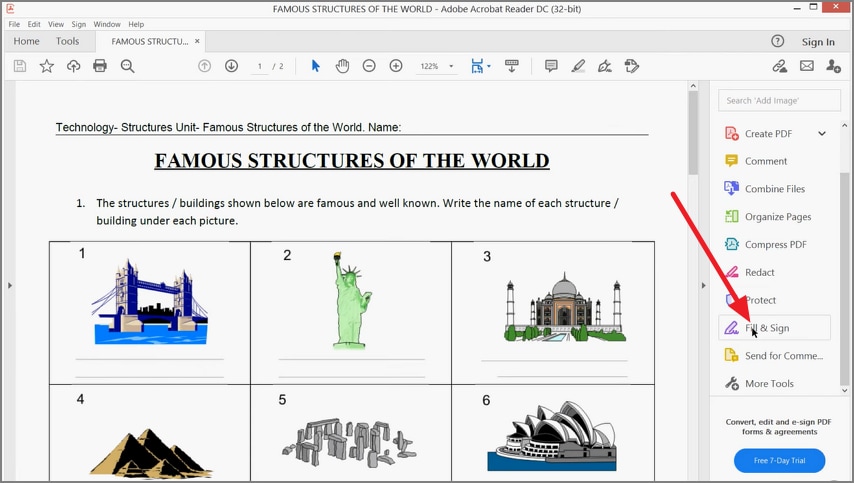
Step 1Begin by launching the tool on your device and importing the document
Begin by launching the tool on your device and importing the document that you want to sign with the "Fill & Sign" feature. Next, head to the toolbar on the right and choose "Fill & Sign" from the options.
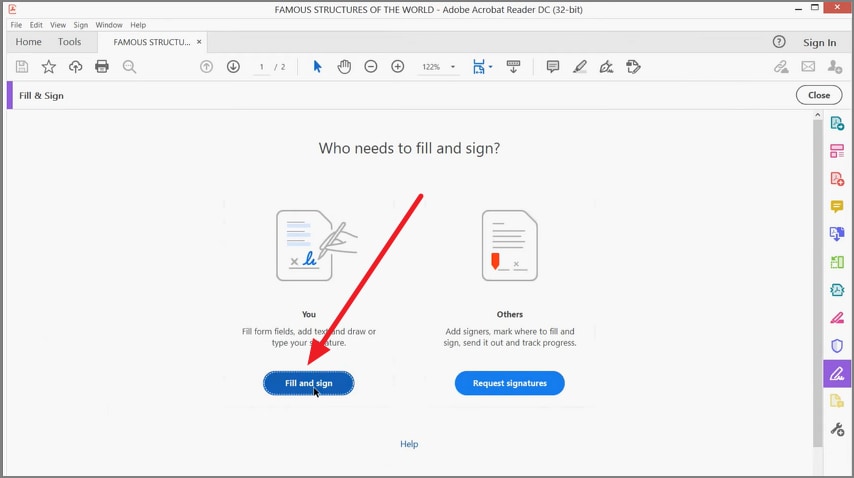
Step 2Press the "Fill & Sign" button
In the following interface, press the "Fill & Sign" button to continue signing the document.
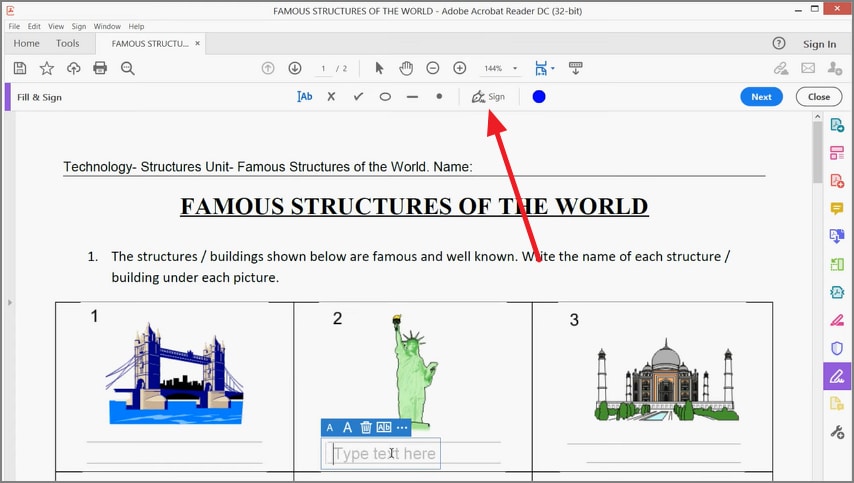
Step 3Enable the "Sign" option
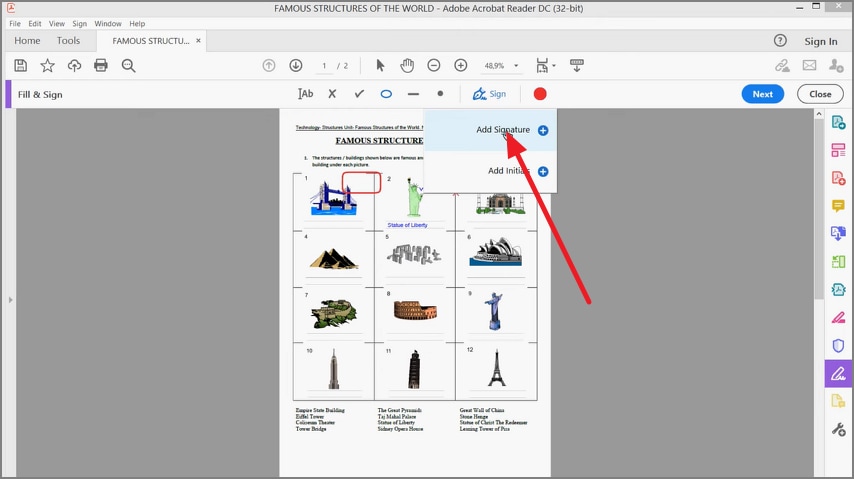
Next, enable the "Sign" option from the toolbar at the top and press the "Add Signature" option.
G2 Rating: 4.5/5 |100% Secure
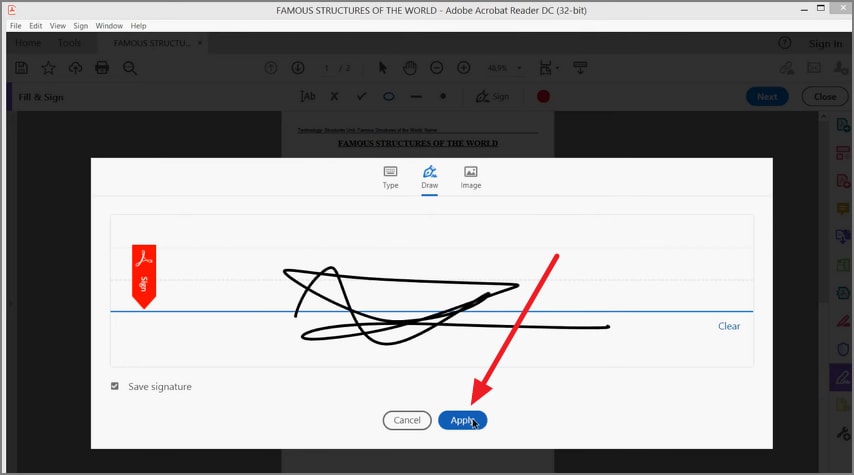
Step 4Type or draw the signature
Now, type or draw the signature in the designated field or even upload an image of the signature from your device's storage.
Step 5Press the "Apply" button
Once you have drawn the signature, press the "Apply" button to add the signature.
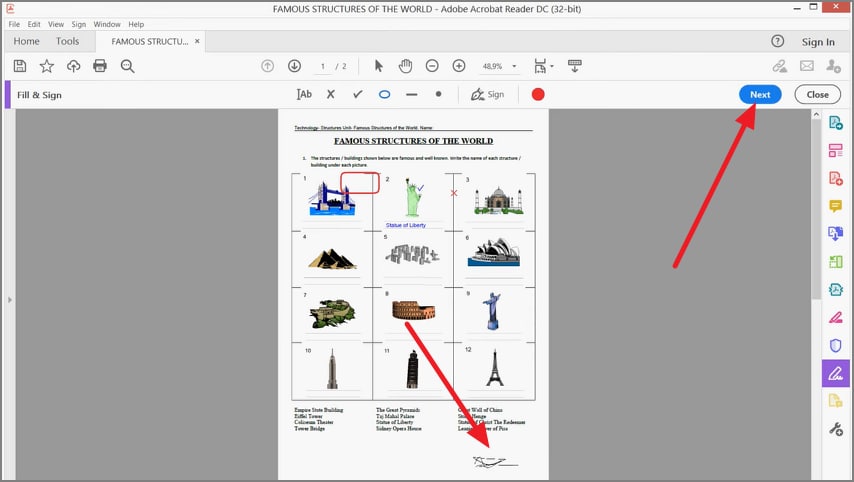
Step 6Place the signature on the document
Now, place the signature wherever you want on the document and hit the "Next" button to successfully save the changes.
Note: This method is suitable for basic signing only, as no certificate is involved. This means the signer's identity isn't verified, and document integrity isn't guaranteed.
Part 5. Why Adobe Reader May Not Be Enough for Digital Signatures
Despite being a popular free PDF viewer, Adobe Reader for digital signatures often falls short when users need advanced digital signing capabilities. Many users only realize these gaps after running into roadblocks, which creates confusion and slows down critical workflows.
- No Digital ID Creation: Adobe Reader cannot create a new digital ID, which is required to apply a certificate-based digital signature. Users must already have a digital ID or rely on external tools to generate one.
- Limited Certificate Management: Managing, importing, or organizing certificates is not intuitive in Adobe Reader. This makes it difficult for users who need regular certificate updates or multi-certificate workflows.
- Restricted Digital Signature Features: Some digital signature options are missing or locked behind paid versions, limiting what users can do in Reader. As a result, users may not see signature fields, validation details, or advanced signing controls.
- Reader vs. Acrobat Pro Confusion: Many users assume Adobe Reader and Acrobat Pro offer the same signing features, leading to frustration. In reality, Acrobat Pro provides full digital signature creation and management, while Reader remains limited to basic use cases.
This gap often pushes users to explore more capable alternatives that offer complete digital signature control without complexity or high costs.
Part 6. How to Digitally Sign a PDF When Adobe Reader Doesn't Support it
When a digital signature (certificate-based) is required, Adobe Reader may no longer be sufficient. In scenarios involving contracts, compliance files, or regulated records, users must digitally sign a PDF document with verified identity and tamper protection. This is where confusion around digital signature Adobe PDF features arises, as basic PDF reader sign options lack certificate authentication.
In such cases, a full PDF editor becomes essential to handle certificate-based signing correctly. Tools like PDFelement allow users to create or import digital IDs. It lets users apply true digital signatures and securely sign PDFs without upgrading to Adobe Acrobat Pro. This makes it a practical solution when Adobe Reader limitations block professional signing workflows.
G2 Rating: 4.5/5 |100% Secure
Part 7. How to Digitally Sign a PDF using PDFelement
As discussed, PDFelement is one of the reliable tools that lets users sign the document digitally while complying with the legal aspect. If you do not know how to sign a PDF on an Adobe Reader alternative, read the steps provided next:
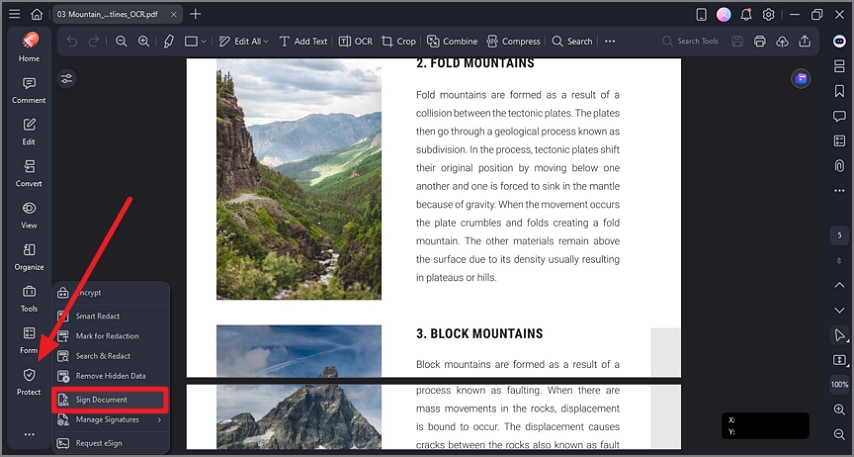
Step 1Open the PDF and Access the "Protect" Tool
Launch PDFelement and open the PDF you intend to sign. From the left-side toolbar, select the "Protect" option, then choose "Sign Document" to start the digital signing process.
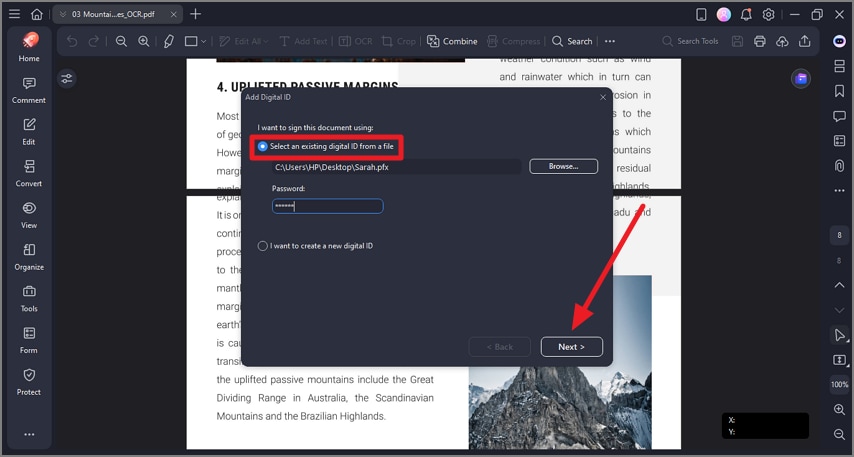
Step 2Choose an Existing Signing ID
On the next screen, select the option indicating that you already have a signing ID. Click the "Next" button to move forward.
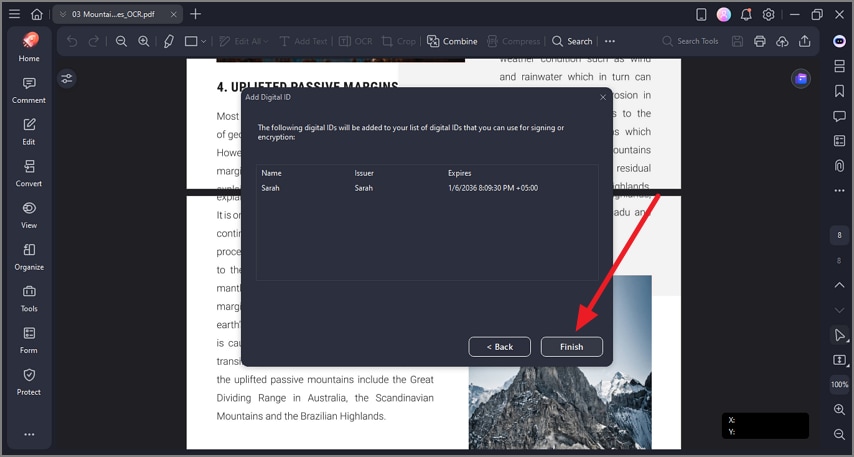
Step 3Confirm the Digital ID
From the available options, select the ID you want to use for signing. After choosing it, click the "Finish" button to proceed.
G2 Rating: 4.5/5 |100% Secure
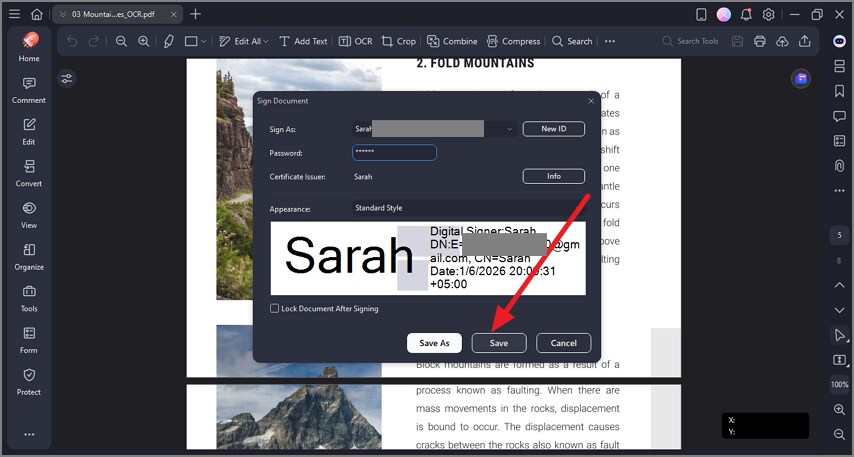
Step 4Apply the Digital Signature
Preview how the signature will appear in the document and enter the password linked to the selected ID. Click the "Save" button to apply the digital signature securely.
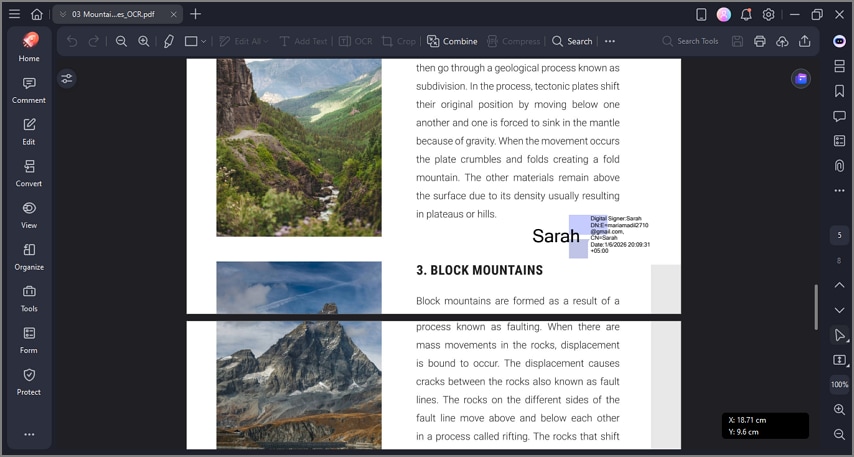
Step 5Review and Save the Signed PDF
Check the document to ensure the signature placement is correct. Once verified, save the signed file to your device or send it directly to the recipient.
Outcomes of Signing with PDFelement
- Creates a certificate-based digital signature for full verification.
- Signature validity can be checked by recipients, ensuring trust and authenticity.
- Suitable for compliance, legal, or formal workflows, making it ideal for contracts and official documents.
Part 8. Adobe Reader vs. PDF Editors for Digital Signatures
To clearly understand how Adobe Acrobat Reader compares with full PDF editors for digital signatures, such as PDFelement, it helps to view their capabilities side by side. The table below breaks down key differences in different aspects to identify which option best fits your signing requirements:
| Adobe Acrobat Reader | PDF Editors (e.g., PDFelement) | |
| Primary Purpose | PDF viewing and basic interaction | Full PDF creation, editing, and signing |
| Fill & Sign Support | Yes, supports simple Fill & Sign (typed, drawn, image-based) | Yes, along with advanced signing tools |
| Digital Signature (Certificate-Based) | Limited or restricted functionality | Fully supported with certificate-based workflows |
| Digital ID Creation | Not supported | Supported (create or import digital IDs) |
| Certificate Management | Minimal control, manual handling | Built-in certificate and identity management |
While Adobe Acrobat Reader works well for basic tasks, it may not be sufficient for users who regularly handle formal or certificate-based signing workflows. Tools like PDFelement are better suited for formal, secure, and repeat digital signature workflows.
Part 9. Common Issues When Signing PDFs in Adobe Reader
When signing PDFs in Adobe Reader, users often encounter roadblocks that can disrupt workflows or prevent documents from being properly signed. Mentioned below are some of the common issues that users might encounter, along with their fixes:
Digital Signature Option Not Showing
Sometimes, Adobe Reader does not display the digital signature feature because it only supports limited certificate-based signing. Using a PDF editor like PDFelement resolves this by providing full digital signature workflows and access to all signing tools.
Signature Not Appearing After Saving
Users may apply a signature in Adobe Reader, but it fails to appear after saving the file due to rendering or compatibility issues. Switching to a PDF editor ensures the signature is correctly embedded and visible in all PDF readers.
PDF Won't Allow Signing
Certain PDFs have restrictions or security settings that prevent Adobe Reader from signing. A PDF editor can bypass these limitations legally by enabling protected signing while respecting document integrity.
Signed File Not Accepted by Recipient
Recipients may reject PDFs signed in Adobe Reader because certificate verification is incomplete or missing. Using a full PDF editor ensures certificate-based digital signatures are properly applied, making files universally verifiable and accepted.
People Also Ask
-
Can Adobe Reader create a digital signature?
No, Adobe Reader cannot create a new digital ID required for a certificate-based digital signature. To apply verified digital signatures, you need a full PDF editor like PDFelement that supports ID creation and certificate management. -
What is the difference between Fill & Sign and a digital signature?
Fill & Sign allows typing, drawing, or inserting an image of your signature, but it does not verify identity or protect the document. A digital signature in Adobe PDF is certificate-based, verifies the signer, and ensures document integrity. -
Do I need Adobe Acrobat Pro for digital signatures?
Yes, Adobe Acrobat Pro provides full certificate-based signing capabilities that Reader lacks. Alternatively, you can use a PDF editor like PDFelement to digitally sign PDFs without purchasing Acrobat Pro. -
Is a Fill & Sign signature legally valid?
Fill & Sign signatures can be legally valid in low-risk agreements or informal documents. However, for contracts, regulated documents, or situations requiring identity verification, a certificate-based digital signature is recommended. -
What PDF reader supports real digital signatures?
Most standard PDF readers, including Adobe Reader, only support basic electronic signatures. Full-featured PDF editors like PDFelement enable real digital signatures with certificate verification and document integrity protection.
Conclusion
To sum it up, this article provided a complete guide for digital signatures with Adobe Reader. While Adobe Reader works well for basic electronic signatures, certificate-based digital signatures require more advanced tools. When Adobe's limitations prevent proper signing, a full PDF editor becomes necessary. Tools like PDFelement offer a practical solution, allowing users to create, manage, and apply verified digital signatures easily, without needing Adobe Acrobat Pro.