
In this article
- Introduction: The Document Processing Challenge
- OpenClaw's Native PDF Capabilities
- The PDF Skills Ecosystem
- PDFelement Skill: Professional Local Processing
- OCR and Data Extraction Skills
- Conversion and Transformation Skills
- Batch Processing and Automation Skills
- Document Management and Organization
- Choosing the Right PDF Skill
- Frequently Asked Questions
Introduction: The Document Processing Challenge
Marcus, a legal researcher, faced a recurring nightmare every Monday morning. His inbox overflowed with PDF documents—court filings, discovery materials, client contracts—each requiring specific processing. Some needed OCR to make them searchable. Others required data extraction from tables. A few needed to be merged, split, or converted to different formats. What used to consume three hours of manual work was about to transform entirely.
When Marcus discovered OpenClaw, he initially assumed it would just read PDF content and provide summaries. The native PDF tool did exactly that—it could extract text and analyze documents effectively. But his workflow demanded more: batch processing of scanned documents, automated form filling, secure watermarking, and structured data extraction. That's when he discovered OpenClaw's skill ecosystem, a collection of specialized PDF processing tools that extended the platform's capabilities far beyond simple reading.
This guide explores the complete landscape of OpenClaw PDF skills, from native capabilities to specialized tools for every document processing scenario. Whether you're handling financial documents, legal materials, academic research, or everyday paperwork, understanding which skills to use—and when—can transform hours of manual work into minutes of automated processing.
OpenClaw's Native PDF Capabilities
Before exploring the skill ecosystem, it's important to understand what OpenClaw can do natively. The platform includes a built-in PDF tool that provides foundational document processing capabilities.
What the Native Tool Does Well
The native PDF tool excels at three primary tasks:
Text Extraction: For digitally created PDFs where text is embedded as actual characters, OpenClaw can extract and present the content in a readable format. This works seamlessly for modern documents created from Word, Excel, or other digital sources.
Multi-Document Analysis: The tool can process multiple PDFs simultaneously, making it valuable for comparative analysis. A researcher might ask OpenClaw to analyze five different studies and identify common methodologies. A business analyst could have it review quarterly reports from three competitors and extract market positioning statements.
Content Understanding: Because the extracted text feeds directly into OpenClaw's reasoning engine, the platform can summarize, answer questions about, and identify patterns in the content without additional processing.
Where Native Capabilities Fall Short
Despite these strengths, the native tool has significant limitations:
- No File Manipulation: You cannot merge PDFs, split documents, compress files, or convert formats using the native tool alone.
- OCR Limitations: Scanned documents and image-based PDFs pose challenges. The native tool isn't designed for heavy-duty optical character recognition.
- No Batch Automation: Processing fifty invoices with the same logic requires manual repetition rather than automated workflows.
- Limited Structure Preservation: Complex layouts, tables, and graphical elements may not extract cleanly.
These limitations don't make the native tool useless—they simply define its scope. For straightforward reading and analysis, it works perfectly. For document-heavy workflows requiring manipulation, transformation, or batch processing, you need specialized skills.
The PDF Skills Ecosystem
OpenClaw's skill system allows the platform to interface with specialized PDF processing tools through natural language commands. Think of skills as plugins that teach OpenClaw how to perform specific document operations. The ecosystem contains over 100 PDF-related skills, each designed for particular use cases.
How Skills Work
Skills are essentially markdown files (SKILL.md) that contain instructions telling OpenClaw:
- What operations the skill can perform
- When to use the skill based on user requests
- How to call external tools or APIs
- What parameters and options are available
When you issue a command like "convert these PDFs to Excel and extract the tables," OpenClaw parses your intent, identifies the appropriate skill, and orchestrates the execution—all while keeping your documents secure.
Security Note: When installing skills from the ClawHub marketplace, always verify the source. Security researchers have identified that approximately 80% of marketplace skills are low-quality or potentially malicious. Stick to well-vetted skills from trusted sources or use the curated Awesome OpenClaw Skills repository.
PDFelement Skill: Professional Local Processing
PDFelement Skill
Best For: Organizations requiring local processing of sensitive documents with professional-grade features
- 20+ batch PDF operations (conversion, OCR, compression, security)
- Local processing—documents never leave your machine
- Natural language command interface
- Support for Windows and Linux environments
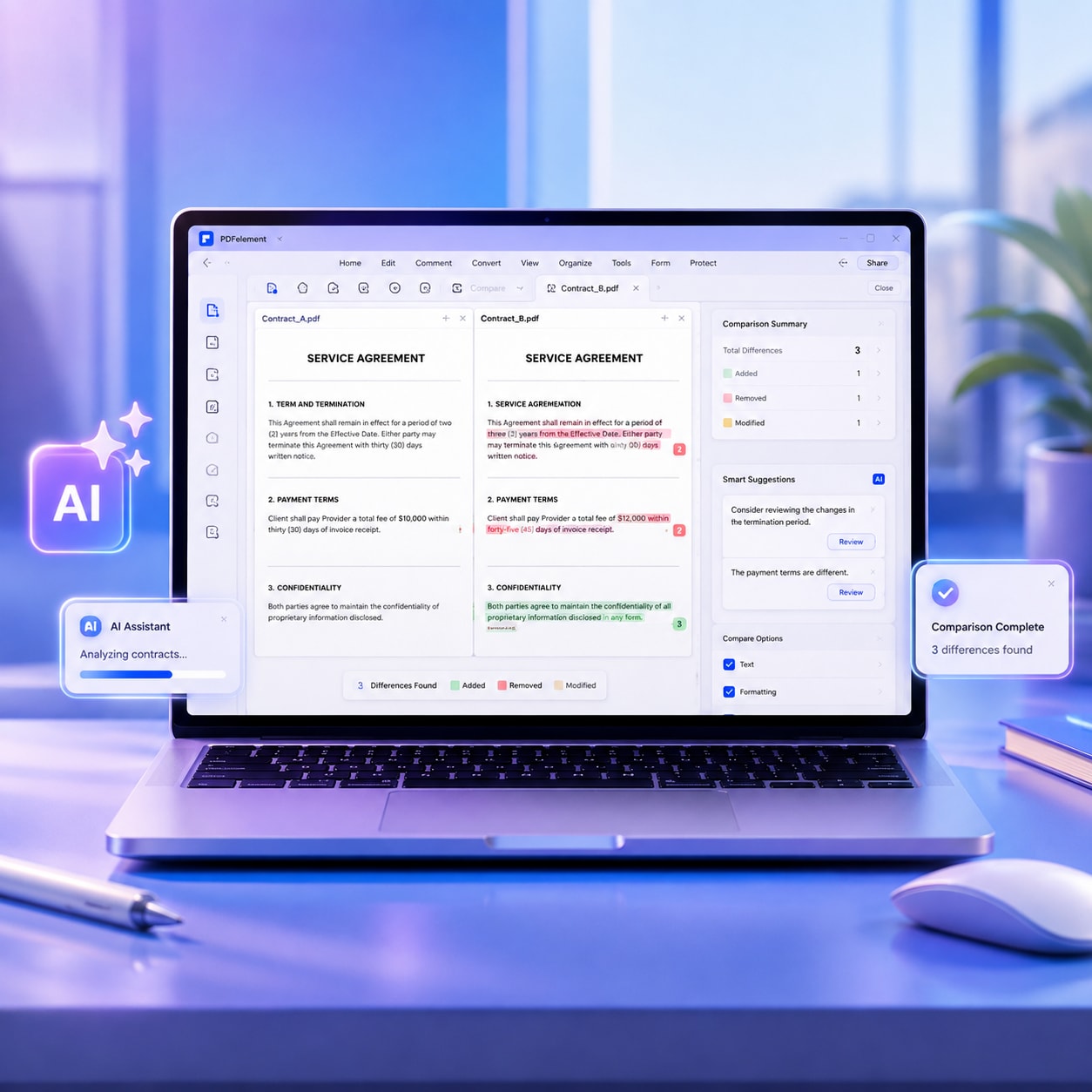
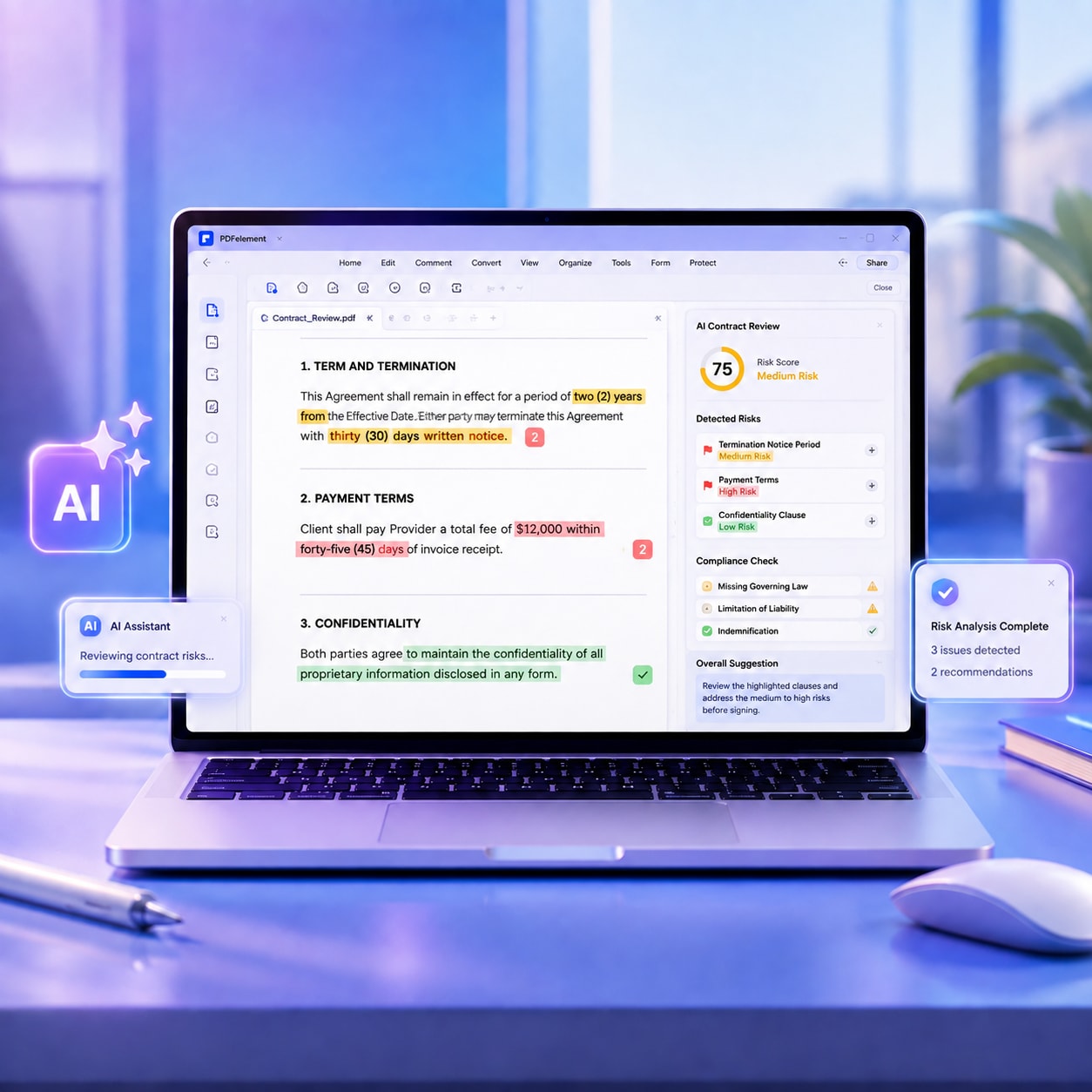
The PDFelement skill stands out as a comprehensive solution for document-heavy workflows. By integrating OpenClaw with the PDFelement desktop application, it enables batch processing through natural language commands while maintaining complete data privacy.


 G2 Rating: 4.5/5 |
 100% Secure
Key Capabilities
Format Conversion: Convert PDFs to Word, Excel, PowerPoint, images, text, and other formats. The skill preserves formatting and structure during conversion, making the output immediately usable.
OCR Text Recognition: Process scanned documents and image-based PDFs to extract searchable text. This is essential for digitizing paper archives or working with documents from sources that don't provide digital text.
Document Assembly: Split large PDFs into sections, merge multiple documents into organized files, or reorganize pages within documents. Legal teams use this for preparing discovery materials; researchers use it for consolidating sources.
Security Features: Add watermarks, set passwords, manage permissions, and apply digital signatures. Compliance-focused organizations particularly value these features for protecting sensitive information.
Bates Numbering: Apply sequential numbering to documents for legal and archival purposes. This feature automates a task that traditionally required specialized software.
Real-World Workflow Example
A financial services company processing quarterly reports might use the PDFelement skill to:
- Receive a batch of PDF reports from various departments
- Extract data tables and convert them to Excel format
- Merge related documents into organized packages
- Apply security watermarks and password protection
- Compress files for email distribution
- Generate a summary report using OpenClaw's reasoning on the extracted content
The entire workflow runs through natural language commands, with all processing happening locally on the user's machine. This ensures sensitive financial data never uploads to external servers.
Get Started with PDFelement
Experience professional PDF processing with OpenClaw integration. Download PDFelement and install the skill to transform your document workflows.
G2 Rating: 4.5/5 |100% Secure
OCR and Data Extraction Skills
Veryfi OCR 3.0 Skill
Best For: Financial document processing—receipts, invoices, statements, expense reports
- Purpose-built OCR engine for financial documents
- Extracts 100+ structured fields automatically
- Real-time processing with industry-leading accuracy
- SOC 2 Type II certified security
Unlike general-purpose OCR tools, Veryfi's engine understands financial document context. It knows the difference between a subtotal and a line item, between an invoice date and a due date. This contextual understanding results in significantly higher accuracy for business documents.
Use Cases:
- Automated expense report processing
- Invoice data extraction for accounting systems
- Receipt management for tax preparation
- Purchase order matching and validation
PDF Extraction Skill
For general-purpose extraction needs, the PDF Extraction skill uses pdfplumber to extract text, tables, and metadata from PDF documents. It's particularly effective for:
- Extracting data tables while preserving structure
- Pulling metadata (author, creation date, properties)
- Handling documents with complex layouts
- Processing digital PDFs with embedded text
Conversion and Transformation Skills
PDF.co Skill
Best For: Cloud-based conversion, merging, splitting, and editing operations
- Convert PDFs to/from Word, Excel, HTML, images
- Merge and split PDFs programmatically
- Add text, images, watermarks
- Password management and security controls
- Requires PDF.co API key and Maton OAuth integration
The PDF.co skill provides cloud-based processing for teams that don't require local document handling. It offers a comprehensive API for document manipulation, including advanced features like AI-powered invoice parsing and barcode generation/reading.
Stirling PDF Skill
Stirling PDF provides a self-hosted alternative for organizations that need cloud-like features without actually uploading documents to external services. Key features include:
- Page operations (merge, split, rotate, extract, reorder)
- Conversions between PDFs and Word/Excel/HTML/images
- PDF optimization and compression
- Form filling and flattening
Batch Processing and Automation Skills
Batch Processor Skill
Best For: Processing hundreds of files with parallel execution and progress tracking
- Parallel processing of multiple documents
- Checkpoint and resume capabilities
- Progress tracking with visual feedback
- Error handling and logging
The Batch Processor skill is essential for workflows involving large document volumes. It can:
- Convert 100 PDFs to Word documents simultaneously
- Extract text from all images in a folder
- Batch rename and organize files based on content
- Mass update document headers, footers, or metadata
The skill implements smart parallel processing, using multiple CPU cores to maximize throughput while maintaining system stability. If processing is interrupted, checkpoint files allow resuming from where you left off without starting over.
Summarize Skill
With over 26,000 downloads, the Summarize skill is one of the most popular in the OpenClaw ecosystem. It provides:
- URL summarization for online documents
- Local PDF file summarization
- Audio file transcription and summarization
- YouTube video summarization with transcript extraction
The skill automatically handles the extraction-to-summarization pipeline, making it simple to condense lengthy documents into key points, obligations, risks, or deadlines.
Document Management and Organization
Paperless-ngx Skill
Best For: Organizations using Paperless-ngx document management system
- Search and retrieve documents via natural language
- Upload and organize documents automatically
- Tag and categorize using AI understanding
- Manage correspondents and document types
For teams using Paperless-ngx as their document management system, this skill provides a natural language interface to the entire platform. Instead of navigating through web interfaces, you can simply ask OpenClaw to "find all invoices from ACME Corp in Q4 2025" or "upload this contract and tag it as legal/confidential."
PDF Form Filler Skill
Automating form filling saves enormous time for organizations that process standardized documents. The PDF Form Filler skill can:
- Fill text fields with data from databases or spreadsheets
- Check or uncheck boxes based on boolean values
- Handle government forms, applications, and surveys
- Preserve form functionality for further editing
The skill uses pdfrw to set field values while maintaining appearance streams, ensuring filled forms render correctly in any PDF viewer.
Invoice Generation Skill
For businesses that need to generate invoices programmatically, this skill automates the entire process:
- Collect billing details and line items
- Calculate taxes and totals automatically
- Generate professional PDF invoices using templates
- Support for multiple currencies and tax systems
Choosing the Right PDF Skill
Not all PDF skills are built for the same kind of workload. Some are optimized for cloud convenience, others for niche extraction tasks, and a few are designed to handle full-scale document workflows end-to-end. If your goal is to reduce tool-switching, protect sensitive data, and automate complex PDF operations in one place, the choice becomes much clearer.
| Skill | Best For | Privacy Level | Complexity | Key Strengths |
|---|---|---|---|---|
| PDFelement Skill | All-in-one PDF workflows, batch processing, secure document handling | High (local processing) | Medium | Complete toolkit: OCR, conversion, editing, compression, watermarking, security, form handling, and batch automation in a single workflow |
| Veryfi OCR 3.0 | Financial documents (receipts, invoices) | Medium (cloud) | Low | High-accuracy field extraction for accounting-specific workflows |
| PDF Extraction Skill | Simple text/table extraction | High | Low | Lightweight parsing for digital PDFs without editing capabilities |
| PDF.co Skill | Cloud-based automation and API workflows | Low (cloud) | Medium | Flexible API integrations for conversion and editing tasks |
| Stirling PDF Skill | Self-hosted PDF tools | High | Medium | Basic PDF operations in a private, self-managed environment |
| Batch Processor | High-volume file processing | High | Low | Parallel execution and workflow scaling |
| Summarize Skill | Content understanding | Medium | Low | Fast summarization of PDFs and other content |
| Paperless-ngx | Document management systems | High | Medium | Search, tagging, and archival workflows |
| PDF Form Filler | Form automation | High | Low | Programmatic field population |
| Invoice Generation | Invoice creation | High | Low | Template-based billing workflows |
Decision Framework
Start with PDFelement if your workflow involves more than one task. Most real-world document workflows are not just “convert” or “extract”—they involve multiple steps like OCR → edit → merge → secure → export. PDFelement is designed to handle this entire chain locally, without forcing you to switch between tools or upload files to different services.
Use specialized tools only when the task is extremely narrow. For example, Veryfi OCR is excellent for receipt and invoice parsing, but it is not designed for document editing, restructuring, or security workflows. Similarly, extraction tools work well for pulling data, but cannot transform or manage documents afterward.
Avoid fragmenting your workflow unless necessary. Combining multiple single-purpose skills often introduces overhead—manual coordination, inconsistent outputs, and higher security risk. In contrast, a unified solution like PDFelement reduces operational complexity while keeping processing local.
Consider privacy as a default constraint, not an afterthought. Many cloud-based tools require uploading documents to external servers. If you are working with legal, financial, or internal documents, local processing through PDFelement or self-hosted tools is typically the safer baseline.
Use Batch Processor as an accelerator, not a replacement. When dealing with hundreds of files, batch processing becomes critical—but it works best when paired with a full-featured tool like PDFelement that actually performs the operations being scaled.
Think in workflows, not features. The right skill is not the one that does one thing well—it’s the one that eliminates the most steps in your process. For most users, that means starting with a comprehensive tool, then layering in niche skills only when a specific edge case requires it.
In practice, PDFelement often becomes the foundation of the workflow, with other skills acting as optional extensions rather than primary tools. This approach keeps document processing efficient, secure, and easier to scale over time.
Frequently Asked Questions
-
Can OpenClaw process scanned PDFs that are just images?
Yes, but you need OCR-capable skills. The native PDF tool has limited OCR capabilities. For scanned documents, use Veryfi OCR 3.0 for financial documents or PDFelement with its OCR feature for general documents. These skills convert image-based text into searchable and extractable content.
-
Is it safe to use OpenClaw PDF skills with sensitive documents?
Security depends on the skill you choose. Local processing skills like PDFelement and Stirling PDF keep documents on your machine. Cloud-based skills like PDF.co upload files to external servers. Always review the skill's privacy policy and consider your organization's data handling requirements. For highly sensitive materials, stick to local-only skills.
-
Can OpenClaw fill out PDF forms automatically?
Yes, the PDF Form Filler skill can automate form completion. It works with fillable PDF forms, setting text fields and checkboxes programmatically. You can provide data from databases, spreadsheets, or direct input. The skill preserves the form's functionality for further editing if needed.
-
How do I convert PDFs to Excel with OpenClaw?
Several skills handle PDF-to-Excel conversion:
- PDFelement: Local conversion with table structure preservation
- PDF.co: Cloud-based conversion with API integration
- Stirling PDF: Self-hosted option for privacy-conscious organizations
The best choice depends on your volume, privacy requirements, and whether you need local or cloud processing.
-
Can OpenClaw batch process hundreds of PDFs?
Yes, the Batch Processor skill is specifically designed for high-volume workflows. It supports parallel processing using multiple CPU cores, includes checkpoint and resume capabilities in case of interruption, and provides progress tracking. You can convert, extract, or manipulate hundreds of files in a single operation.
-
What's the difference between OpenClaw's native PDF tool and skills?
The native PDF tool provides basic text extraction and analysis for digitally created PDFs. Skills are specialized extensions that add capabilities like OCR, conversion, form filling, batch processing, and integration with external systems. Think of the native tool as reading comprehension, while skills are specialized document manipulation tools.
G2 Rating: 4.5/5 |100% Secure
Conclusion
The OpenClaw ecosystem offers a rich landscape of PDF processing capabilities, from simple text extraction to sophisticated document management workflows. By understanding the strengths and limitations of each skill, you can build powerful automated document processing pipelines that save hours of manual work.
For users new to OpenClaw PDF processing, we recommend starting with these steps:
- Assess your needs: Determine whether you primarily need reading/analysis or document manipulation
- Test with native tools: Try OpenClaw's built-in PDF capabilities with a few sample documents
- Start with one skill: Choose a single PDF skill that addresses your most common use case
- Verify security: Review the skill's source and privacy policy before processing sensitive documents
- Scale gradually: Add more skills as you identify additional workflow needs
With the right combination of native capabilities and specialized skills, OpenClaw transforms from a document reader into a comprehensive document processing platform. Whether you're processing a single contract or managing thousands of financial documents, there's a skill designed to make your workflow more efficient.