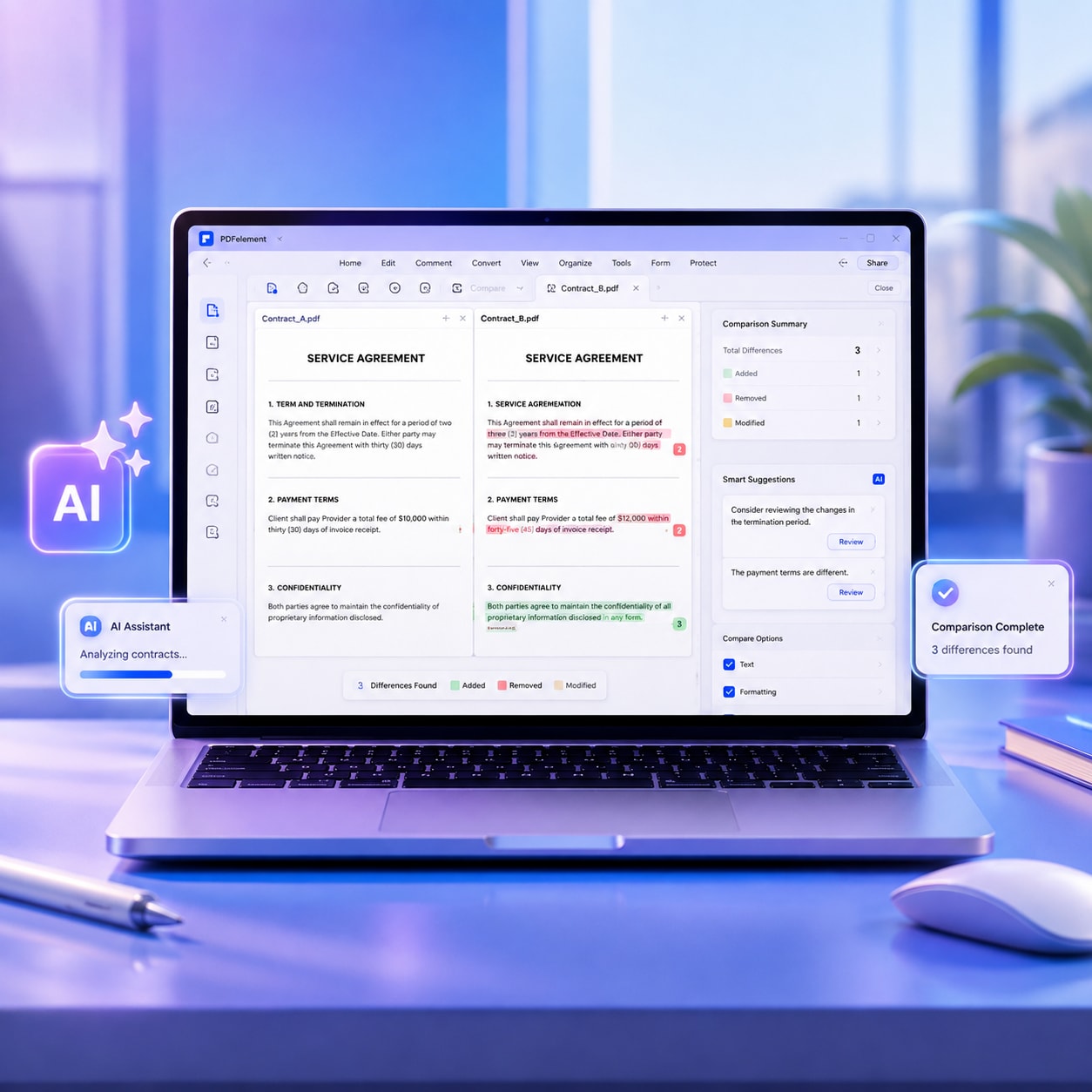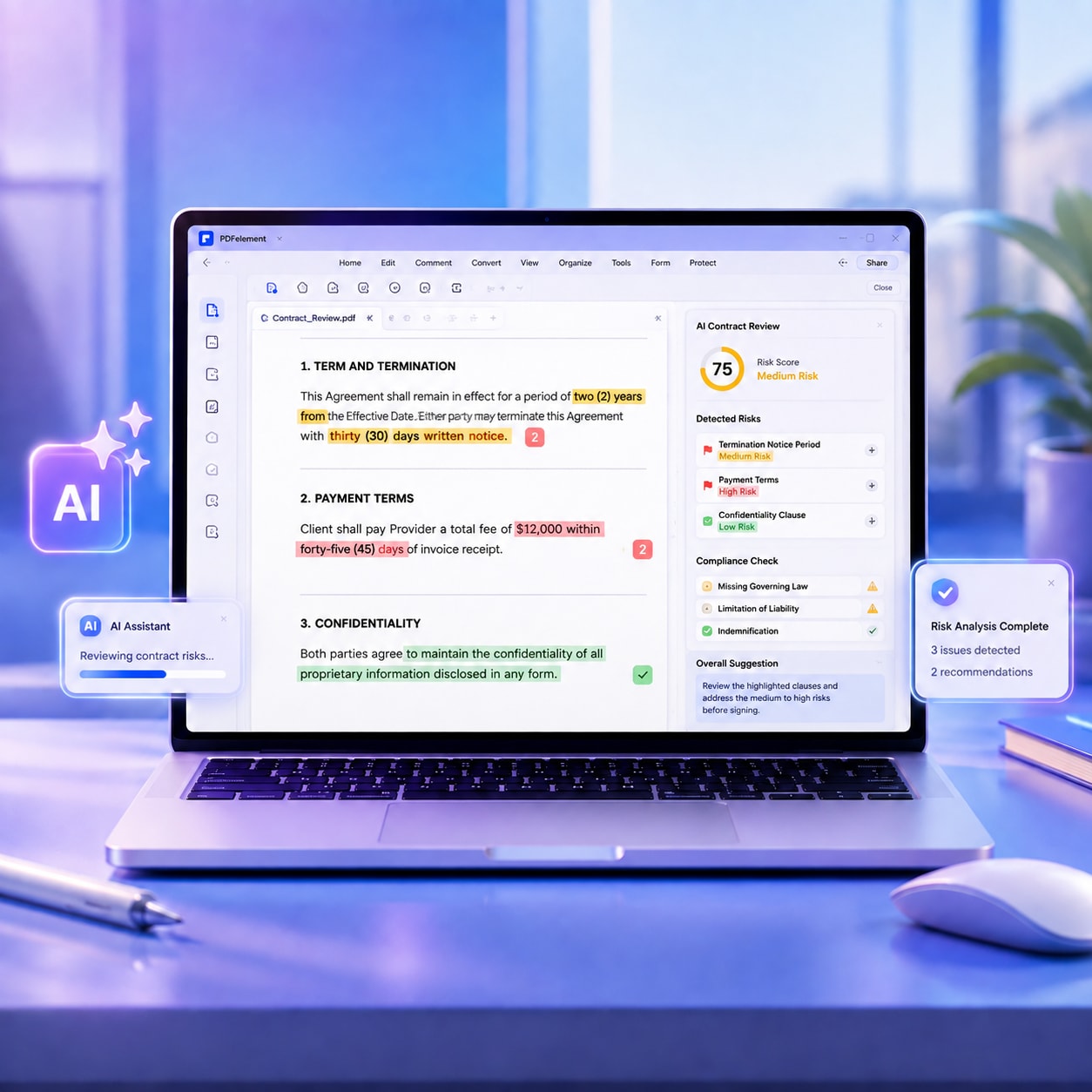

If you are searching for Claude Skills, Claude agent skills, or how to use Claude Skills, you are likely looking for a smarter way to handle PDFs, contracts, invoices, reports, and other document-heavy tasks. Anthropic defines Agent Skills as modular capabilities that package instructions, metadata, and optional resources so Claude can apply them automatically when relevant. In simple terms, Skills help transform Claude from a chat assistant into a more practical tool for structured work.
For document workflows, the challenge is not just getting AI to answer. It is getting AI to work well with scanned files, multi-column PDFs, invoices, forms, and sensitive business documents. That is where a dedicated PDF solution becomes valuable. Wondershare PDFelement is designed as an AI-powered all-in-one PDF solution, combining AI PDF tools, OCR, editing, conversion, protection, batch processing, and Smart Redact across desktop, mobile, and web.


 G2 Rating: 4.5/5 |
 100% Secure
In this article
- What are Claude Skills?
- Why Claude Skills matter for document automation
- Claude Skills vs. Custom GPTs vs. Gemini Gems
-
How to use Claude Skills
-
High-value Claude Skills examples
- Where to find Claude Skills templates
- Why PDFelement is the missing PDF layer
- An Alternative Way to Run PDF Workflows with OpenClaw
- The hidden risks of Claude Skills
- FAQs about Claude Skills
- The future of agentic document workflows
What are Claude Skills? (And Why They Change Everything)
Anthropic describes Agent Skills as reusable resources that give Claude domain-specific expertise, workflows, and best practices. A Skill can package instructions, metadata, and optional resources, and Claude can invoke it when the request matches. In practice, that means a Skill is more than a one-time prompt. It is a reusable way to get consistent help with recurring work.
Understanding Claude's new capabilities
This matters because many business tasks are repetitive but complex. Teams often need to summarize long PDFs, extract invoice data, compare clauses, turn reports into spreadsheets, or generate polished deliverables from raw files. Anthropic's quickstart explicitly lists pre-built Skills for PDF, Word, Excel, and PowerPoint, making it clear that document workflows are one of the most useful areas for Claude Skills.
Why this matters for PDF-heavy work
A Skill can guide Claude on how to handle a document task, but it does not automatically fix blurry scans, broken layouts, or privacy issues inside the file itself. This is where a PDF-native workflow makes a real difference. PDFelement combines AI PDF tools with OCR, conversion, editing, batch processing, and Smart Redact, making it a strong companion for Claude Skills in day-to-day document workflows.
G2 Rating: 4.5/5 |100% Secure
Why Claude Skills Matter for Document Automation
Claude Skills are part of a wider shift from chat-based AI to workflow-based AI. Anthropic recently expanded the ecosystem with organization-wide skill management and a partner directory featuring Skills from companies like Notion, Canva, Figma, and Atlassian. That makes Skills more useful for real teams and everyday business workflows.
This is especially important for document workflows. Once teams move beyond a single file into batches, approvals, redaction, conversion, and validation, they need more than AI reasoning alone. They also need reliable PDF preparation, extraction, and protection. PDFelement fits naturally into this process with features such as AI PDF tools, OCR, Smart Redact, and Batch PDF.
G2 Rating: 4.5/5 |100% Secure
Claude Skills vs. Custom GPTs vs. Gemini Gems
People searching for claude skills often also compare them with Custom GPTs and Gemini Gems. That makes sense: all three help turn a general AI model into a more task-focused assistant. The main difference is where they fit best and how well they support document-heavy work.
| Dimension | Claude Skills | Custom GPTs | Gemini Gems |
| Best fit | Structured workflows and long-context document tasks | General customization and broad assistant use | Workspace-oriented productivity tasks |
| Document workflow depth | High, especially with pre-built file Skills | High, but highly setup-dependent | Moderate, strongest in Google ecosystem |
| Most relevant for PDF sites | Excellent for reasoning over long reports, contracts, and extracted data | Good for flexible assistants, but not inherently PDF-native | Useful for light office automations, less specialized for complex PDFs |
| What still matters | All three work better when the document has already been OCR-processed, cleaned, protected, and structured before the model begins analysis. | ||
How to Use Claude Skills: A Step-by-Step Setup Guide
The exact experience depends on whether you are using Claude's API or another Anthropic-supported environment, but the flow stays similar: identify available Skills, choose a pre-built Skill or create your own, then test it with real files. Anthropic's quickstart is the best official place to begin.
Creating your first custom Skill
01of 04Define one narrow, repeatable task
Good starting examples include “summarize a long PDF report,” “extract invoice fields to JSON,” or “identify conflicting clauses in a contract.” Anthropic's best-practices guide recommends concise, structured, and testable Skills.
02of 04Define role, constraints, and output format
For document workflows, it helps to define what Claude can rely on, what assumptions it should avoid, and what kind of output you want back. Clear structure makes the result easier to review and reuse.
03of 04Prepare the PDF before the model sees it
This is where many AI guides leave out an important step. If the source file is scanned, image-based, table-heavy, or contains sensitive content, preparing it first leads to better results. PDFelement OCR converts scanned PDFs into searchable and editable files, while Batch OCR helps streamline this process across multiple documents.
04of 04Test with real-world document edge cases
Try the Skill on lower-quality scans, different invoice layouts, contracts with inconsistent formatting, and long reports with tables or appendices. If it only works on ideal examples, it is not ready for practical use.

G2 Rating: 4.5/5 |100% Secure
High-Value Claude Skills Examples for Professionals
The “Deep Researcher” Skill (PDF-Centric)
This Skill is ideal for summarizing long research papers, annual reports, regulatory filings, or industry studies. Claude's long-context reasoning is useful here, but long context alone does not solve layout issues, image-based pages, or poorly scanned PDFs. PDFelement's AI PDF workflow and OCR features help make source documents easier to work with before AI analysis begins.
The “Legal Auditor” Skill
This Skill can help review contracts for conflicting clauses, missing obligations, and compliance issues. For a PDF workflow, the better story is not simply that AI can read contracts, but that it performs better when files are prepared properly and sensitive data is handled with care. PDFelement Smart Redact helps identify and mask sensitive information such as names, IDs, and financial details, which is especially useful before sharing documents with AI workflows.
The “Data Extraction” Skill (Excel & PDF)
This Skill is built for turning invoices, receipts, statements, and tabular PDFs into structured output. This is one of the most natural connections between Claude Skills and PDFelement because Wondershare offers a Receipt Assistant add-on that uses OCR and AI to identify key information in receipts and invoices, such as amounts, dates, and merchant names. That makes PDFelement a strong extraction layer, while Claude can focus on reasoning, validation, and summarization.
A smooth workflow looks like this:
- Use PDFelement Receipt Assistant to capture invoice fields from receipts or invoices
- Use PDFelement OCR or PDF to Excel-style conversion workflows to organize tables and scanned content
- Use a Claude Skill to validate, summarize, categorize, or turn those fields into business-ready insights
G2 Rating: 4.5/5 |100% Secure
Where to Find Claude Skills Templates
For readers who want trusted sources, official documentation should come first.
- Anthropic Agent Skills Overview: This is the best place to understand how Skills are structured and invoked.s
- Anthropic Agent Skills Quickstart: This is the best place to confirm available pre-built document Skills and the setup flow.
- GitHub: anthropics/skills: A credible source for seeing real Skill structures and examples.
- Anthropic's long-form build guide: Useful for understanding planning, testing, and practical deployment.
- Anthropic's organization Skills and directory announcement: Useful for understanding the ecosystem and partner-built Skills.
Why PDFelement Is the Missing PDF Layer in Your Claude Workflow
This is the most important takeaway for PDF automation: Claude Skills bring intelligence, but they do not replace the need for reliable document handling. Claude works with text. PDFs often include scanned pages, visual layouts, tables, and forms. That creates three common challenges:
- OCR dependency: scanned PDFs need to be recognized before they are easy for AI to process
- Layout loss: tables, columns, and structure can become harder to interpret when flattened into text
- Workflow gaps: after AI analysis, users still need editing, conversion, redaction, form handling, and secure export
PDFelement is a strong fit here because its product stack addresses those needs directly. It offers OCR to turn scanned PDFs into searchable and editable files, Batch PDF tools to process multiple documents more efficiently, Smart Redact for protecting sensitive information, and AI-powered PDF features that support smarter document handling.
G2 Rating: 4.5/5 |100% Secure
G2 Rating: 4.5/5 |100% Secure
An Alternative Way to Run PDF Workflows with OpenClaw
While PDFelement is commonly used as part of a structured document workflow, some users may prefer a different way to initiate and manage PDF tasks. OpenClaw offers an alternative approach by allowing users to run supported PDF operations through a command-based interface.
With the PDFelement Skill installed, OpenClaw can recognize PDF-related tasks and route them to PDFelement for execution. This provides a more direct way to start document processing without navigating through the full application interface.
- Convert PDF files into other formats such as Excel or Word
- Apply OCR to scanned or image-based documents
- Compress, split, or organize PDF files
In this setup:
- OpenClaw provides a command-driven interface for initiating tasks
- PDFelement performs the actual PDF processing and file operations
G2 Rating: 4.5/5 |100% Secure
When a task is initiated, OpenClaw checks whether PDFelement is installed and up to date. If available, the desktop application launches automatically to continue the task. If not, users are prompted to install or update before proceeding.
This approach is useful for users who prefer a more direct, command-based way to handle PDF tasks, especially for repetitive operations or quick execution scenarios.
G2 Rating: 4.5/5 |100% Secure
The Hidden Risks of Claude Skills
Many guides focus only on capability and skip over workflow issues. In real document scenarios, the main risks are outdated templates, low-quality OCR, unredacted sensitive data, and Skills that perform well in demos but struggle with real business files. Anthropic's best-practices documentation emphasizes structure, testing, and discoverability for a reason: strong results depend on a strong workflow.
For document-heavy teams, the better approach is not to avoid Skills. It is to combine them with reliable preprocessing, privacy handling, and output review. That is another reason PDFelement fits naturally into this kind of workflow.
FAQs about Claude Skills
What are Claude Skills?
Claude Skills are reusable capabilities that package instructions, metadata, and optional resources so Claude can apply specialized workflows automatically when relevant. Anthropic presents them as modular capabilities rather than one-off prompts.
Do Claude Skills work with PDFs?
Claude Skills support PDF-related workflows, and Anthropic provides pre-built Skills for PDF and other document tasks such as Word, Excel, and PowerPoint. In practice, results still depend on document quality and structure, so scanned or image-based PDFs often benefit from OCR before analysis.
What is PDFelement Receipt Assistant?
Receipt Assistant is a PDFelement add-on that uses OCR and AI to identify key information in receipts and invoices, such as amounts, dates, and merchant names. It can also help organize and export receipt data into structured files such as Excel or PDF.
Where can I find Claude Skills templates?
The most reliable starting points are Anthropic's official Agent Skills overview, quickstart, public GitHub repository, and long-form build guide. These sources are more trustworthy than unverified community templates for document-heavy workflows.
Conclusion: The Future of Agentic Document Workflows
The most practical future is not one tool doing everything. It is a connected workflow: one layer prepares the file, one layer understands the content, and one layer delivers a usable result. Anthropic's growing Skills ecosystem supports the reasoning layer. PDFelement supports the document layer. OpenClaw can act as the natural-language control surface that ties them together.